
Upwards receives first book award!

The_New_England_Book_Festival_Logo

OK, how humble is it to say “first” book award? Honestly, though, my hopes and dreams for this book continue to grow, as more people read and share their thoughts. The volume of responses is growing and opportunities for the new year are coming in fast.

A few highlights:

  • Four upcoming events in the next three weeks (details on the events page)
  • Just invited to present at the Wilderness Paddlers Gathering in Fairlee, VT in March
  • Planning two events during the Adirondacks’ Celebrate Paddling month in June
  • And, of course, Honorable Mention in the category of Biography/Autobiography from the New England Book Festival.

The Boston-based New England Book Festival, sponsored by JM Northern Media, recognizes the best books of the holiday season in 17 categories. Winners are judged on “general excellence and the author’s passion for telling a good story” and “the potential of the work to reach a wider audience.”

To balance out the many hours devoted to the book, I continue to plan for next summer and enjoy today. A deluge of rain, amid temperatures as high as 55 degrees, has washed away much of our snow. The sight of green grass and brown leaves has been a welcome change. Sunday’s afternoon walk, on boots not snowshoes, felt free and unencumbered.

I tramped, I tromped, the trail more brown than white, looking around at the woods, rather than down at my feet. You know how it feels when you’ve just climbed up, then down, a mountain and hit the flat? The joy of simply swinging along is wonderful.

Gone, though, was the hushed white wonderland of winter. Every step was a loud crunch, either on a couple of inches of frozen remnant snow or, mostly, on frosty ground. Crunching along at a good pace, out to the edge of an old beaver pond.
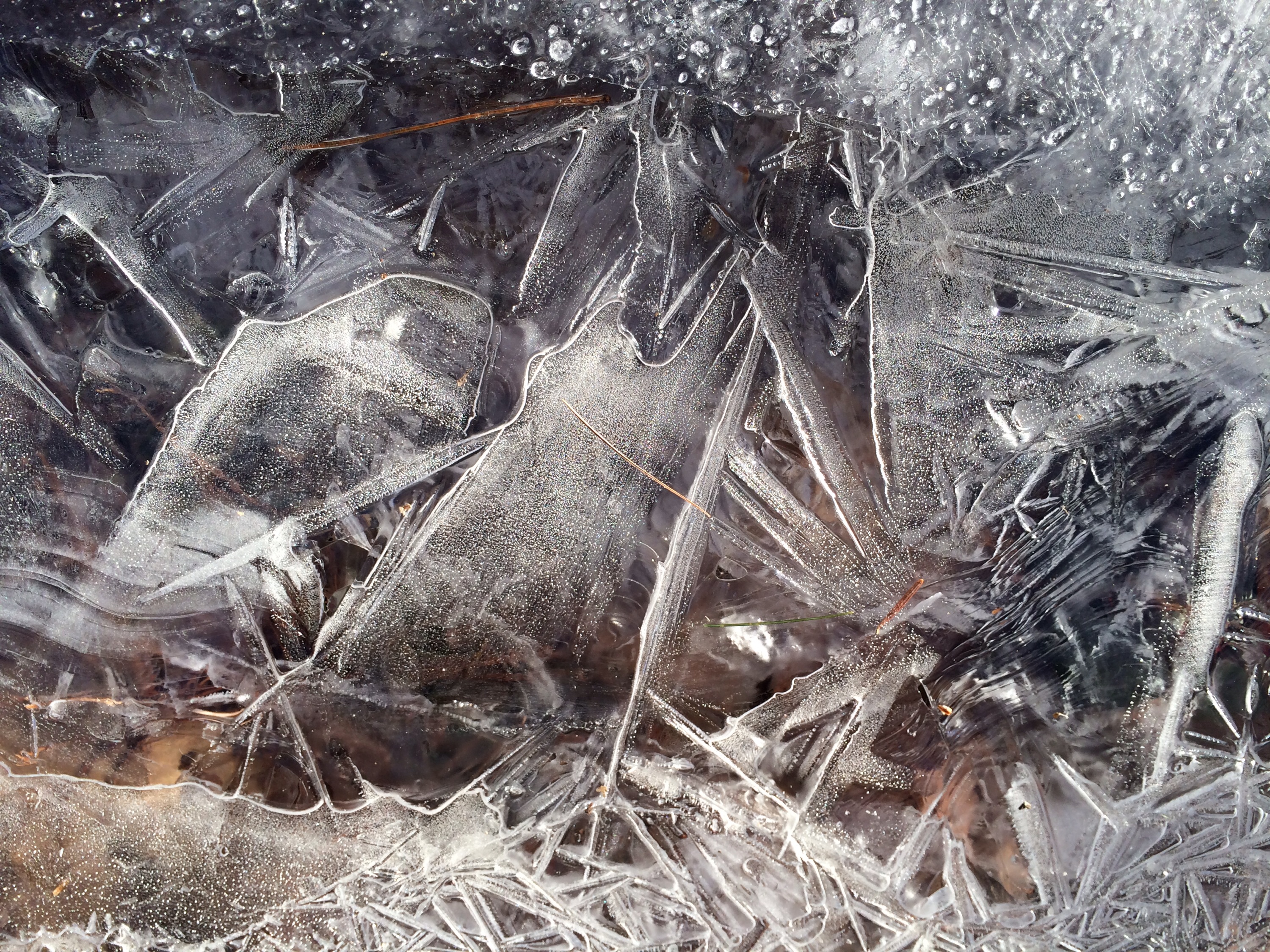
There, nature had sculpted striking designs in the paper-thin sheet of ice that rimmed the pond. I walked a few feet out to sit on a log, trying not to destroy too much of the beauty, finding an inch or two of air between the ice and solid ground below. The sound of my progress was deafening, all wildlife no doubt well warned of my visit.


When I sat, though, to take in the play of the brilliant sunlight across the ice, the ruckus continued. A vigorous wind, rustling the trees in the pond, gave the ice a tortured voice. The grinding, cracking, and squealing never let up, and the cold soon nudged me to head back home to a cup of hot cocoa and my never-ending to-do list.

As my faithful readers know, I am still learning the ins and outs of social media, and recently discovered that my automatic sharing of posts somehow missed the last one. If you’d like to join me on an earlier walk, here is my January 5th post.

 

Bombogenesis…it even sounds scary!

Winter so far has brought enough bitter cold and snow to make us believe that it’s serious this year. The snowshoeing has been great. I’m thinking of it as the start of training for next summer’s north woods adventure (still in the planning stages).

IMG_7115
Berries at the edge of the swamp shone in a coat of ice last week.

The word “bombogenesis” had somehow escaped my notice for some 56 years…until yesterday. According to NOAA, the term describes the rapid intensification of a mid-latitude cyclone, measured by its drop in central atmospheric pressure. A drop of 24 millibars or more in 24 hours creates a bomb cyclone like Winter Storm Grayson, whose pressure dropped an incredible 59 millibars as it approached New England yesterday. Skies are still dark here, but soon I’ll head out to start shoveling my way to the garage and our snow blower. As of now, school is open with a 2-hour delay. 

IMG_7193
Farewell small spots of bare ground, farewell to tracks and signs of life that laced the winter woods, farewell to quick and easy walking…soon all my trails must be won once more.

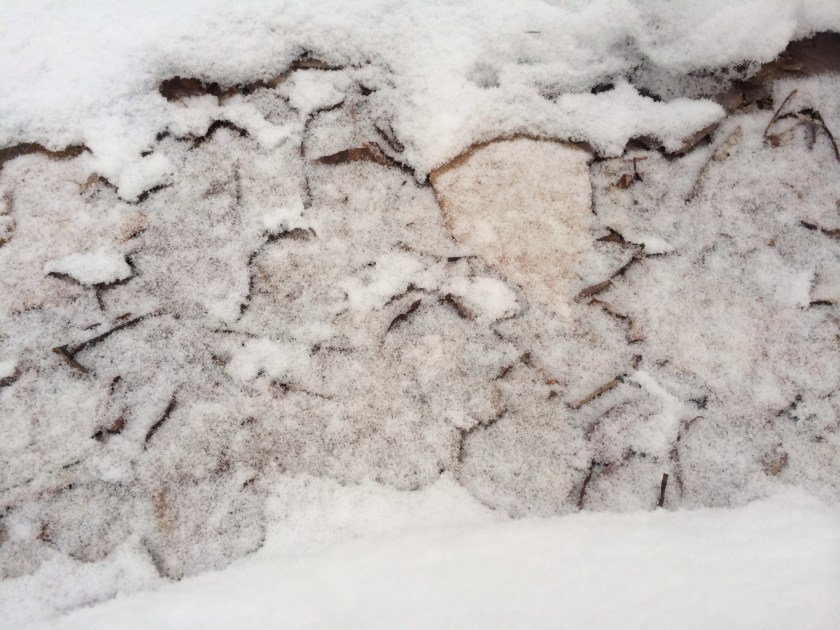
Around nine in the morning, the first powdery sprinkling of snow began dusting the ground. As I followed my favorite trail by the swamp to a far hill, I took a last look at the many animal tracks, almost memorized in my traipsing back and forth day after day. Dad had discovered the scene in the photo below, one sunny day last week. “There’s a story!” he exclaimed. Tiny prints of mouse or vole raced for the cover of a hole, the sweep of owl wings marking either the creature’s demise or narrow escape.

IMG_7181

I ventured out again around one o’clock yesterday. The blizzard conditions were just starting, and snow was quickly reclaiming the forest, even a moving person. The particles bombarded me, an audible pelting against my parka. Once, a gust of wind gave a hint of the fury soon to follow and I thought of turning back, but didn’t. I was warm, the temperature thirty degrees warmer than on some recent days. At the same far hill, I turned around, the tracks I’d made already blurring into fluffy whiteness.


Trudging home, I could still faintly see depressions from the ski poles that my daughter Megan had used on Christmas week. Soon, they, too, would be buried, our ramblings just a pleasant memory of a week of family fun. The woods tomorrow will be all new.

Stretching Upwards (and, believe me, being on the radio is a stretch!)

kiah-2.jpg
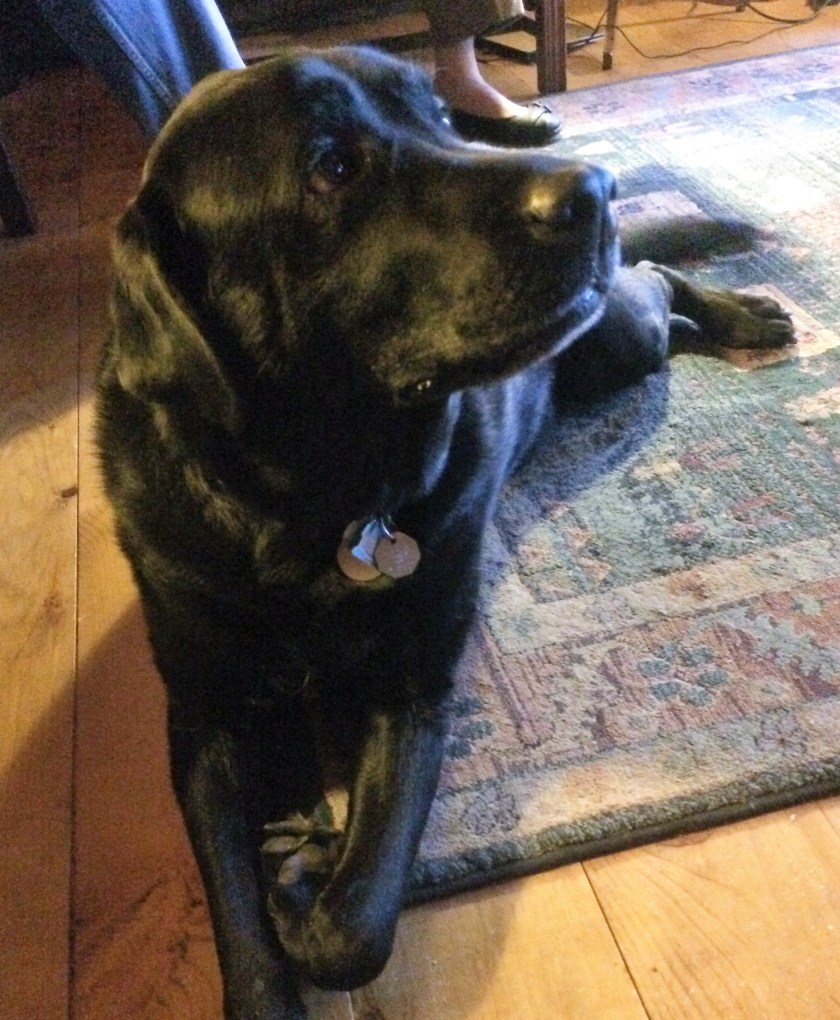
Kiah brought his best manners along on our Thanksgiving visit home yesterday

It’s never hard to feel grateful at Thanksgiving time. Beyond the blessings of family, friends, and the start of the Christmas season, there are five days off from school. This year, added in are a mellow black Lab named Kiah sleeping at my feet while I write and the sun washing the frosty fields of the farm where I’m staying for a few days. Soon I will pull on my boots and saunter out to open the chicken door and count 1, 2, 3…10, as the chickens march out in a parade, of white, russet, and speckled black. And they’re even still laying, so I get to gather eggs!

On the book front, there is also a lot happening. This Sunday, Nov. 26, will be my first radio talk show appearance, on “Maine Outdoors” with V. Paul Reynolds. Tune your dial to WVOM FM 101.3/103.9 or AM 1450 around 7:30 p.m. to listen in. Our first book review posts Nov. 27 on “George’s Outdoor News,” a Bangor Daily News blog by George Smith.

We also continue to have new press coverage, including this article about an upcoming book signing with Thomas Jamrog, a new author friend, who wrote In the Path of Young Bulls about his Continental Divide Trail thru-hike. We’ll be at Maine Sport Outfitters in Rockport (where I purchased my canoe) from 1 to 4 PM on Sat., Dec. 2. Love this photo!

Jamrog FP CG 112317
Tom Jamrog stands atop Colorado’s Mount Elbert, the highest summit in the Rockies

In closing, may your blessings be many and your home be warm and filled with a spirit of true thankfulness, not just on Thanksgiving, but every day!

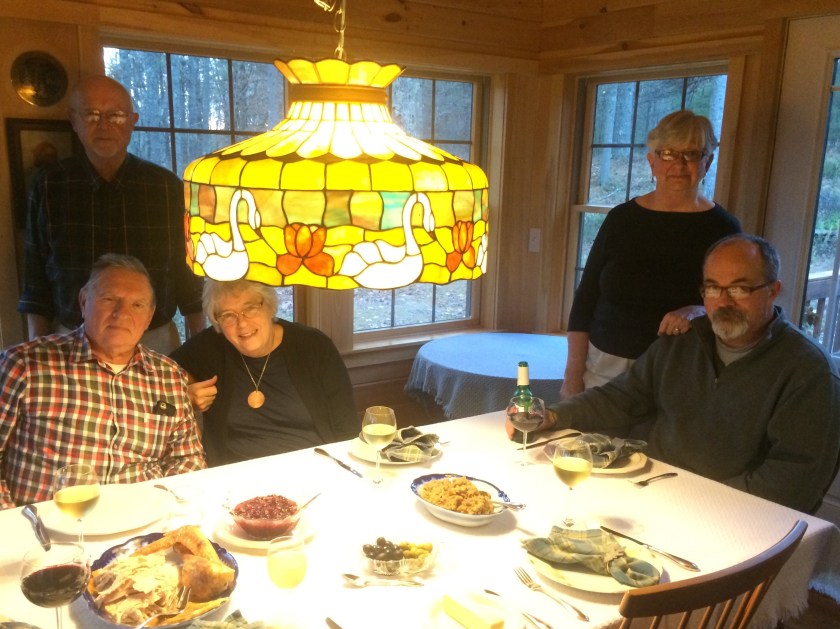
thanksgiving-2017.jpg
Gathered with family for Thanksgiving dinner (Kiah was lying hopefully under the table)


The Old Stone Wall, a poem


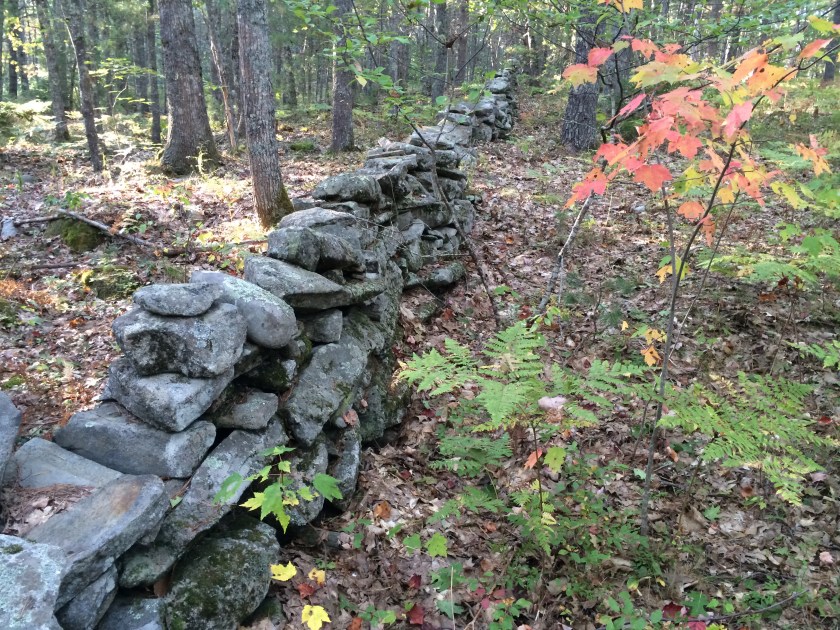
IMG_6672
Stone wall that runs along in the woods behind our house

The Old Stone Wall

We wander, both, the crisp clear slopes of autumn,

Through scattered leaves of faded, fallen color.

For me, a carefree hour, or maybe two.

The stone wall, though, has twice outlived its builder:

He who plucked the granite from heavy, stubborn soil.

Dragging, rolling, hefting the puzzle pieces into place.


That wall and man shared much in common,

in their struggle to tame nature’s endless march.

Rugged, stalwart, they took the character of an unyielding land,

framed fields that winter buried deep in drifted white,

that spring sprinkled with tender newborn calves,

and summer balanced barefoot children on the winding way.


In time, the passing years gathered up the man

and crusted stone with olive moss and lichen gray.

Stumbling with age and witness to a different time,

still, there are stories harbored here,

meaning to be found in the wall’s enduring presence,

if only that, when I am gone, the silent stones will stay.

Up, up and away!


img_6663.jpg

“You must do something to make the world more beautiful.”

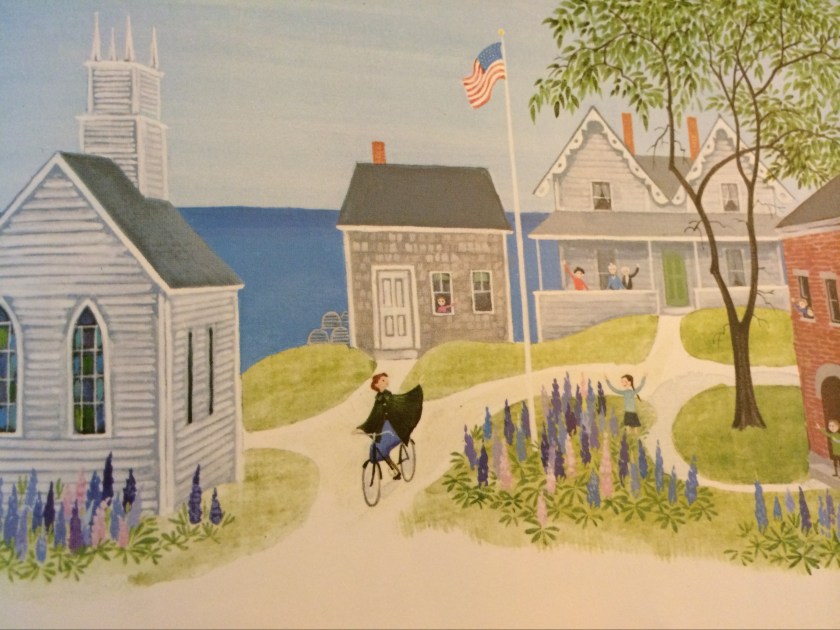
These words of wisdom, from a grandfather to a small girl, are at the heart of the beloved children’s book Miss Rumphius, by Barbara Cooney. A lifetime later, little Alice grows up to become the Lupine Lady, spreading seeds of joy in her town by the sea.

IMG_6667
Miss Rumphius and her lupines from Barbara Cooney’s award-winning book

I hope you know this story and its talented author/illustrator, who lived in Damariscotta, the town where I work. Barbara Cooney Porter was a major benefactor of Skidompha Library, providing the foundation gift for the building that became its new home in 2001. When my children and I moved to Maine in the frigid depths of the winter of 2003, we started volunteering at Skidompha. Every Thursday evening, I would process new books and the children’s librarian would patiently and creatively put the kids to work.

I wish Barbara Cooney were still here, to read and talk about my about-to-be-released adventure memoir, Upwards.

getDesignThumb.php

It is an honor and a delight to announce my Book Launch Party, to be held at Skidompha Library,  184 Main St., Damariscotta, Maine, on Sunday, October 29, from 2 to 4 p.m. Everyone is welcome to this celebration, which will include a short talk with the author, refreshments, and plenty of copies of my long awaited book. Please join us if you can!

Glamping, Northwoods style, on spectacular Fish Pond in Jackman

Pano Fish Pond 5485-5490.JPG

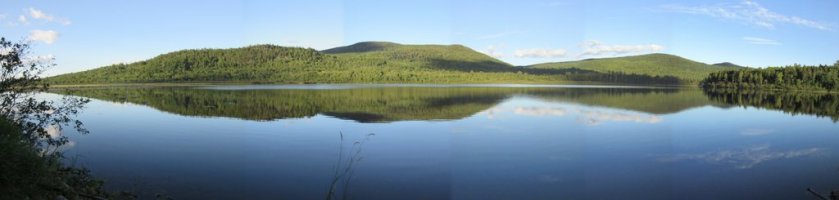
Fellow adventurers Bill and Mary Bausch were among the group who camped together last week up near Jackman, Maine. Bill’s panoramic photo above captures the spirit of aptly-named Fish Pond, where we had a small campground all to ourselves, for five days and nights of campfires, swimming, berry picking, and more.

IMG_6408.JPG
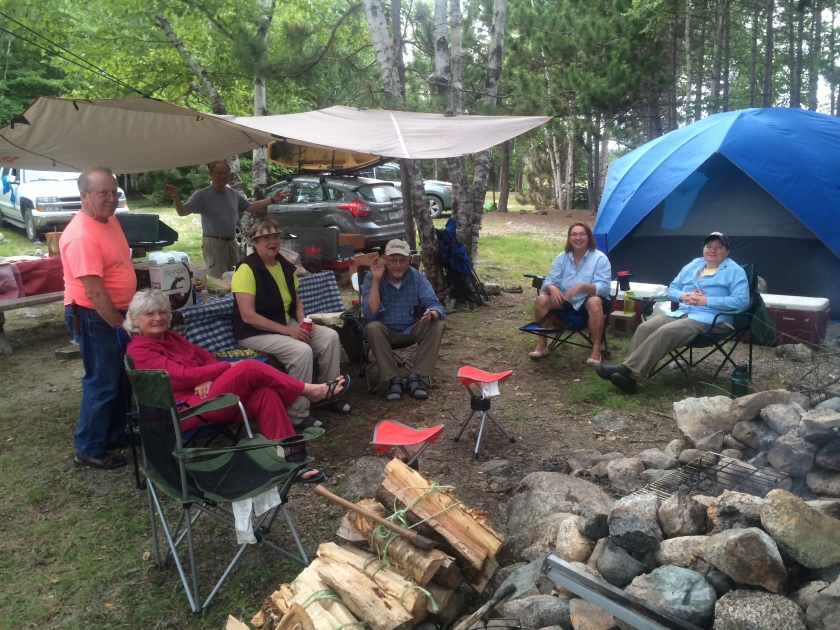
The crew (from left) were Phil Blomquist, Mary Berger, Bill and Mary Bausch, Dad, Linda Blomquist, Kathy Buhl, plus me and Mom, who was staying in a cabin on Big Wood Pond

“40 degrees in the ME woods yesterday as we woke!” Mary Bausch wrote after arriving safely home. “The crackling fire Phil started @5 got us up out of our sleeping bags and into the hot coffee, chocolate and oatmeal (with fixins). Three hours from here to there doesn’t take into account the 30+ minutes it takes to get out from the campsite on 13 miles of a dusty dirt – dodging the huge trucks hauling – logging road! But well worth the hazardous road to get to this lovely campsite on Fish Pond, connected to Spencer Lake. We did two long paddles to fab lunch sites on the local lakes, enjoyed an actual fish fry one evening thanks to the avid fisher people with us! Our fare was clearly gourmet – “glampingly” so, since we had our cars near our tents, plenty of coolers. Finally ran out of ice and paper towels this morning. Not much of a hardship. And we saw TWO whole moose(s) across our Fish Pond. Altogether a successful adventure.”

IMG_6367.JPG
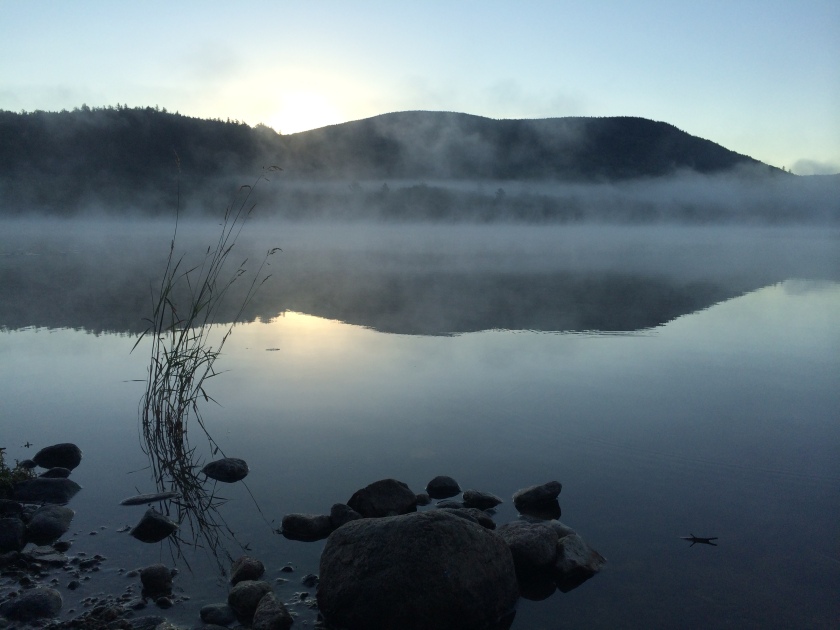
Up early to welcome the sun on our first morning
IMG_6419.JPG
Mary Berger wets a fly in the cove by our campsite
IMG_6363.JPG
This chair was one of many perks that would never come along on a river trip
IMG_6396.JPG
Almost ready to paddle island-studded, mountain-ringed Attean Pond
IMG_6447.JPG
Yoga? – No, Kathy trying to entice a gray jay closer to camp
IMG_6440.JPG
One morning, Phil discovered a stowaway in his kayak, peeking out from behind the foam in the bow. After being evicted, the tiny gray shrew swam valiantly (and safely) to shore.
IMG_6435.JPG
The “before” photo: Dad starting out on a solo adventure, a two-night trip down 14 miles of the NFCT, starting in this tiny inlet to Fish Pond and ending on Spencer Stream near Grand Falls

Continuing his quest to section-paddle the Northern Forest Canoe Trail, Dad brought along portage wheels and a pole and set off to tackle both lakes, plus the rapids and rock gardens of Little Spencer and Spencer Streams. On his first morning, camped below Spencer Lake,  a party of fisherman came by just after dawn and included Dad in their stream-side bacon and egg breakfast. That may have been the high point of what turned out to be a challenging day of climbing endlessly in and out of the boat on slippery rocks. Dad made it, though, and was waiting as planned when I arrived to pick him up.

IMG_6490.JPG
The “after” photo: A broken bone in Dad’s right hand and a new story to tell around the campfire

How quickly life can change! Instead of an August trip down the Allagash Wilderness Waterway, Dad and I will be finding lots to keep us entertained at home. Right now we are in the midst of a grand family reunion, with cousins, aunts and uncle, kids, and dogs. There’s nothing as sweet as gathering with loved ones in the glorious Maine summer!

Going back…to some of the NFCT’s treasured corners of Maine

051315 5 through paddlers
Paul Heintz (third from right) was on the thru-paddlers panel at NFCT’s 2015 Freshet Fest.

Last summer, I kayaked in Honduras, Norway, and the Netherlands, but not anywhere on the Northern Forest Canoe Trail. Surprising indeed, since every other summer since moving to Maine in 2003, I have. I think I first heard about the trail in 2008, at the Lobster Stream boat launch, where Mom, Dad, and I met thru-paddler Paul Heintz. Paul was a cheerful guy, tall and bearded, with a canoe full of an impressive amount of gear.

In those early years, I paddled the NFCT many times, without knowing it. For sure, I was on Mooselookmeguntic, the Richardsons, the Allagash, Flagstaff, the West Branch of the Penobscot, Moosehead, and Chesuncook, all without benefit of NFCT’s great maps. This year, I promise to do better. In fact, I already have one NFCT sojourn in the books.

IMG_6288.JPG
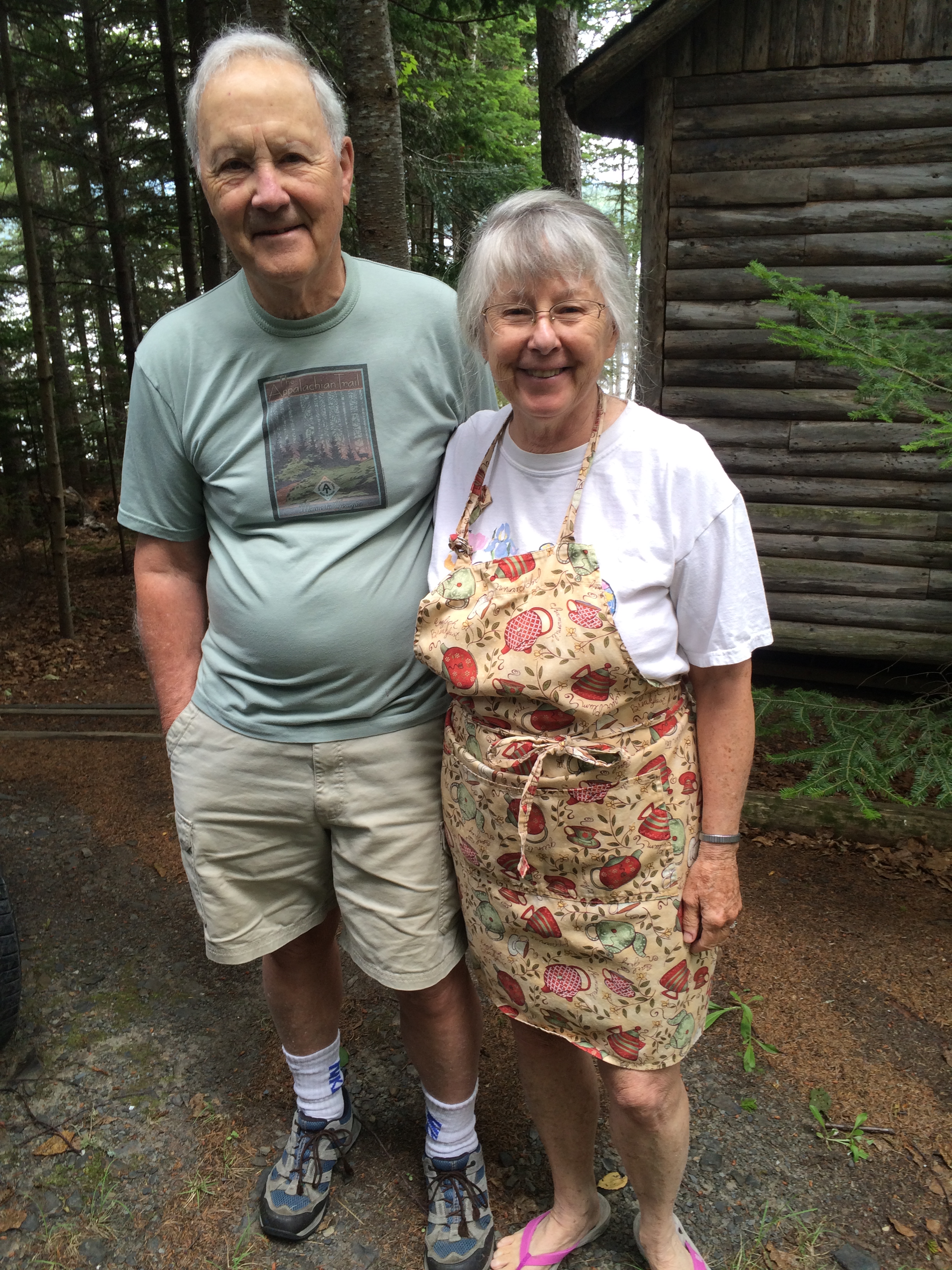
Paul and Janie Hartman welcomed me to their Mooselookmeguntic cabin, Cup o’ Tea, for a couple of days of kayaking, restful reading, chilly swimming, and, of course, their amazing and warm outdoor shower. Janie has the perfect apron for the hostess of Cup o’ Tea.

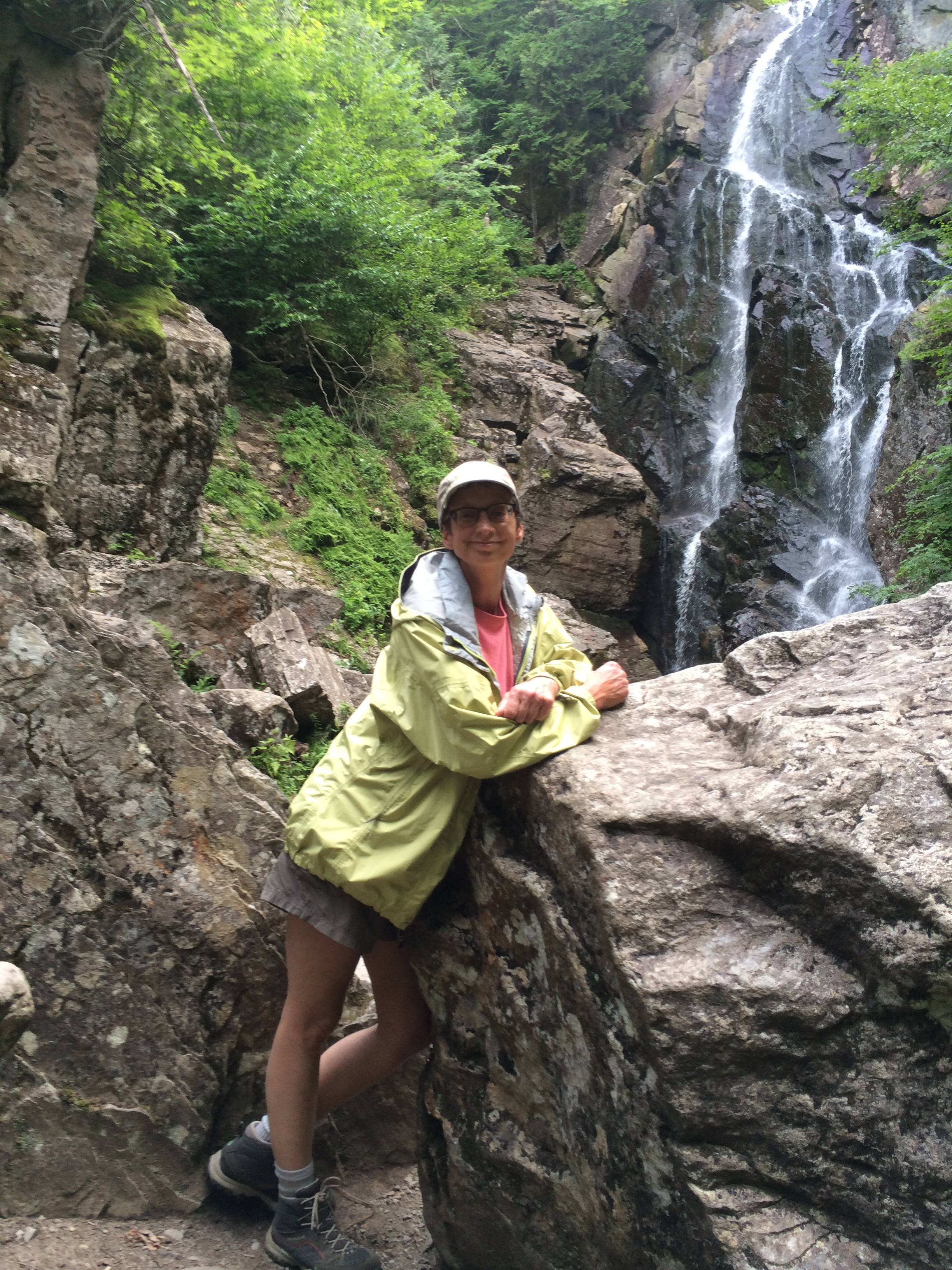
The Hartmans’ cabin was my home for one night during Paddle for Hope in 2011 and two during my 2015 thru-paddle. A week or two ago, I returned for a more relaxing visit. Paul and Janie have owned their place for almost fifty years and have a lifetime of natural discoveries to share with visitors. This year we hiked to Angel Falls, off nearby Bemis Road, not far from where the AT crosses the road.

IMG_6292.JPG
Paul and Janie rock hopping at one of several stream crossings on the way to Angel Falls
IMG_6298.JPG
Angel Falls, with a 90-foot drop, is among the top three highest waterfalls in Maine. Janie says that it used to be called Angel Wing Falls, until a stone “wing” cracked off decades ago. Some online sources say that the shape of an angel’s wing can still be seen in the moving cascade.
IMG_6344 (2)
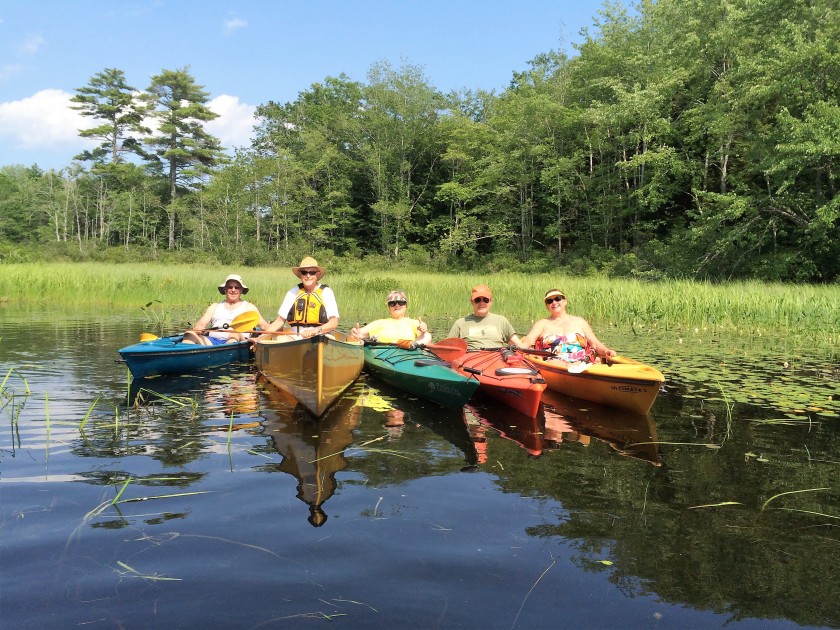
Most of the crew for the next planned NFCT adventure, up in the Jackman area. Phil, Dad, Mary, Bill, Linda, and I (taking the photo) warmed up with a paddle on the Pemaquid River last week. Don’t you love the color palette?


No need to be perfect…a lesson from blueberry pie


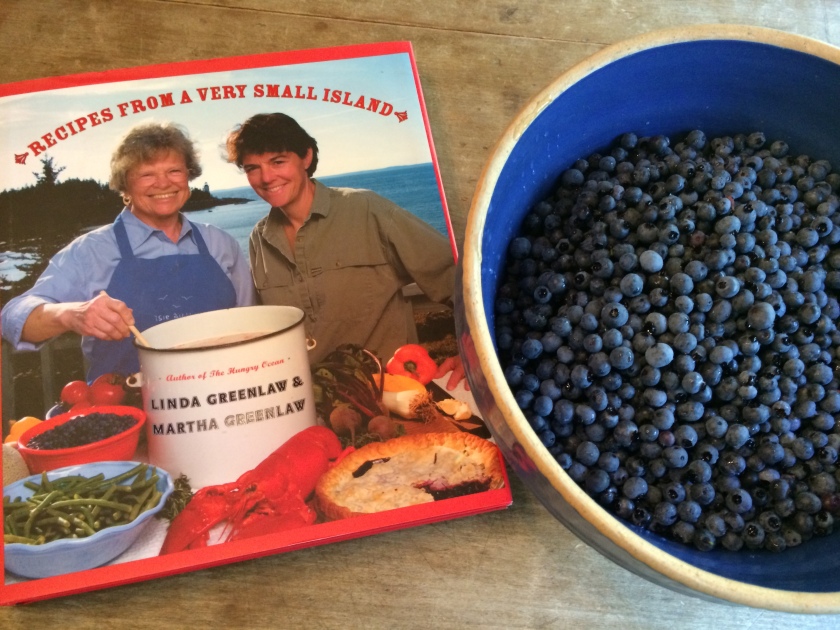
There’s plenty of time for reflection when you’re making a wild Maine blueberry pie from scratch. Up on the hill behind our house, at least this summer, there’s a good patch of berries, at the peak of ripeness. Dad’s been wishing for a pie, so I pulled out the cookbook to see how many berries it would take – five cups – then started picking.

Big berries, tiny berries, blue ones and black, they slowly began to fill my bucket. My hands fell into a rhythm, getting less fussy about stripping off a cluster at a time, including a few that were less than perfect. After all, they were soon going to be bubbling in a piecrust. My mind drifted. Long ago, people had harvested the summer’s bounty just as I was. Not concerned about perfection, but about feeding their families.

IMG_6347.JPG

Later, I washed the berries, then picked them over, a handful at a time, pulling out the leaves, finding stubborn stems still clinging here and there. I felt proud to be baking my first blueberry pie from my own berries. The sun and heat had gotten me tired, so I sat for a few minutes rereading the recipe. Sugar, flour, lemon juice, and cinnamon would all go in with the berries, then I’d make the same homemade crust as for my apple pie.

As I measured out the sugar, I happened to glance into the bowl.

“Oh, I missed a couple of stems!’ was my first thought. Then those stems, thin and reddish-green, began to wiggle and crawl across the glistening blue berries. Two tiny worms, hunching their way across my pretty bowl of blueberries! After close examination, I think I found seven, enough to make me hesitate before blithely dumping in the sugar. Mom and Dad didn’t seem concerned, though, so I plunged ahead.

I cut the shortening into the flour, still thinking about long-ago pies. My great-grandmother, Grandma Searls, had lived in the Jersey Pine Barrens, with blueberries in her yard. I remember picking them there. For her pie crusts, way back when, she’d collected fat from cooking, her favorite being chicken fat. It wouldn’t have looked anything like the pure white uniformity of my can of Crisco, but her pies were delicious.

Then it was time to roll out the piecrust, and I knew from experience not to even hope for perfection there. The bottom crust cooperated and was soon filled with berries dotted with pats of butter. The top crust bore a much closer resemblance to a patchwork quilt. Tomorrow, though, when we have it for breakfast, that pie will be perfect!

Sleuthing in the littoral zone, the fight against invasive aquatic plants

image
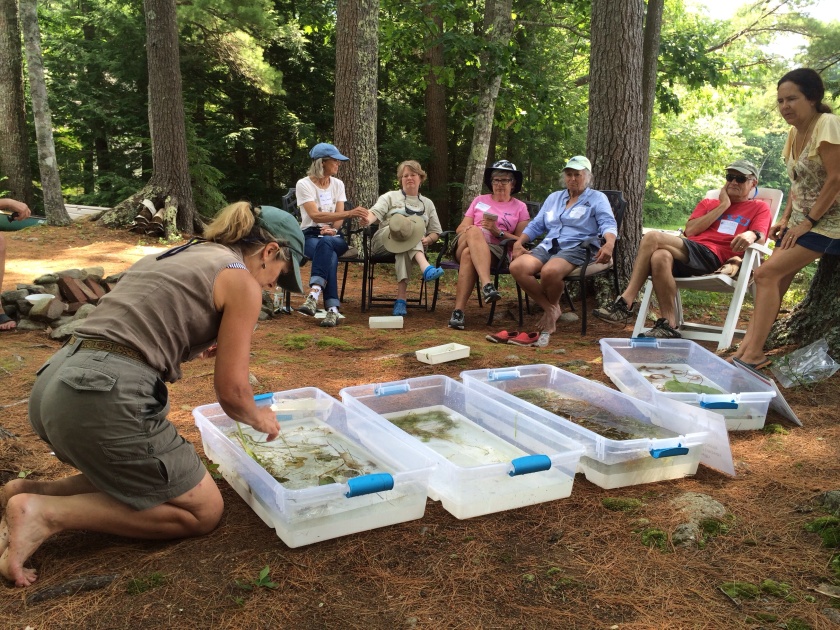
Roberta Hill, from the Maine Volunteer Lake Monitoring Program, helped us sort and identify the aquatic plants we collected from Pemaquid Pond during our Invasive Plant Patrol workshop.

Back in 2009, a man named Dick Butterfield did what I did yesterday. He attended his first workshop with the Maine Volunteer Lake Monitoring Program (VLMP), to start learning to identify dangerous invasive aquatic plants. His thirst for knowledge, combined with concise, effective training, soon saved one of our local lakes.

No doubt armed with his mini waterproof identification key to the 11 most-unwanted suspects, he ventured out on his very first patrol, on nearby Damariscotta Lake. And found hydrilla, which the Maine DEP calls “the most problematic invasive plant in North America.” The lake is huge, with 45 miles of shoreline, but volunteers and experts sprang into action to contain the hydrilla in the tiny cove where Dick had found it. Dick caught it early, which is critically important in the fight against invasives.

image.jpg
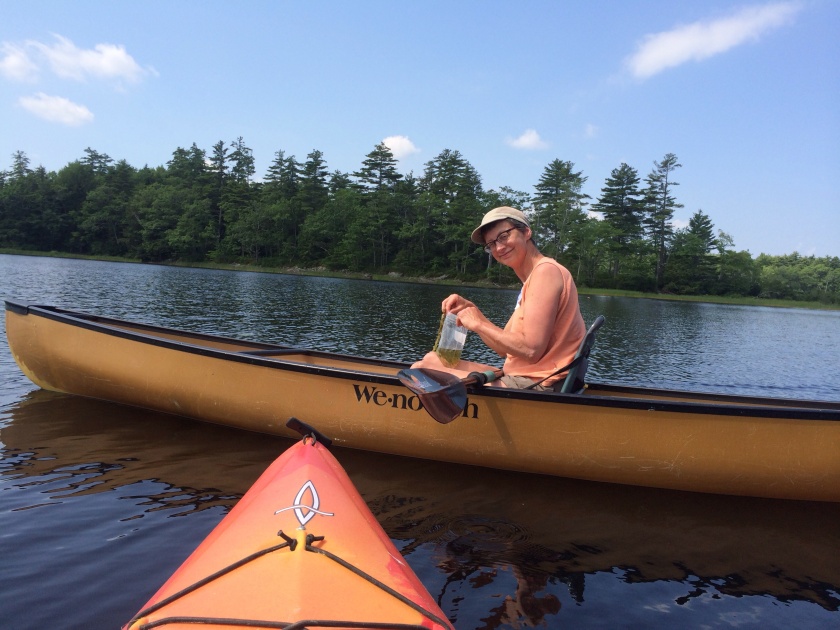
Paired up with buddies, we went out into our assigned sectors to collect plant specimens in the littoral zone, the zone of richest diversity along the lake’s shoreline.

Our workshop was information-packed, but my message for you is simple. In Roberta’s words, “The work of citizen scientists [volunteers] on the the front line is the most important piece in this fight.” Training focuses on just those 11 likely culprits, which fall into three main structural categories. That means that some types of plants (like hairy, grass-like stuff) you see can just be ignored. To demonstrate how easy screening samples can be, VLMP recently set up a table at L.L. Bean and taught willing shoppers how to use the key. Their average time to key out a sample was just two minutes.

image
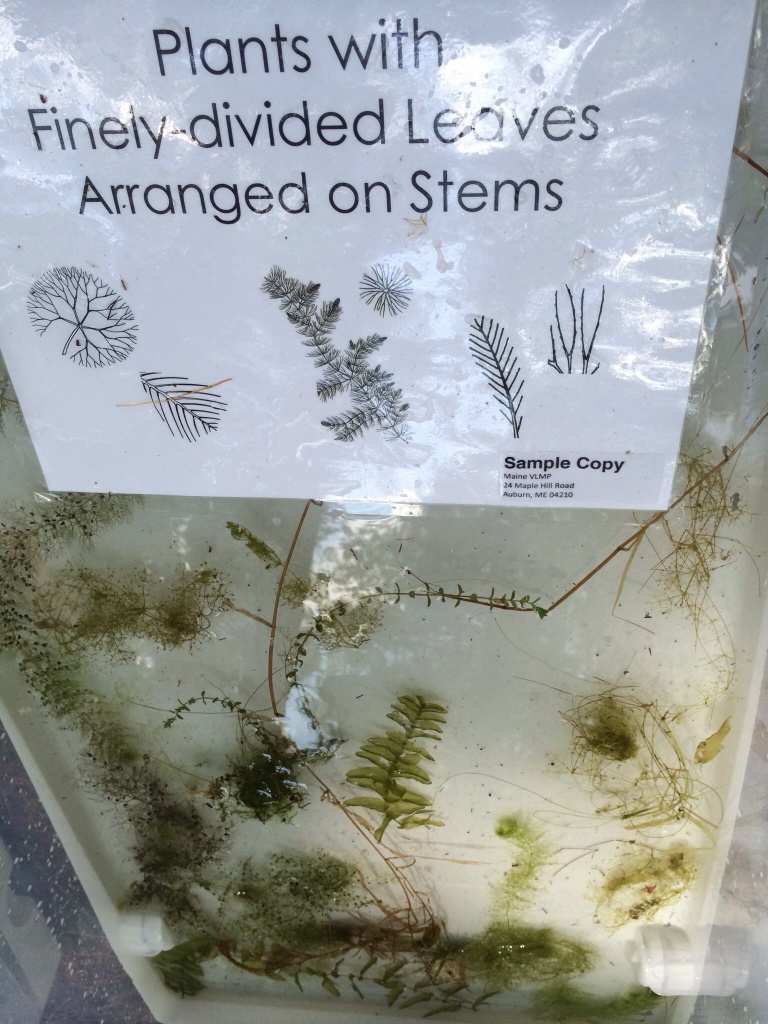
The sorting pan for one of the three broad categories that the eleven-most-unwanted invasive plants fall into. Although we were just learning, and made some mistakes, visible in the photo are some innocuous native milfoils and bladderworts that we collected on our plant patrol.

I was invited to yesterday’s workshop by the Pemaquid Watershed Association, which I’ve belonged to for many years. One of my resolutions for 2017 was to become a more active PWA volunteer. I’ve been writing some press releases and plan to volunteer for plant patrols on McCurdy Pond, where I often keep my canoe. If you’re interested in learning more, visit the Maine Volunteer Lake Monitoring Program or take a peek at the Key to the Eleven Most Unwanted Invasive Aquatic Plants.

A letter from camp: The 2017 Maine Canoe Symposium

Mom and Dad’s home was four tents down, where we sat one evening sharing smoked salmon that Dad had brought back from his workshop on smoking fish with Shawn Burke.

Wouldn’t you like to be a boy, away at summer camp in Maine?

Enjoying late-night loon calls, ice cream heaped with strawberries, summer breezes, and the pull of the paddle?

IMG_5948
Gathering for the morning Parade of Canoes

This letter from camp has taken a few days to arrive, but this past weekend, I christened another summer of possibility in the company of friends, old and new, famous or not-so-much, at the annual Maine Canoe Symposium. Somehow this event manages to be old-fashioned and far-reaching, restful and yet challenging everyone to try new skills.

“Dear friends,” I might have written from Camp Winona, on the shores of Moose Pond in Bridgton, Maine…

P1010213.JPG

Today I tried poling under the tutelage of Harry Rock, well-known at MCS for leading us all in a chorus of huzzahs from time to time. “Your boat might be a little tender,” he told me, by which he meant I might end up tipping into the chilly water. It felt very strange leaving shore without a paddle! “Huzzah!” I stayed upright. It was all about leverage and angle, as we stood up and propelled ourselves around with just a 12-foot aluminum pole.

IMG_6103.JPG
Learning to identify edible woodland plants with Ray Reitze, who also shared the effectiveness of Japanese knotweed in fighting Lyme disease, a surprise to me!

The two evening speakers lived up to MCS tradition. This year, we heard from Winchell Delano about the Rediscovering North America expedition, 5,200 miles by canoe with five friends, from the Gulf of Mexico to the Arctic Ocean. They redefined perseverance and conquered unforeseen challenges like raging forest fires in their 8-month odyssey.

Did you know that the 2020 Toyko Olympics will be the first to include women’s canoe sprint, as well as kayak events? This victory owes much to the fight of our other evening speaker, Pam Boteler, the first woman to participate in canoe sprint (against men) in the 2000 U.S. National Championships. She brought home two medals, a gold and a bronze, and the dream of breaking down the barriers at the Olympic level.

Sunday morning, I had a chance to try the high-kneel stroke, first on the dock and then on a paddle board. With Pam teaching me! I can testify to the power and physical demands of this racing stroke, which I experienced once or twice, before taking a swim.

So, it’s never too early to put dates on the calendar. Next year’s MCS will be June 8-10, 2018, and I’d love to have you join me. This year, I tent camped with friends, ate all six meals in the dining hall, and experienced all the above and more for just $153. Hope to see you at Camp Winona on the shores of Moose Pond under the towering pines.