We’re on our way: Traveling to Normandy for the 80th anniversary of the D-Day invasion

We’ll be grateful to reach today’s destination, an apartment in Bayeux near Omaha Beach.

View leaving the Boston area on Aer Lingus enroute to Paris and Normandy, France

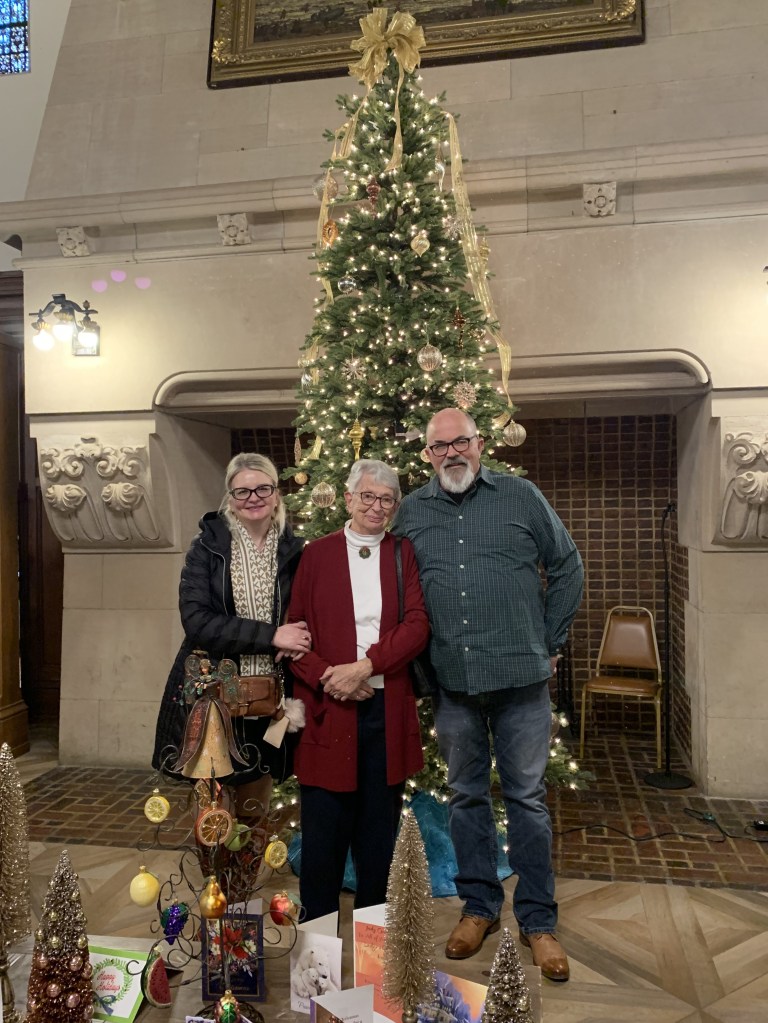
It feels momentous, unbelievable, delightful, and sacred. Twelve days in France leading up to the 80th anniversary of the Normandy invasion on June 6, 1944. Our friends Kathy and Steve wished us bon voyage, with the hope we would “enjoy every moment – the profound and the light-hearted.” There are certain to be plenty of both emotions. Lance served in the Army as a paratrooper in the 82nd Airborne. For him there could be no more profound pilgrimage.

Cheers to a new beer on the plane

We counted up. Traveling to Bayeux would happen in seven stages: car, bus, plane, plane, cab, train, and rental car. We’ve checked each one off so far without too many surprises. Aer Lingus fed us a delicious Irish beef stew and chocolate mousse for dinner, and we watched Napoleon before managing to get a little sleep. Approaching Dublin early this morning, the moon shone through veils of cloud and the lights of the city twinkled below. We were glad to be across the Atlantic and well on our way.

The inflight map provided all kinds of data
The cab ride from Charles de Gaulle airport to the train station gave us a taste of Paris
This post comes from the train on stage six of our journey

I am much anticipating staying for an entire week at a Bayeux hotel apartment where we will have a kitchenette and outdoor patio. Having a home base and rental car will allow us flexibility in exploring all the historic sites and enjoying local foods from the markets and shops. Two nights each in Rouen and Paris round out our French adventure. For now, I’m going to enjoy the sunny French countryside from the train window.

New Orleans tickles all the senses

Experiencing the French Quarter and Garden District through sight, sound, smell, taste and feel.

My kayak and I have early morning plans, so I thought…why not give you the sights, sounds, smells, tastes and feel of the Big Easy through some of my favorite photos. It won’t be difficult to accomplish. This city puts herself out there; she’s gregarious and flamboyant, yet with deep and meaningful roots.

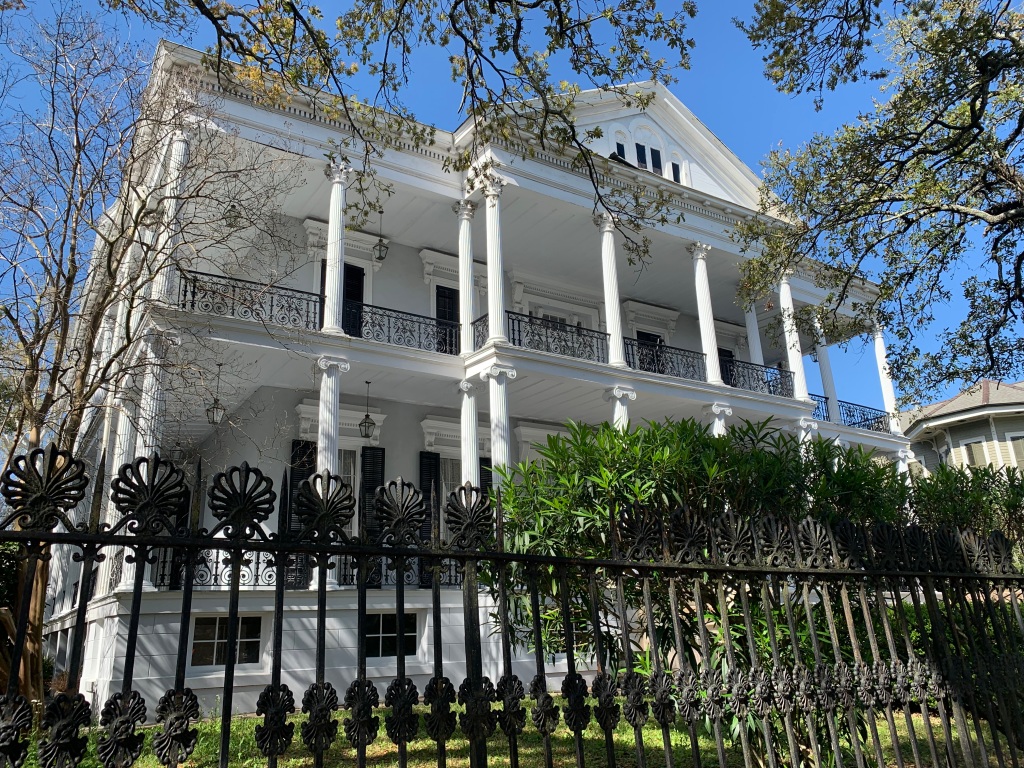
The grand houses of the Garden District, like the Buckner Mansion on Jackson Street, feature ornate wrought iron fences and railings, as well as exquisite landscaping.
Derby Pottery makes the official letter tiles that spell out street names on NOLA sidewalks.
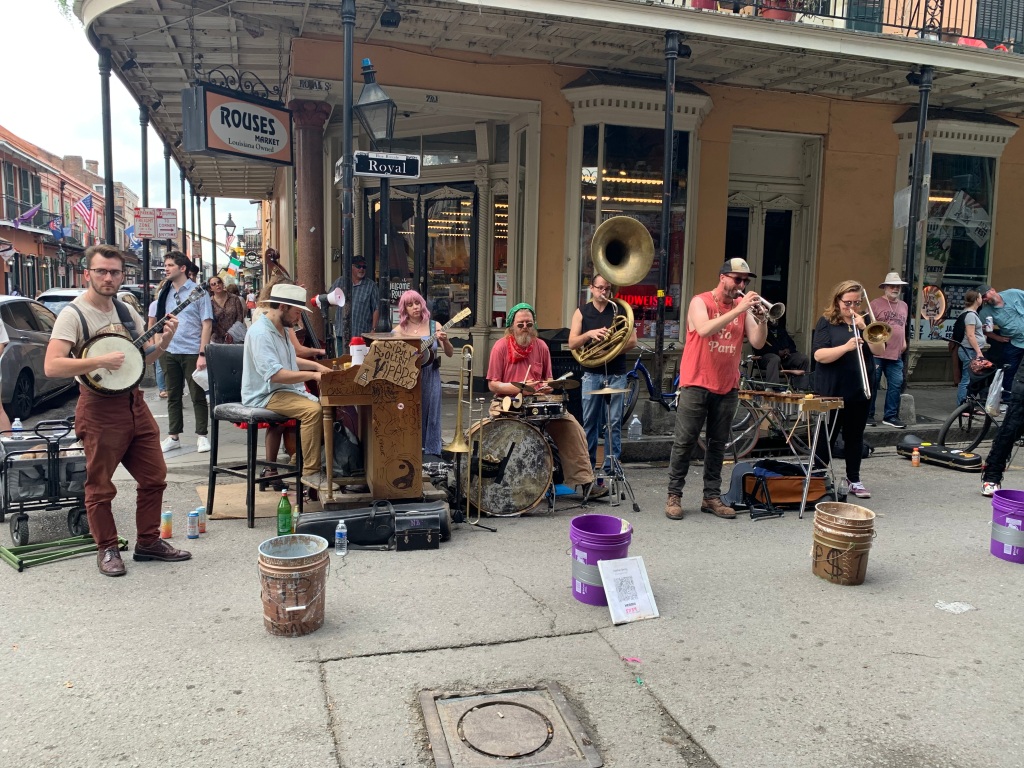
Street bands abound. The Dirty Rotten Vipers drew quite a crowd after a tune or two.
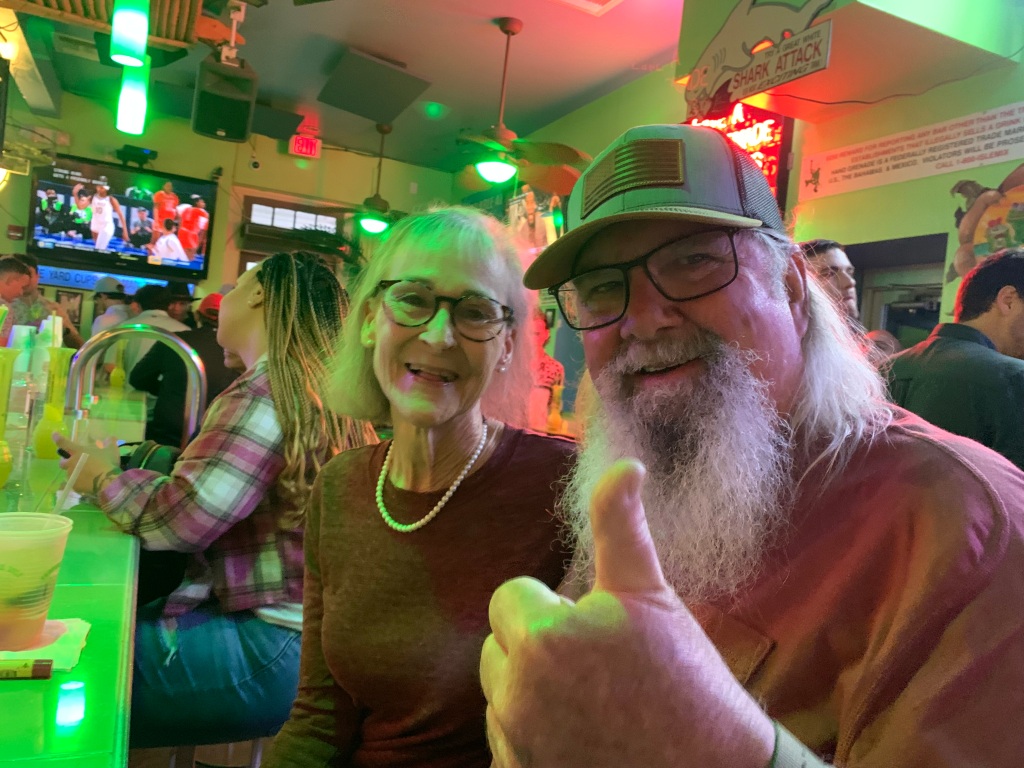
Ingrid and Al were camped next to me and kindly invited me for an evening at the Tropical Isle on Bourbon Street, where their son Jack was the drummer in the band. What fun to request Ingrid’s favorite song (Brown-eyed Girl) for her birthday and even try a signature Hand Grenade!
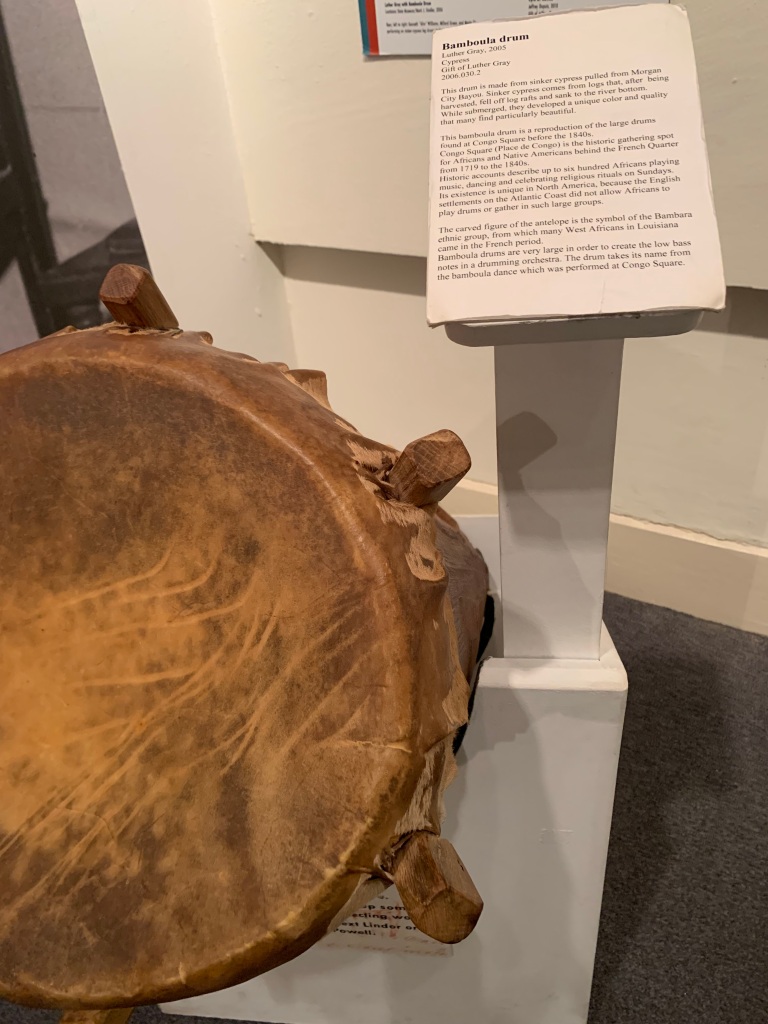
Why did I take only one photo of this special moment, and a blurry one at that? This bamboula drum, of the type played in Congo Square in the early 1800s, was made to be played by visitors to the New Orleans Jazz Museum. The rich and varied tones of my novice drumming gave me a small sense of how it must have been to drum there, where New Orleans music all began.
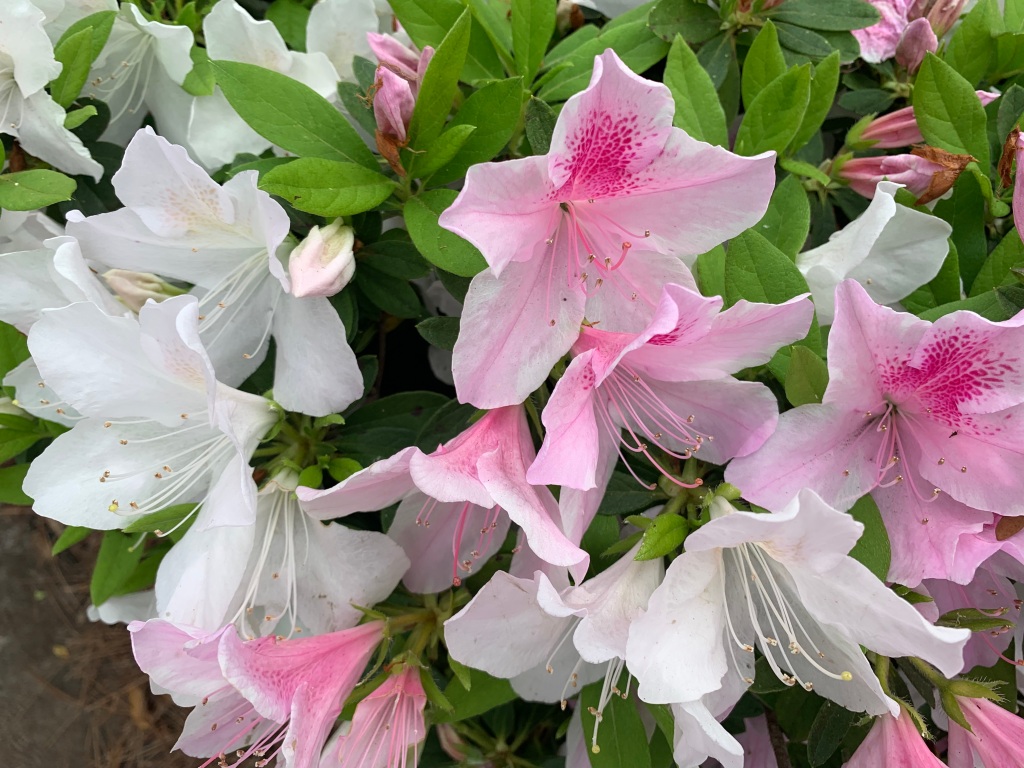
You’ve got to stop to smell the flowers when you’re fortunate enough to be in the South in March!
Beignets and cafe americano in an early morning courtyard with all the day before me. Light, airy, still warm, and covered in powdered sugar, they became an instant favorite.
This Stein’s Deli “muphaletta,” on fresh ciabatta bread, features mortadella, soppressata, Tuscan ham, aged provolone, olive salad (key to a muffaletta), and garlic vinaigrette. Definitely try one the next time you are in New Orleans. Stein’s is on Magazine St. in the Garden District.
Rocking along to the Garden District on a Green Line historic streetcar. An all-day pass for unlimited rides, including buses and ferries, is only three dollars!
Oh, my weary feet, but it was worth every hour of walking!
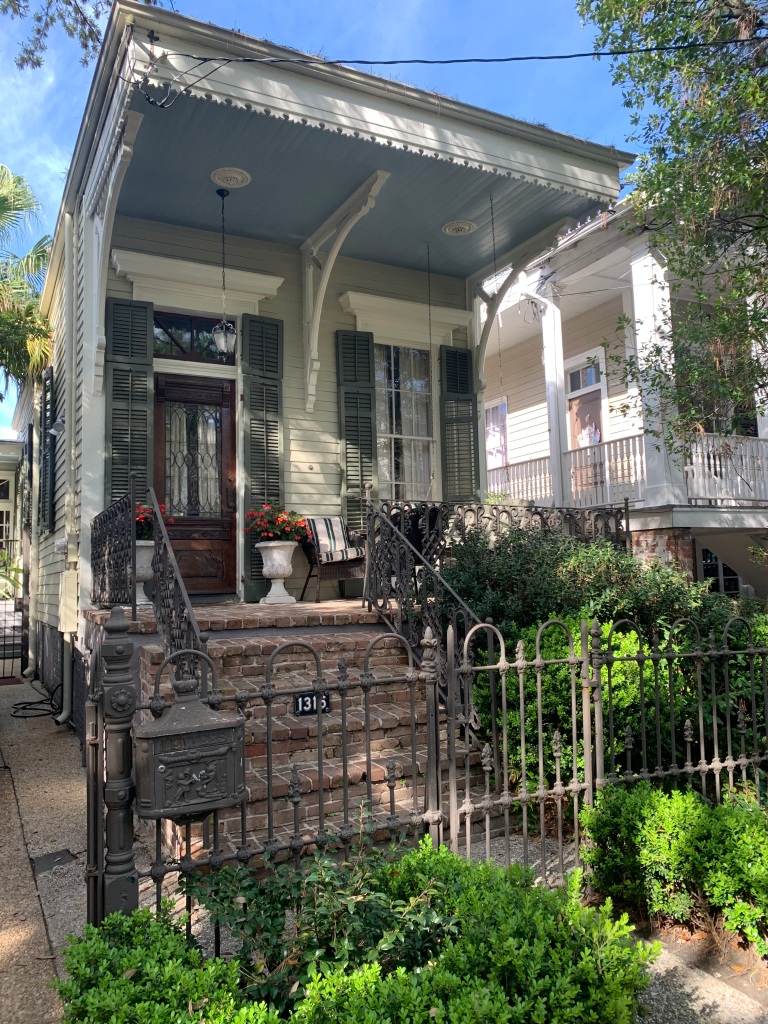
My dream house, if ever I move to the charming Garden District!

Uwharrie National Recreational Trail: Dark Mt. and Little Long Mt.

Winter views and discoveries on two mountains along North Carolina’s Uwharrie National Recreational Trail

I want to begin with a note that my posts will not always appear in exact chronological order. In order to be a little more secure, I will be posting some details about my solo RV journey (like exact camping locations) after the fact. In the meantime, here’s a peek at yesterday’s adventure.

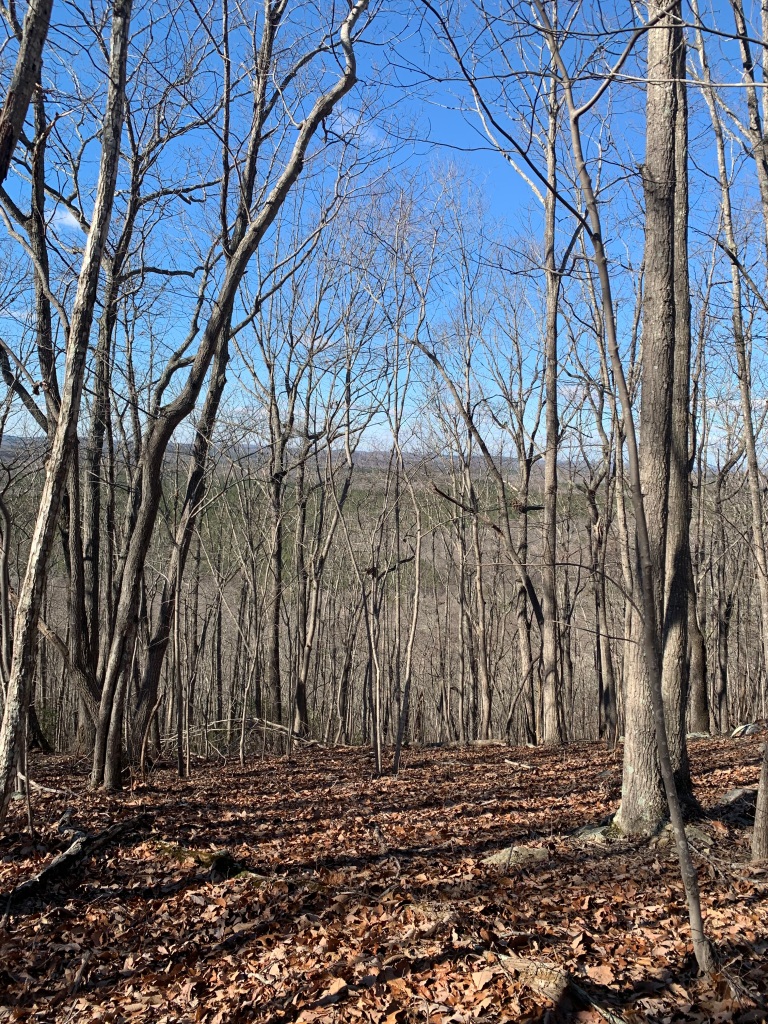
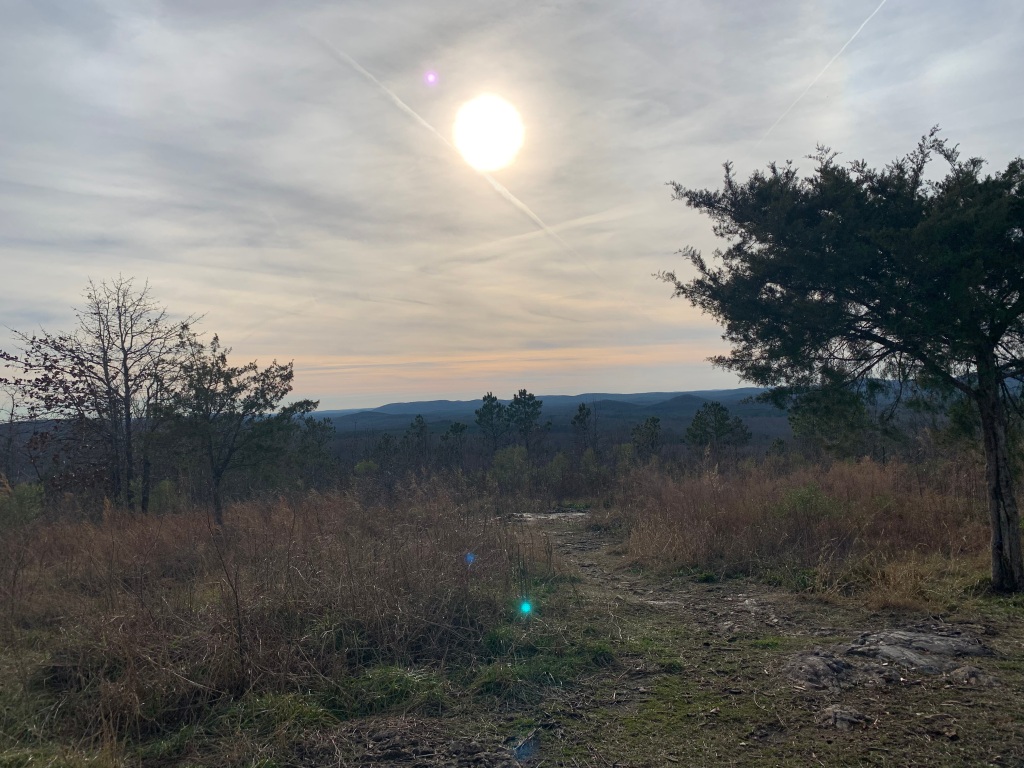
View from the shoulder of Dark Mountain near Mile 20

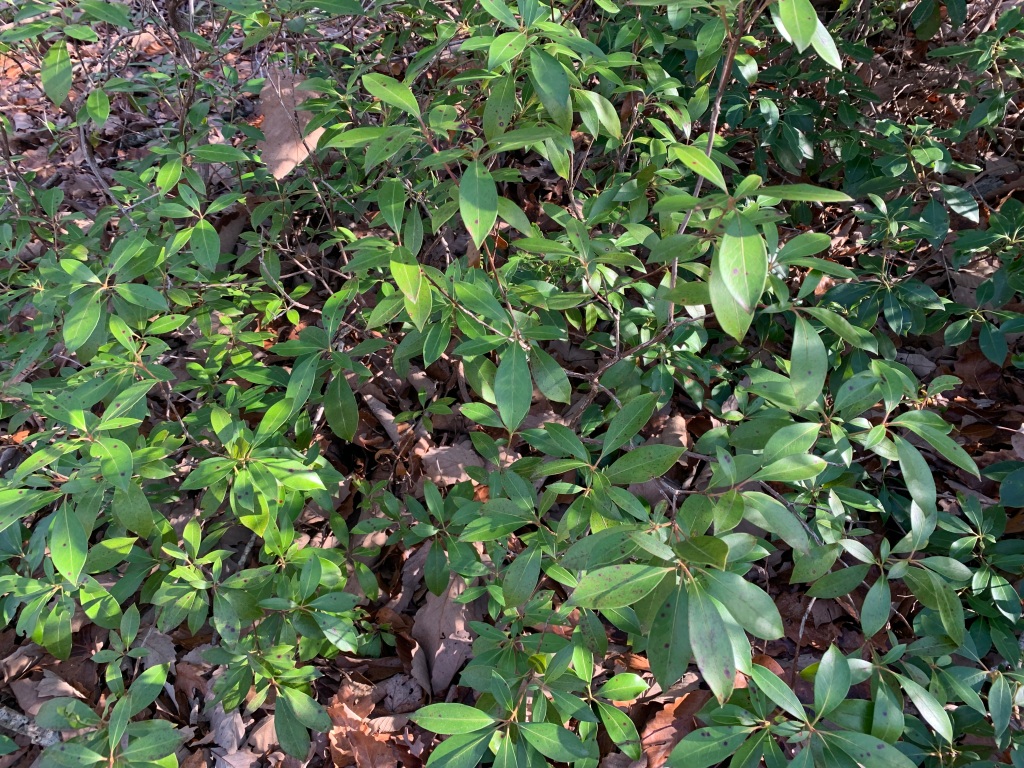
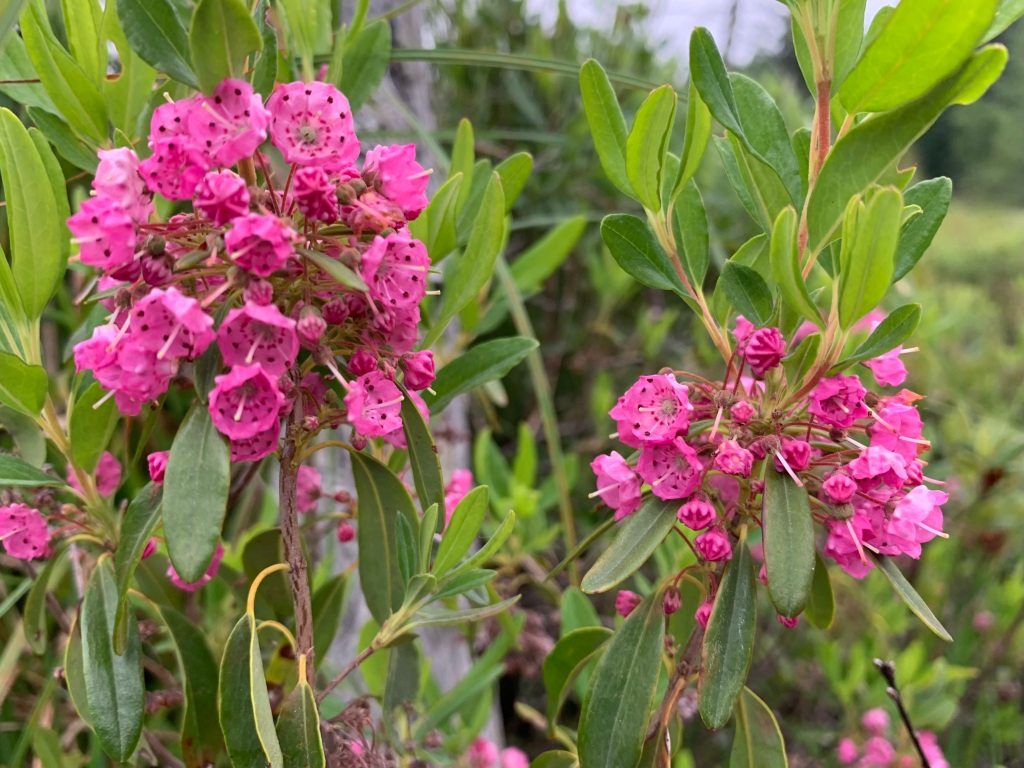
The 40-mile Uwharrie National Recreational Trail can be completed as a thru-hike or enjoyed in short sections. I began at the Jumping Off Rock trailhead, hiking south for the short, but rather steep, 500-foot ascent to the shoulder of Dark Mountain. Highlights were the beautiful open hardwood forest and patches of mountain laurel, which I could picture in its spring delicate, pink-flowered glory. Even in January, it was enlivening to see the shiny green.

Can you imagine the beauty of this mountainside in spring?

After the initial climb, the rest of the trail (4 miles roundtrip) was less rocky and smooth, with only gentle ups and downs. Wooden signs marked each mile, and surprisingly, there were audio stops where you could scan a QR code to listen to snippets of area history and ecology. The name Dark Mountain derives from tales of the killing of Army deserters here and an outlaw cave that was the hiding place for a murderer of one of those pesky revenuers.

The summit of Little Long Mountain (922 ft) opens up to the best views of the day

Moving on to the nearby Joe Moffitt Trailhead, named for the Boy Scout leader who created the trail, I could choose between two hikes. To the north, King Mountain, the highest peak on the trail at 1,020 feet, was a 1.1-mile climb. To the south, Little Long Mountain was 0.8 miles away and provided the most open mountaintop vistas. I went south, hiking back toward Dark Mountain.

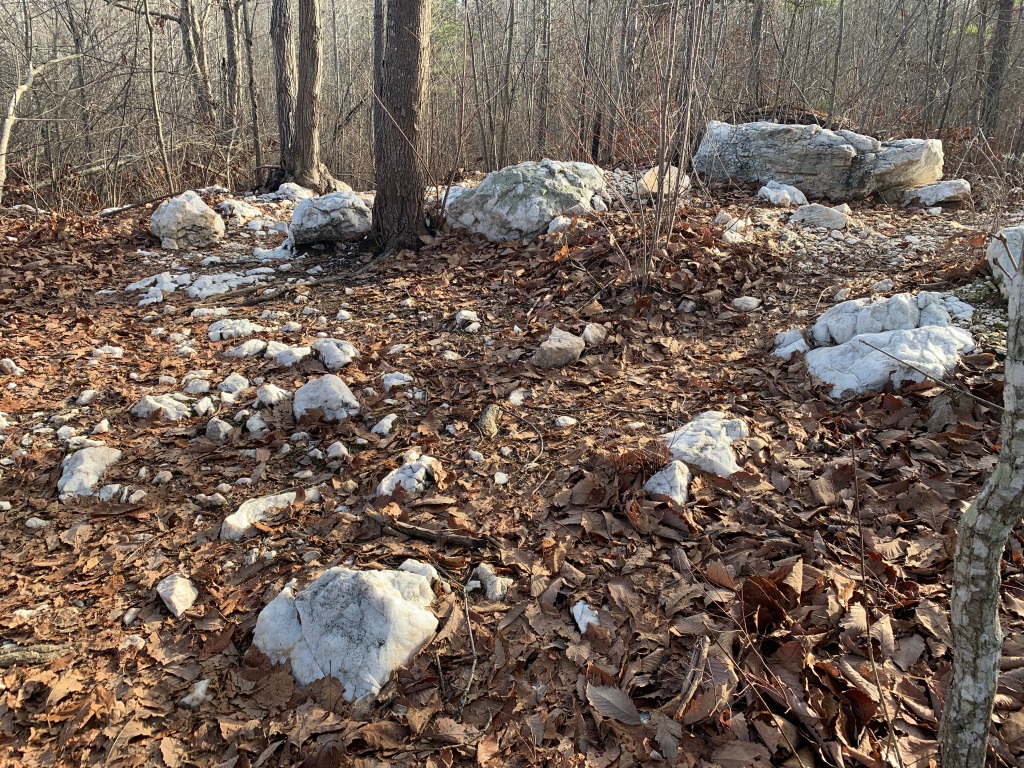
Passing through a short section of copious exposed white granite

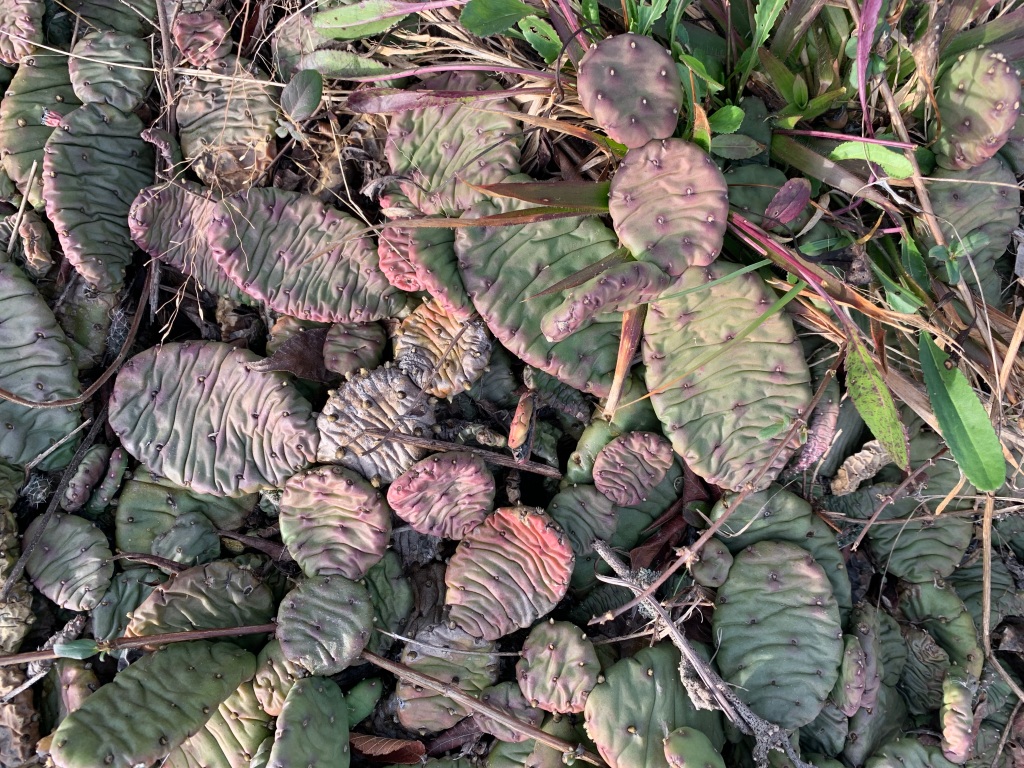
At the Little Long Mountain summit, another audio tour stop explained that I was standing in a Piedmont glade. Characterized by thin layers of soil over rock, this ecological community features unique plant species like native prickly pear cactus (Opuntia humifusa), which I found in abundance. There is a lean-to here, as well as a spring providing a water source on the way up. Descending, my first white-tailed deer of the Uwharrie bounded away down the hillside.

Ringing in a new journey

Ringing in 2024 with the news that a new adventure is beginning, a winter of RV life in the South!

First night on the road at the Danbury, CT welcome center

New Year’s Day 2024 is an excellent time to let you all know about my brand-new, months-long winter adventure. I left Maine on December 20 pulling my 2020 Grand Design Imagine XLS 17MKE camping trailer with my 2017 Ford F150, which still has not turned 50,000 miles on the odometer.

Mila, Mom, and Greg after Christmas dinner in the Masonic Village Grand Lodge

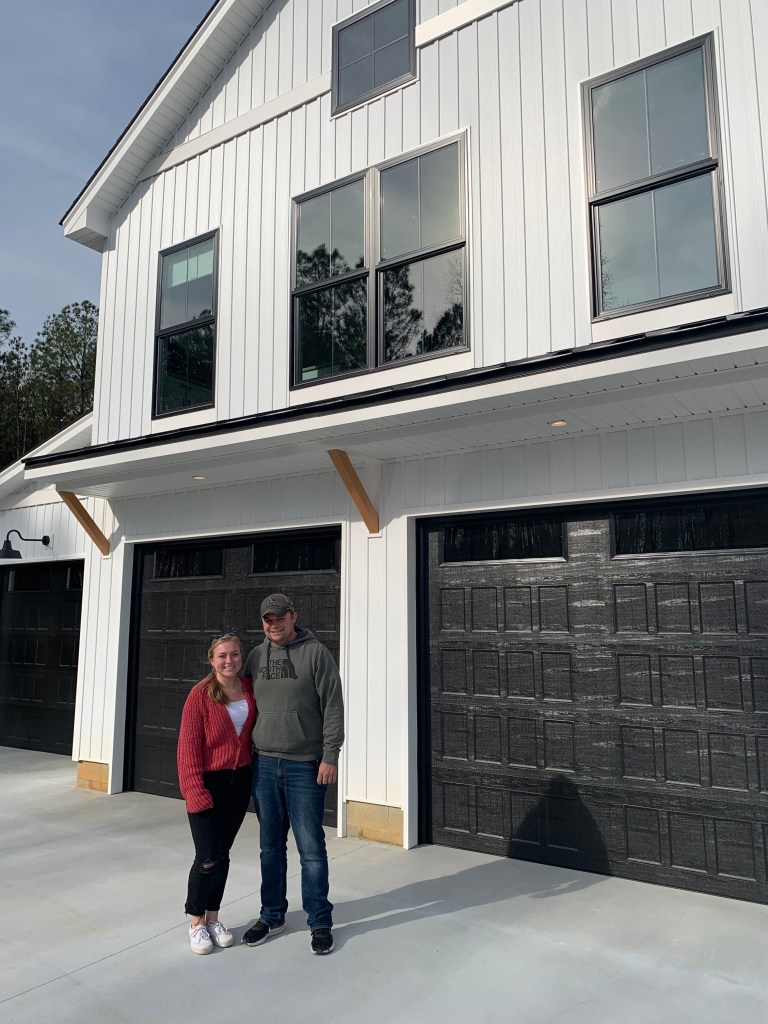
Two days and 630 miles later, I arrived at the Masonic Village in Elizabethtown, PA. I had reserved a spot in the RV parking lot here, where residents store their RVs and family members can temporarily park while visiting. My parents’ cozy apartment would be home base for almost two weeks in between family trips to VA for my son’s 30th birthday and later to celebrate Christmas. Taylor hosted us for brunch and a tour of the home he recently built on the family farm where he is the fourth generation working the land.

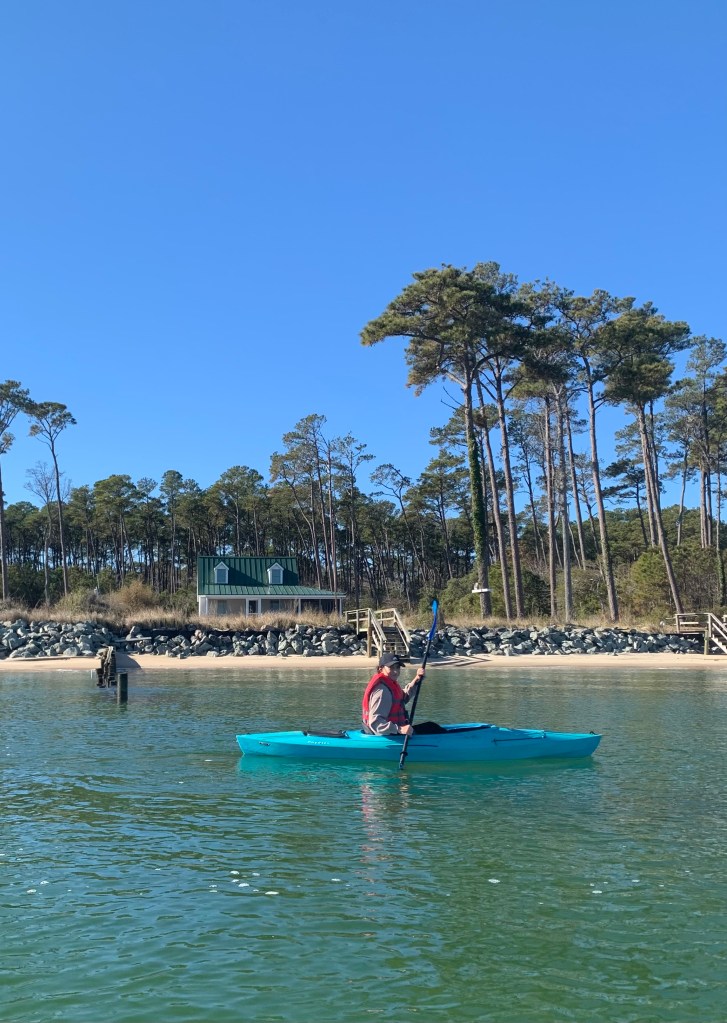
Our Airbnb on Gwynn’s Island in the Chesapeake Bay came with two kayaks. The warmest, calmest hours were just warm and calm enough to enjoy cruising the shore. Megan spotted a plum-colored jellyfish jetting through the clear, cold water, propelled by a host of delicate, translucent tentacles.

Of course, the best part of the last couple of weeks has been the time together: sunny adorable Millie enjoying her first Christmas, the conversations and food, the traditions old and new. There could be no better beginning to my journey.

Wildlife dreams come true

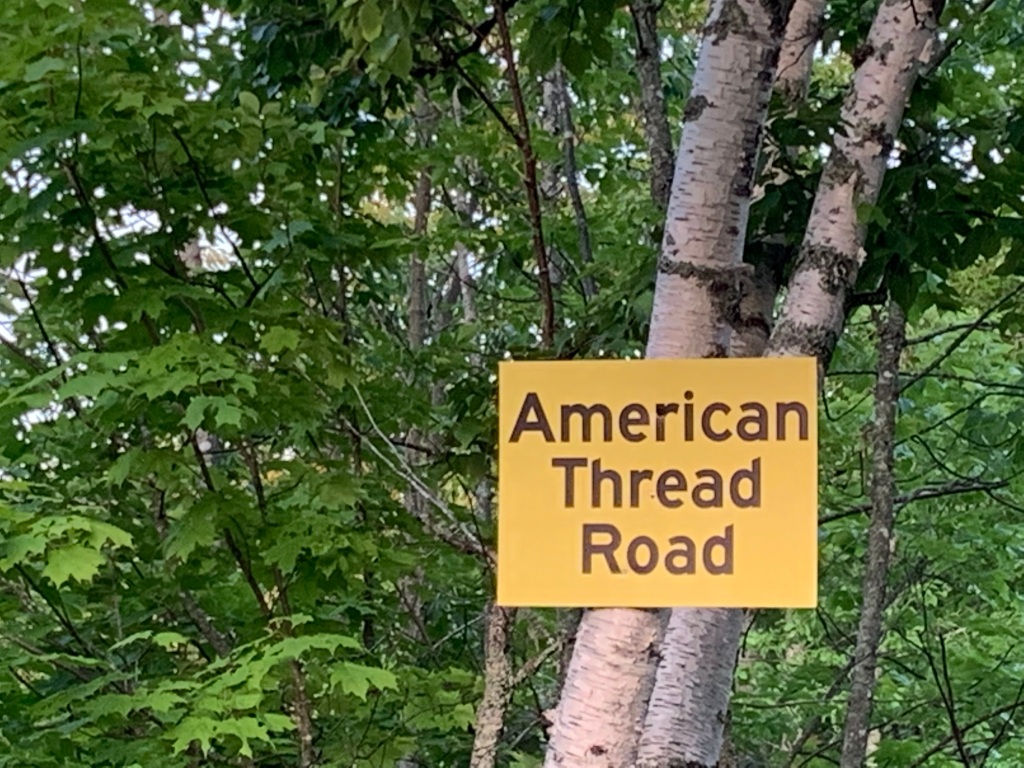
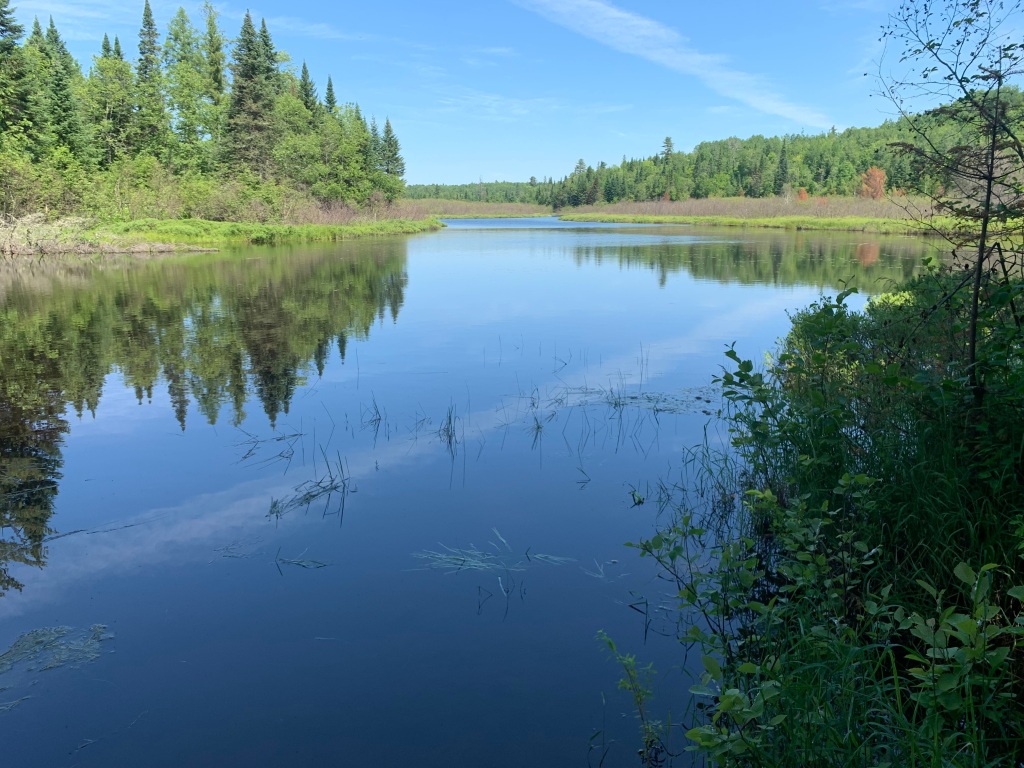
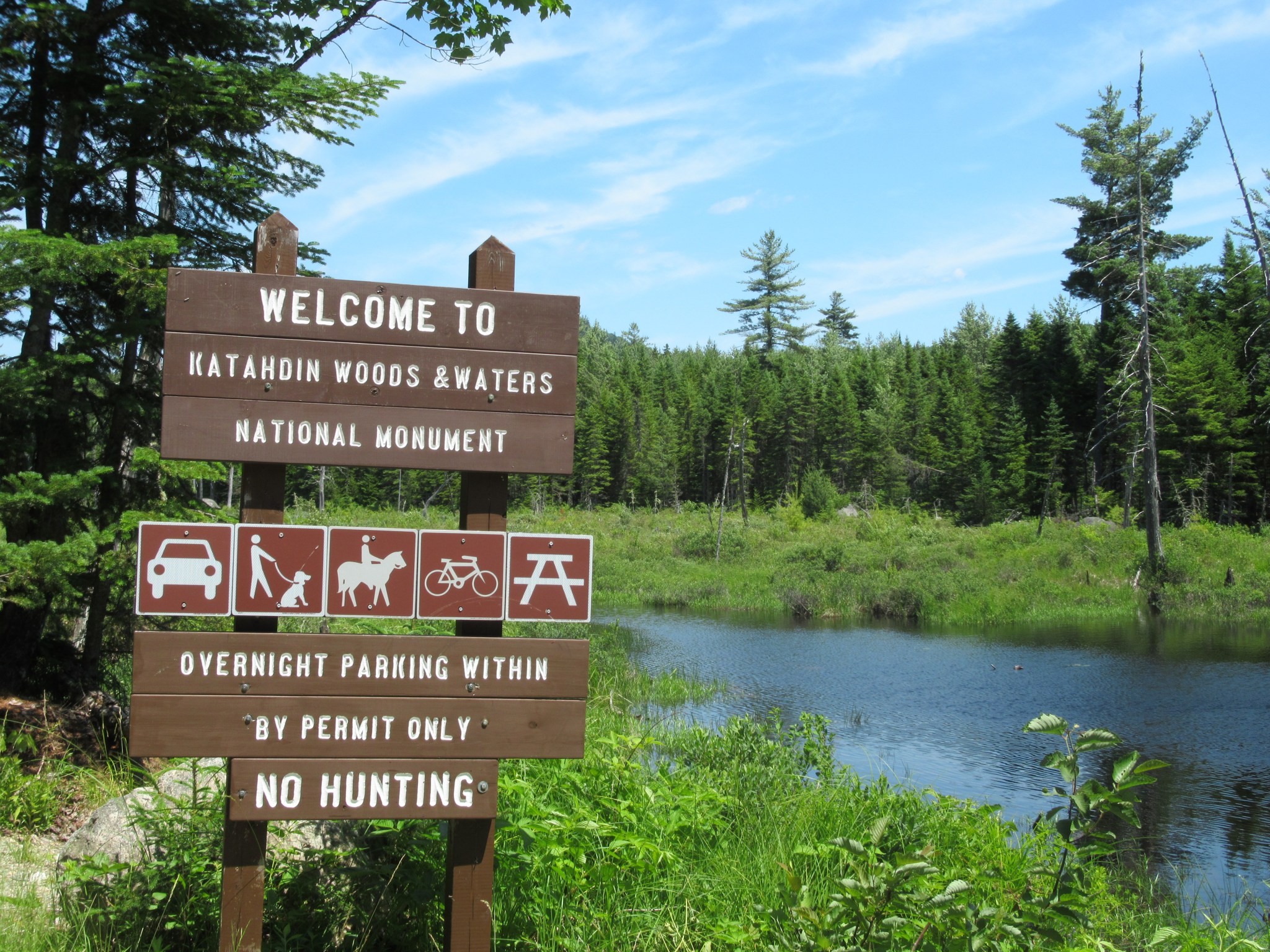
A deer whooshed and crashed away through the woods as I loaded my canoe at Kimball Deadwater in the Seboeis parcel of Katahdin Woods and Waters National Monument. Continuing north two miles on the American Thread Road, I parked at the sign for Twin Ponds, on the left. I would just take a look today and perhaps return with the canoe tomorrow.

A short tenth-mile trail leads to Twin Ponds

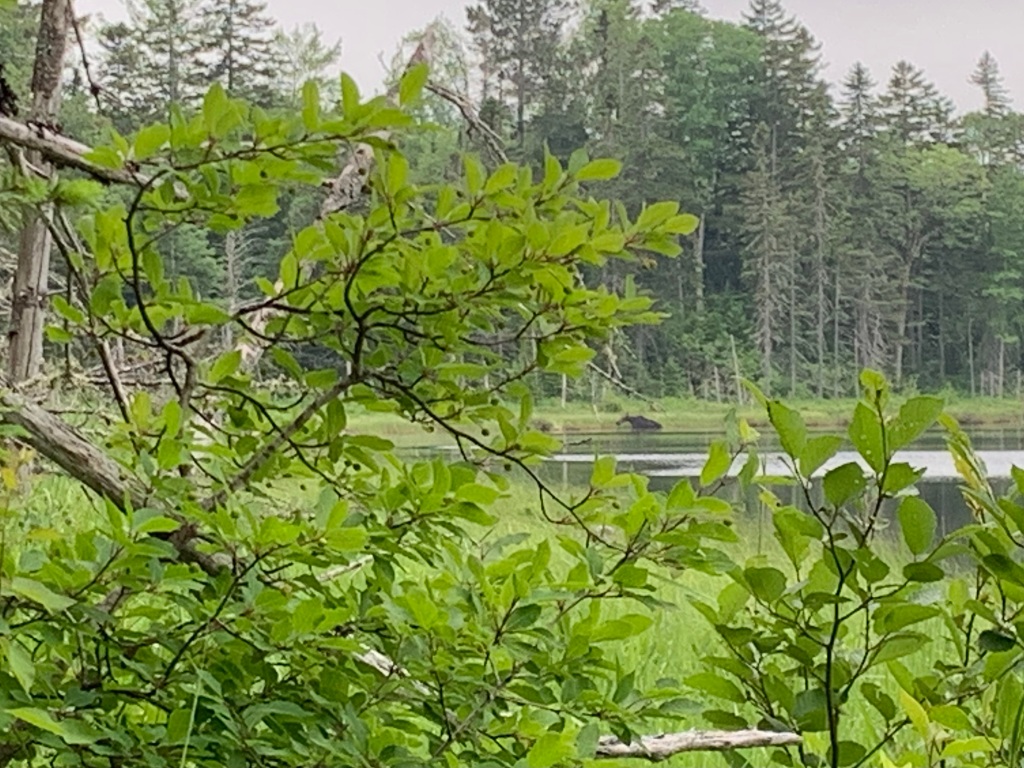
My feet fell silently on the soft path as I cautiously approached the small oval pond. The far shore rose high enough to support a narrow strip of spruce and other conifers. Gradually, most of the perimeter came into view, and there was a cow moose feeding contentedly in the shallows at the south end. I watched her, alert for any sign of a calf or two, for it was that time of year. Sure enough, she soon climbed on shore, and a light brown calf emerged, fuzzy in the morning sun.

Just big enough to see, before the calf appeared. No camera this trip, so photos are from my phone.

I planned to return the next morning to see if I could get through to the even tinier twin pond that lies behind this one. And so I did.

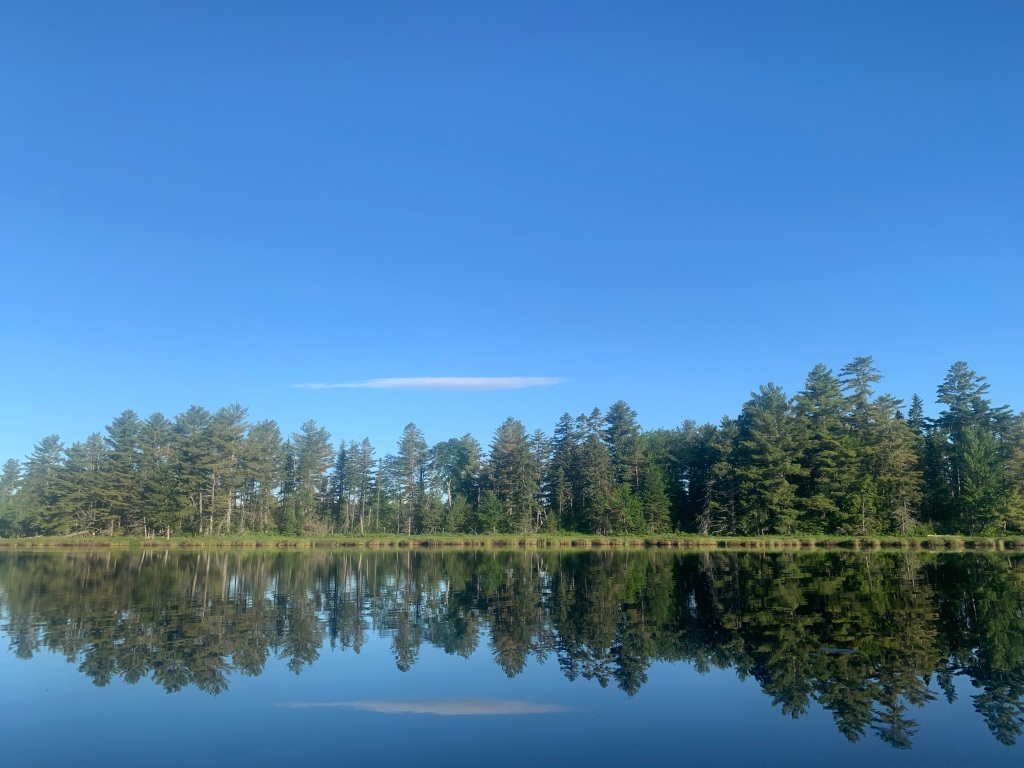
Sunny and still, this is the shoreline that separates the two ponds.

A loon was diving for breakfast, and I watched him swallow more than one silvery minnow. Paddling toward the southwest corner, the connecting stream materialized from what had looked like solid shore. I scrambled out of the boat to lift over a narrow bridge of land and continued on.

The second pond was quite shallow and perhaps a third the size of the first. Along the eastern shore was a colorful bog, its palette rich with reds and greens. Later, checking out the Maine Natural Areas Program categories, I believe it would be classified as a Mossy Bog Mat. Purple pitcher plant (Sarracenia purpurea) flowers poked above the sphagnum mosses, and there were a few scattered trees and clumps of sheep laurel. Walking just far enough for a couple of photos, the spongy ground gave and shifted underfoot.

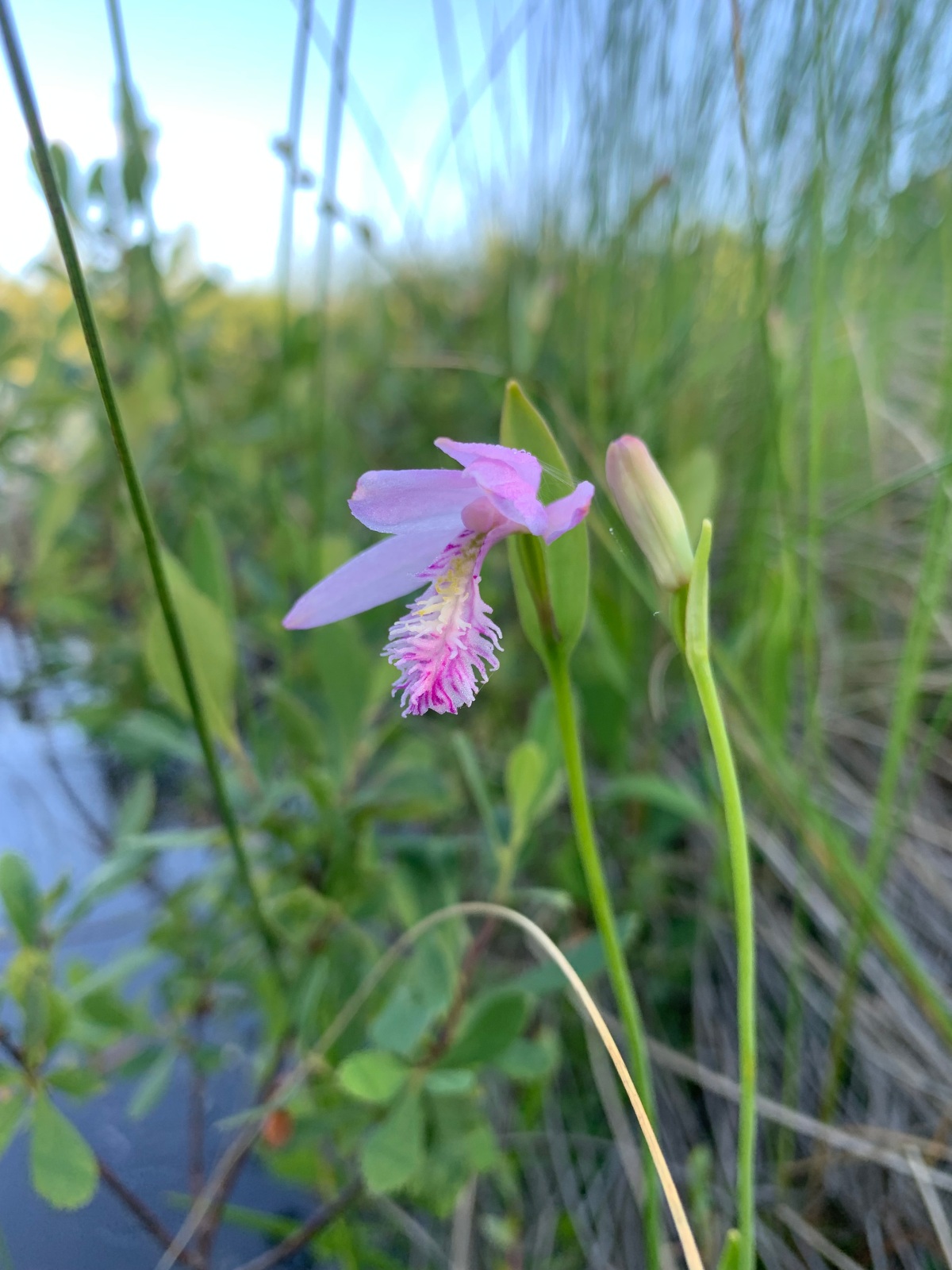
That afternoon, my friend Chris Gill commented on my last blog post, saying he missed the days when he’d had to identify the plants for me. I said, “You only need to ask,” with a photo of the little orchid below. Chris identified it, of course, then also suggested that next time I look closely in the moss for carnivorous sundews as well. Horned bladderwort, a third carnivorous species with yellow flowers, might also be present, according to MNAP.

The shaded shore is always the place to back the canoe in and watch for wildlife. It just so happened that the spot I chose offered up a new orchid. “New” meaning that I don’t remember having identified it before, although I well could have. A rose pogonia (Pogonia ophioglossoides), just a single specimen.

This rose pogonia will have a second bloom
The flowers of the carnivorous pitcher plant
A pitcher-shaped leaf awaits an unwary insect

From Twin Ponds, the road continued north to the intersection with Grondin Road. Turning right, another three miles brought me back to Route 159. This would conclude my time in the national monument for now.

That evening, my parents and I took a drive to fill our water jugs at a local spring. On a typical whim, we turned into the gravel road to the Shin Brook Falls trail, happily bumping and bouncing along. On the way out, I was perched in the middle of the back seat. Looking ahead to the crest of the slope, there was a bear, smack in the middle of the road. Right size and shape, ebony black, and gone too quickly, before anyone else could see it.

Up with the birds : Kimball Deadwater by canoe

When you rise at four, nature rewards you. Rain was forecast, and I was on the road by five. A porcupine waddled surprisingly quickly along the shoulder of the road, then vanished into the woods. I entered the Seboeis parcel of Katahdin Woods and Waters National Monument on the American Thread Road. Since yesterday’s drive, I’d been pondering that name.

At first, I envisioned the historic site of a mill that manufactured sewing thread. Not so, although I was on the right track. The American Thread Company also produced wooden spools to hold its thread. When the supply of birch was exhausted in one area, a new spool mill would be built elsewhere. The last, in Milo, Maine, was in operation from 1902 to 1975.

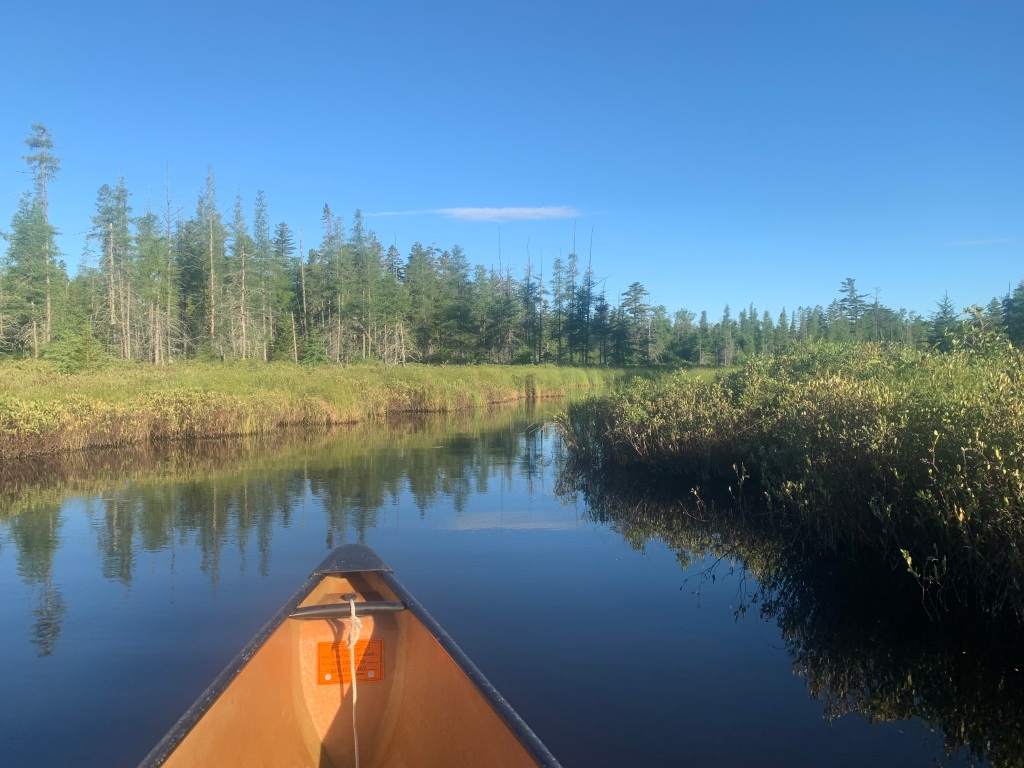
Kimball Deadwater soon narrows, winding into an impassable tangle of alder

At the short Kimball Deadwater trail, I unloaded my canoe and carried it down to the water. The telltale wake of a cruising beaver cut across the wide water, and I spotted a sleek brown head gliding along. I savored the short paddle, drifting close to photograph sheep laurel and blue flag iris.

Sheep laurel
Blue flag iris

Of course, the true barometer of success would be spotting a moose. I spent an hour quietly waiting. A strong wind had risen ahead of the rain and it washed over me, keeping the mosquitoes at bay. Delicate heads of marsh grass bowed low, and the red-winged blackbirds moved with restless energy, flashes of color bright in the cloudy sky. From near and far came the twang of bullfrogs.

Spatterdock

Before giving up, I paddled the length of the deadwater a second time, 15 minutes for the round trip. It isn’t large. Near a patch of spatterdock, I saw the beaver again, or another one. After I was well gone up the trail came an emphatic tail slap that said, “Good riddance.”

Exploring the Katahdin Woods and Waters Seboeis Parcel

It’s been a long two years since I’ve written a blog post. Amazing!

There is one good explanation. In the spring of 2021, I began writing a monthly column for the Northwoods Sporting Journal. My articles for “View from the River” are varied, covering paddling, wildlife, wilderness places, and even book reviews. The discipline of a deadline has been motivating and the writing itself rewarding. But with summer here, I want to blog, too.

Today, my parents and I explored the national monument parcel that lies south of Shin Pond. Not long after passing the monument boundary on the well-maintained American Thread Road, we had our first view of the mountains.

About a mile in was a sign for the Kimball Deadwater. Down the short trail shone the unmistakable brightness of water. Here was a place where I would like to return one early morning with my canoe. It looked moosey, and perhaps a half-mile long on the map.

Kimball Deadwater

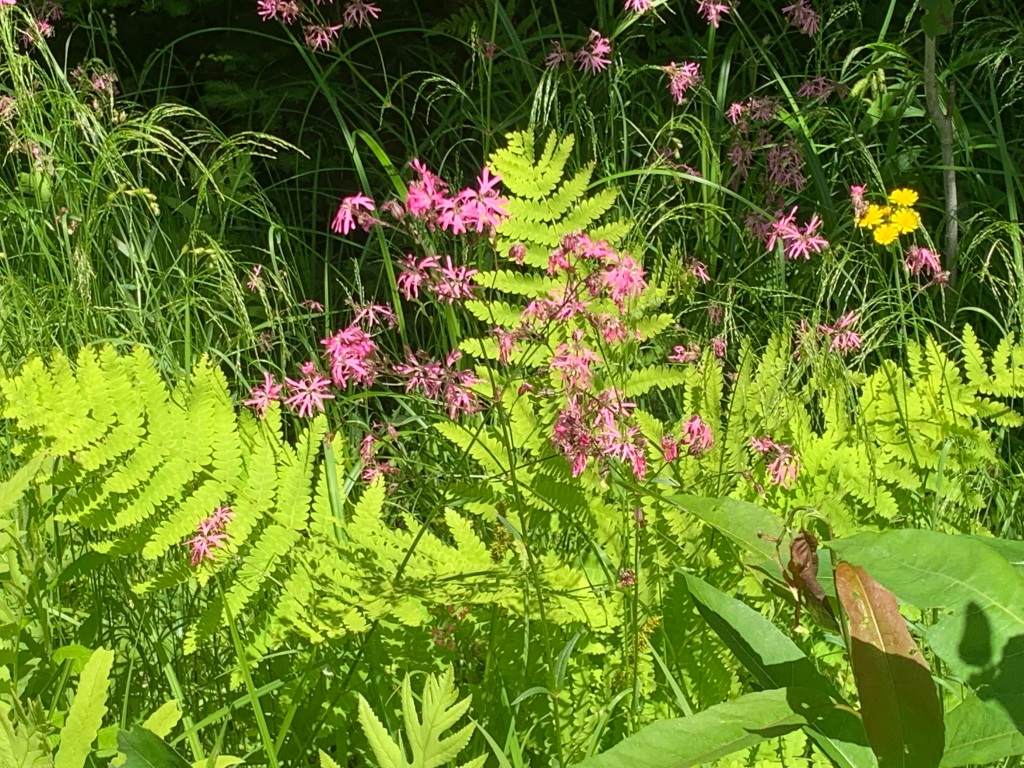
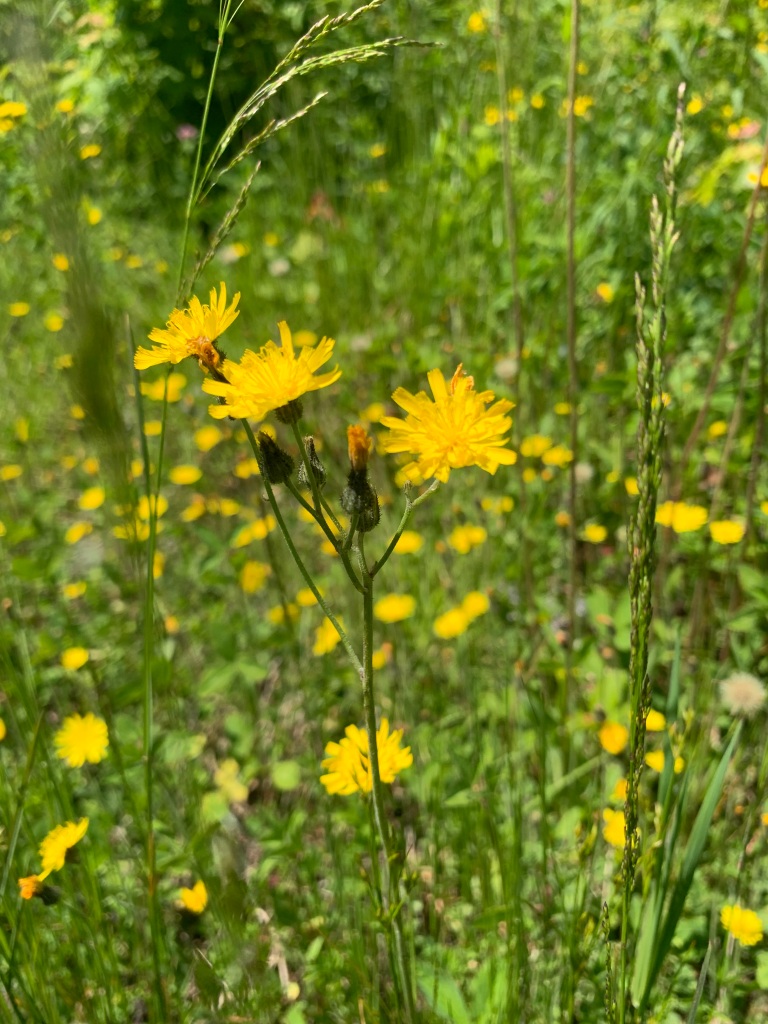
The wildflowers along the roadsides were stunning in their sheer quantity. Our field guide yielded new discoveries: pink ragged-robin and large displays of yellow king devil, which looks much like orange hawkweed.

Ragged-robin
King devil

The large flowers and leaves of cow-parsnip gave us quite a scare. I was sure I’d seen the flower before, but Dad pointed out that it looked remarkably similar to giant hogweed. In the Adirondacks, we’d seen posters warning about this very toxic invasive plant. Its sap causes a dangerous skin reaction and even blindness if it gets in the eyes.

As it turns out, the two are closely related, in the same genus. Giant hogweed can get twice as large as cow parsnip (14 feet tall) and has stems mottled with red, while those of cow-parsnip are solid green. I am going to give cow-parsnip a wide berth as well, after learning that it can also cause a milder irritation.

Cow-parsnip

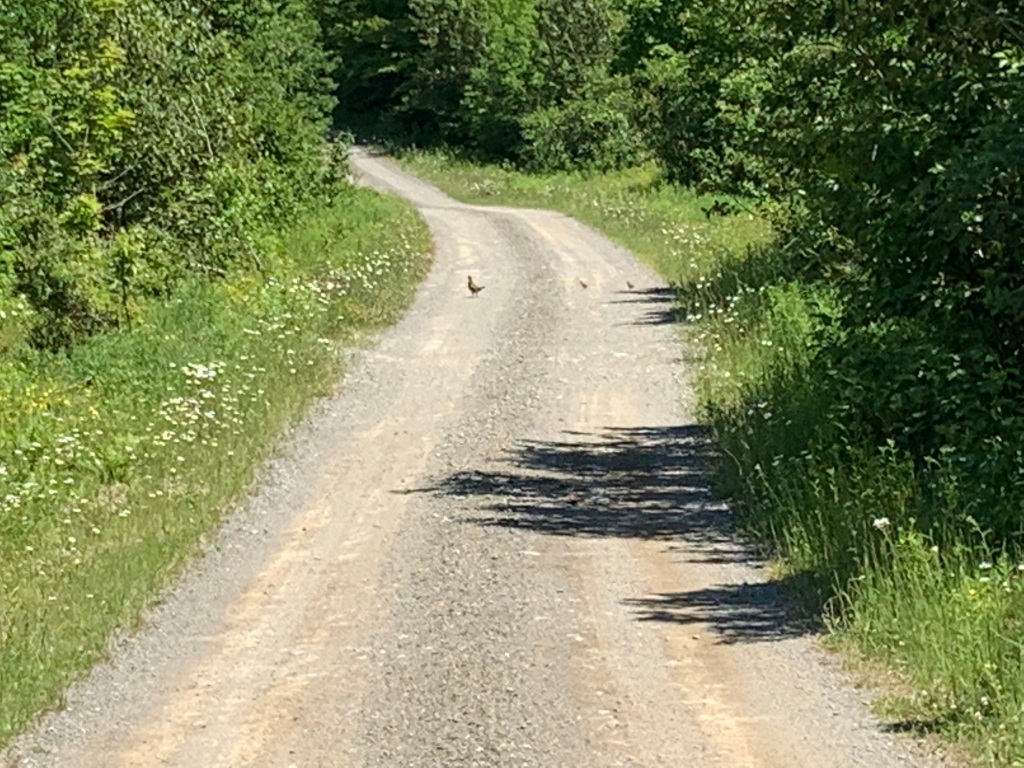
We saw both a spruce grouse and this ruffed grouse with two chicks, rounding out a drive that left us wanting to return to this quiet part of the monument.

About that new book

IMG_0567

I am the ultimate morning person. The fresh promise of a new day always energizes me, and I can often be found writing as the sun rises, at least in the darker months. Today, here in Bremen, Maine, the sun rose at the precocious hour of 4:54 a.m., as it has for the last week or so. This is the third day of my summer vacation, so I was still deep in sleep at that hour. Nonetheless, I arose a little later with a much-anticipated mission—to give you all a glimpse into my new book and update you on recent milestones.

IMG_8087

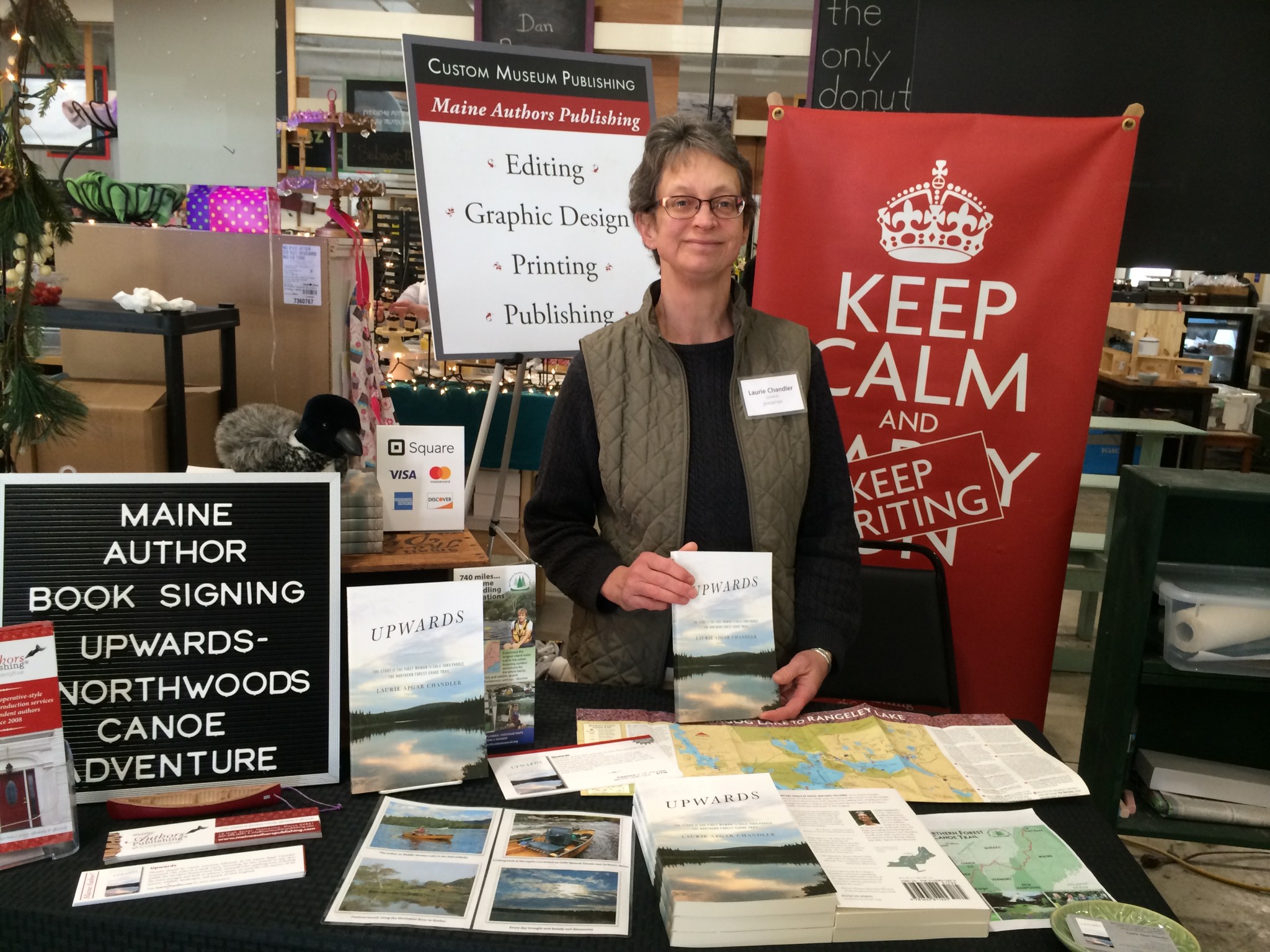
There is no better place to begin my story than with Maine Authors Publishing, my partner in publishing and marketing my work. Located in Thomaston, around twenty-two miles from my home, MAP has welcomed me into their fabulous community of authors and guided me through the years with wisdom and patience.

As a veteran author, navigating the publishing process has been smoother this second time around. One week ago, the edited manuscript was returned to me. Hundreds of edits, many repetitive in nature, awaited review. As I worked through them, the value of professional editing was once again clearly apparent. I learned a lot, too.

I hereby resolve to remember not to indent the first paragraph of a chapter or section, to spell good-bye with a hyphen and nonprofit without one. Note, in top paragraph, how proudly I exhibit my newly acquired ability to insert an em dash in place of a minus sign. Perhaps there won’t be so many edits next time around!

IMG_0344


With Upwards, the adventure inspired the writing. With Through Woods & Waters (or will it be Through Woods and Waters?) , the writing inspired the adventure. By spring 2018, I was yearning to embark on another long wilderness expedition, one that could become the subject of a second book. I wanted a compelling destination and challenges in getting there. Tough river sections, novel vistas, thrilling beauty, rich history—I found them all on the way to and through newly established Katahdin Woods and Waters National Monument. (Look, another em dash!).

IMG_0578


My travels began with a backpack and hiking boots, following the International Appalachian Trail up and over mountains and along part of the river I would later descend by canoe. After the backpacking trip and a long-awaited book event, I put my small canoe in at the western end of Seboomook Lake, some 150 miles from the national monument boundary. Going the long way ’round allowed me to incorporate a couple of hitherto unexplored alternative routes of the Northern Forest Canoe Trail, as well as the upper reaches of the East Branch Penobscot watershed.

IMG_0776

Shortly after creating this blog in spring 2015, I wrote a post about the “why” of attempting a solo NFCT thru-paddle. That post, entitled May you find fireplace birds, still rang true as I embarked on my newest adventure. Should you decide to come along on the journey, you will see that I found more this time than I ever could have anticipated.


An amazing, extravagant day

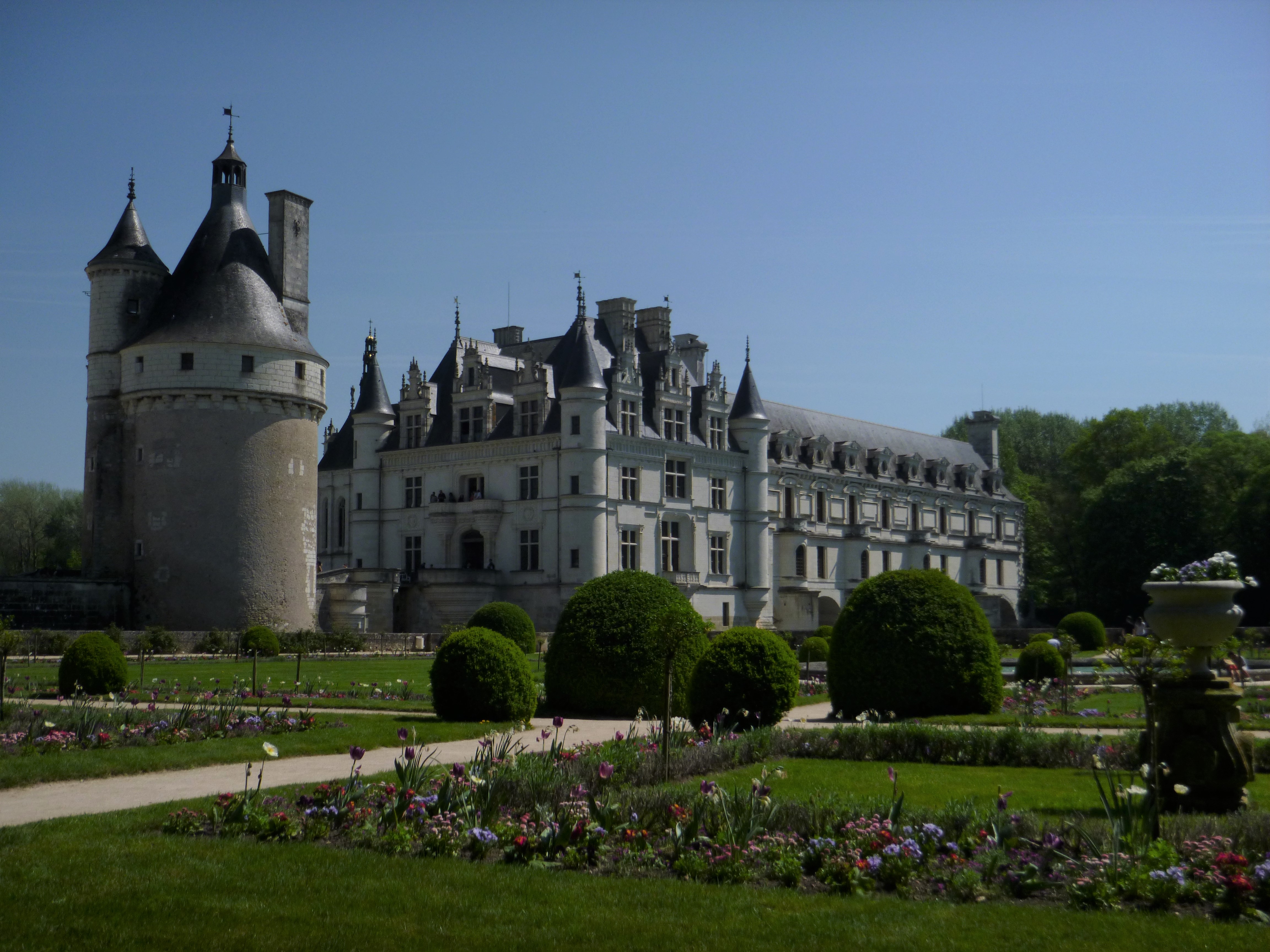
By now, we had made peace with a slower, more thorough pace than originally planned. We toured only one chateau, but we chose well – Chenonceau, billed as “The Ladies’ Chateau,” influenced over the centuries by the women who lived there. In the 16th century, there was Diane de Poitiers, the mistress of Henri II, and later his wife, Catherine de Medici, who ousted Diane when the king died and she became Regent. Then, in the 18th century, came Louise Dupin, a brave, enlightened promoter of writing and learning, who cleverly protected the chateau during the French Revolution.
P1010859

The history doesn’t end there, as Chenonceau also had a role to play in both world wars. We decided to rent audio guides and again found them a wise choice. In room after room, I would listen, then go back to hear again the more interesting tidbits. The chapel’s stained glass was destroyed by bombs in 1944, but has since been tastefully replaced.

P1010797

Visitors walk on the original floors, where in some places the design remains only at the edges of the room. This carefree hare was protected by the nearby furniture. Although some corners were roped off, we were free to wander more than I would have expected.

P1010793

P1010844

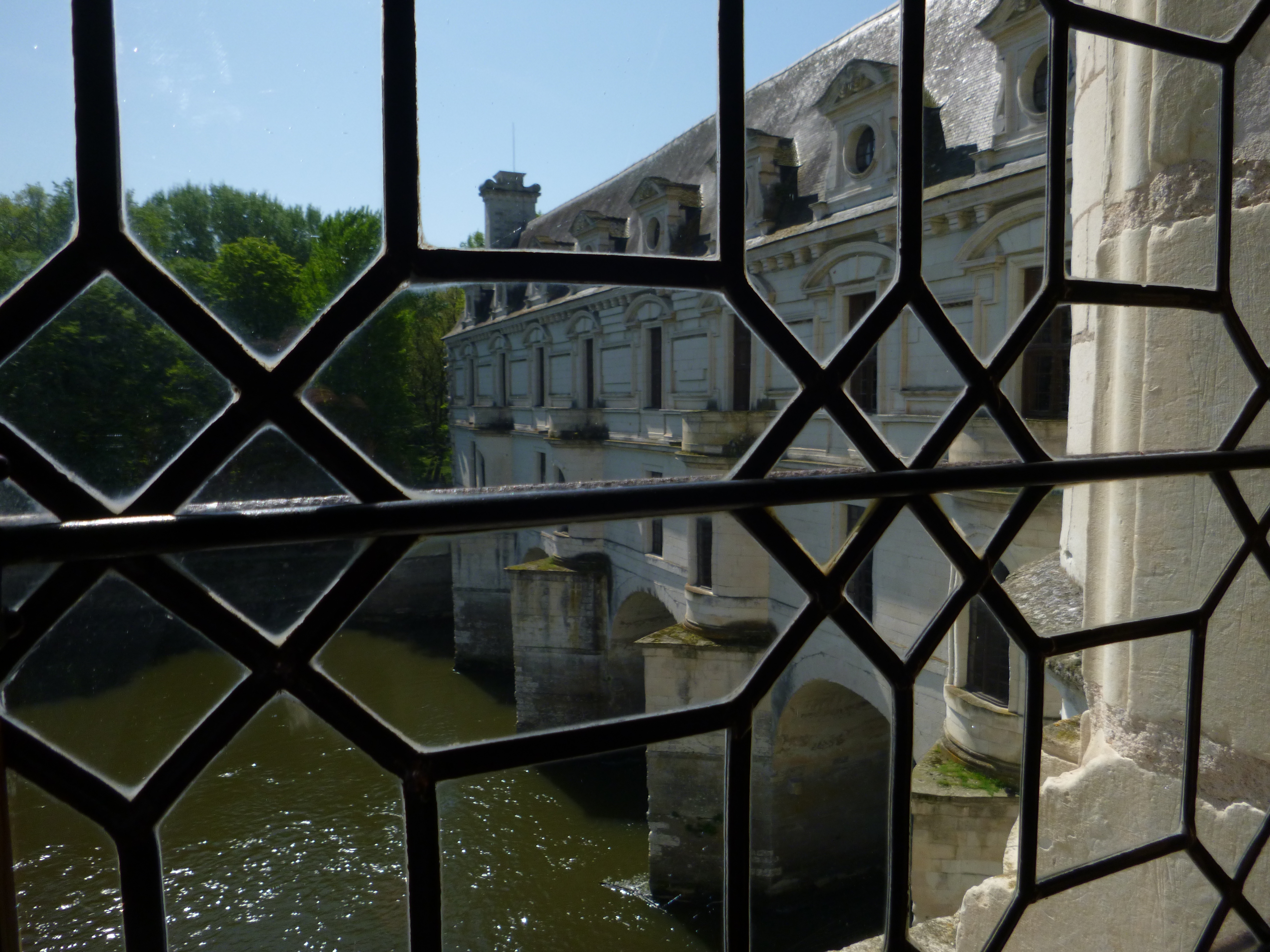
The stately arched bridge that reaches out over the River Cher was Diane’s creation, but it was Catherine who later built on it a long, elegant ballroom. It’s possible to rent a canoe and paddle downriver and underneath the chateau, if you have time.
P1010848

By World War I, Chenonceau was owned by the Menier family, of Paris chocolate factory fame. They transformed the ballroom and another gallery above it into a 120-bed hospital at their own expense. Simone Menier served as matron of the facility, which was equipped with a state-of-the-art operating theater and one of the first X-ray machines. From the windows, convalescing soldiers would fish in the river below, tying small bells to their lines to signal a bite. Then, during the second world war, the chateau found itself sitting on the line between the occupied and free zones, allowing the Resistance to spirit many people through these same rooms to safety.

P1010809

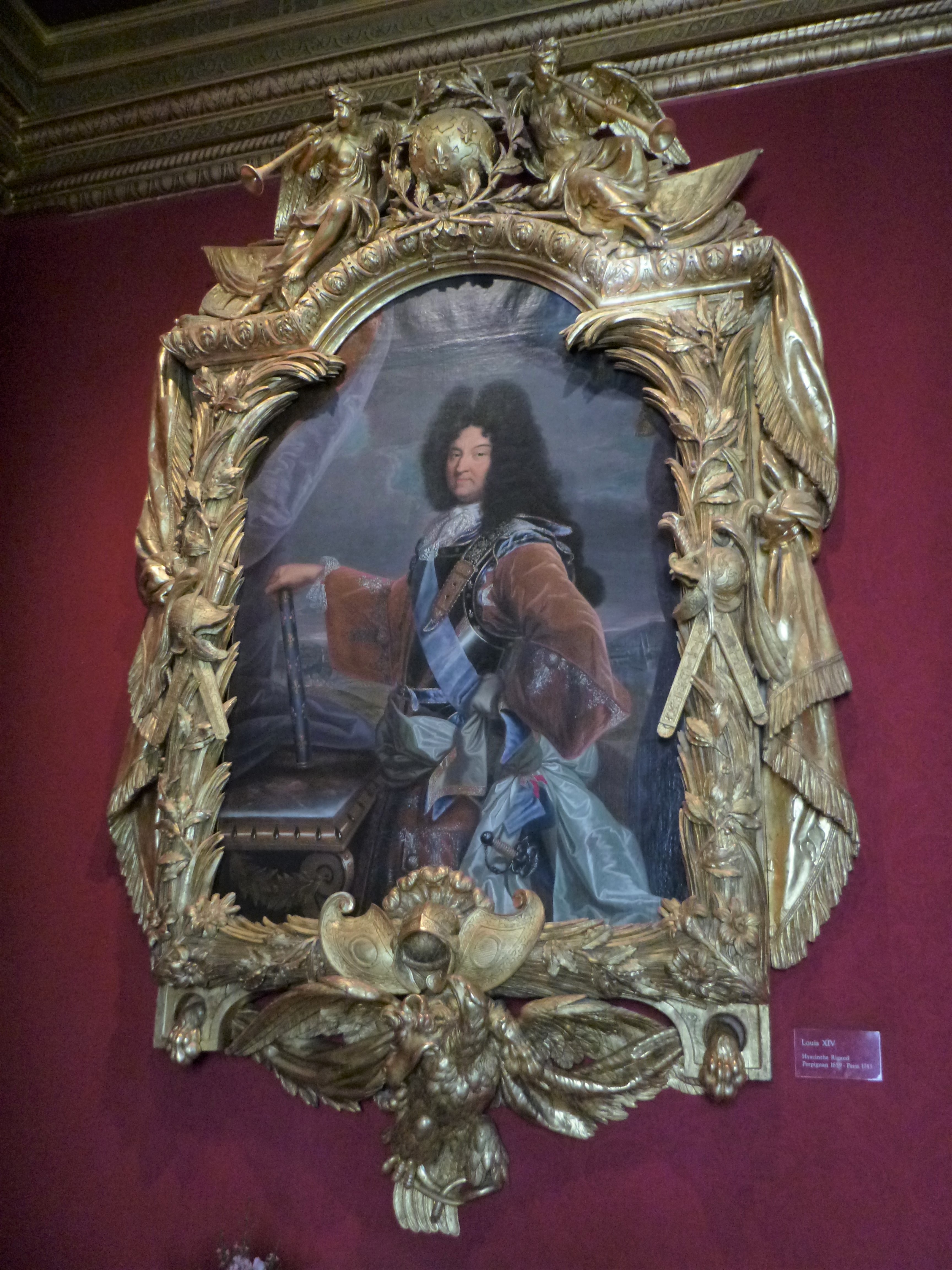
In honor of baby Prince Louis, whose birth was announced while we waited in Charles de Gaulle airport for our flight home, I am including this incredible portrait of Louis XIV. The massive ornate frame draws the eye and dominates all else in the room. The Sun King reigned for over 72 years, the longest of any European monarch. He visited the chateau in 1650, at age 11, and later sent this portrait to commemorate his visit.
P1010828

Every room had fresh flowers, often many arrangements in one room, all changed twice weekly by the chateau’s florists. Here are some from The Five Queens’ Bedroom.

P1010842

Don’t you just love this photo of Mom and Dad, patiently waiting for us to finish?

P1010836 (2)

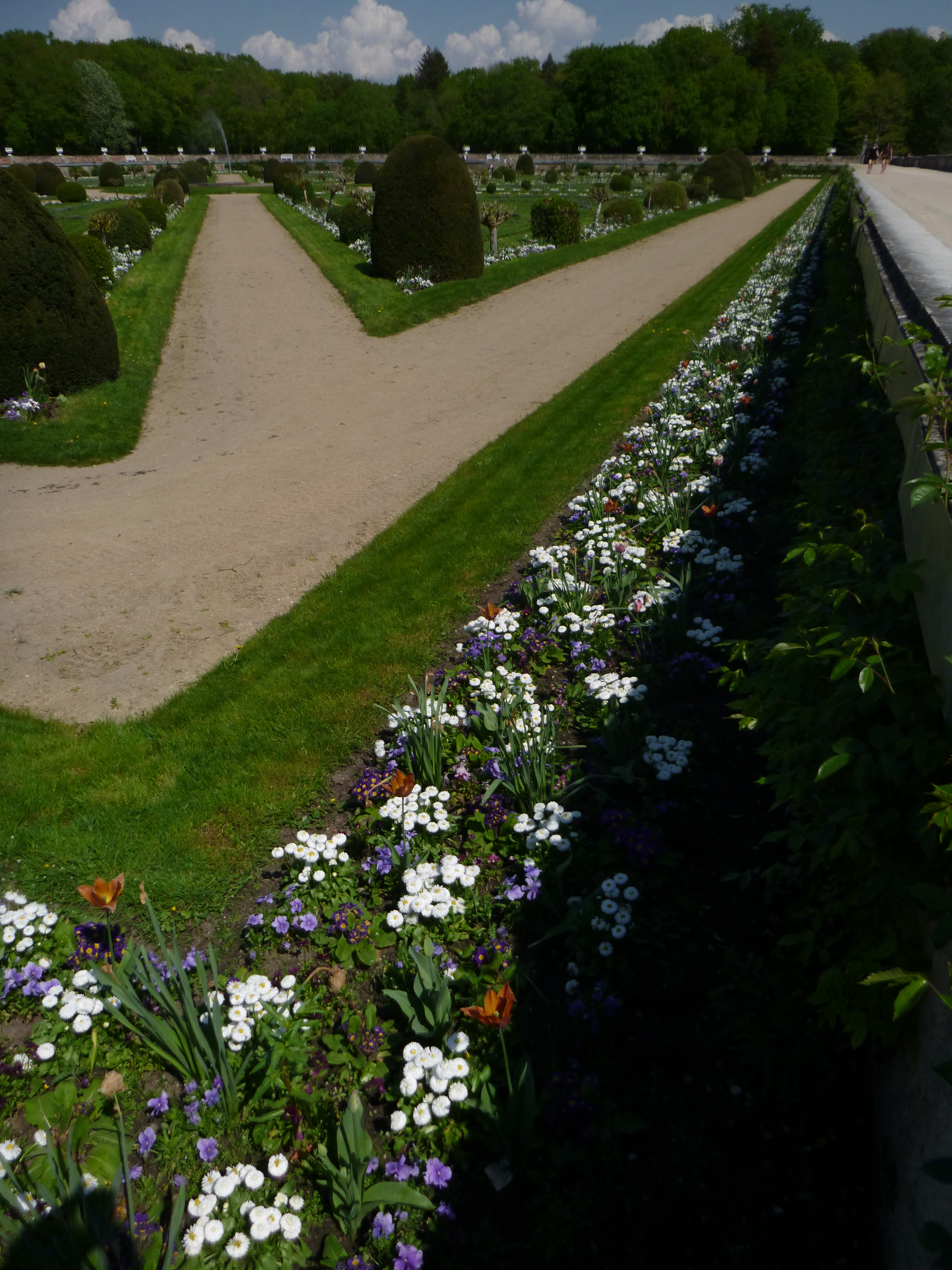
Of course, Diane and Catherine both had their gardens…Diane’s was my favorite.
P1010872

Next time you are in France, I hope you will go to the Loire Valley and see Chenonceau. It’s worth the trip. Now, though, it’s time to say au revoir, after one last story.

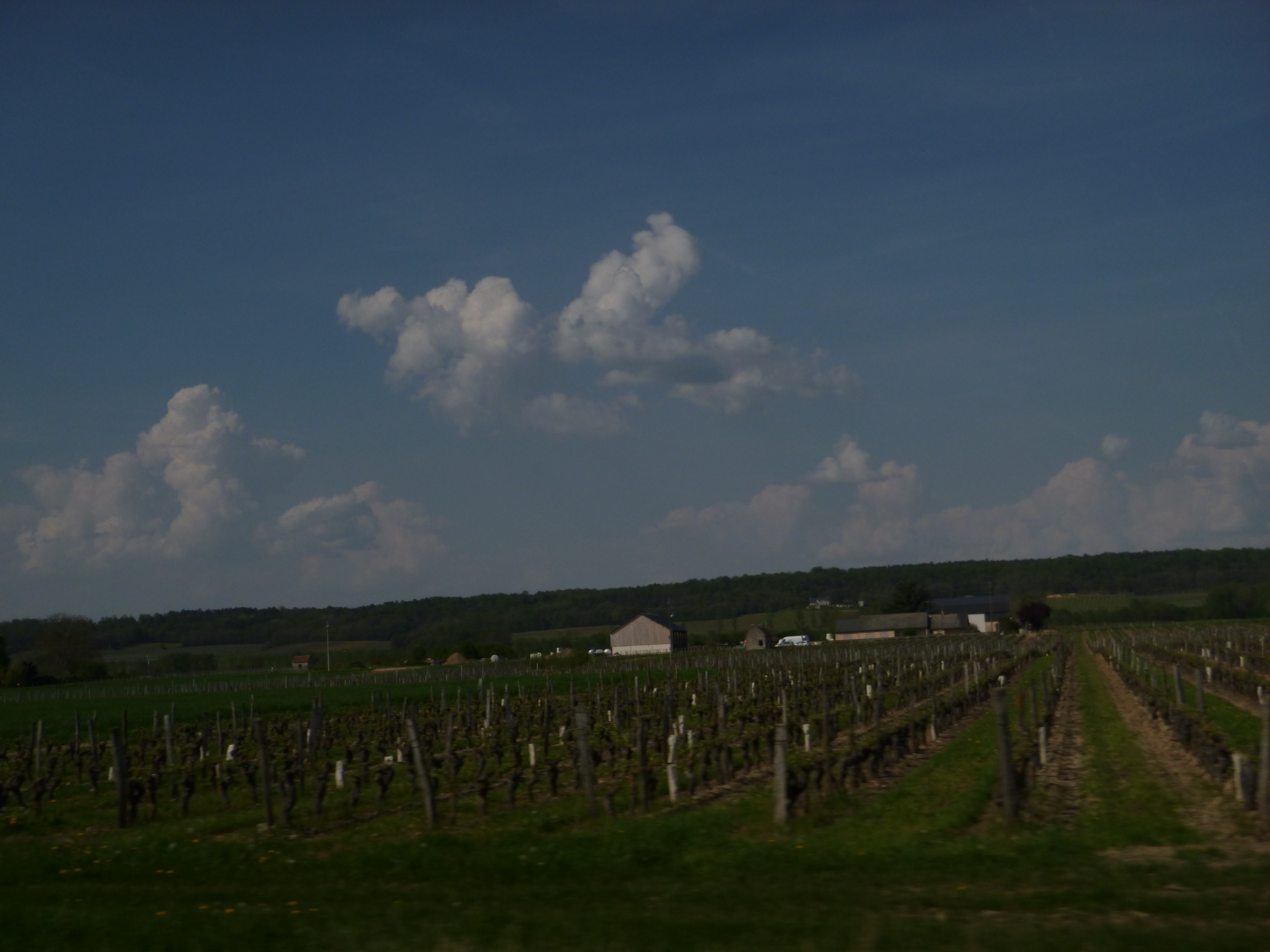
To make our adventure complete, we wanted to visit a winery and not just any one. In Charlottesville last fall, Megan had been impressed by a red wine from Domaine Fabrice Gasnier, from the nearby Chinon region, and had taken a photo of the restaurant menu. As we drove, though, vineyards lined every road and there were countless signs with grapes and bottles on them. How would we find Fabrice?
P1010885

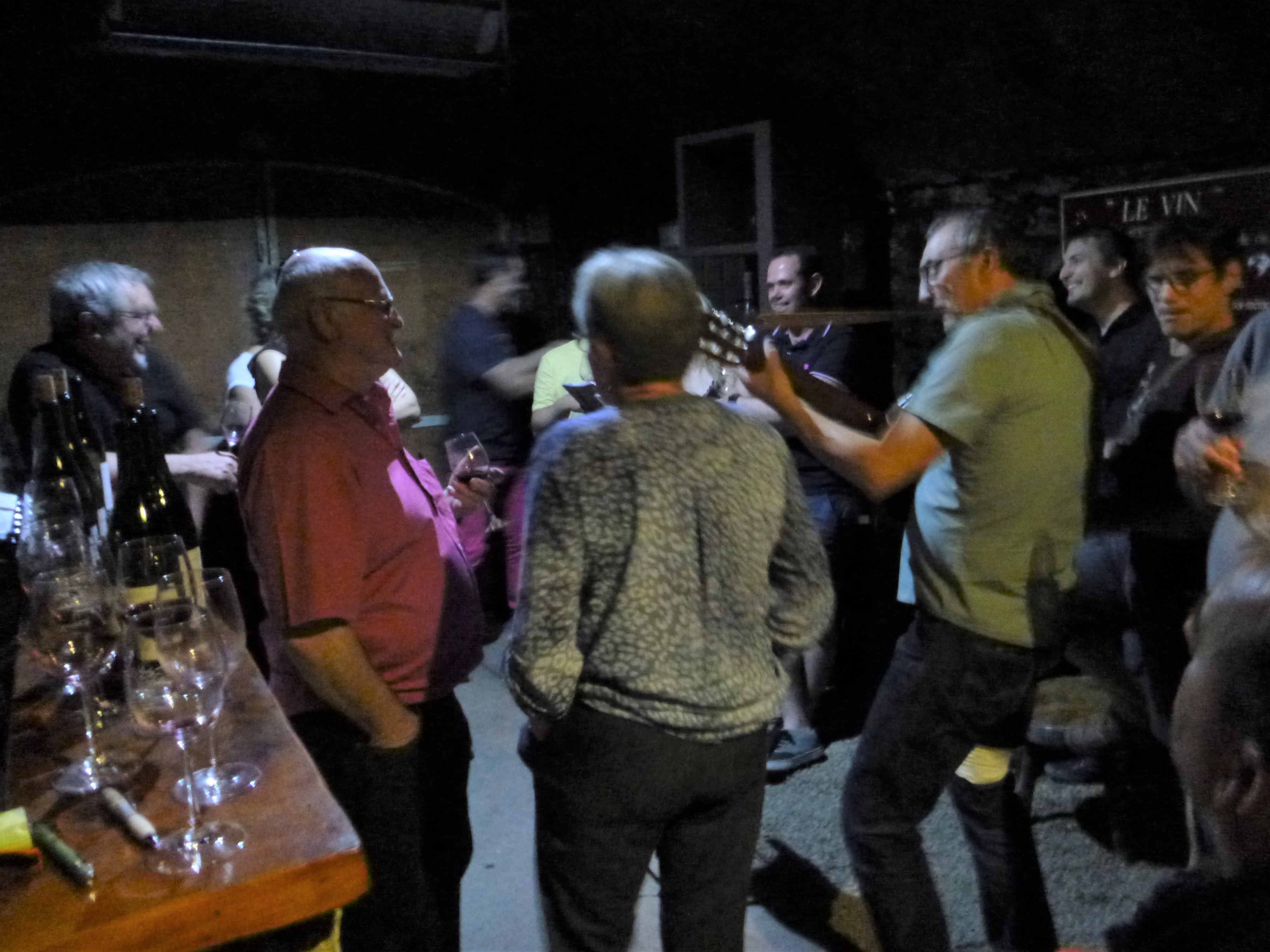
Luckily, we soon came across a large, helpful map on a display board near the river, showing the location of all the local wineries.  After one small wrong turn, we found the right place and squeezed into the crowded driveway. By the doors to a large barn, a couple was sitting outside, but there were no signs to indicate where to go or if the place was even open. They came right over, though, smiling. “Come, come,” they said, drawing Megan and I through a door into a dark, crowded room, filled with voices and music. In the dim recesses ahead, a long row of barrels faded into the darkness.
P1010889 (2)

Incredibly, we had stumbled on a party, been welcomed into a gathering of friends, to celebrate the first bottling of the new year. Before long, we each had a glass in hand and were tasting different red wines, while chatting as best we could in both languages. Then Dad got up there and sang “I’ve Been Workin’ on the Railroad,” with his new friends.
P1010896

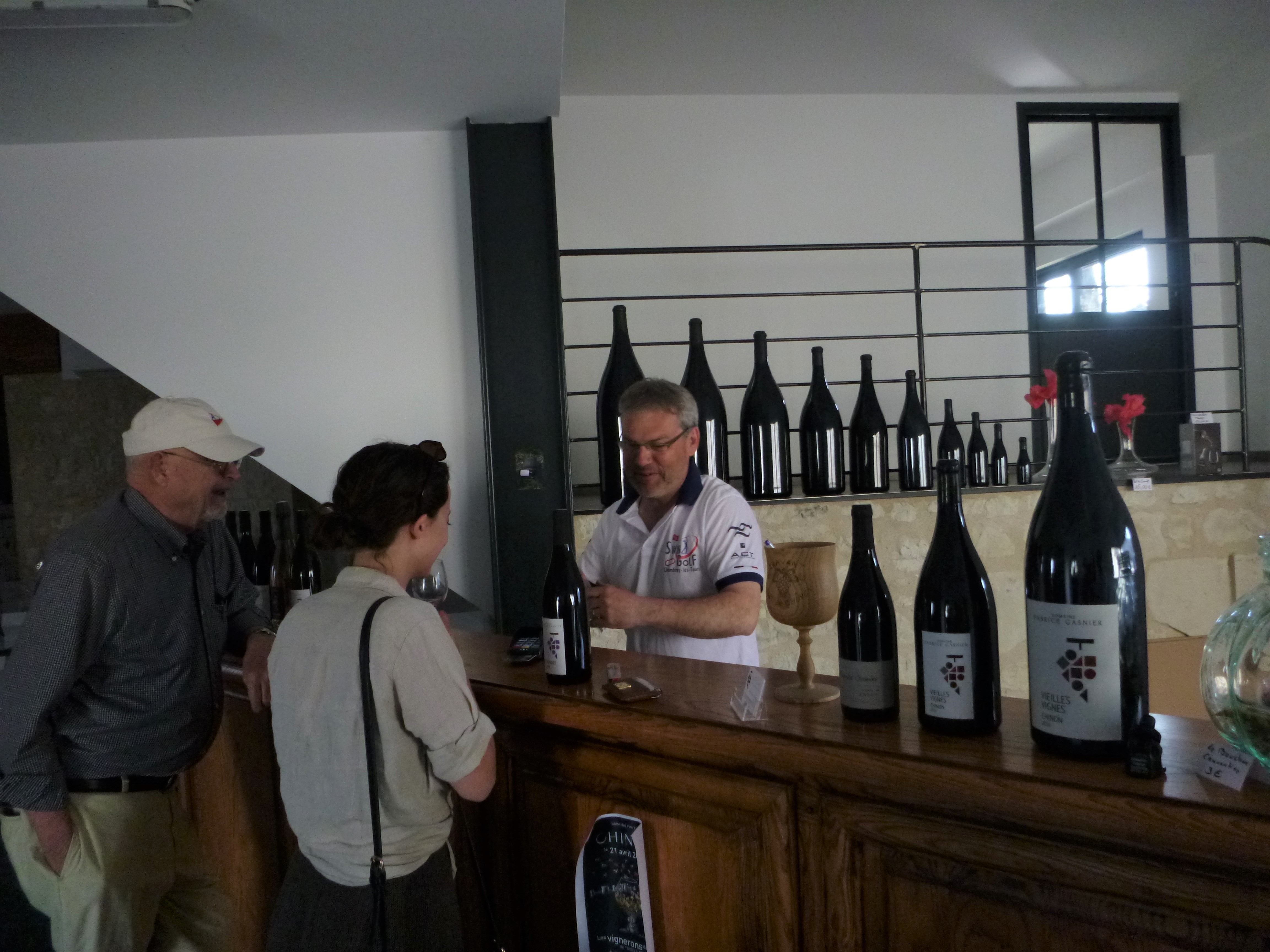
Afterward, we all agreed that this had been a highlight of the trip. Eventually, we even found the retail area. In the photo above, Megan and Dad are making a few purchases from Fabrice himself. I plan to save the bottle that I bought for when Megan comes up in August and we’ll drink a toast to serendipity! So, a la prochaine, until the next time.



The humblest and grandest of dwellings

P1010742

Mention of the Loire Valley brings visions of exquisite châteaux, but there are other living spaces here, that couldn’t be more different. In the Loire Valley, winding our way up along France’s longest river, we would experience both.

As we left Carnac, I was navigating, tracing our route carefully to find the smaller roads that would hug the river. Driving in France, unless you are on the large toll roads, is slow and picturesque. If there is a village, it seems, you will pass through it, with a sign as you enter with the village name and another as you exit, showing the same name with a slash through it. Just past Angers, we found the river and followed it toward Saumur.

P1010746

Dad had been telling us the history of the area’s sparkling wines, when suddenly we came upon the grand facade of Gratien & Meyer, the cellars that he had visited long ago. They offered tours to see how their wines (not called champagne because we weren’t in the Champagne region) had been made in the late 19th and early 20th centuries.

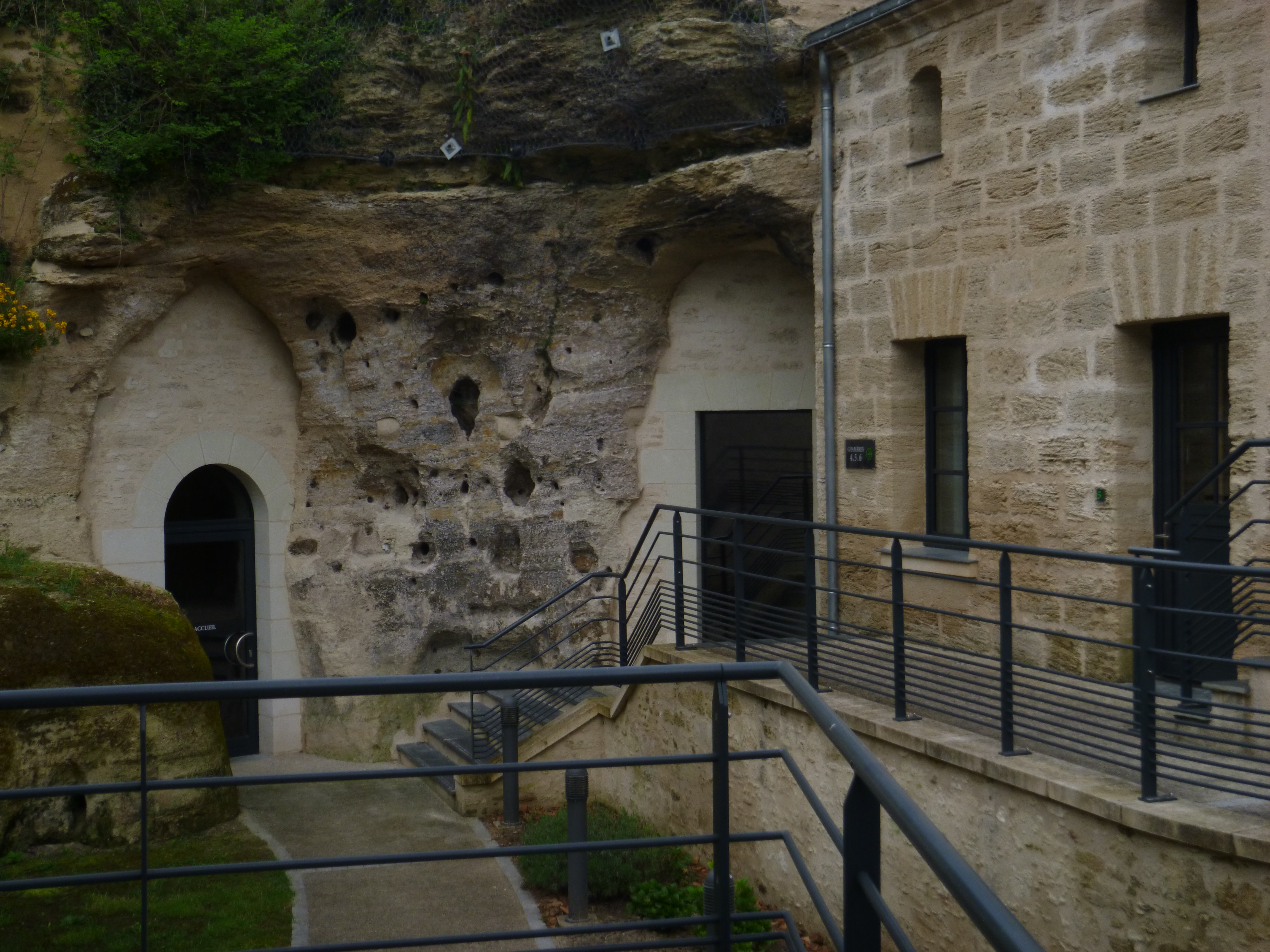
Their cellars, like the many troglodyte cave homes around Saumur, were originally quarries. When the soft limestone called tuffeau was dug out in this region, the caves left behind were inhabited and still are. Often, part of the structure would be in the hillside caves and part would be outside, constructed of blocks of the pale yellow-tan tuffeau that had been quarried there. Tomorrow night we would sleep in rooms like that.

P1010758 (2)

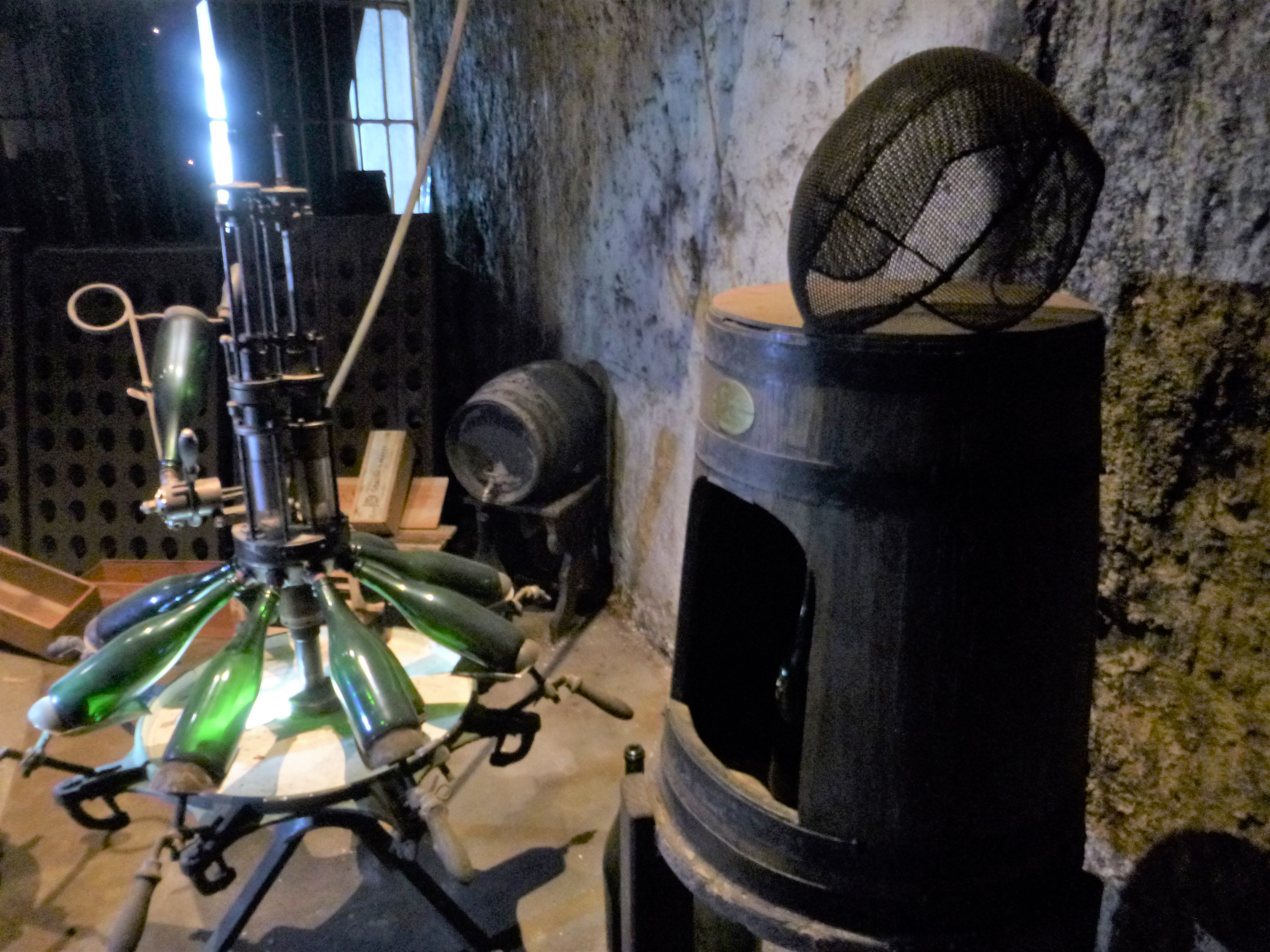
Deep in the cellars, we were introduced to the wine-making process, from the careful blending of grape varieties, through the labeling of the bottles. Labels were applied up the neck of the bottle to hide the inconsistencies in how full the bottles were. Men turned the bottles 1/4 turn each day and could do 50,000 in one day. Then there was the innovative change to metal wire to hold the corks, rather than the hemp cord that rats would sometimes chew through. Note the knight-like face mask above, that the workers wore to protect themselves from carbon dioxide-fueled accidents!

P1010774 (2)

P1010776

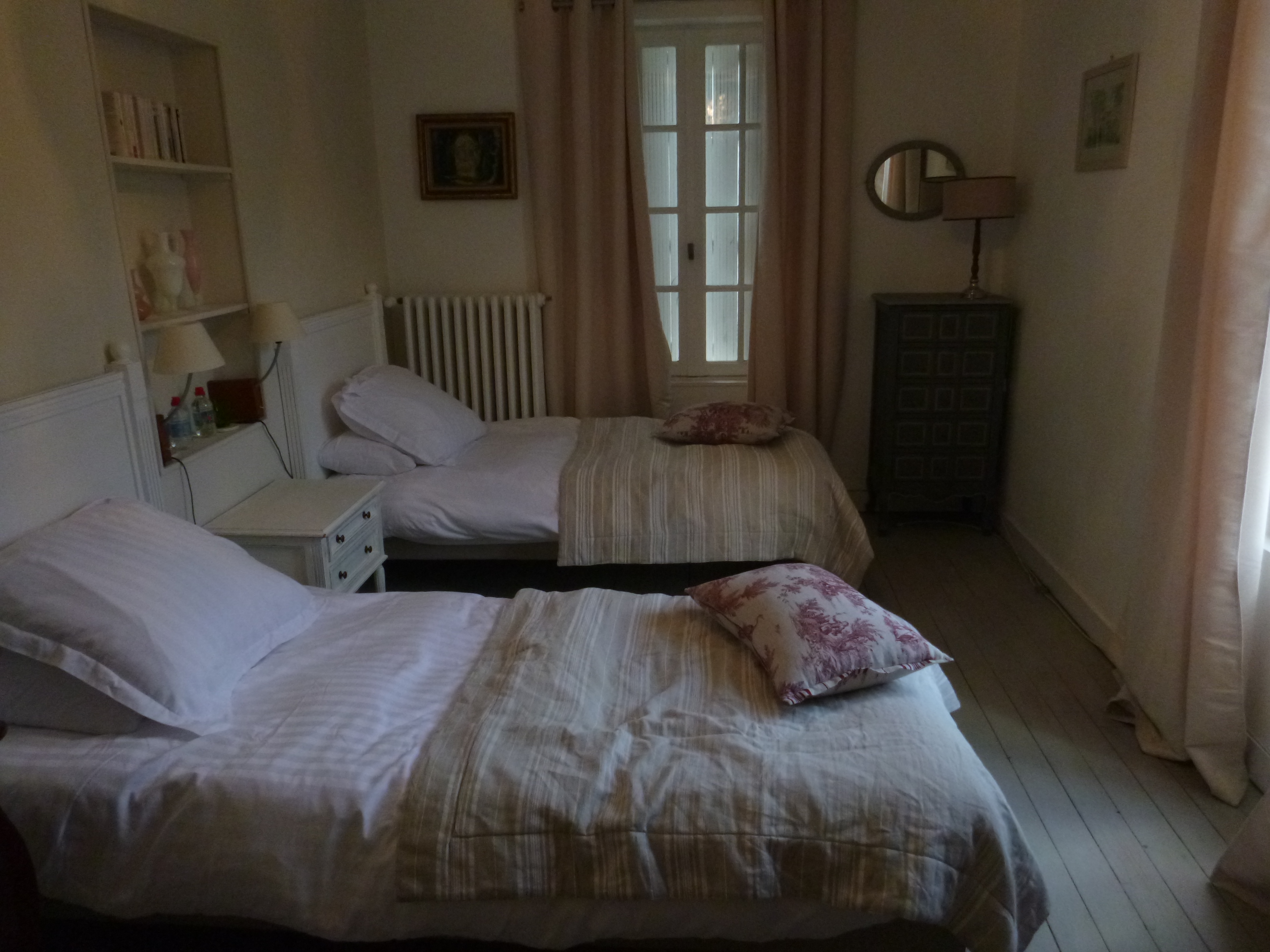
From Saumur, we drove to our B&B in Amboise, whose chateau towered above the city. We enjoyed the family feel of Les Collones de Chanteloup, located along a quiet lane. Our breakfast there included some dainty local strawberries very close in size and taste to wild ones and tiny individual pots of chocolate mousse, served in antique flowered porcelain as old as the recipe. Of course, there were also the typical cheeses, meats, breads, cakes, croissants, yogurt, and freshly-squeezed orange juice, too.

P1010766

That day, we visited the chateau at Chenonceau and had our most surprising adventure, a true serendipity and the subject of tomorrow’s post, most likely the last for this adventure. We’ve been home now for almost a week – time to finish up!

P1010914 (2)

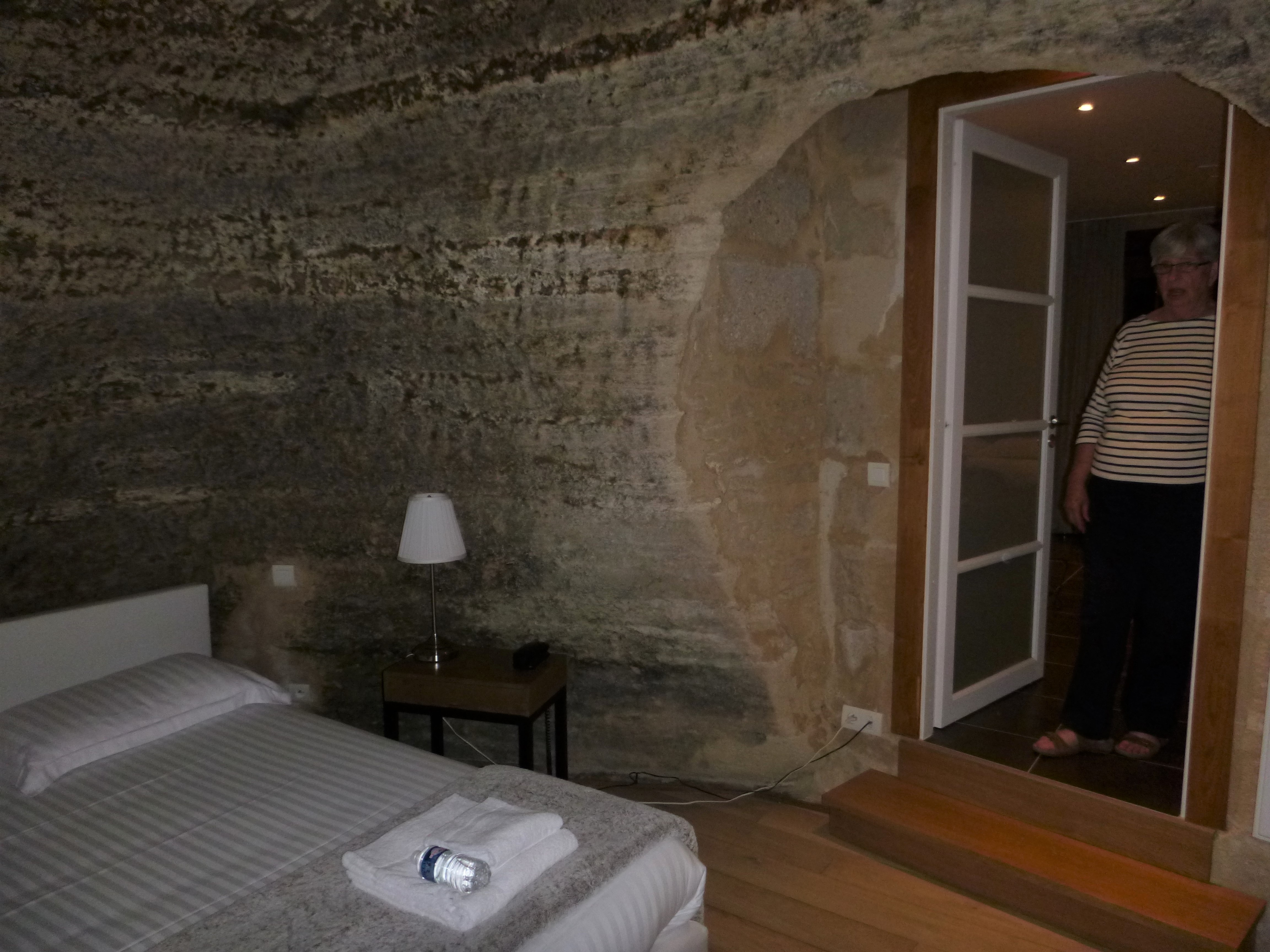
The experience of cave dwelling for a night did not disappoint us. Megan and I had the interior room. The curving walls, damp and rugged, set off the clean bed, which was bravely made with crisp white sheets. Crusted on the rough walls were bits of rocks, tinged green with moss or lichen, that mysteriously made their way into our hair. The cooler sleeping temperature (naturally around 54 degrees Fahrenheit unless the heat was on) was a nice change after several sweltering nights in much fancier rooms.

The hotel’s restaurant served dinners centered around bread baked in the traditional troglodyte manner, with various toppings, but we opted for burgers a short walk away at a restaurant by the small village church instead.

P1010919

P1010905