First impressions of rural Normandy

P1010511 - Monet's house

Normandy’s countryside made for a picturesque day of driving, the most we would have this week. Quilted fields of yellow-flowering rapeseed and white-flowering orchards bordered pastures where cows of all colors grazed by half-timbered barns.

The sun was warming the air beneath deep cobalt skies as we arrived in Giverny. Here was where Monet had lived for exactly the second half of his life, from 1883 until his death in 1926. At 80 rue de Claude Monet, we found ample free parking in a spacious lot just across the street from his house. The ticket was a bargain at 9.5 euros.

P1010480 - poppies.JPG

The large rectangular flower garden behind Monet’s house was a riot of brilliant hues. Having just left the dull brown landscape of wintery Maine, I drank in the color. Bright green grass, tulips, azaleas, poppies, and pansies lined the walkways, while vines climbed trellises, arches, and ancient stone walls.

P1010478 - me at Giverny

What I’d been dreaming of seeing, though, was Monet’s water garden, which has been recreated in its original design. A passageway took us under another road and toward the Etang des Nympheas, the lovely French translation of “water lily pond.” And there it was, with the curving bridge and the rowboat and mysterious carp hovering near thick lily pads not yet in flower.
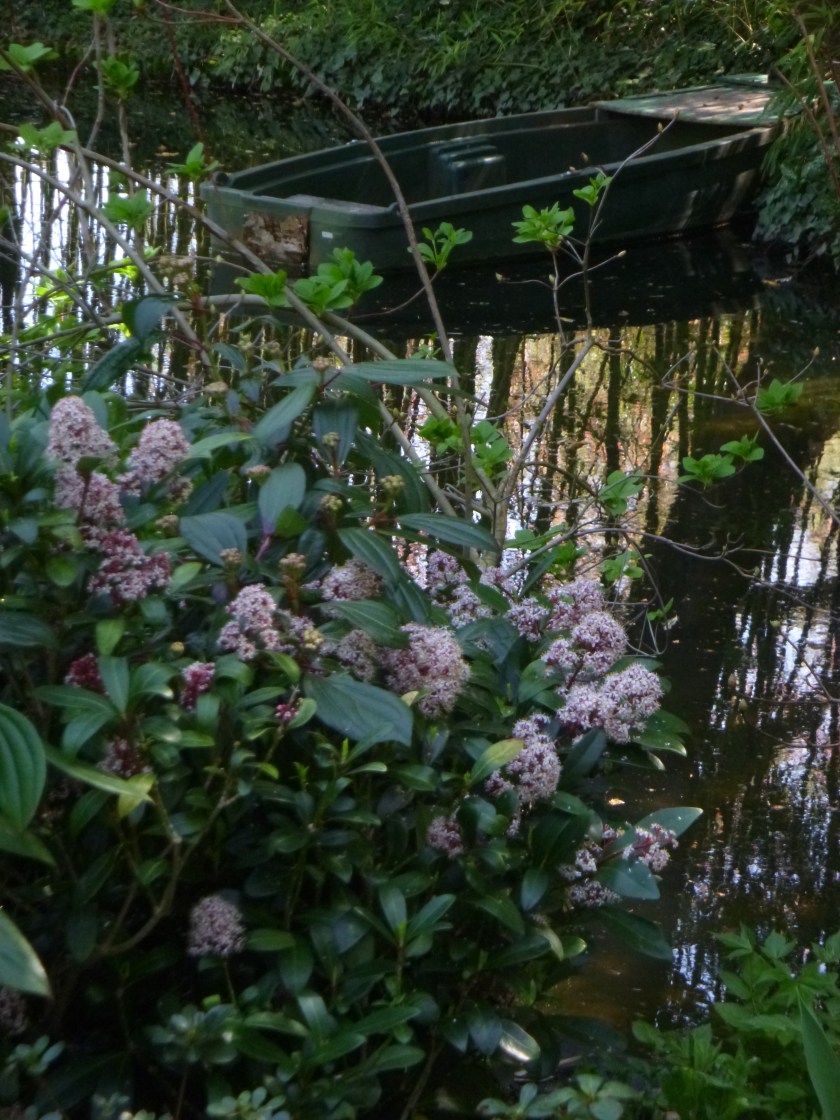
P1010490 - Monet's boat

There were plenty of paths to wander. All of the bridges had been painted rather a shinier, brighter green than I would have chosen, but the other touches blended easily into the garden’s natural design. Bamboo railings were lashed together with dark brown twine and rustic wooden borders lined the tiny, fast-moving stream.

This was a garden of textures, merging with colors, creating the living painting that Monet had intended.  People strolled, their voices hushed, as if around the next bend they might come upon Monet intent upon his work.
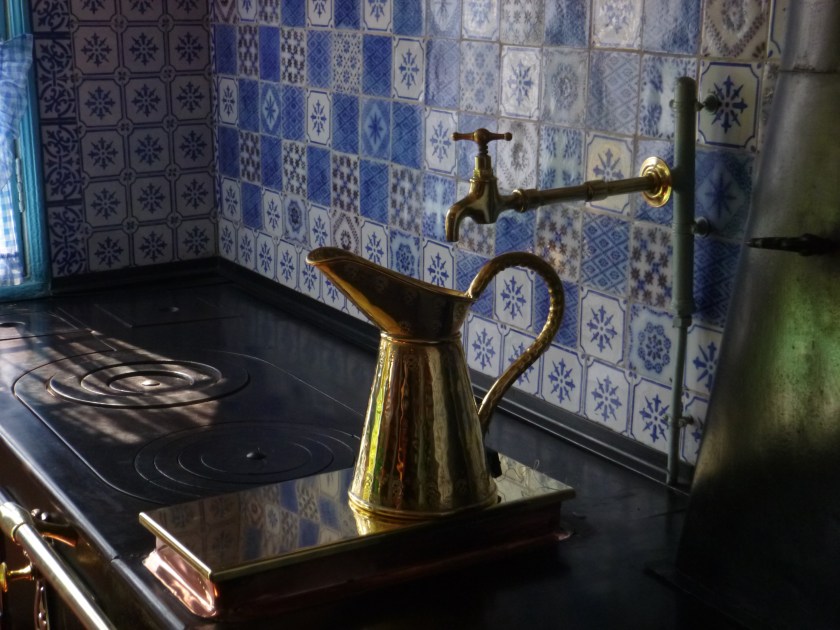
P1010534 - Monet's kitchen

Inside, the house overflowed with art, as Japanese engravings mingled with the paintings of Monet’s contemporaries and his own. The yellow dining room and blue kitchen made me feel right at home; they were my favorite rooms.

P1010544 - cliffs at Etratat

Our next stop, a detour to Etratat, on Normandy’s north coast, was well worth it. White cliffs bracket the beach on either end like encircling arms and tower high above mere humans. The sea in places has carved out arches and tiny caves. Mom and Dad sat on a bench looking out over the English Channel, perhaps remembering early days on a beach on the other side of the Atlantic.
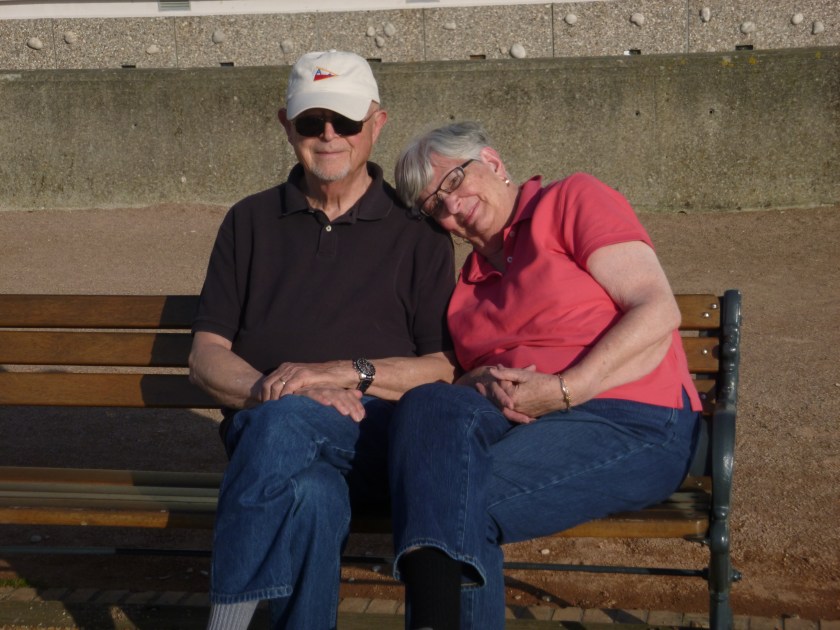
P1010555 - Mom and Dad at Etratat

We ended our day with dinner in the scenic town of Honfleur, where tall narrow houses, some 2 windows wide and 7 stories tall, marched along the far side of the harbor. We will have one more day in Normandy, then head to Brittany.
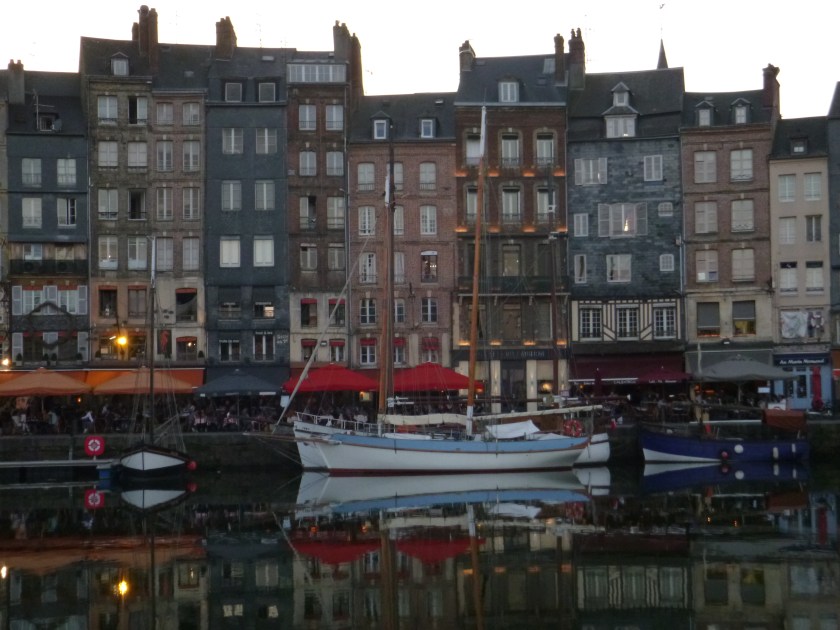
P1010567 - Honfleur


Just a peek at the grandeur of Paris

P1010456

We walked home late Sunday afternoon, with Île Saint-Louis bathed in sunlight that had finally won free of dark clouds. We’d sampled pungent blue cheese and local wine and walked a timeline from the very roots of the city to the fall of brave heroes in World War II. It had been a full day, and yet just a bit of all that Paris has to offer.

That first night I hadn’t gotten much sleep, couldn’t sleep, and didn’t even feel tired when morning came. Paris energized me with her tempo that never seems to stop. It was invigorating, pulsing, embracing, but also required our commitment not to linger. We didn’t. I’ve fallen in love with French butter and tried it this morning on a croissant, though Mom and Dad’s crepes looked awfully good, too.

Our day began at the Musée d’Orsay, a treasure trove of Impressionism, with lovely exhibits of art nouveau, architectural models, and more that we didn’t see. We traveled by metro to this museum which resides in a former train station.

P1010333

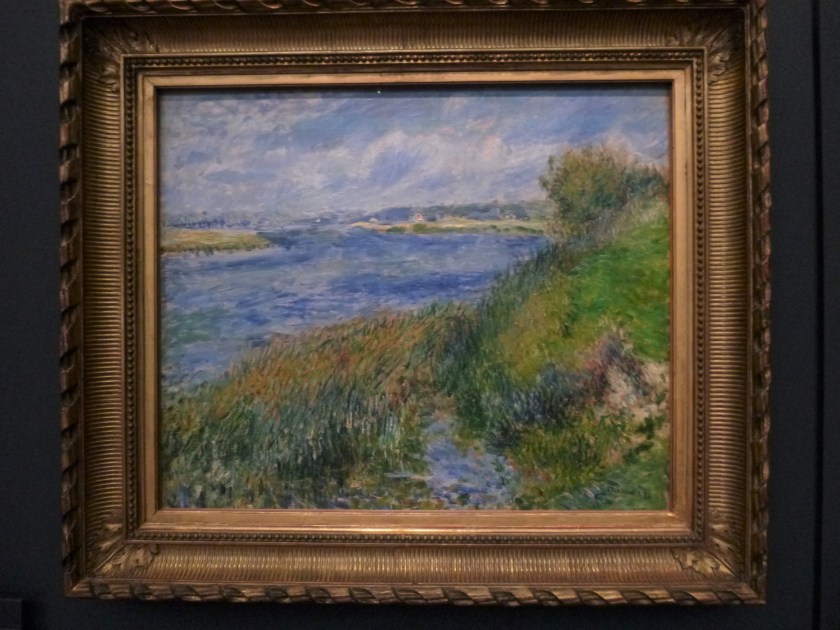
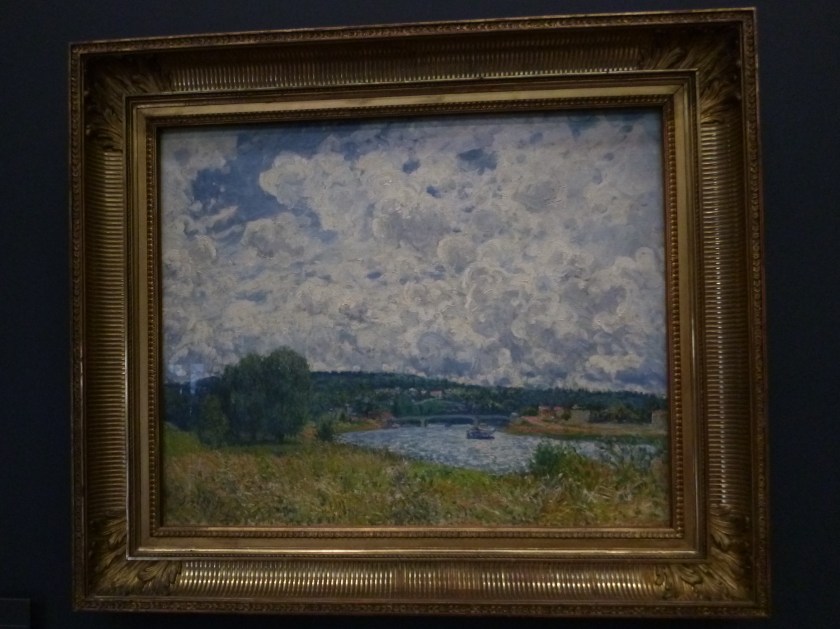
We spent about four hours there and absorbed so much that we never ended up (at least this weekend) going to the Marmottan. I was particularly drawn, logically, to the natural landscapes of the Impressionists, who strived to capture moments in time by working quickly in the ever-changing light. “The brushwork is rapid and visible,” said one display. “The framework is often off-center; the colours are light, seeking to capture the atmospheric effects outdoors.” The two works below did this well, I thought.
P1010362 - early nature scene

Both of these paintings were in a gallery focusing on the early years, following the first Impressionist Exhibit in 1874. Renoir’s painting above (1876) shows the banks of the Seine at Champrosay. Alfred Sisley’s painting below (1877) is of the Seine at Suresnes.

p1010321.jpg

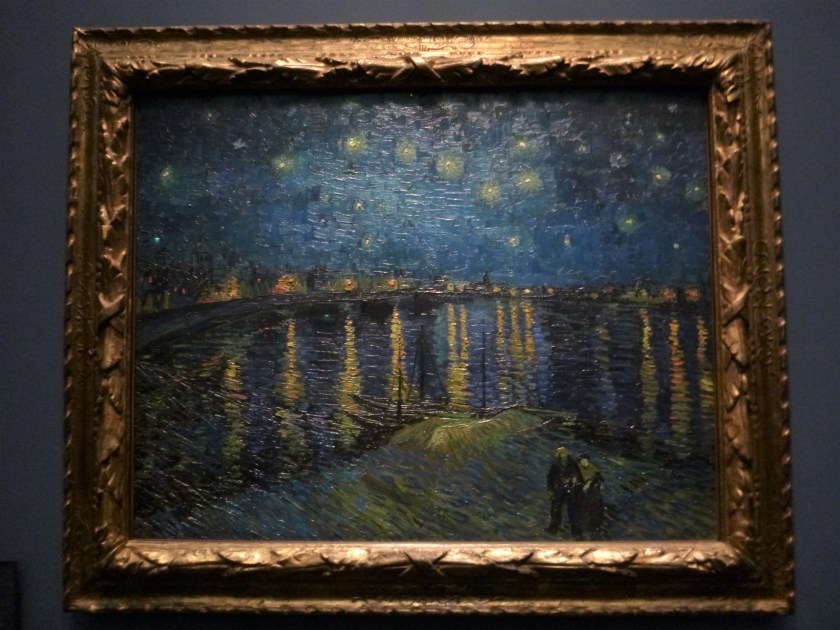
Then there was the fun of discovering paintings that I knew, from art history class or a book…moving close to scrutinize the brushwork, then moving back to see the whole scene. Renoir’s Bal du moulin de la Galette and Van Gogh’s first Starry Night (not the one painted later after he was confined to a mental institution) both reside at d’Orsay.

P1010316

P1010342

P1010365

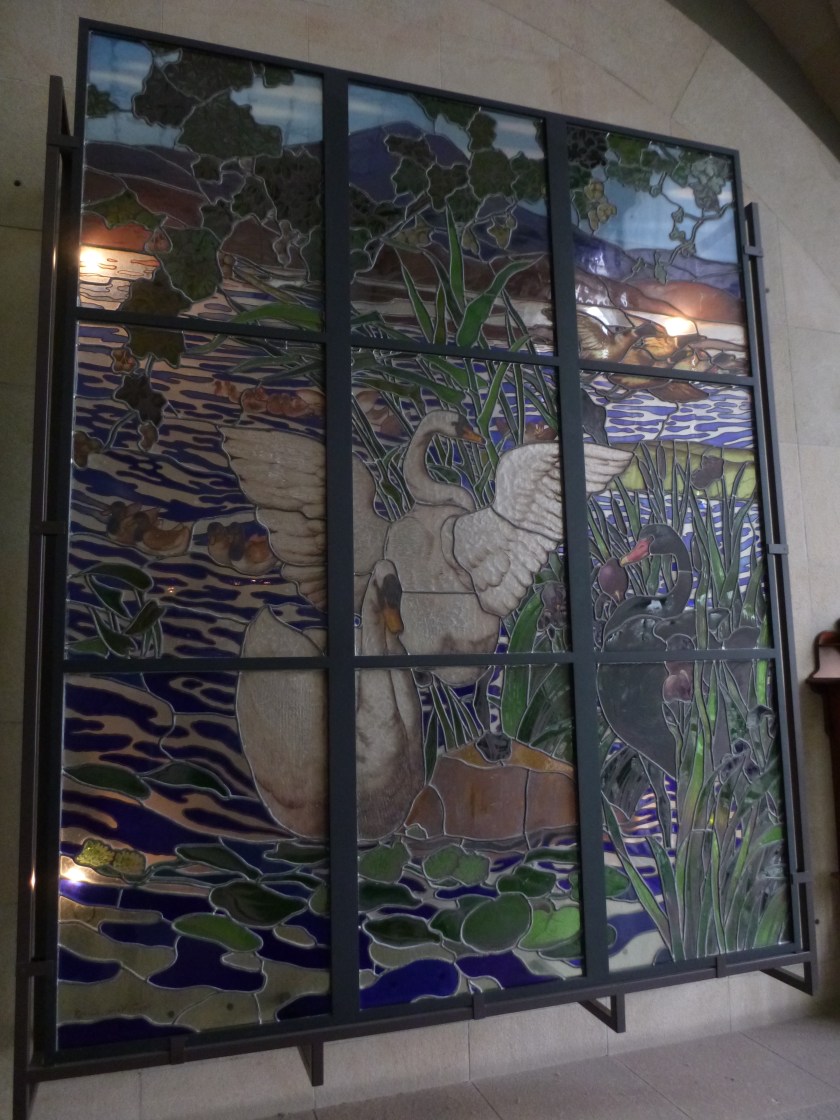
My favorite work in the art nouveau exhibit was the delicately- colored stained glass of “Cygnes sur la lac d’Annecy,” created in 1890.

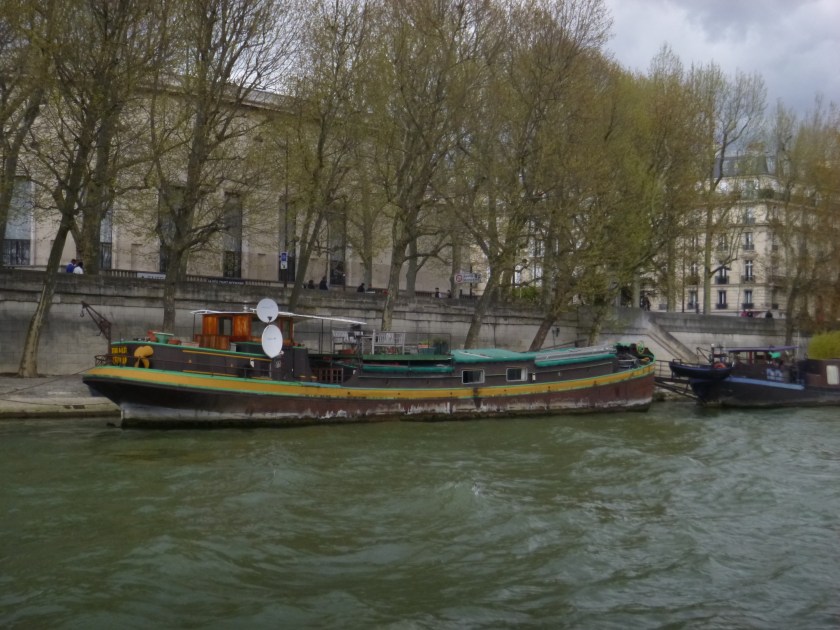
Our Seine river tour was not particularly noteworthy, although it did help me understand the layout of Paris a little better. The overcast sky and crowded quarters dampened our moods or perhaps we were still jet-lagged. I did enjoy the motley assortment of houseboats moored along the banks; some are older working canal boats repurposed for habitation, with patio sets and umbrellas out on the decks.

P1010398

P1010403

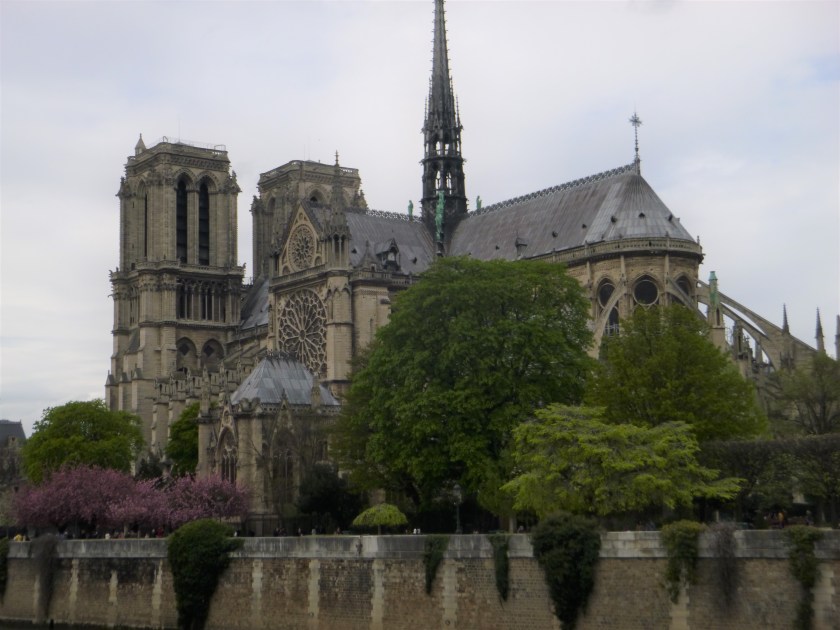
From the Hotel Abbatial, it was just a short walk across one of the bridges to Île de la Cité. This island in the Seine is the oldest part of Paris, first populated by Celtic tribes in the third century B.C. and home to the cathedral of Notre-Dame. A bride and groom were just emerging from a shiny white Rolls Royce to take wedding photos, so I took one, too.

P1010405 - Notre Dame

P1010412

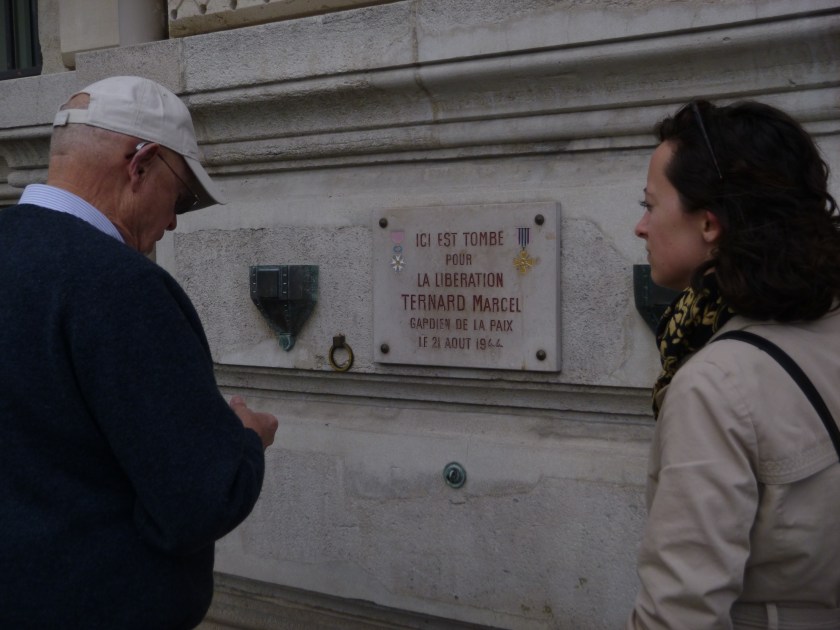
As we walked across the small island, we passed two plaques honoring the places where men of the French Resistance had died during the Liberation of Paris in August 1944. You could just hear the emotion and respect in Dad’s voice as he explained their significance to Megan.

P1010429

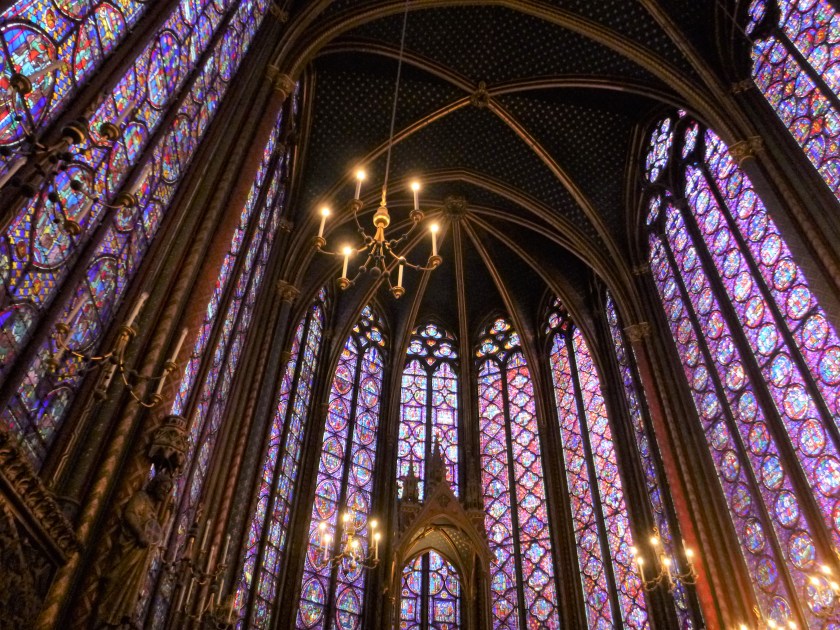
Nearby was Sainte-Chapelle, whose towering stained glass windows are framed by the thinnest of columns, curving into the heavens. This marvel of Gothic architecture was constructed in the mid 13th century by Louis IX to hold Christ’s Crown of Thorns and fragments of the cross, which the king purchased from the Emperor of Constantinople. These holy relics cost three times as much as the chapel’s construction!

P1010435

With our aesthetic and historical minds full, we headed to another excellent restaurant that Dad remembered from long ago, called La Rotisserie d’Argent, where I had superb confit de canard. We enjoyed the food so much that we made a reservation to return in a week on our last night in Paris. In the interim, our next stop will be Normandy.


Paris, we love you!

P1010258

“Any rubbish for the bin?” our cheery Aer Lingus flight attendant asked, collecting the remnants of our breakfast. “Any children for the bin? Or have you all been good children now?” I laughed. The travel logistics had gone smoothly and we were almost to Paris.

From the plane window, Dad pointed out the English Channel, which he said the French call La Manche. It’s been 47 years since Dad first came to France and he returned often on business trips. For the rest of us (Mom, Megan, and I), it would be brand new.

We arrived midday Saturday for two nights in Paris, then a week touring northwestern France. We will wind our way through Normandy, Brittany, and the Loire Valley, before returning to Paris for one last night.

Just getting to our hotel was an adventure, with a rolling rail strike in process. On certain days, there are trains running, but only a few. On the RER train from the airport to the city, the crush of humanity seemed limitless, as more people crammed on at each stop, far more than I would have believed possible. As an icebreaker, the experience was unsurpassed, and one young woman even helped us negotiate our transfer to the metro.

P1010264

People in Paris seem to welcome conversation. At this sidewalk table, we talked with a woman walking her spaniel, who was excited to discover that we were from Maine. She loves watching the TV show “Murder She Wrote,” which still airs here, and wanted to know if Cabot Cove was a real place.

p1010269-e1523867099528.jpg

Megan was waiting when we arrived at our hotel, amazingly cheerful despite her suitcase being still in D.C. On the bright side, she got to shop for a new Paris dress!

P1010293

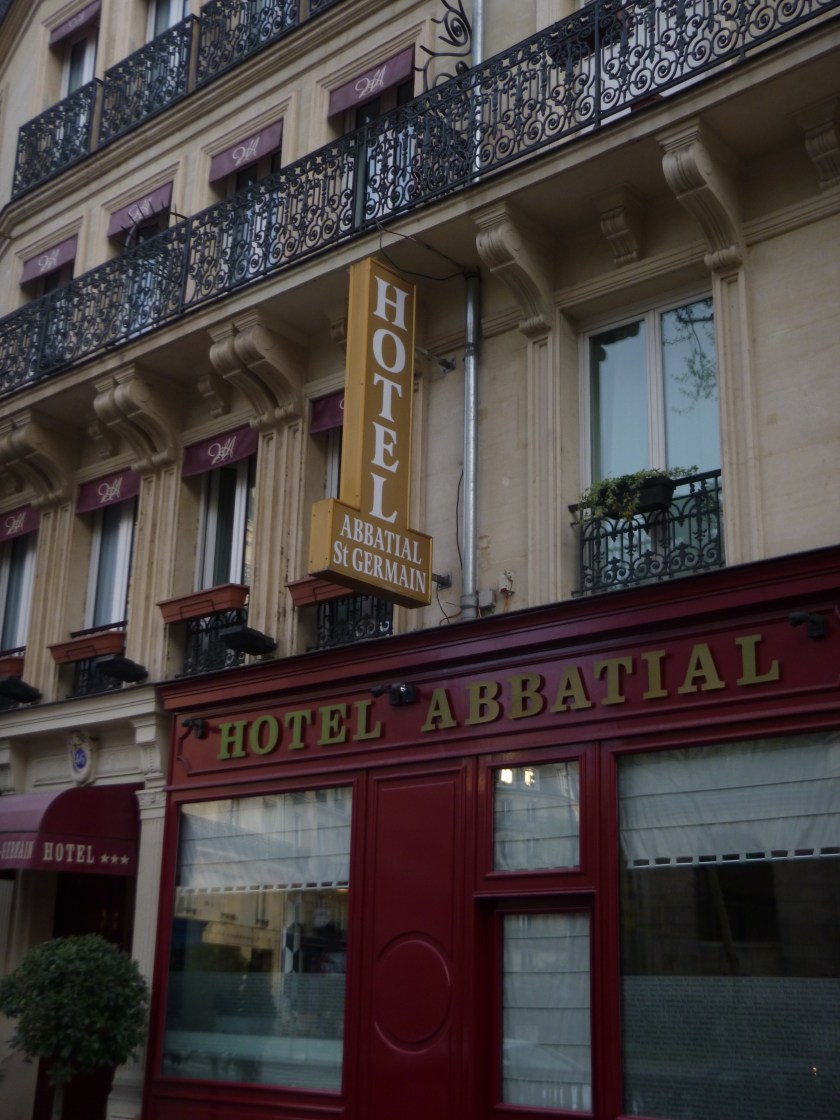
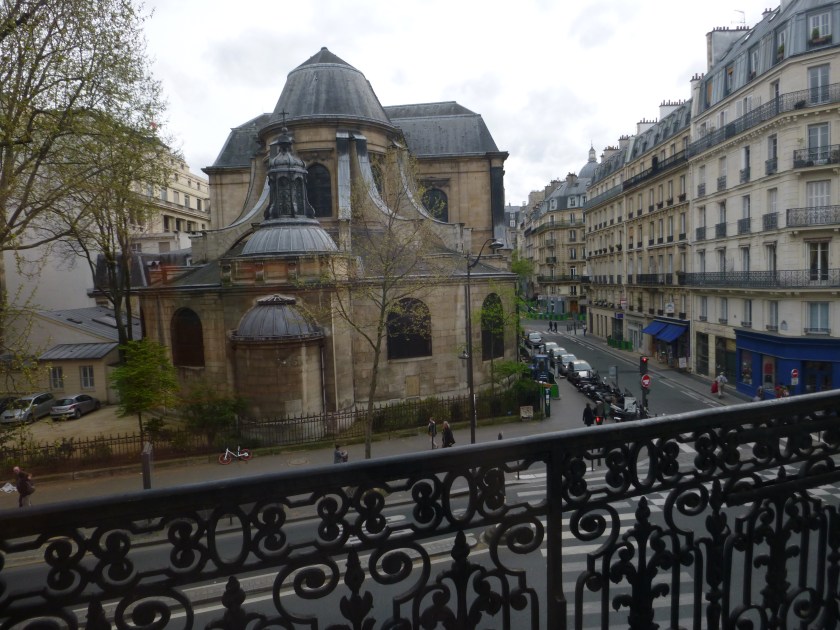
The Hotel Abbatial St. Germaine, on busy Boulevard St. Germaine, lies close to the Seine River and Notre Dame. Our room is on the street side, with a small balcony, and we’ve enjoyed leaving the door open to the sights and sounds of the city. It also brings fresh air into our small and rather warm room.

P1010265

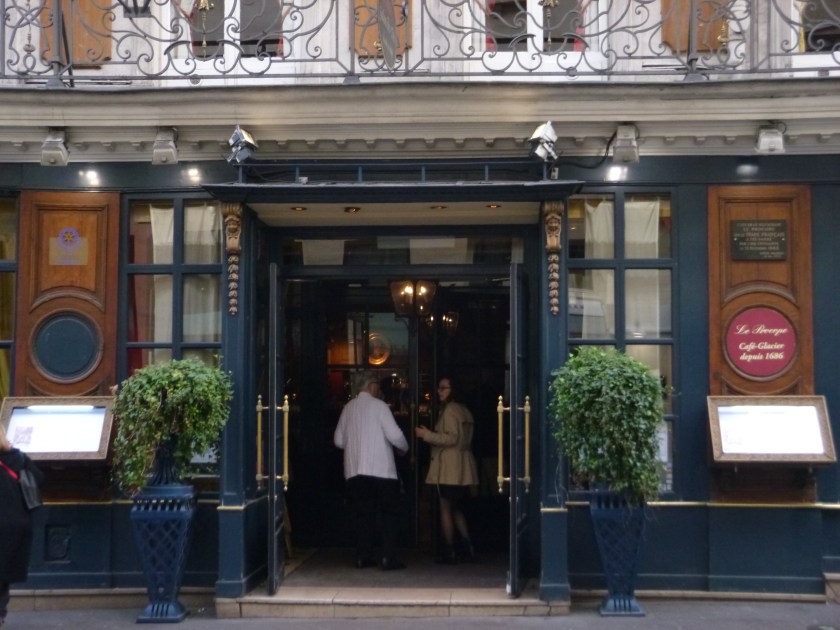
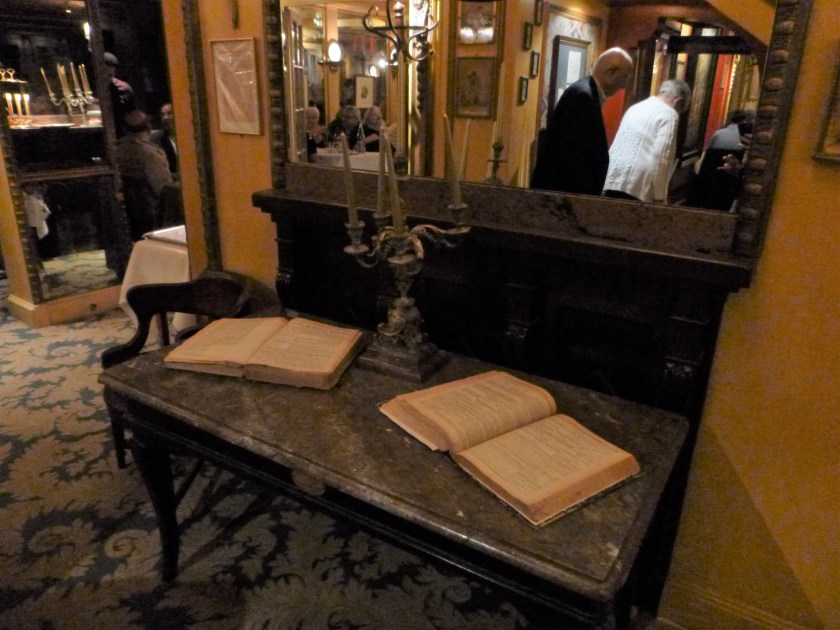
We finished the day with dinner at La Procope, the oldest restaurant in Paris. We ordered a bottle of champagne to celebrate our safe arrival. I had a country terrine, coalfish with winter vegetables, and crème brulee, then we walked upstairs to see Voltaire’s desk, which occupied a place of honor amid the elegant décor. Then, to sleep.

P1010274 - La ProcopeP1010285 - desk of Voltaire


A March gathering of canoeists warms the heart


Thanks to a generous invitation, last weekend I attended my first (but probably not my last) Wilderness Paddlers Gathering. Begun in March 1993 during “a blizzard of historic proportions,” this annual event has become a tradition at the Hulbert Outdoor Center in Fairlee, Vermont. For those of us who love canoeing, what could be a better way to spend a March weekend? Sharing stories, photos and videos, skills, and incredible amounts of tasty food with those who love canoeing the waters of the north.


Once there, I discovered a few old friends and made lots of new ones. I had 25 minutes on Saturday morning to tell my story and practiced at great length on the 4-hour drive over to this comfortable camp on the NH/VT border. See what a great audience I had! As always, though, listening to everyone else was the most fun. Through the beautiful magic of media, we rafted the Grand Canyon, paddled the Alatna and Koyukuk Rivers in Alaska, and followed Chewonki down Quebec and Labrador’s George River.

My favorite was a documentary, “Into Twin Galaxies: A Greenland Epic.” This hour-long film follows three young explorers on a insanely breath-taking quest kite-skiing across the Greenland ice cap to reach a river that they discovered on Google Earth. Delayed by the terrain and a serious injury, they arrive later than planned to find ice where they expected open water. When fate finally provides them with a churning river filled with huge, uncharted waterfalls, viewers will hold their breath in astonishment at what they try to run. Seize the chance to see this one when you can!

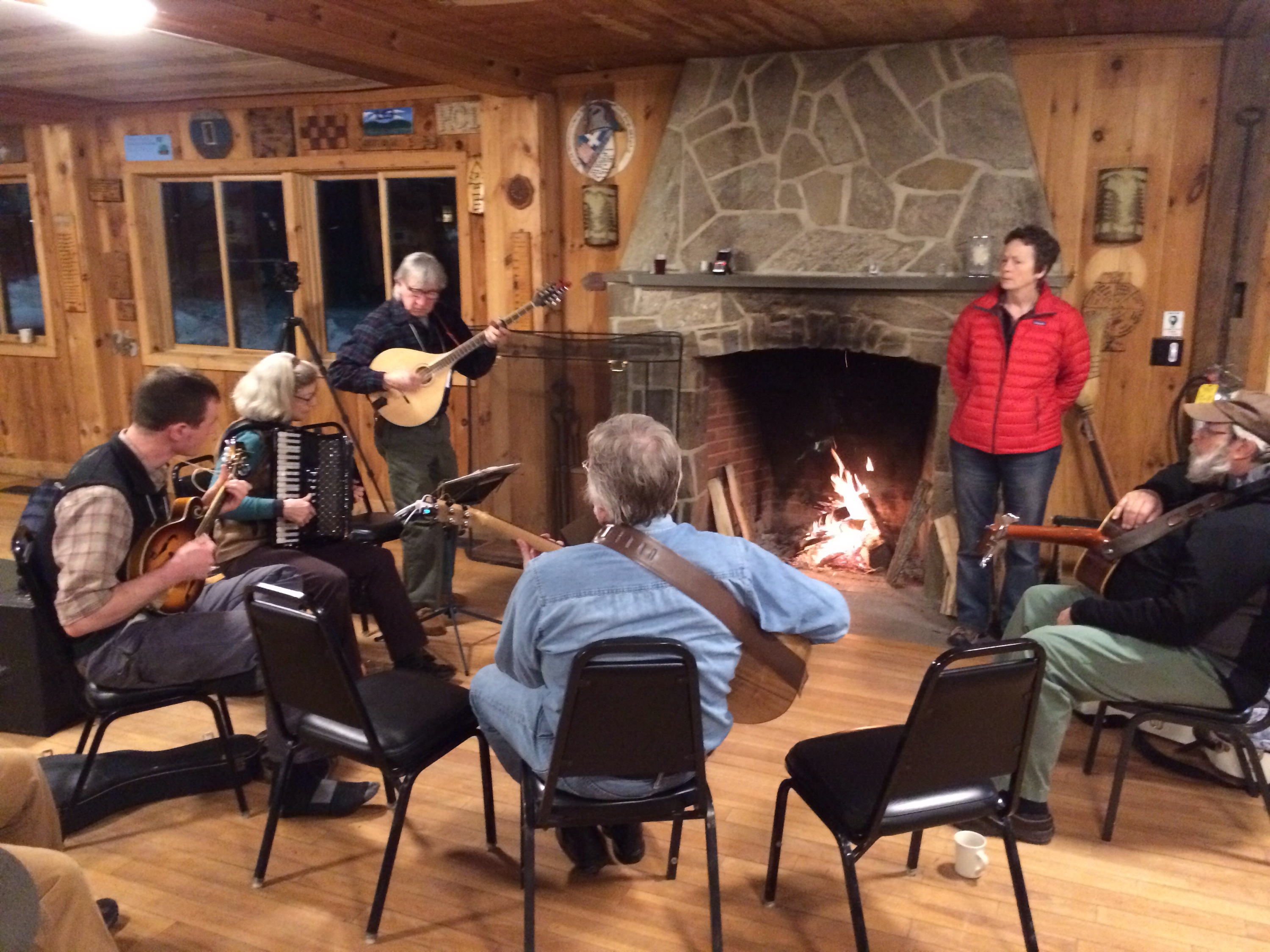
IMG_7376

Of course, you never know quite what you’ll learn. Above, retired Vermont fish & game warden Eric Nuse, whose stories are featured in Megan Price’s book series, Vermont Wild, tells a great breakfast story. Seems there was this ripe moose carcass caught up in a tree, one that could perhaps be best removed with dynamite. The key to success, learned the hard way, was to have a long enough cord to get well out of range!

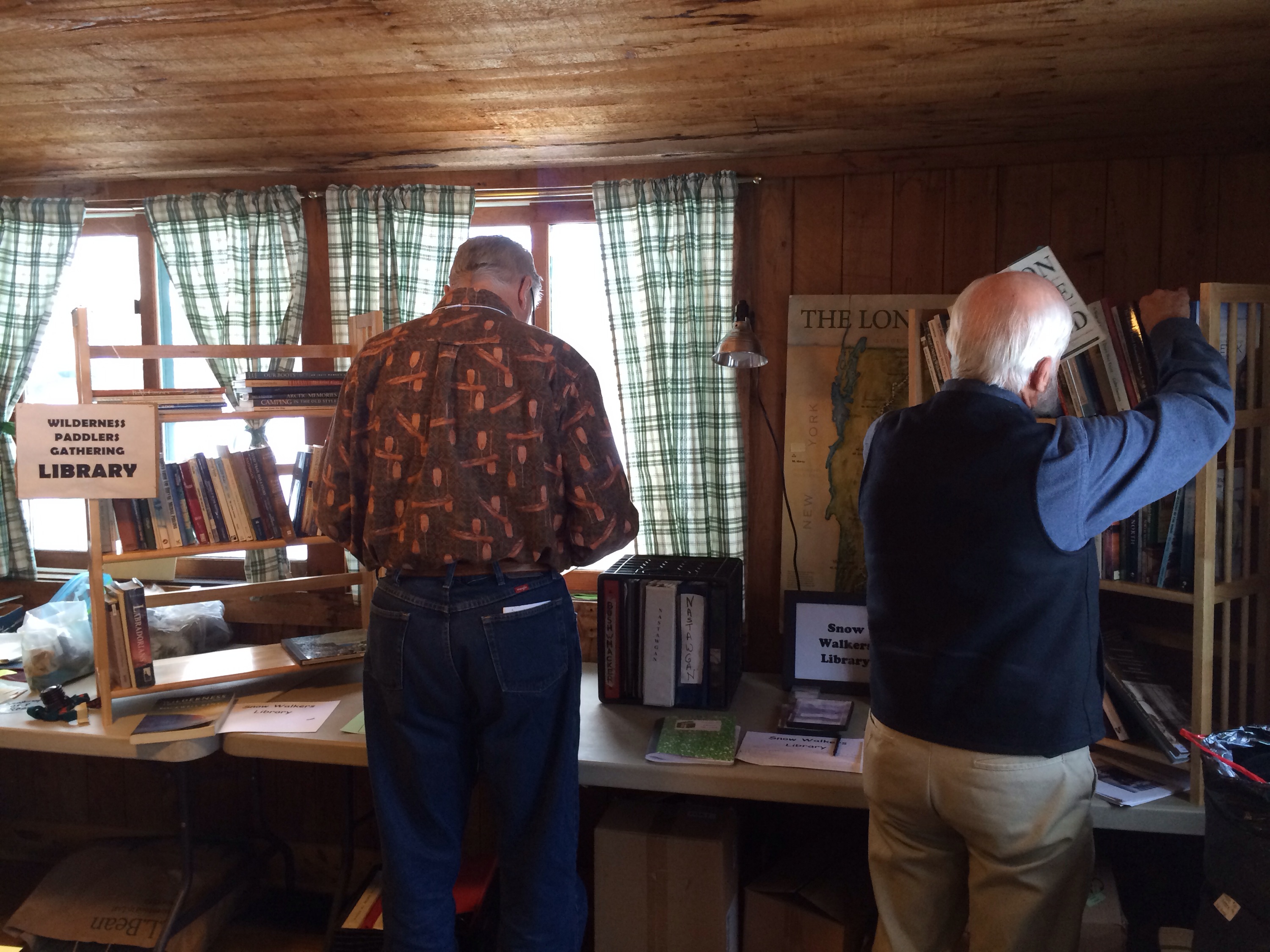
Below is the traveling library that appears at both of the yearly Northern Wilderness Travelers Conferences, including the November Snow Walkers Rendezvous. I borrowed a book that’s been on my list for a long time, Kabloona in the Yellow Kayak: One Woman’s Journey Through the North West Passage by Victoria Jason. I guess that I just can’t get enough of reading by the woodstove, waiting for spring!

To think I almost put my snowshoes away


It’s been a while, hasn’t it?

Sadly, February was mainly dedicated to flu survival and recovery. Happily, I got better in time to visit my children in Virginia, meeting their new chickens, touring Monticello, and celebrating my former brother-in-law’s 50th birthday. (How could that be?)

Now, somehow, I find myself a week away from spring, with visions of paddling trips dancing in my head. There is much to share and catch up on!

IMG_7369
View of last week’s snow-laden trees from flat on my back. I’d been tugging on a sapling bent across the path and pinned to the snowy ground. As it popped free, I tumbled backwards, arms flailing, to see the forest from a slightly different angle!

Today is another snow day, our ninth, counting the 3 days we missed with October’s wind storm. That is two more than in any other school year I can remember. With our third nor’easter in 11 days upon us, and a blizzard warning, we may miss tomorrow as well. Last week’s storm brought about 14 inches of wet, heavy snow that plastered itself to the sides of trees and created Dr. Seuss-like mounds on every branch and twig.


In late February, I was tickled by the sign above, spotted in Thomaston during a book delivery jaunt. The weather was warm and the air felt like spring. I truly did almost put my snowshoes away. Now I think the groundhog may have been wiser than I thought!

IMG_7393

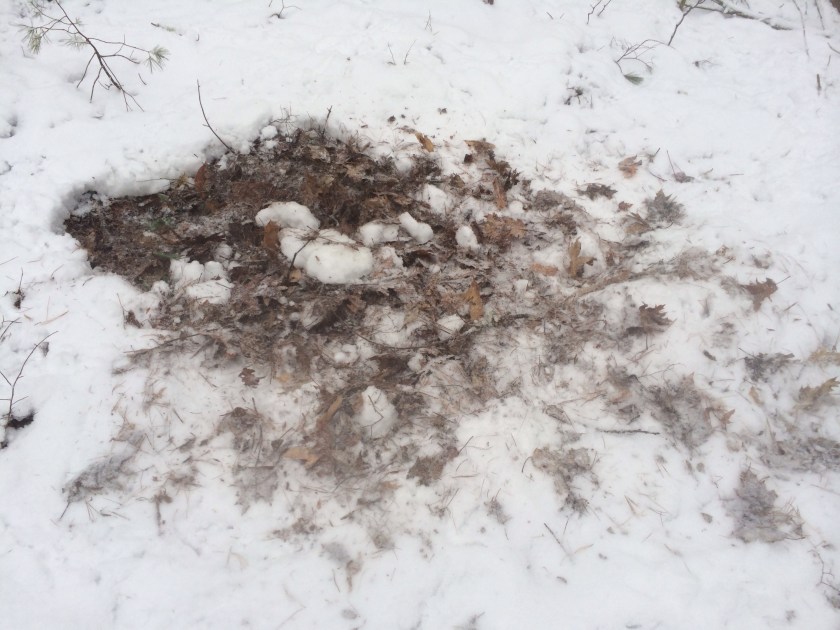
Out snowshoeing this morning, with just a dusting of new powder, turkey tracks were everywhere. In places, the forest floor was in turmoil where they’d torn up the leaf litter in search of food. Hopefully the turkeys were feasting on ticks, already active here in Maine. I found the first one of the year crawling on my pants last week. Seems like we should either have ticks or blizzards, not both!

IMG_7392

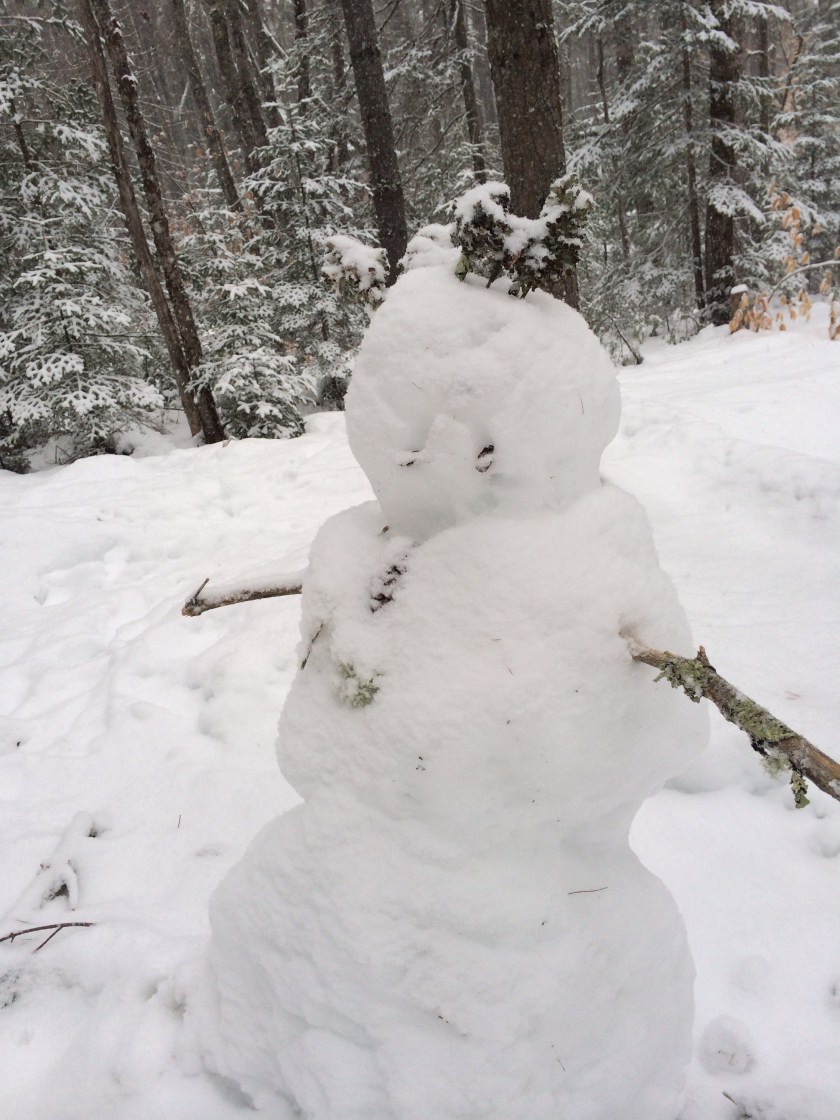
Usually, I have the back woods to myself. This morning, though, I was greeted by a new friend. Our neighbors had taken a walk with their kids, leaving behind this snowman, decorated with branches, pine cones, and lichen. By mid-afternoon, he was rapidly becoming just a snowman-shaped blob.

IMG_7394

Well, it certainly feels good to be back to writing. Look for more news soon, including updates on Upwards and the author life and perhaps even some paddling plans. Then, in April, our family adventure in France will take us to Paris, Normandy, Brittany, and the Loire Valley.  Until then, stay warm, dry, and safe!

Looking and seeing in the winter woods

The real voyage of discovery consists not in seeking new landscapes, but in having new eyes.     Marcel Proust

To clarify, I’m all for seeking new landscapes! Like April in Paris, this spring, where we’ve just booked a hotel a block from Notre Dame! In our everyday world, though, there are plenty of new discoveries to be made, if we would just look for them.

img_7239.jpg

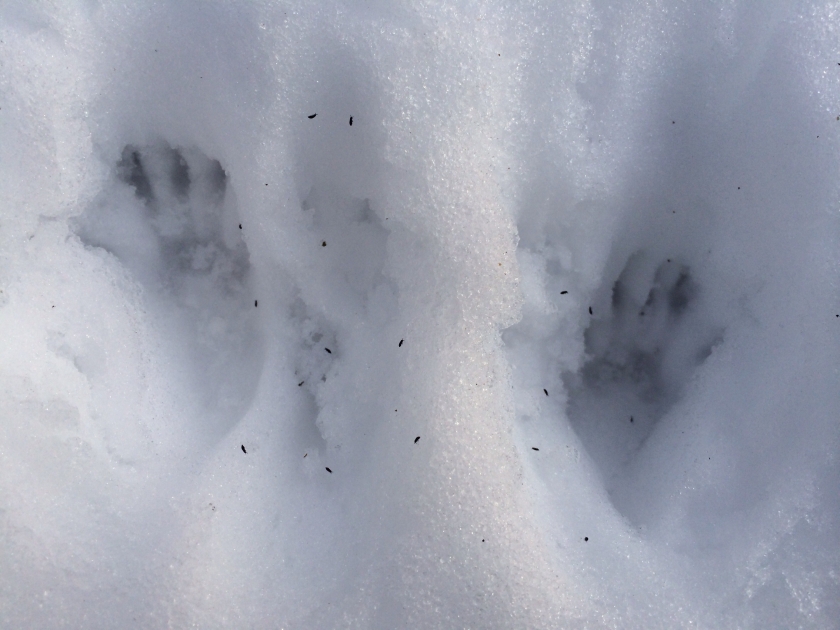
The forest is still criss-crossed with animal tracks. As the snow turned thin and slushy this week, the imprints stood out in greater detail. Tiny “handprints” of red squirrels were everywhere, as were the squirrels themselves. The warmth prompted me to carry along my binoculars and to pause from time to time. The repeated call of a barred owl came from afar, but it was mostly red squirrels that I saw.

One explored an ancient log pile, dark and damp, adorned with scattered piles of demolished pine cones. He moved with fluid energy among the logs, popping out first here, then there, to scold me. Later, another bravely stood his ground atop a stone wall. Only his haunches moved, quivering with indignation, and the shiny blackness of his eye stared me down. He looked fit and well-fed, the subtle gray and rust of his sleek fur elegant in the drab and cloudy light.


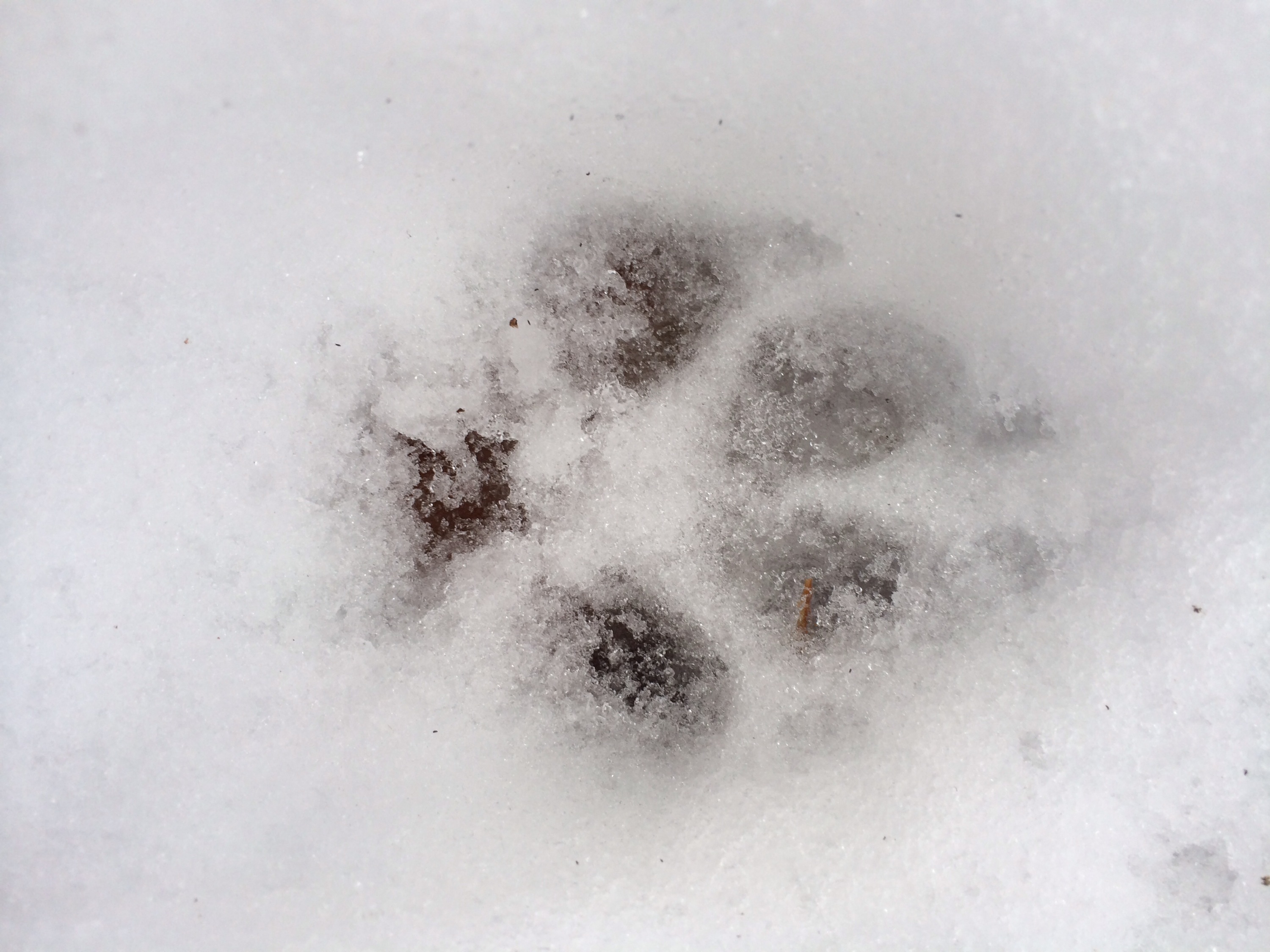
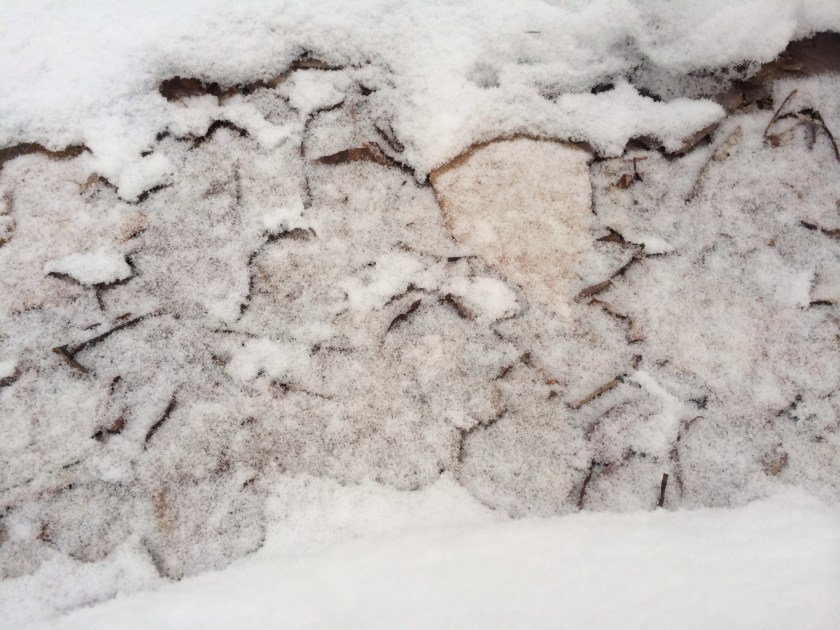
Canine tracks still mystify me. The one above was repeated in a single line that roughly followed my old trail for quite a distance. Both coyotes and foxes frequent these woods.

IMG_7258

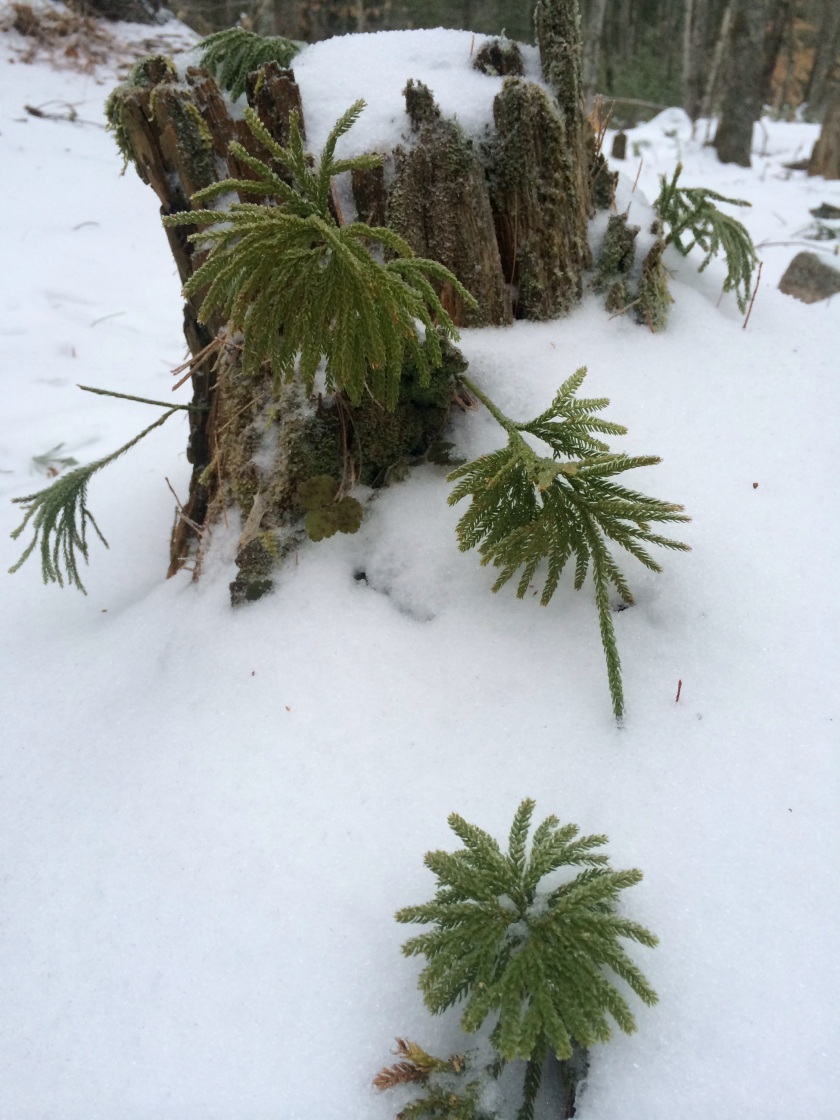
There’s green stuff out there, too. Not just trees, but much more, if you look closely. This small native plant, whose relatives once dominated primeval swamps, is very common. Somehow, it thrives in the northern forest, surviving months of ice and snow.

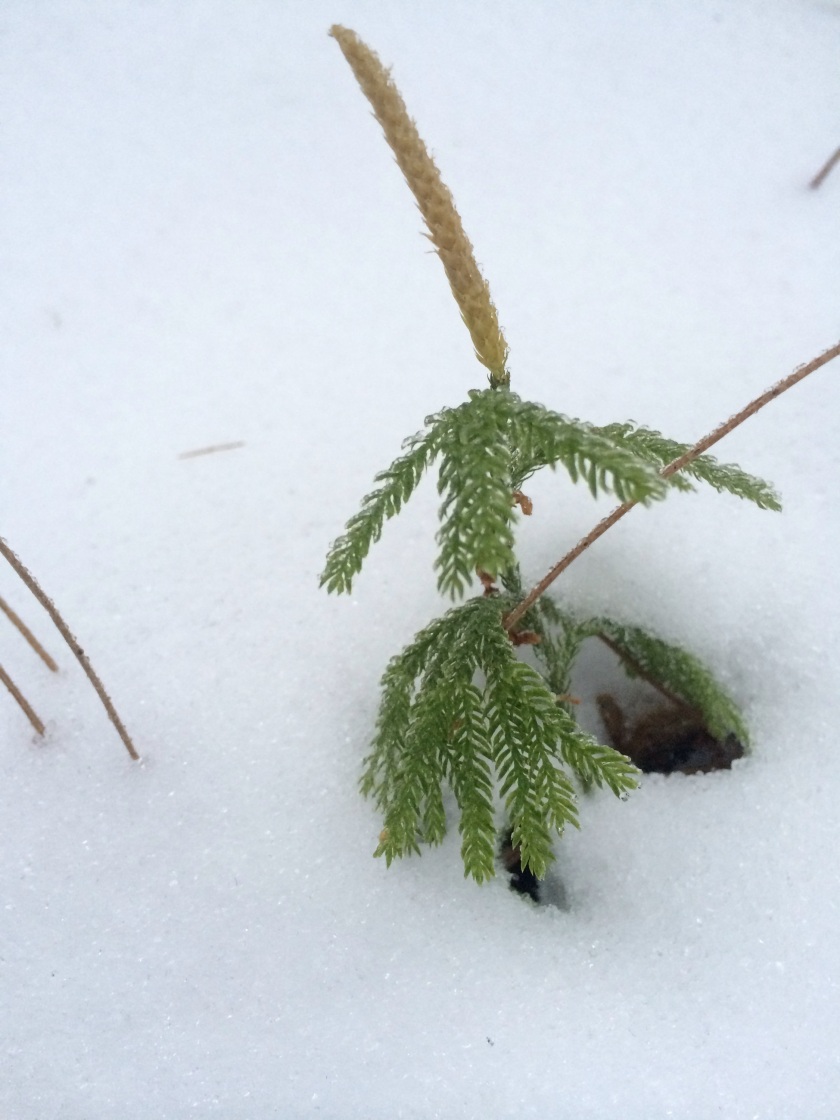
Looking a bit like a miniature spruce and often called “running pine,” the club moss is neither a conifer nor a moss. Closely related to ferns, the club mosses are vascular plants, with “veins” of xylem and phloem. Their ancestors were once the most complex plants on Earth. In the Carboniferous period, 350 million years ago, club mosses well over 100 feet tall dominated the forest that was later transformed to vast deposits of coal.

IMG_7254

This species, Lycopodium clavatum, is found in damp woodlands throughout North America. During the asexual part of its rather complex reproductive cycle, it produces spores, which are released from the plant’s erect, yellow-brown strobilus.

The spores are, for me, perhaps the most fascinating part of the story of the club moss. High in oil content, they are water resistant and flammable. Native tribes knew many medicinal uses for the spores, and, according to the Virginia Native Plant Society, medicine men tossed them on the fire during ceremonies to produce a flash of light.

In my reading, I found a host of other historical uses for the powdery spores, including flash photography, magician’s tricks, fingerprinting powder, fireworks, and treating rashes. Good incentive, perhaps, to try collecting some this year!

Upwards receives first book award!

The_New_England_Book_Festival_Logo

OK, how humble is it to say “first” book award? Honestly, though, my hopes and dreams for this book continue to grow, as more people read and share their thoughts. The volume of responses is growing and opportunities for the new year are coming in fast.

A few highlights:

  • Four upcoming events in the next three weeks (details on the events page)
  • Just invited to present at the Wilderness Paddlers Gathering in Fairlee, VT in March
  • Planning two events during the Adirondacks’ Celebrate Paddling month in June
  • And, of course, Honorable Mention in the category of Biography/Autobiography from the New England Book Festival.

The Boston-based New England Book Festival, sponsored by JM Northern Media, recognizes the best books of the holiday season in 17 categories. Winners are judged on “general excellence and the author’s passion for telling a good story” and “the potential of the work to reach a wider audience.”

To balance out the many hours devoted to the book, I continue to plan for next summer and enjoy today. A deluge of rain, amid temperatures as high as 55 degrees, has washed away much of our snow. The sight of green grass and brown leaves has been a welcome change. Sunday’s afternoon walk, on boots not snowshoes, felt free and unencumbered.

I tramped, I tromped, the trail more brown than white, looking around at the woods, rather than down at my feet. You know how it feels when you’ve just climbed up, then down, a mountain and hit the flat? The joy of simply swinging along is wonderful.

Gone, though, was the hushed white wonderland of winter. Every step was a loud crunch, either on a couple of inches of frozen remnant snow or, mostly, on frosty ground. Crunching along at a good pace, out to the edge of an old beaver pond.

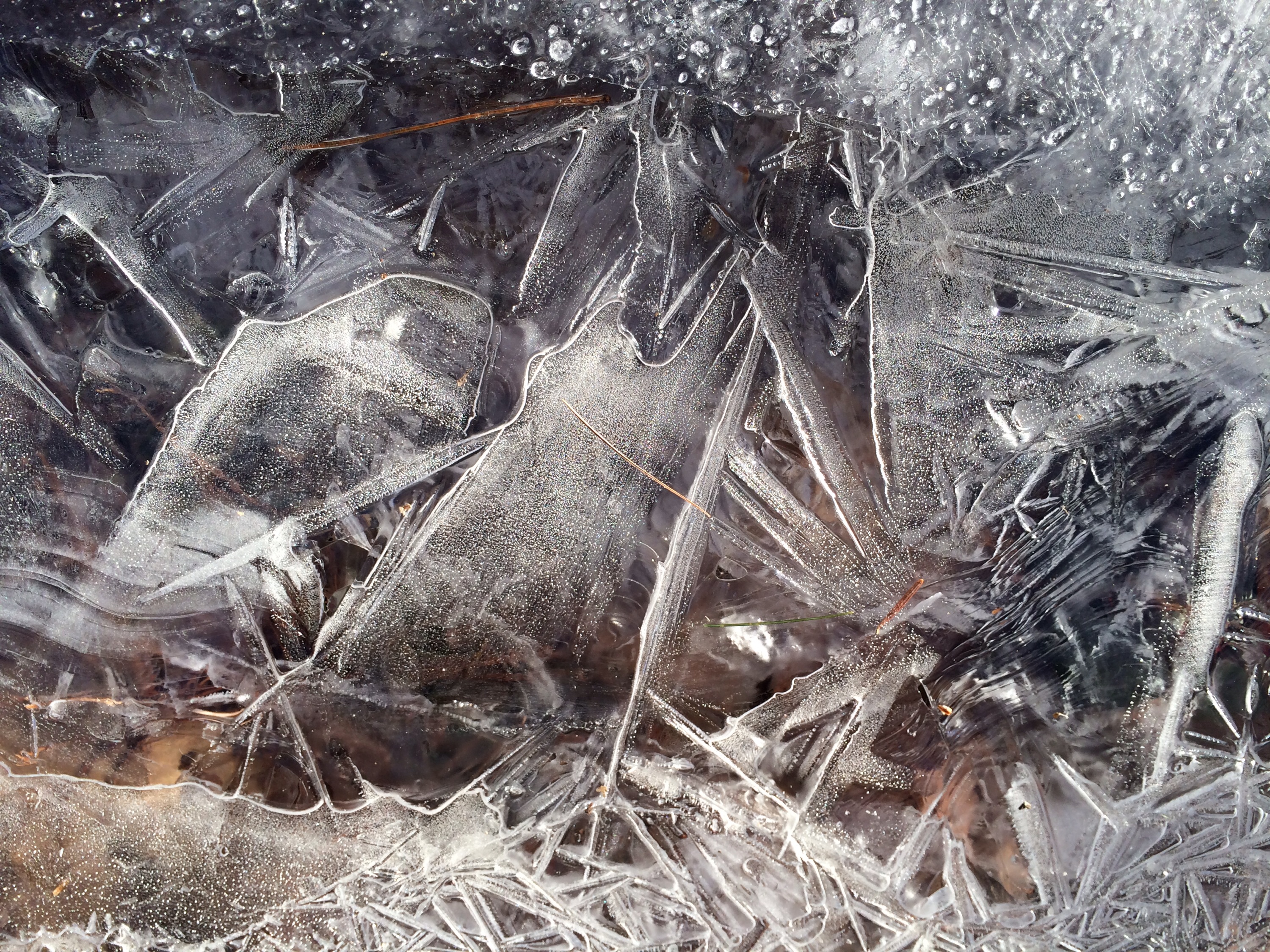
There, nature had sculpted striking designs in the paper-thin sheet of ice that rimmed the pond. I walked a few feet out to sit on a log, trying not to destroy too much of the beauty, finding an inch or two of air between the ice and solid ground below. The sound of my progress was deafening, all wildlife no doubt well warned of my visit.


When I sat, though, to take in the play of the brilliant sunlight across the ice, the ruckus continued. A vigorous wind, rustling the trees in the pond, gave the ice a tortured voice. The grinding, cracking, and squealing never let up, and the cold soon nudged me to head back home to a cup of hot cocoa and my never-ending to-do list.

As my faithful readers know, I am still learning the ins and outs of social media, and recently discovered that my automatic sharing of posts somehow missed the last one. If you’d like to join me on an earlier walk, here is my January 5th post.


Bombogenesis…it even sounds scary!

Winter so far has brought enough bitter cold and snow to make us believe that it’s serious this year. The snowshoeing has been great. I’m thinking of it as the start of training for next summer’s north woods adventure (still in the planning stages).

IMG_7115
Berries at the edge of the swamp shone in a coat of ice last week.

The word “bombogenesis” had somehow escaped my notice for some 56 years…until yesterday. According to NOAA, the term describes the rapid intensification of a mid-latitude cyclone, measured by its drop in central atmospheric pressure. A drop of 24 millibars or more in 24 hours creates a bomb cyclone like Winter Storm Grayson, whose pressure dropped an incredible 59 millibars as it approached New England yesterday. Skies are still dark here, but soon I’ll head out to start shoveling my way to the garage and our snow blower. As of now, school is open with a 2-hour delay. 

IMG_7193
Farewell small spots of bare ground, farewell to tracks and signs of life that laced the winter woods, farewell to quick and easy walking…soon all my trails must be won once more.

Around nine in the morning, the first powdery sprinkling of snow began dusting the ground. As I followed my favorite trail by the swamp to a far hill, I took a last look at the many animal tracks, almost memorized in my traipsing back and forth day after day. Dad had discovered the scene in the photo below, one sunny day last week. “There’s a story!” he exclaimed. Tiny prints of mouse or vole raced for the cover of a hole, the sweep of owl wings marking either the creature’s demise or narrow escape.

IMG_7181

I ventured out again around one o’clock yesterday. The blizzard conditions were just starting, and snow was quickly reclaiming the forest, even a moving person. The particles bombarded me, an audible pelting against my parka. Once, a gust of wind gave a hint of the fury soon to follow and I thought of turning back, but didn’t. I was warm, the temperature thirty degrees warmer than on some recent days. At the same far hill, I turned around, the tracks I’d made already blurring into fluffy whiteness.


Trudging home, I could still faintly see depressions from the ski poles that my daughter Megan had used on Christmas week. Soon, they, too, would be buried, our ramblings just a pleasant memory of a week of family fun. The woods tomorrow will be all new.

Thank you, Aqua-Bound, maker of fine paddles, for writing about Upwards!

DSCN8096

Aqua-Bound, who manufactures quality U.S.-made paddles in Osceola, Wisconsin, recently invited me to collaborate on a blog post about my thru-paddle and book.

A long paddling expedition is built of many components, both within the paddler and without. When it comes to on-the-water equipment, after the boat, the paddle you choose is key. In my case, it was an Aqua-Bound Sting Ray Carbon kayak paddle that brought me safely through to Fort Kent. Here is the blog post, published yesterday. We covered a lot of ground, or should I say water, in 900 or so words!

I was especially pleased that we were able to include a quote from Upwards, in response to one of the more introspective interview questions, about paddling solo. The post also links to two of my favorite websites, the Northern Forest Canoe Trail (with an amazing online auction ending Sunday) and the Pemaquid Watershed Association. Thanks again, Aqua-Bound, for introducing the book to a new community of paddlers!

Stretching Upwards (and, believe me, being on the radio is a stretch!)

kiah-2.jpg
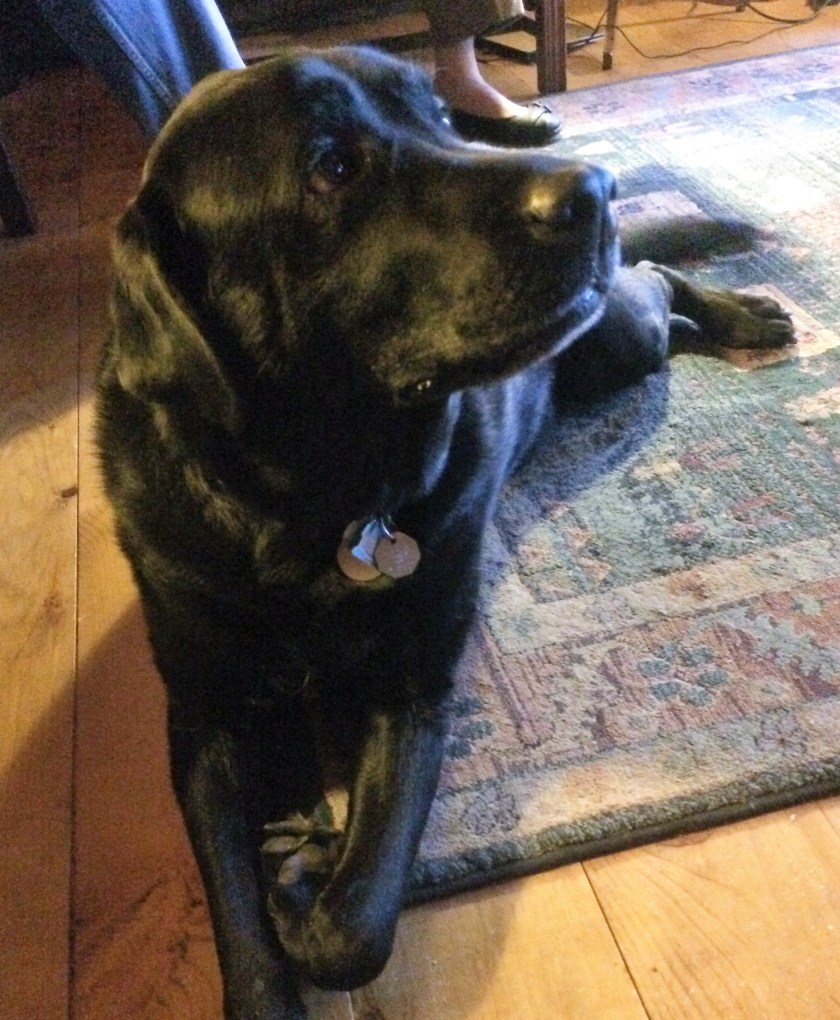
Kiah brought his best manners along on our Thanksgiving visit home yesterday

It’s never hard to feel grateful at Thanksgiving time. Beyond the blessings of family, friends, and the start of the Christmas season, there are five days off from school. This year, added in are a mellow black Lab named Kiah sleeping at my feet while I write and the sun washing the frosty fields of the farm where I’m staying for a few days. Soon I will pull on my boots and saunter out to open the chicken door and count 1, 2, 3…10, as the chickens march out in a parade, of white, russet, and speckled black. And they’re even still laying, so I get to gather eggs!

On the book front, there is also a lot happening. This Sunday, Nov. 26, will be my first radio talk show appearance, on “Maine Outdoors” with V. Paul Reynolds. Tune your dial to WVOM FM 101.3/103.9 or AM 1450 around 7:30 p.m. to listen in. Our first book review posts Nov. 27 on “George’s Outdoor News,” a Bangor Daily News blog by George Smith.

We also continue to have new press coverage, including this article about an upcoming book signing with Thomas Jamrog, a new author friend, who wrote In the Path of Young Bulls about his Continental Divide Trail thru-hike. We’ll be at Maine Sport Outfitters in Rockport (where I purchased my canoe) from 1 to 4 PM on Sat., Dec. 2. Love this photo!

Jamrog FP CG 112317
Tom Jamrog stands atop Colorado’s Mount Elbert, the highest summit in the Rockies

In closing, may your blessings be many and your home be warm and filled with a spirit of true thankfulness, not just on Thanksgiving, but every day!

thanksgiving-2017.jpg
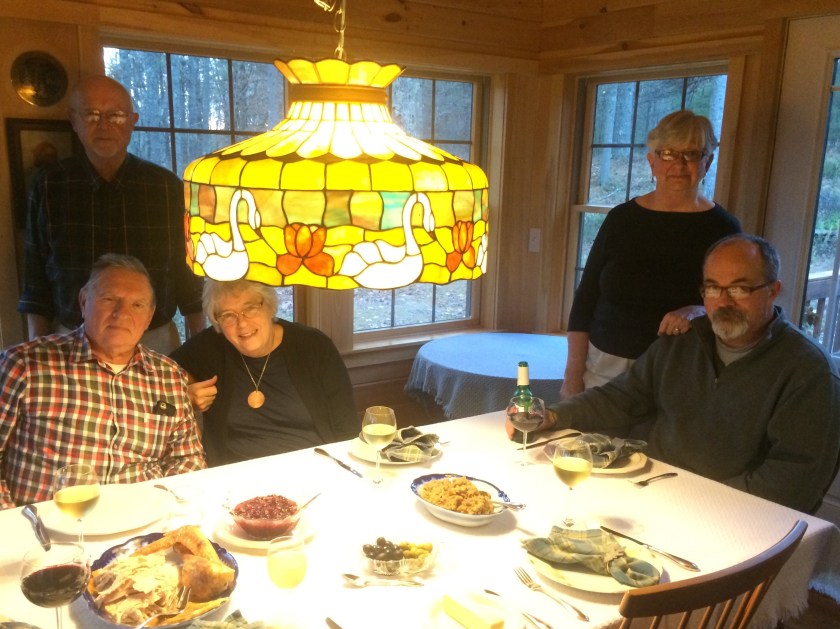
Gathered with family for Thanksgiving dinner (Kiah was lying hopefully under the table)