Our stylish Paris grand finale: A river cruise on the Seine and Les Invalides

Paris, the City of Light, could take a lifetime to know but we savored our short glimpse of her delights

Just around the corner from our Mercure hotel was this view of the Eiffel Tower

We arrived back home in Maine around midnight Friday night, and I was up bright and early this morning writing, still on Paris time! Someone asked, why the walker? I should have explained that Lance has a very rare form of muscular dystrophy. He didn’t know, back when he was a paratrooper in the 82nd, or later, serving as a stevedore in an Army transportation company in Saudi Arabia during Desert Storm. Traveling through France heightened our awareness of the research we should do ahead of time and increased our appreciation for ADA accommodations in the U.S.

Cobblestones were everywhere, including the interior passage to our first apartment. Our second hotel had no elevator, and all of the larger rooms were on the second floor. Sometimes museums or churches would have elevators, but they invariably had many long, elegant flights of steps. We developed an efficient system of carrying the walker between us – descending into cathedral crypts or up to the heights of Pointe du Hoc, often without railings.

People were almost universally quick and generous to offer a helping hand, and we did find handicapped parking many times just where we needed it. Checking in at the Rouen hotel, a sharply dressed man stepped up to carry the walker upstairs with its load of two heavy bags piled on top. Only later, at dinner in the hotel’s fine restaurant, did we discover that he was a guest, not staff!

On our way home, we took full advantage of mobility assistance services. These were a lifesaver, not just the wheelchair transport, but having someone to guide us efficiently through security and customs. The walker, and people’s kindnesses, made this dream trip a reality!
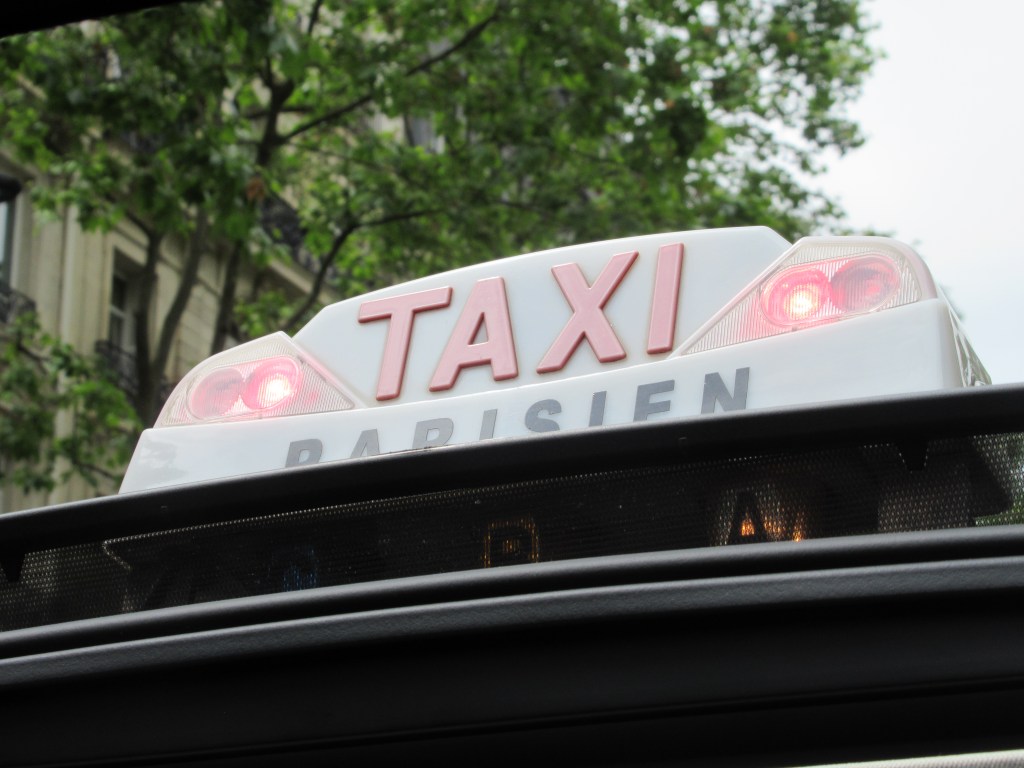
Hailing a taxi at the train station involved loading up out in a lane of busy traffic, as police had the entire taxi lane blocked off. A motorcade, presumably of 80th anniversary dignitaries or their families, soon rolled in with sirens, lights, and a stream of shiny black SUVs.
Our favorite waiter, at La Riva, called me “a beautiful doll” and made our first lunch feel both elegantly Parisian and lots of fun. We had endive salads, mine topped with toasted baguette, melted rounds of goat cheese, and slices of smoked duck breast.
Looking back at the Pont Alexandre III, the grandest bridge on the Seine. Superb weather brightened our early river cruise on an uncrowded boat. The woman ahead of us was enjoying a free birthday cruise that the company offers to Parisiens. She worked hard perfecting my pronunciation of “Joyeux Anniversaire,” French for “Happy Birthday.”

We were pleased with Vedettes de Paris, which offers a one-hour cruise (20 euros) with a guide narrating alternately in French and English. He was engaging and imparted lots of historic information with a personal flair. We had booked ahead and scouted a way to access the river from a bike path near our hotel rather than down the several flights of stairs below the Eiffel Tower.

Five years ago, a devastating fire broke out in Notre-Dame Cathedral, destroying the roof and toppling its delicate Gothic spire. Already in disrepair, the spire was being repaired at the time and all of its priceless statues had been removed just four days earlier. Although the cathedral will not reopen in time for the Summer Olympics as originally hoped, the recent reinstallation of the spire was a moment of great joy and emotion for the people of Paris.

The boat cruised by the Louvre, the Musée d’Orsay, and Notre-Dame Cathedral, and under bridges both elaborate and historic. I was intrigued to learn that an 1856 statue of a Zouave soldier on the Pont de l’Alma is used to measure flood levels. In the epic flood of 1910, water reached the statue’s shoulders. Passing under the stone arch of the Pont de la Concorde, a treasured symbol of the French Revolution, we looked up at its darkened underside. For centuries, the people of France have taken great delight in crossing its span, which was constructed of bricks taken from the demolished Bastille.

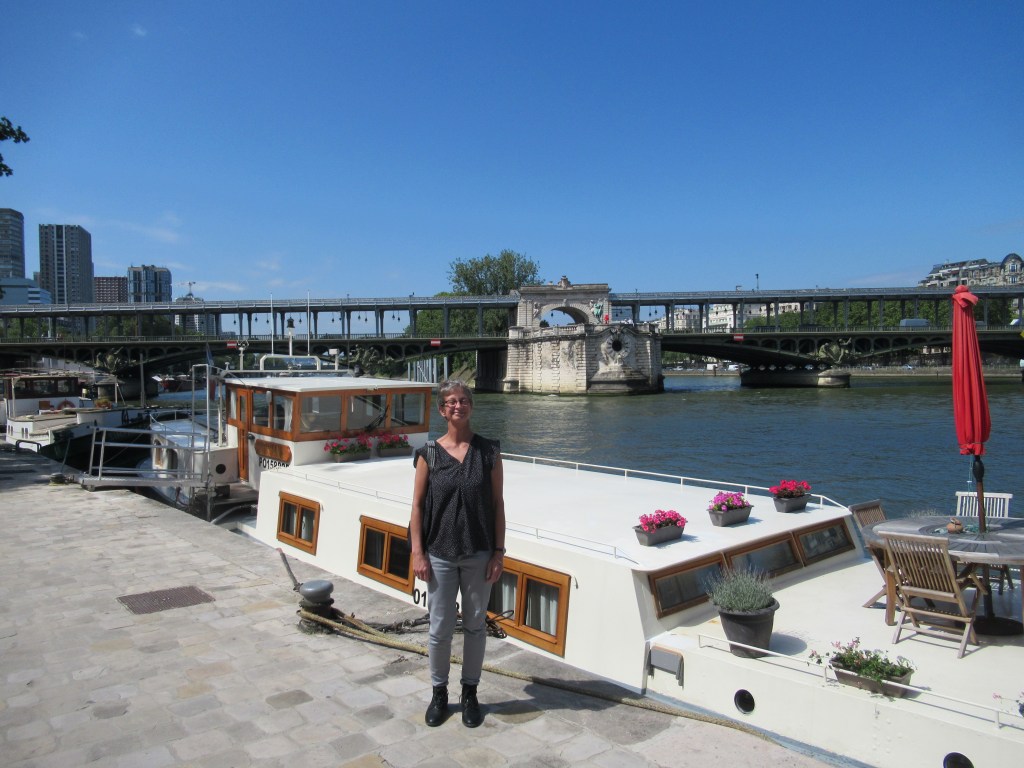
We enjoyed the wide assortment of boats being used as homes along the river
A block of postal boxes at the water’s edge included one for the Adriana, pictured here
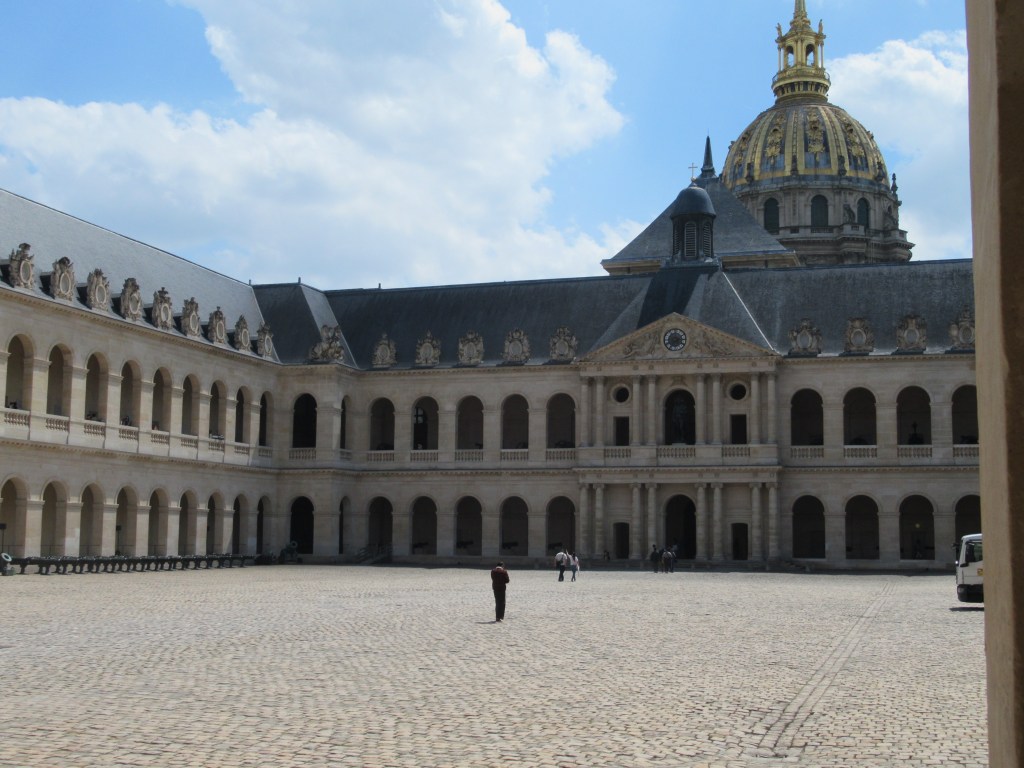
We took a taxi to Les Invalides, a 17th-century complex that began as a home for many hundreds of wounded soldiers, who ate in vast dining rooms that now house the Musée de l’Armée. Lance was captivated with imagining formations of troops, with commands echoing off the walls over the centuries past. Under the golden dome lies Napolean’s tomb, as well as the final resting places of other military heroes.
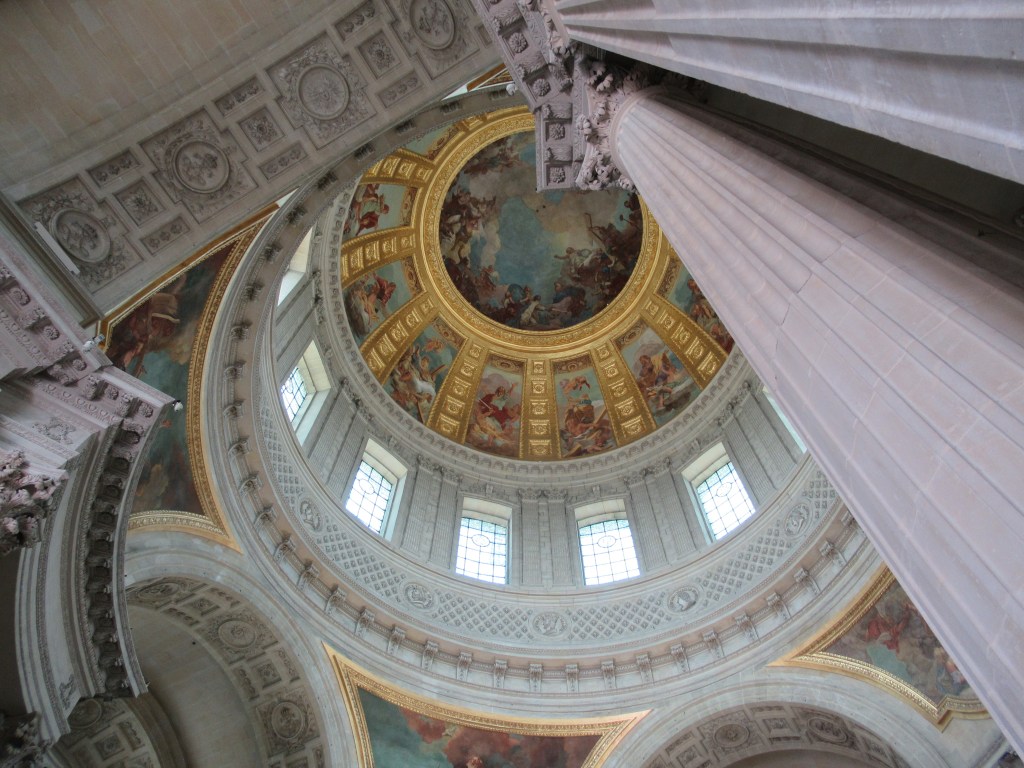
Photographing the dome cupola from this angle highlights its ornate architectural details

There were many stairs (of course) to descend to the crypt level where Emperor Napolean Bonaparte’s impressive sarcophagus rests, encircled by white marble statues of angels. Above a huge bronze door made from cannons captured at Austerlitz are written these words from Napolean’s will: I wish my ashes to rest on the banks of the Seine among the people of France whom I so much loved.
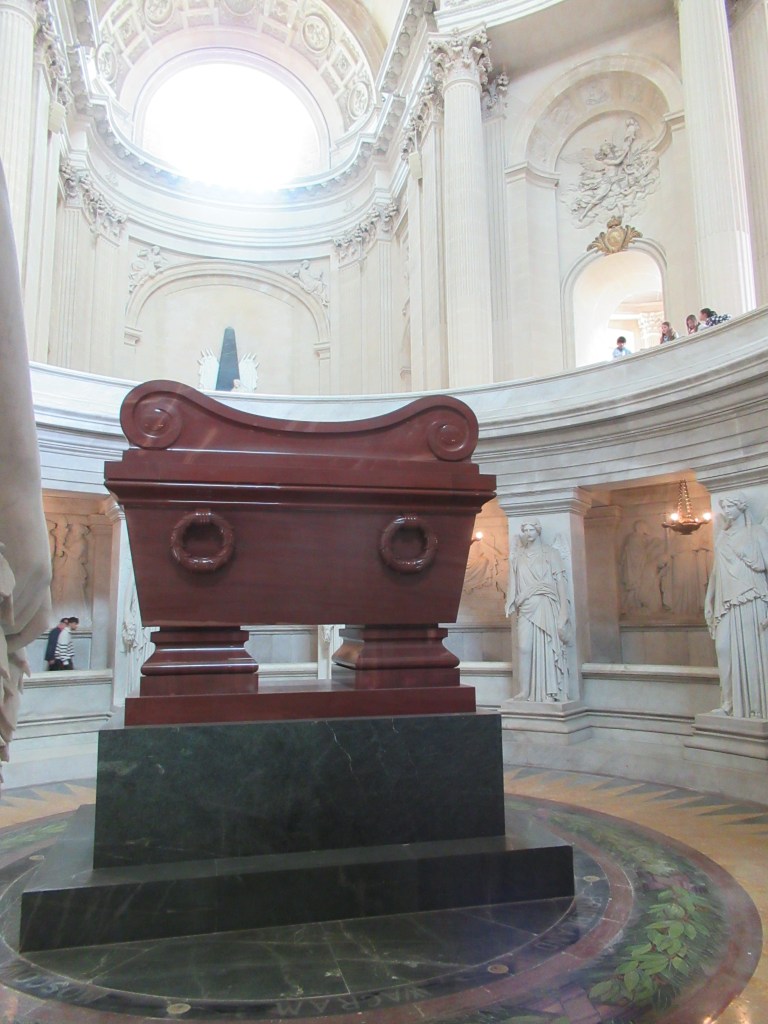
The sarcophagus contains five coffins, one within the next, made of tin, mahogany wood, two of lead, and ebony woods. Eight of Napolean’s major victories are incorporated into the inlaid floor.
The four side chapels, each with a cupola, are equally breathtaking.
One part of the Musée de l’Armée focuses on the ancient weapons and armor of kings and nobles
Very young children wore armor and learned skills they would one day use in battle. This armor and rondache (shield) were a gift to ten-year-old Louis XIII (King of France from 1610-1643).
La Source was an excellent choice for our last fancy meal. We sat outdoors across from a small park, watching Paris stroll by. Lance’s veal medallions in cream sauce with scalloped potatoes and my beef bourguinon were certainly memorable, maybe the best of our trip.

Toasting our trip with beer and champagne downstairs that evening, we knew that although there were surprises, both helpful and difficult, we had done it! Immersed ourselves in memories of a place and time when the free world joined together with great courage and unity of purpose. Walked places that are hallowed ground to the men of the 82nd Airborne. Seen cathedrals and tapestries, flowers and lots of Normandie cows. Eaten to our heart’s content from markets and shops and in sidewalk cafés, just as we’d dreamed.

Just a peek at the grandeur of Paris

P1010456

We walked home late Sunday afternoon, with Île Saint-Louis bathed in sunlight that had finally won free of dark clouds. We’d sampled pungent blue cheese and local wine and walked a timeline from the very roots of the city to the fall of brave heroes in World War II. It had been a full day, and yet just a bit of all that Paris has to offer.

That first night I hadn’t gotten much sleep, couldn’t sleep, and didn’t even feel tired when morning came. Paris energized me with her tempo that never seems to stop. It was invigorating, pulsing, embracing, but also required our commitment not to linger. We didn’t. I’ve fallen in love with French butter and tried it this morning on a croissant, though Mom and Dad’s crepes looked awfully good, too.

Our day began at the Musée d’Orsay, a treasure trove of Impressionism, with lovely exhibits of art nouveau, architectural models, and more that we didn’t see. We traveled by metro to this museum which resides in a former train station.

P1010333

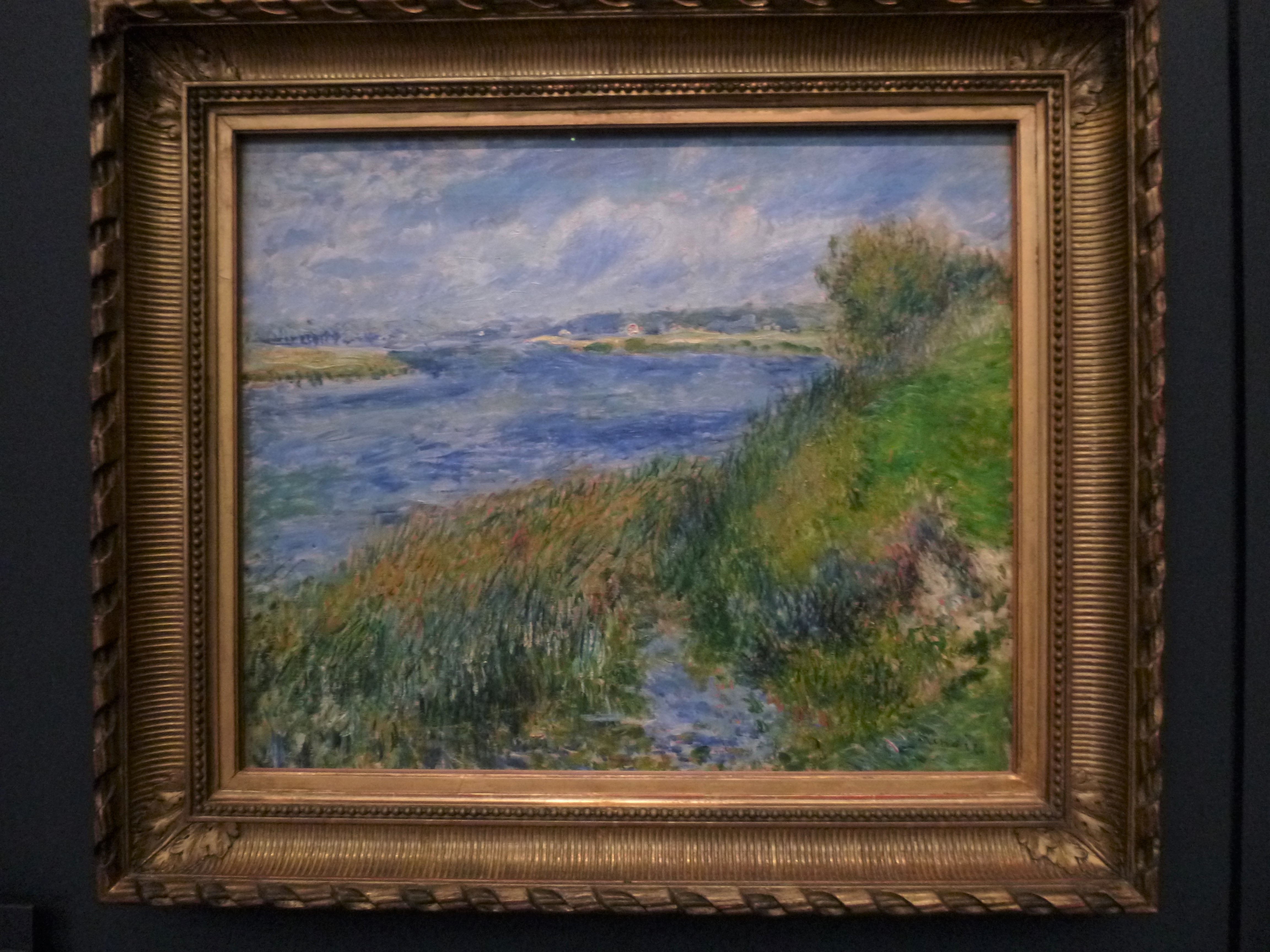
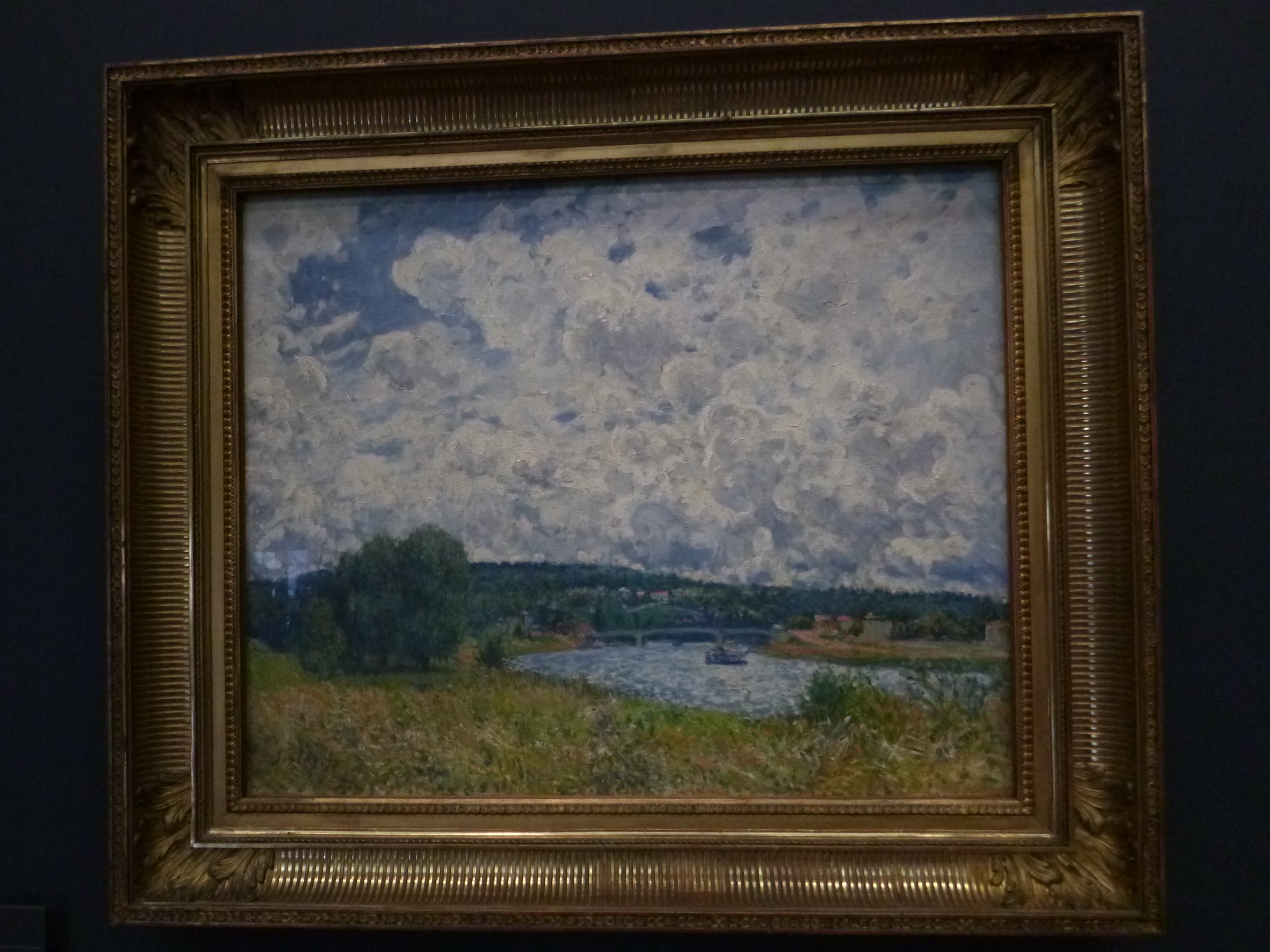
We spent about four hours there and absorbed so much that we never ended up (at least this weekend) going to the Marmottan. I was particularly drawn, logically, to the natural landscapes of the Impressionists, who strived to capture moments in time by working quickly in the ever-changing light. “The brushwork is rapid and visible,” said one display. “The framework is often off-center; the colours are light, seeking to capture the atmospheric effects outdoors.” The two works below did this well, I thought.

P1010362 - early nature scene

Both of these paintings were in a gallery focusing on the early years, following the first Impressionist Exhibit in 1874. Renoir’s painting above (1876) shows the banks of the Seine at Champrosay. Alfred Sisley’s painting below (1877) is of the Seine at Suresnes.

p1010321.jpg

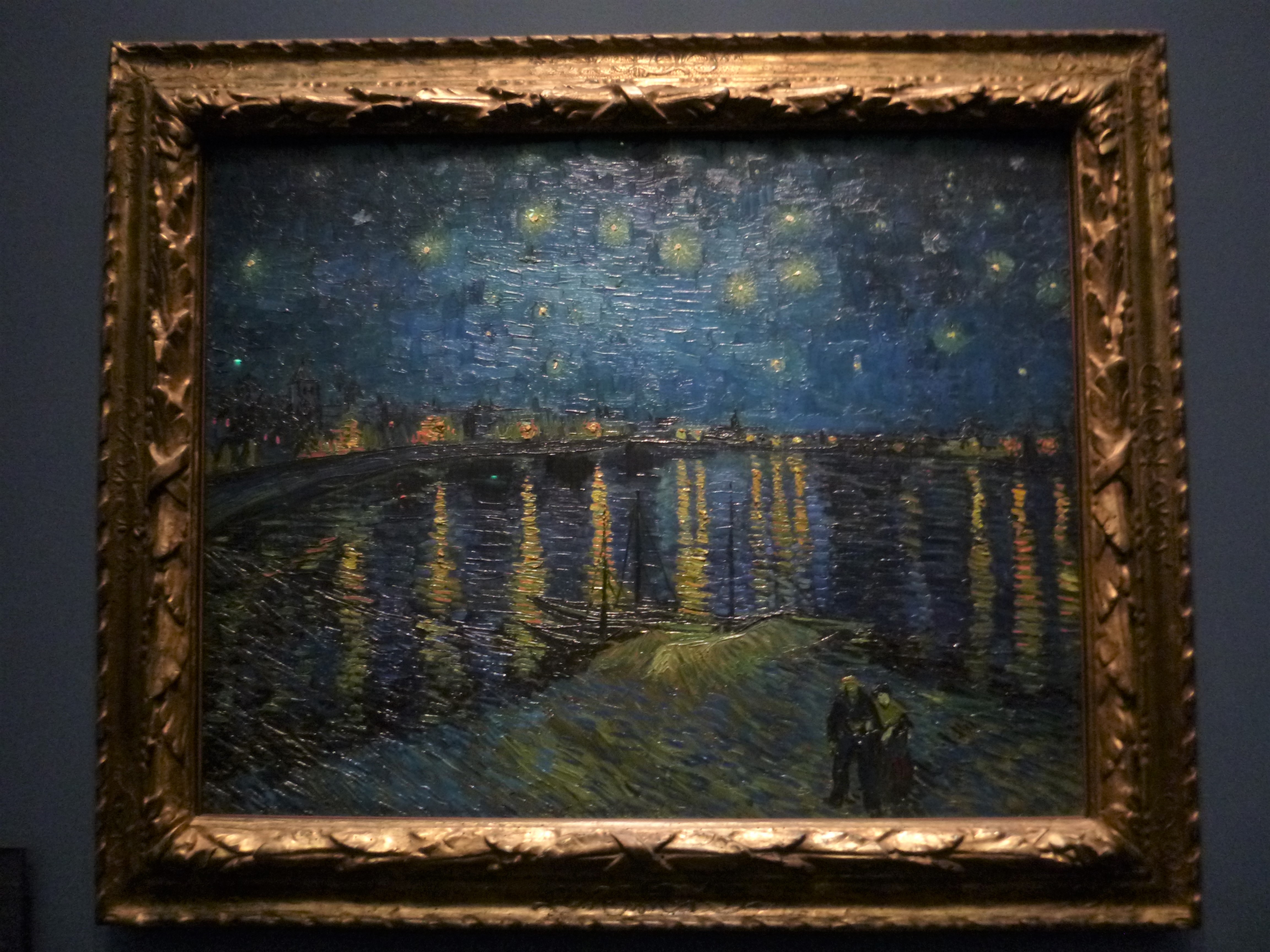
Then there was the fun of discovering paintings that I knew, from art history class or a book…moving close to scrutinize the brushwork, then moving back to see the whole scene. Renoir’s Bal du moulin de la Galette and Van Gogh’s first Starry Night (not the one painted later after he was confined to a mental institution) both reside at d’Orsay.

P1010316

P1010342

P1010365

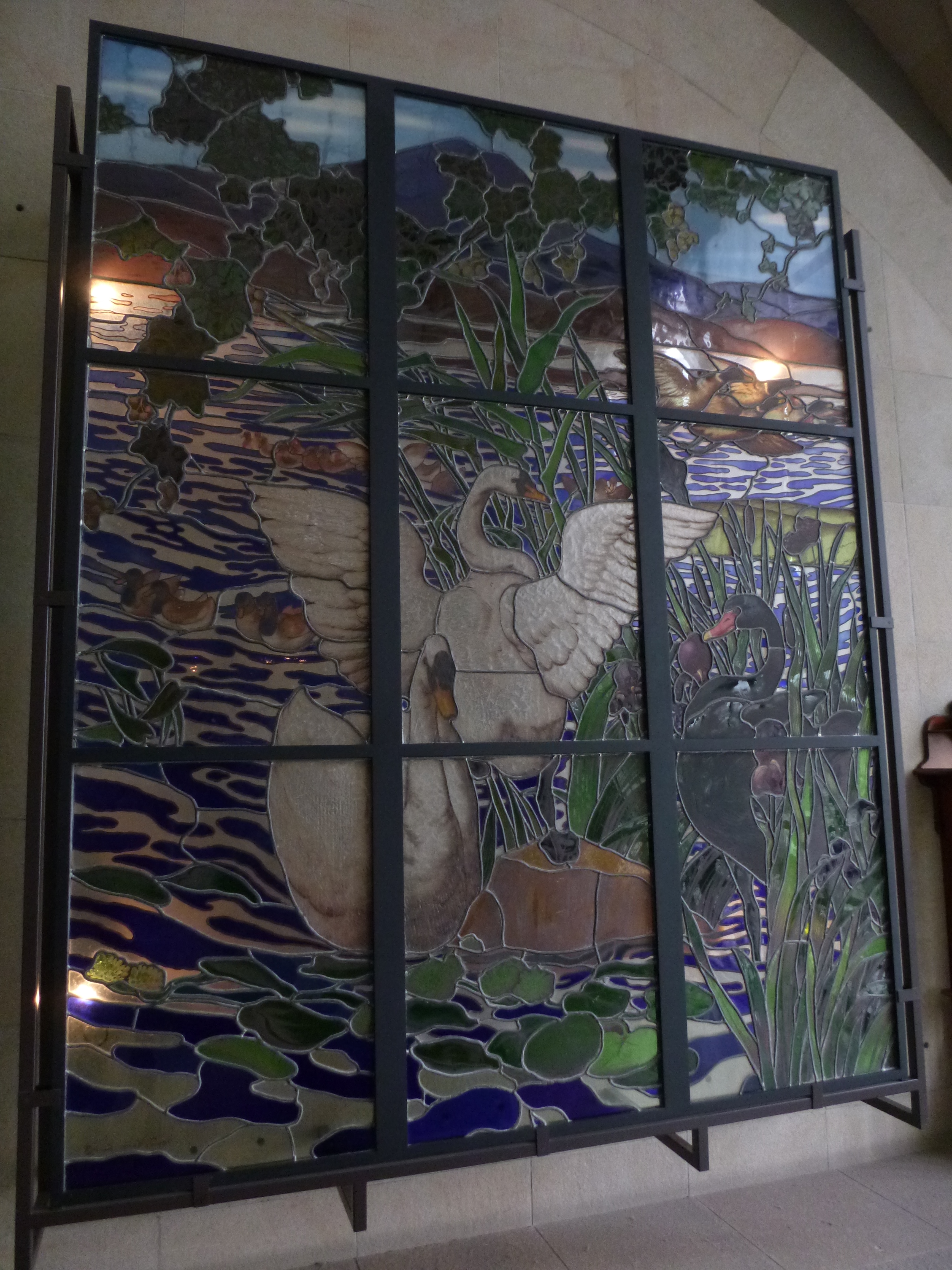
My favorite work in the art nouveau exhibit was the delicately- colored stained glass of “Cygnes sur la lac d’Annecy,” created in 1890.

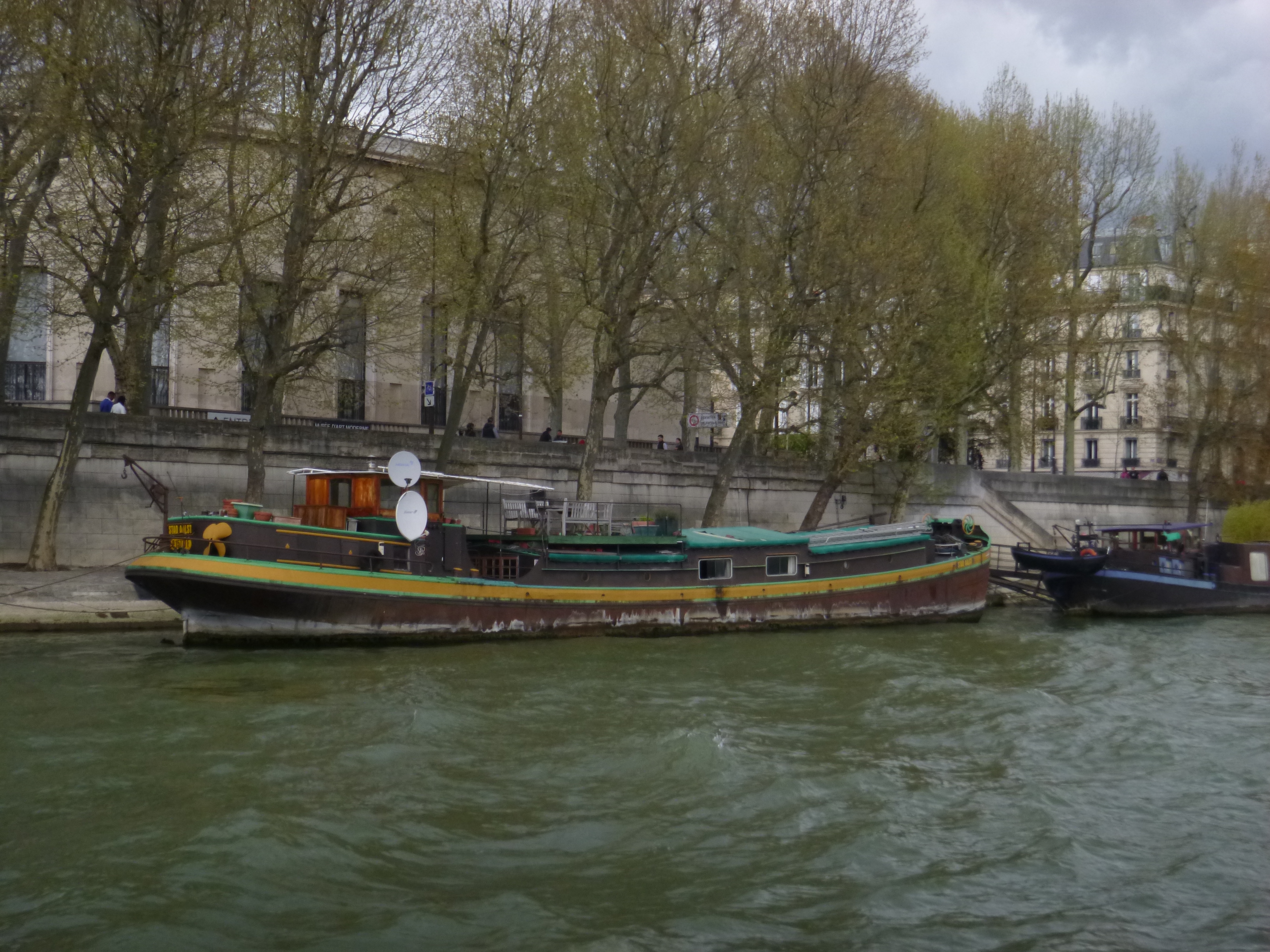
Our Seine river tour was not particularly noteworthy, although it did help me understand the layout of Paris a little better. The overcast sky and crowded quarters dampened our moods or perhaps we were still jet-lagged. I did enjoy the motley assortment of houseboats moored along the banks; some are older working canal boats repurposed for habitation, with patio sets and umbrellas out on the decks.

P1010398

P1010403

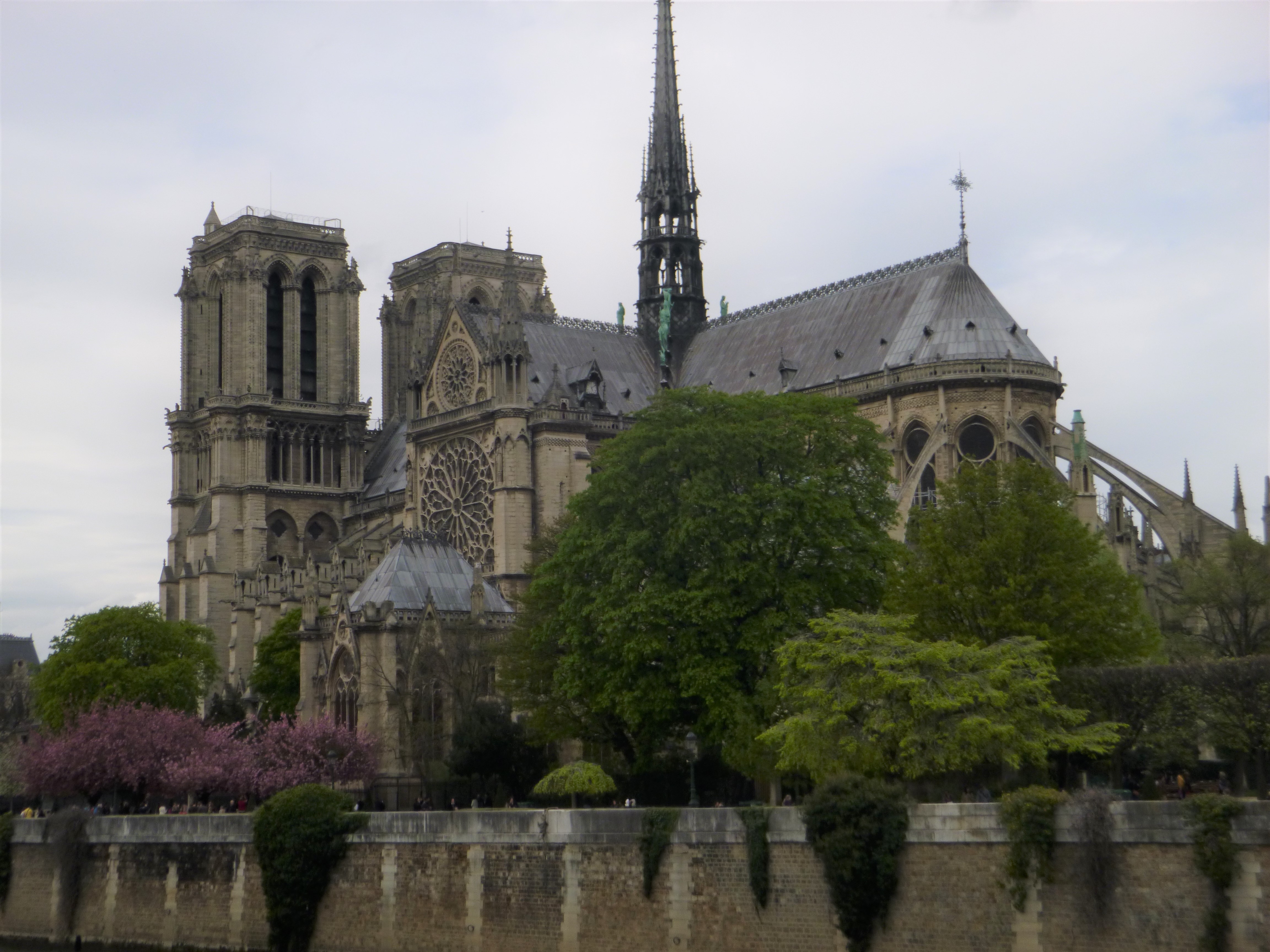
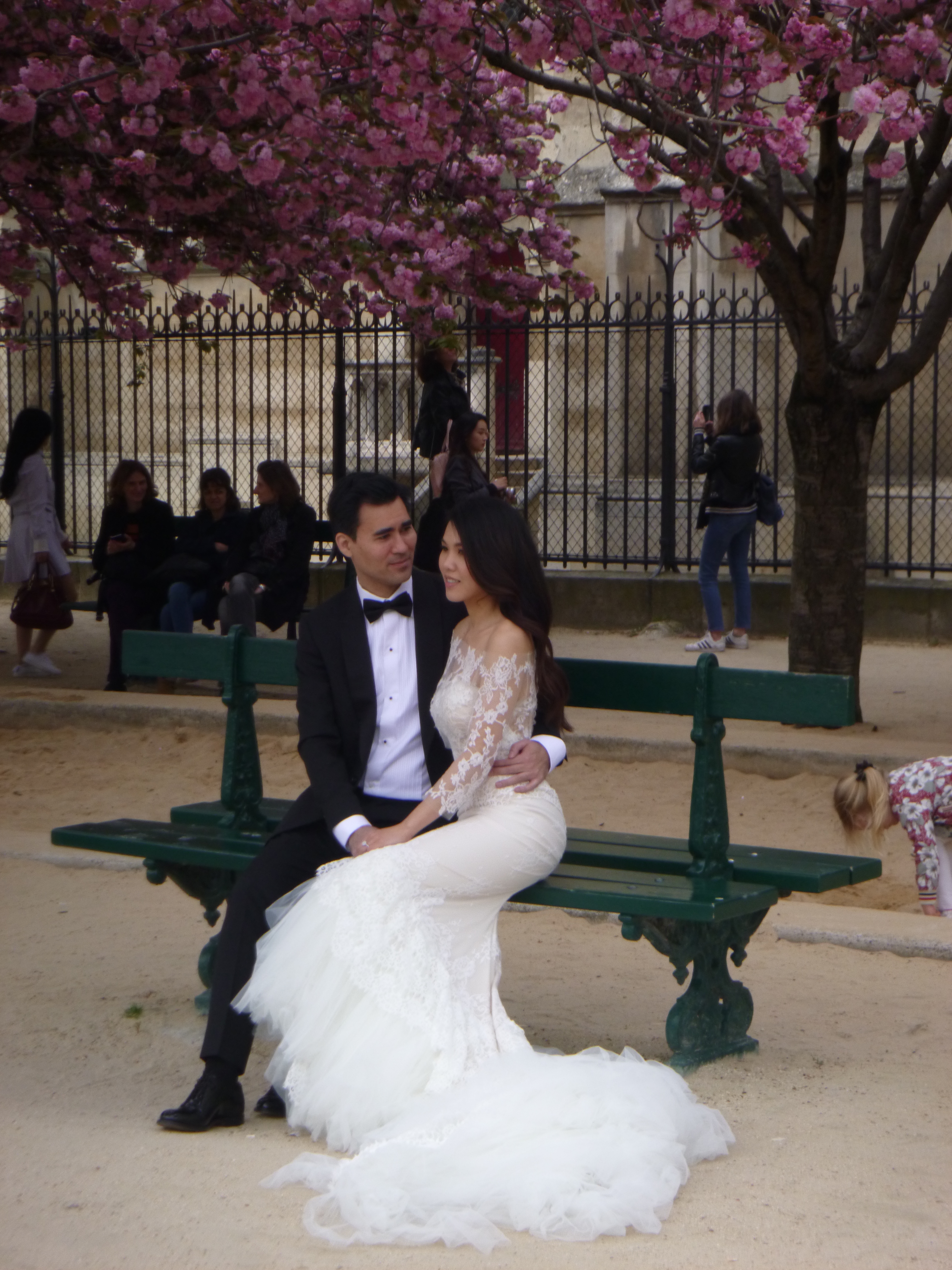
From the Hotel Abbatial, it was just a short walk across one of the bridges to Île de la Cité. This island in the Seine is the oldest part of Paris, first populated by Celtic tribes in the third century B.C. and home to the cathedral of Notre-Dame. A bride and groom were just emerging from a shiny white Rolls Royce to take wedding photos, so I took one, too.

P1010405 - Notre Dame

P1010412

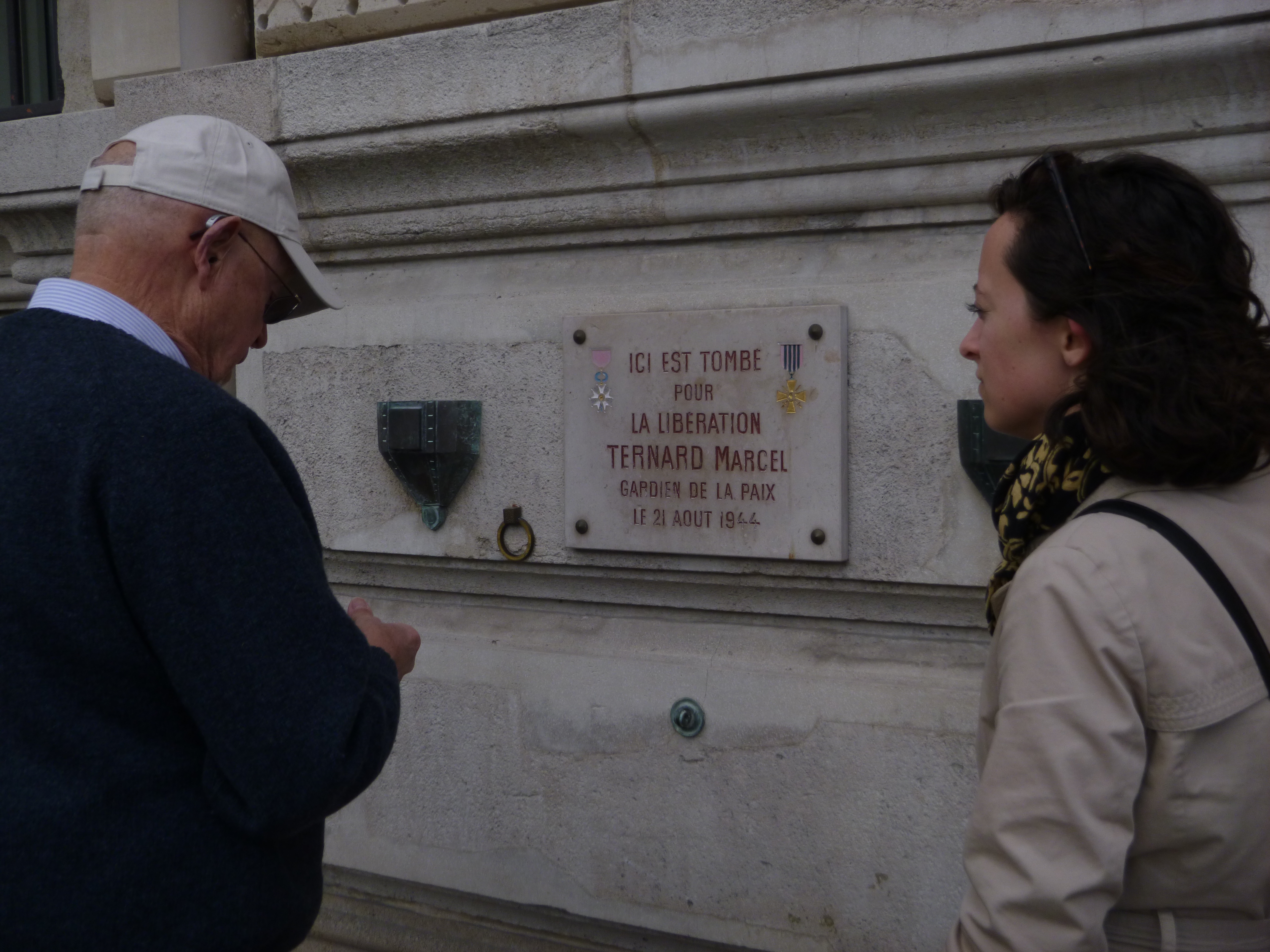
As we walked across the small island, we passed two plaques honoring the places where men of the French Resistance had died during the Liberation of Paris in August 1944. You could just hear the emotion and respect in Dad’s voice as he explained their significance to Megan.

P1010429

Nearby was Sainte-Chapelle, whose towering stained glass windows are framed by the thinnest of columns, curving into the heavens. This marvel of Gothic architecture was constructed in the mid 13th century by Louis IX to hold Christ’s Crown of Thorns and fragments of the cross, which the king purchased from the Emperor of Constantinople. These holy relics cost three times as much as the chapel’s construction!

P1010435

With our aesthetic and historical minds full, we headed to another excellent restaurant that Dad remembered from long ago, called La Rotisserie d’Argent, where I had superb confit de canard. We enjoyed the food so much that we made a reservation to return in a week on our last night in Paris. In the interim, our next stop will be Normandy.