The soul of the Airborne resides in this place: La Fière bridge and the Iron Mike memorial, Normandy

Walking the hallowed ground where men of the 82nd Airborne held a key bridge with valor and tremendous sacrifice of lives. Two Medals of Honor were awarded for actions taken here.

The Saturday morning outdoor market around the corner from our hotel
We loved the heart-shaped Neufchâtel cheese, recommended by a woman with me in line. We also bought Calvados, strawberries and a yellow pepper, but passed up the live chickens and quail.
Our rental vehicle has given us the freedom to stop and explore along the way. Here, we got out to watch a line of planes pass overhead, wondering if there was a paratrooper drop about to happen.

After returning home last evening, we sat in the courtyard outside our room, with the sun warming us at last. In the quiet, Lance began to talk about the day. He felt a new lightness of heart and spirit, even the sense that a physical weight had been lifted from his shoulders after making the pilgrimage to the La Fière bridge near Sainte-Mère-Église. There, “on one of the most hotly contested pieces of ground in WW2,” the men of the 82nd Airborne proved their valor. That quote, and the title above, come from the famous Iron Mike memorial.

This small stone bridge across the Merderet River was crucial to Allied troop movements inland from Utah Beach. In June 1944, the pastoral countryside was heavily flooded and the men who landed, on target, on the far side of the bridge would defend it at any cost.
This friendly gentleman took our photo, and we took his. His cute little dog rides in the basket!
This relief map shows the manor house and bridge as they stand today. A soldier with a bazooka on the left before the bridge was key to taking out two of the three German Panzer tanks in the first day of the four-day battle. The third was destroyed by the paratroopers on the far side of the bridge. No enemy forces ever succeeded in crossing the river.
At the Iron Mike memorial with a USAF captain who will help drop 1,200 paratroopers at La Fière on June 9 as part of the 80th anniversary commemoration. The planes that morning had been on practice runs for the big event. The paratroopers with their red berets that we’ve been seeing everywhere came over to France on those same planes. Men from Lance’s battalion fought here. The 618th Engineer Company (nicknamed The Nasty), in which he served, is part of the 307th Engineer Battalion, forever memorialized on the base of Iron Mike.

We crossed the bridge as a tractor raked hay in a nearby pasture and a couple of fishermen tossed their lines into the water. By an old stone church, yellow roses bloomed. The sun peeked out once more and all this history seemed so long ago. That church, the Cauquigny Chapel, and its cemetery, however, were the scene of intensive fighting on the far side of the bridge during the same battle.

The chapel in 1944. A stone clock, shattered and forever silenced, hangs today on the front wall of the restored building. On the afternoon of June 6, paratroopers who had dropped on the far side of the river held the chapel until driven away by German tanks. They escaped through the cemetery.
The past and present photos of buildings are everywhere, proof of the massive devastation of war.
This chicken quarter smothered in vegetables was fabulous, paired with a local cider
The best (so far) of the FOUR hamburgers Lance has sampled. I treated my favorite member of the 82nd Airborne to lunch for a change, at Les Ecuries in Sainte-Mère-Église.

The hopes and prayers of liberty loving people still march with you: Omaha Beach, Pointe du Hoc, and the American Cemetery, Normandy

Traveling back eighty years to honor and understand the depth of sacrifice on which our future rested

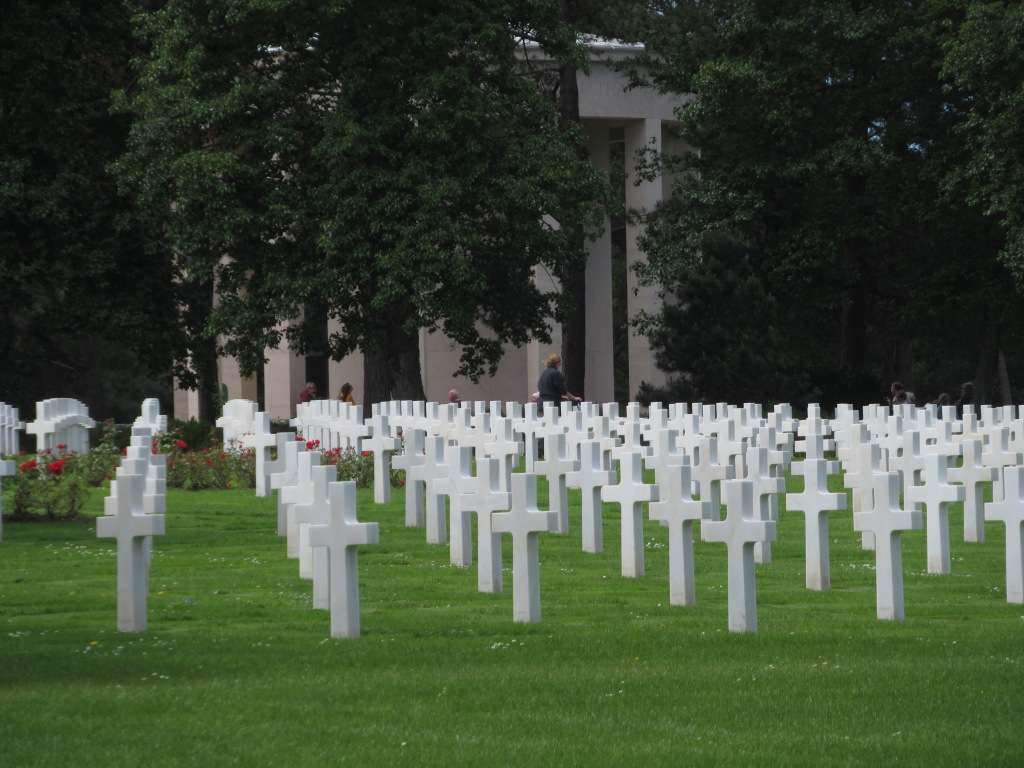
Six years ago, we arrived too late in the day to visit the American cemetery, and I cried. Today, I cried once more. Here are interred the remains of 9,387 Americans, including four women. By the end of the campaign for Normandy, the Allied dead there would number more than 50,000.

On the eve of D-Day, General Eisenhower sent to each of the soldiers, sailors, and airmen of the Allied Expeditionary Force a letter of encouragement from which I have taken the title of this post. How difficult it must have been for him to send forth so many young men into such great danger. Eisenhower spent that last evening with the men of the 101st Airborne and stayed until the planes had all disappeared into the dark night.

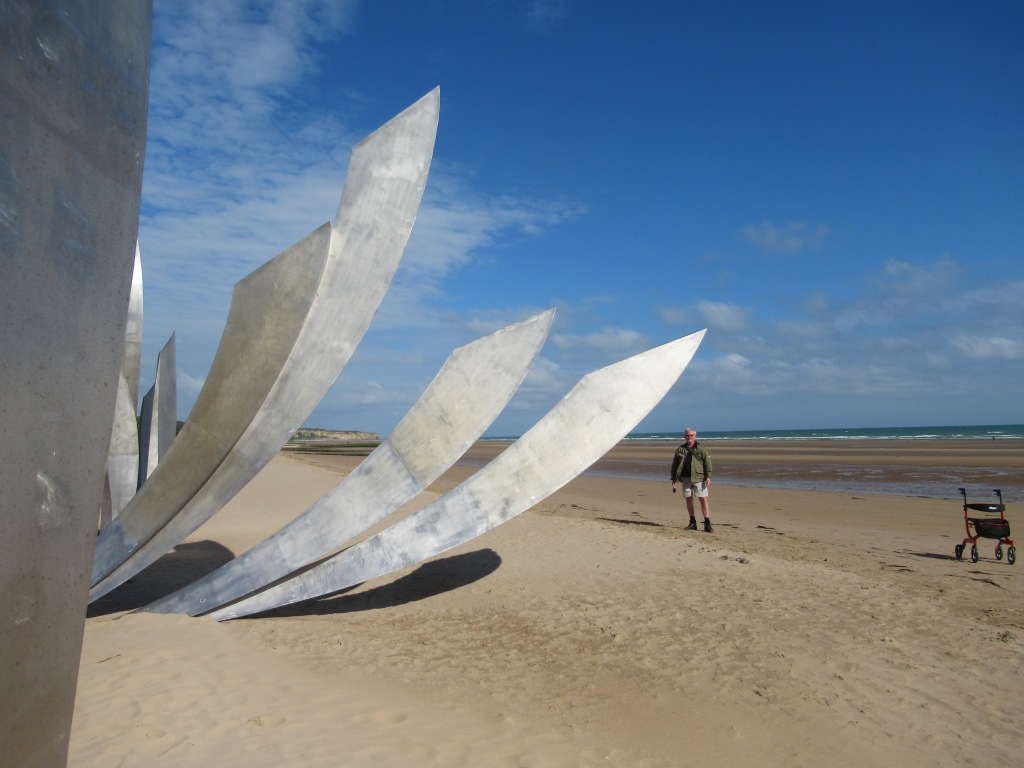
Anilore Banon’s uplifting sculpture Les Braves, on Omaha Beach
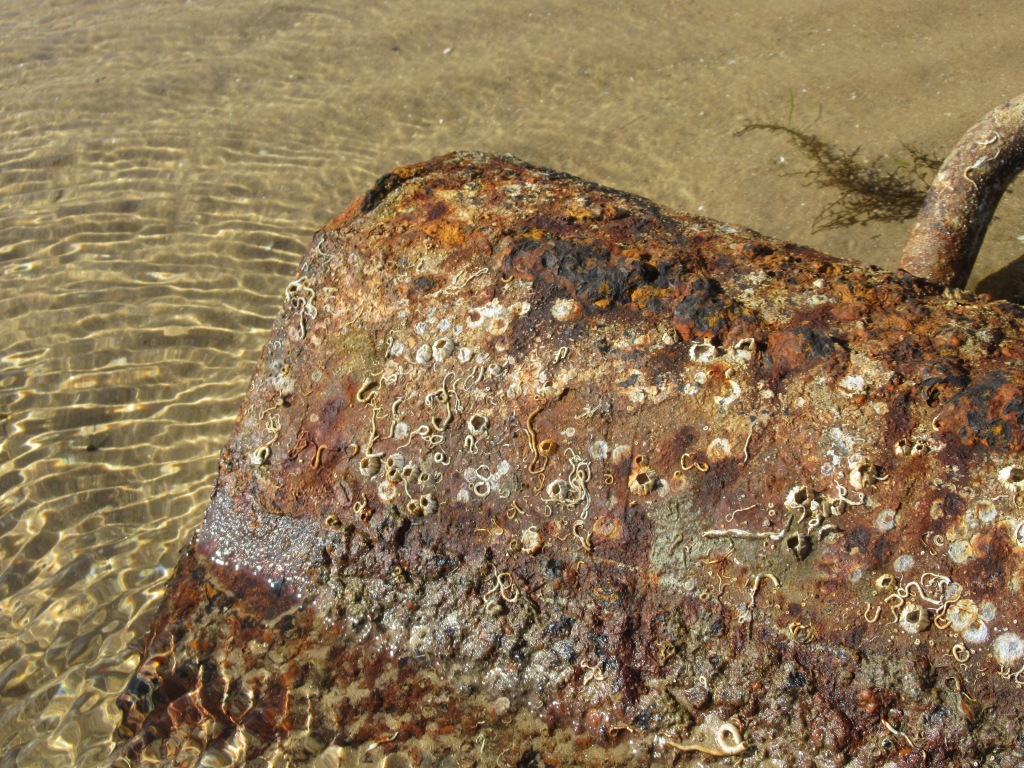
This small remnant of the many tons of metal that littered the beach was padlocked in place.
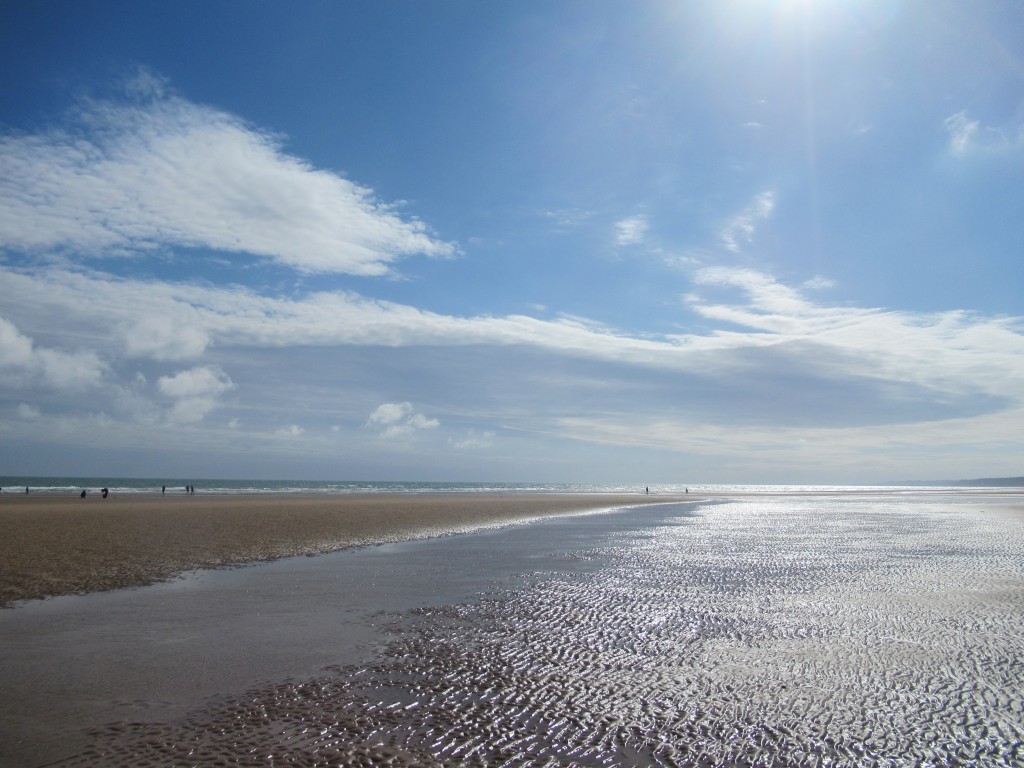
Envisioning the chaos and carnage of 80 years ago amid the beauty of today.

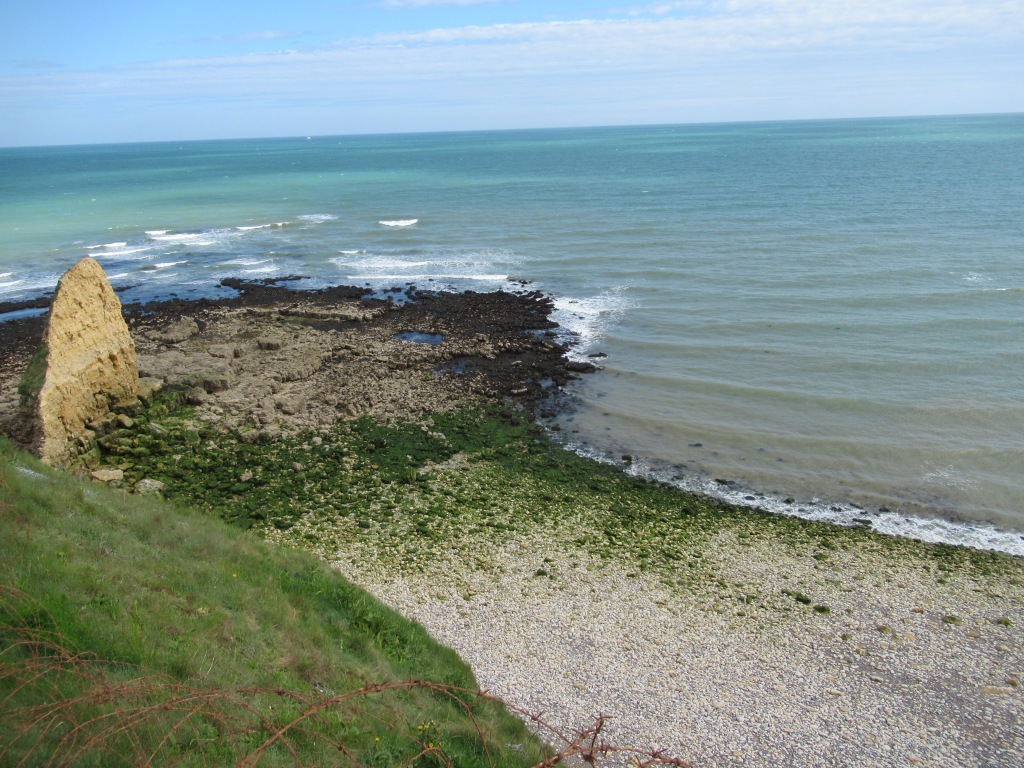
I collected a delicate, perfect seashell (as I had at Utah Beach) to add to our jar of seaglass back home. From here, we drove to the top of the 90-foot cliffs at Pointe du Hoc, where Army Rangers once achieved the impossible, under fire.

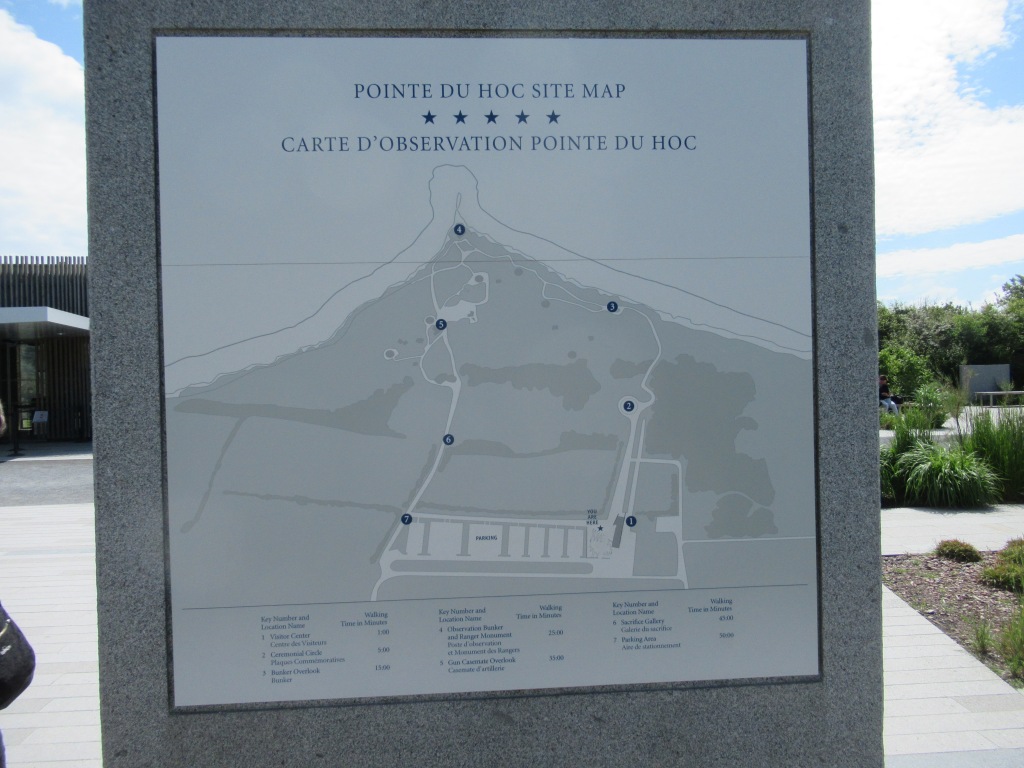
Map of Pointe de Hoc, showing the 50-minute walk that Lance completed, in addition to navigating the seawall, beach, and later the cemetery, more than 10,000 steps for the day.
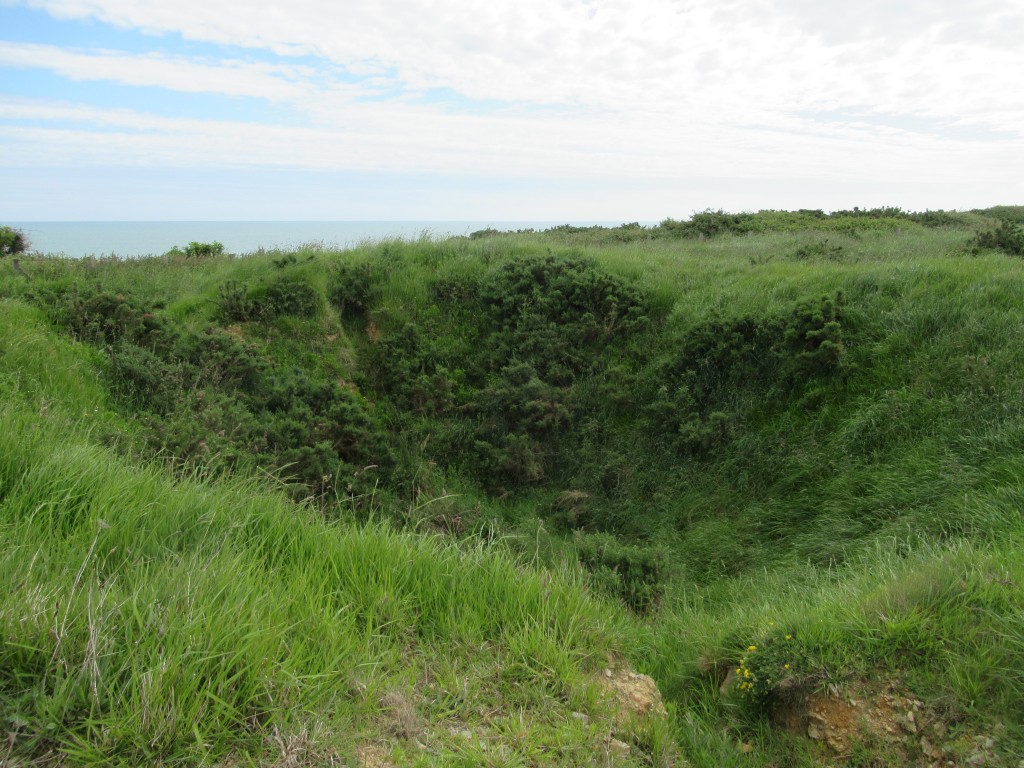
The walk toward the point weaves among countless impact craters left by Naval artillery
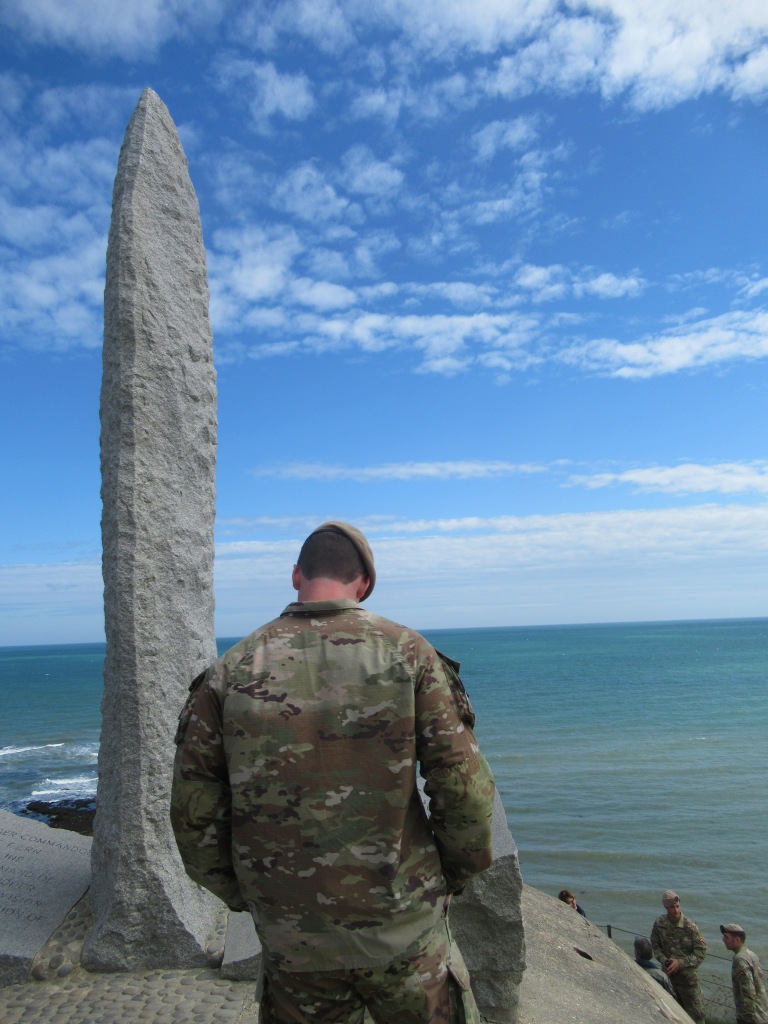
An Army Ranger of today pays his respects at The Dagger, a memorial gift from the French
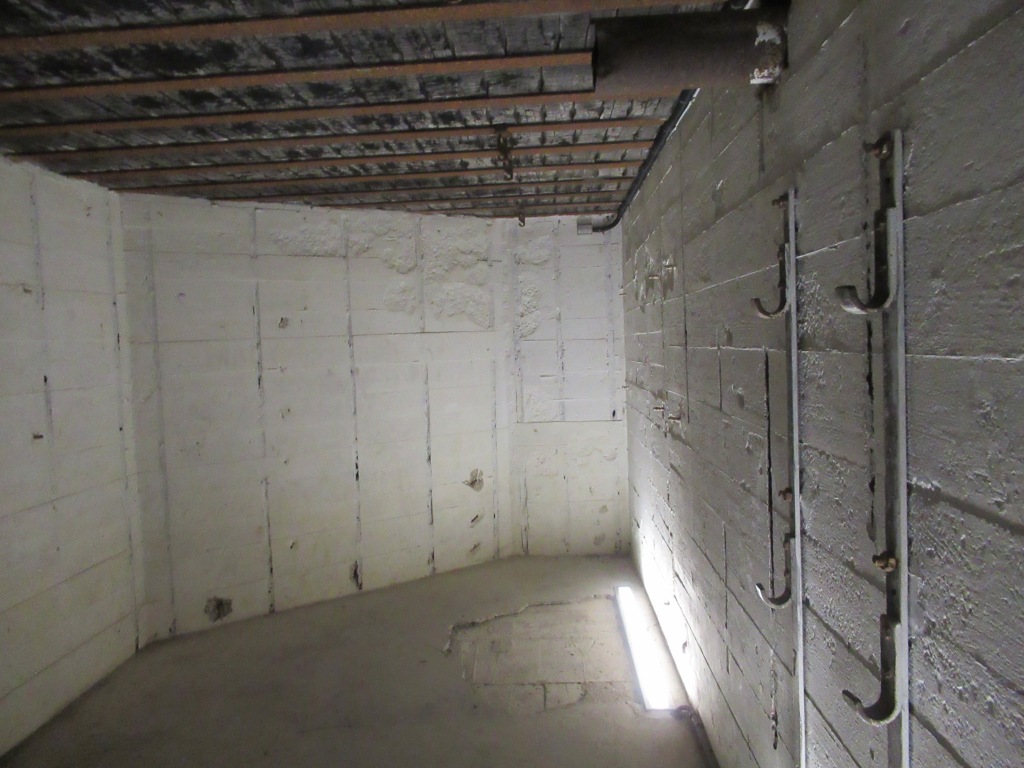
Inside the observation bunker at the tip of Pointe du Hoc, a maze of rooms with a narrow gap toward the sea through which the Germans could shoot and keep watch
Looking down from above at Pointe du Hoc
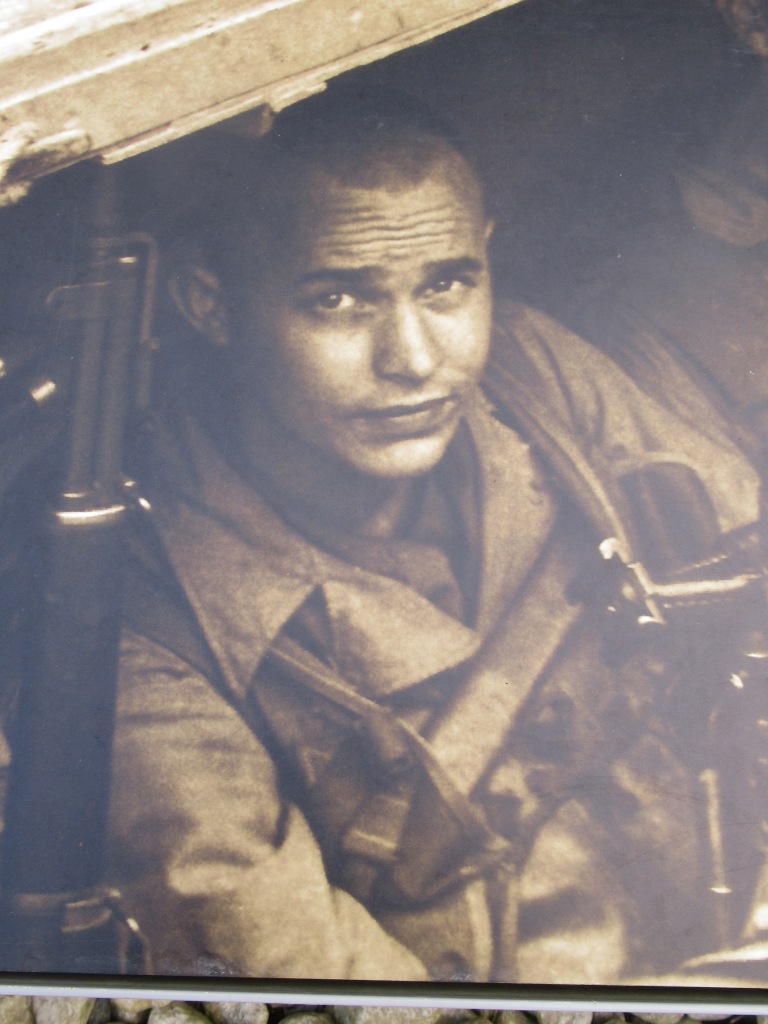
Sergeant Walter Geldon, Company C, 2nd Ranger Battalion

The Normandy sites come alive through many personal stories, though tens of thousands will forever remain untold. Here is just one: “June 6, 1944 was Sergeant Geldon’s third wedding anniversary. He and his fellow Rangers sang songs to celebrate the occasion shortly before landing on Omaha Beach. The 23-year-old steel worker from Bethlehem, Pennsylvania, was cut down by enemy fire within a few minutes of coming ashore. When his widow died in 2002 at age 78, she was buried by his side.”

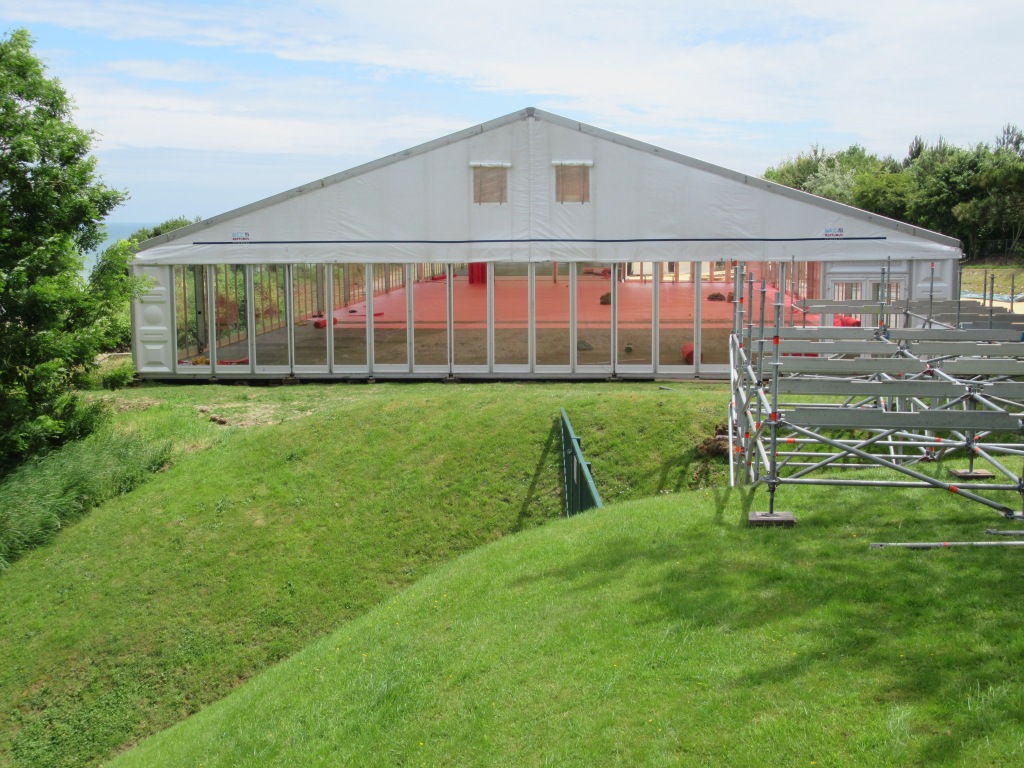
Temporary building and staging being installed for 80th anniversary celebrations

There are ups and downs to being here now, as June 6th fast approaches. An unbelievable number of active and retired military, as well as a stunning array of vintage Jeeps and other Army vehicles have gathered. The spirit of anticipation and brotherhood are at their highest. However, much of the American cemetery was blocked off, including the main memorial visible in the opening photo, with its soaring statue representing American youth. We never learned if there were open sections toward the back where you could walk among the graves. Thus, we were very grateful to find the Garden of the Missing open and paid our respects amid its tranquil beauty.

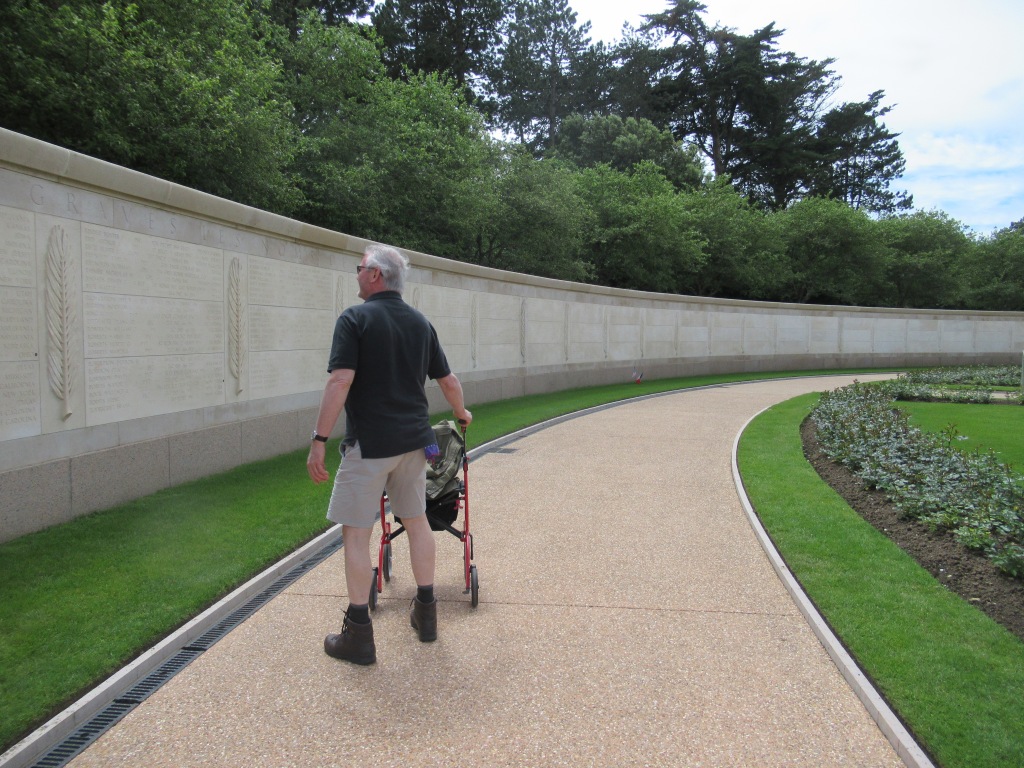
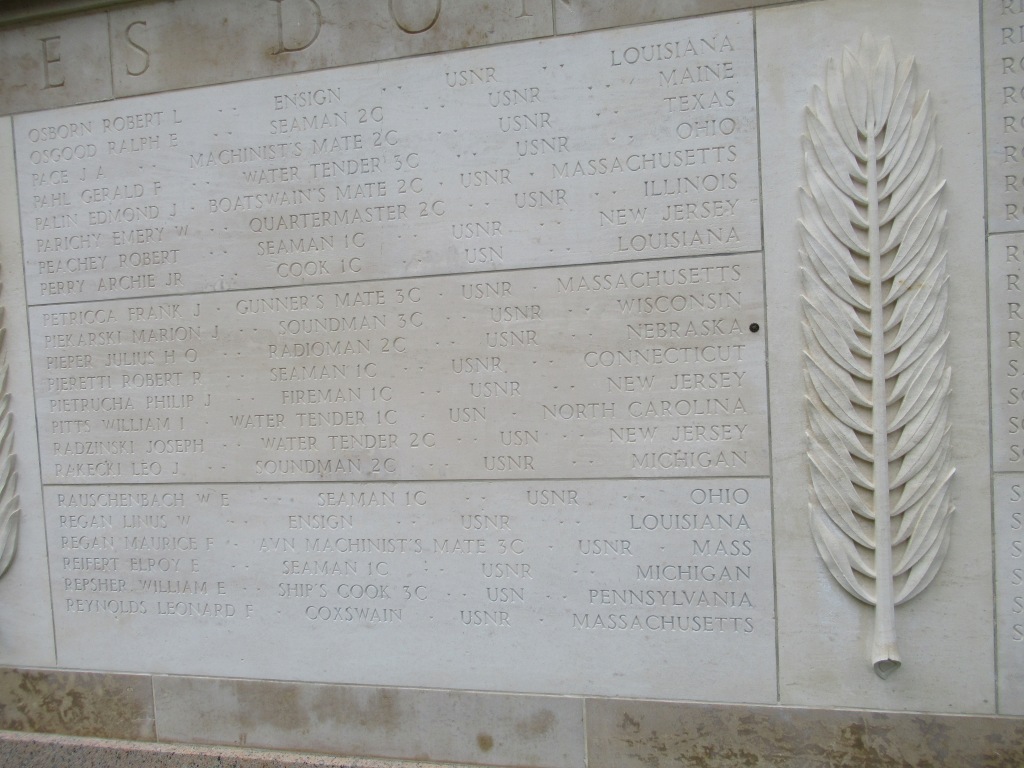
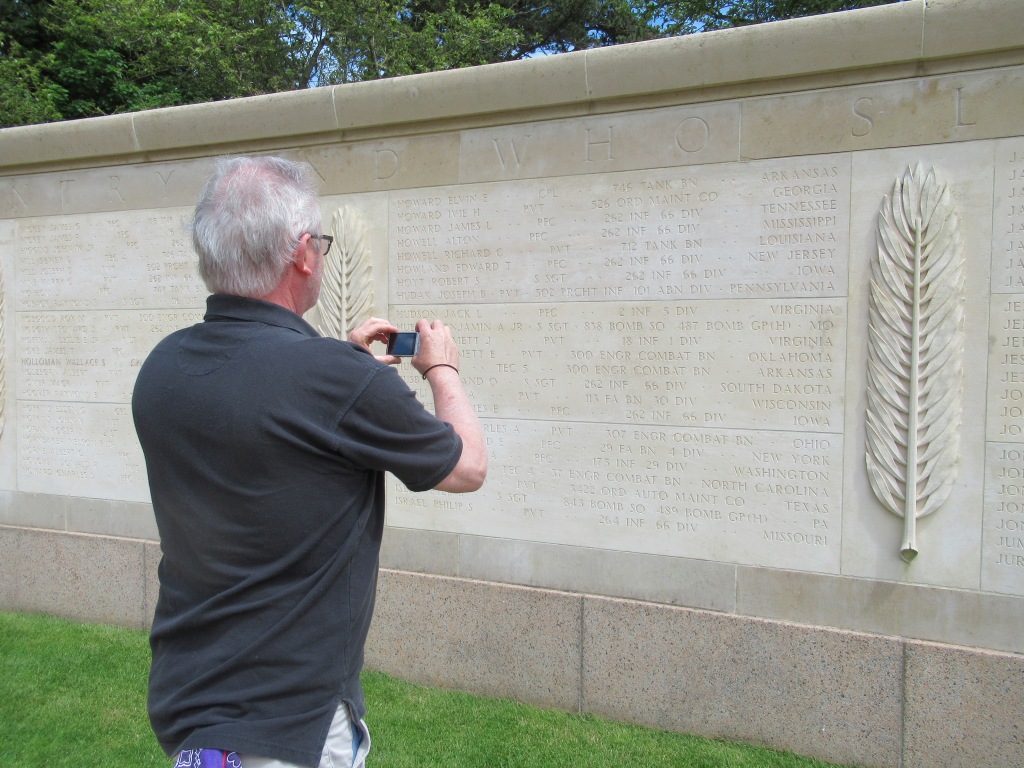
Inscribed around the Garden of the Missing are 1,557 names of American soldiers and sailors whose remains were lost. All the Army panels include multiple names from the 66th Infantry Division. 483 of the lost were never recovered from the English Channel when a torpedo sank their troopship Leopoldville on Christmas Eve 1944.
A bronze rosette indicates a soldier whose remains were later recovered. This panel also includes one of the lost from Maine, most of whom were in the U.S. Navy section.
Lance searched diligently for names of soldiers from his combat engineer company, the 307th, part of the 82nd Airborne Division. Sadly, two were lost and never recovered.

The story of the day would not be complete without mentioning our brush with the gendarmerie. At what appeared to be a random police checkpoint, Lance briefly considered making a run for it in our Range Rover (thinking of the movie The French Connection) when an officer waved him in. Better judgement prevailed, though, and after a very careful scrutiny of Lance’s driver’s license, we were free to go find lunch. We did not observe a single other vehicle get pulled in. On a lighter note, rambling the countryside has surely been a highlight, knowing that the churches, stone houses with their tile roofs and flower draped walls, even the hedgerows, must be little changed from 1944.

We’re on our way: Traveling to Normandy for the 80th anniversary of the D-Day invasion

We’ll be grateful to reach today’s destination, an apartment in Bayeux near Omaha Beach.

View leaving the Boston area on Aer Lingus enroute to Paris and Normandy, France

It feels momentous, unbelievable, delightful, and sacred. Twelve days in France leading up to the 80th anniversary of the Normandy invasion on June 6, 1944. Our friends Kathy and Steve wished us bon voyage, with the hope we would “enjoy every moment – the profound and the light-hearted.” There are certain to be plenty of both emotions. Lance served in the Army as a paratrooper in the 82nd Airborne. For him there could be no more profound pilgrimage.

Cheers to a new beer on the plane

We counted up. Traveling to Bayeux would happen in seven stages: car, bus, plane, plane, cab, train, and rental car. We’ve checked each one off so far without too many surprises. Aer Lingus fed us a delicious Irish beef stew and chocolate mousse for dinner, and we watched Napoleon before managing to get a little sleep. Approaching Dublin early this morning, the moon shone through veils of cloud and the lights of the city twinkled below. We were glad to be across the Atlantic and well on our way.

The inflight map provided all kinds of data
The cab ride from Charles de Gaulle airport to the train station gave us a taste of Paris
This post comes from the train on stage six of our journey

I am much anticipating staying for an entire week at a Bayeux hotel apartment where we will have a kitchenette and outdoor patio. Having a home base and rental car will allow us flexibility in exploring all the historic sites and enjoying local foods from the markets and shops. Two nights each in Rouen and Paris round out our French adventure. For now, I’m going to enjoy the sunny French countryside from the train window.

A freedom dearly won

P1010601

Men would have to come to France by sea, and many would have to die.

It was simply a question of where to land and when. Tens of thousands of lives depended on finding the best answer. At the Musée Memorial 1944 Bataille de Normandie, which we visited in Bayeux, it was sobering to learn that an entire department of the military was fully prepared to handle all the fallen soldiers before the first had even landed.
P1010594

Two alternative plans were considered for Operation Overlord, the initial sea-borne invasion that would liberate France. The first, crossing the Pas-de-Calais, where Great Britain and France lie closest, seemed intuitive. There, in northeast France near Belgium, the Allies would be far closer to friendly air support and supplies, and within striking distance of the heart of Germany. The strait, though, was heavily defended.

The beaches of Lower Normandy, forever memorialized now with the simple code names Utah, Omaha, Gold, Juno, and Sword, were also well protected,. There were mines, physical obstacles (Dad stands by one above), and artillery batteries hidden in bunkers. But there was also a weakness. If the bridges across the Seine and the Loire were destroyed, the German troops would be cut off from reinforcements. So, on June 6, 1944, the Allies cast the die there.

P1010619

This museum’s focus was the entire battle for Normandy, up until the liberation of Paris in late August 1944. I wish we had more carefully researched which museum to visit. The town of Bayeux was a good choice for us, though, as we also saw the Bayeux tapestry, part of a future post. We opted for a quick lunch in town, ham and cheese crepes with some of the fabulous Normandy cider, then returned to the museum for the English showing of their film, which did not even include any footage of the beach landings.

P1010604

At the museum, the woman at the information desk grew very emotional as she told me that veterans still often return to visit the area. I was moved, too by the photos of town after town where homes and churches were reduced to rubble.

My greatest wish had been to visit one or more military cemeteries. In fact, I’d seen a documentary about German cemeteries still carefully tended by the French. So it was a huge disappointment to arrive at the American cemetery near Omaha Beach literally as the entrance gates swung shut, 15 minutes before the posted closing time. Almost crying, I was tempted to try to wiggle through the ornate gate that barred the way, but didn’t.

P1010634

Today, Omaha Beach looks much like any other beach, even down to the running children and lipstick-pink umbrellas. This sculpture, called Les Braves, was commissioned for the 60th anniversary of the D-Day landings. What happened there may seem invisible, but after a visit to France, I know that it is not forgotten.

Someday I will come back, to walk among the headstones of the fallen soldiers and pay my respects. After finding our hotel in Saint-Malo, one of an excellent chain called Ibis Style, we enjoyed our best dinner yet at a harborside restaurant called Le Spinnaker.


P1010645