Walking in the light of Honfleur, birthplace of Impressionism

This harbor town at the mouth of the Seine would inspire anyone to take up a brush and paint

The tall, skinny houses of Honfleur were built by fishermen circa 1700

They say Honfleur has a luminous light all its own. Eugène Boudin, one of the first artists to paint outdoors, was born here. Later, Claude Monet came, to meet Boudin and paint. Visit Honfleur, and you will understand. The composition of the harbor setting is exquisite and its architecture very different from the rest of Normandy. The palette of colors, overhanging stories, slate shingles, and individuality of each home make a walk along the Vieux Bassin (Old Port) delightful.

Crossing the Pont de Normandie from Le Havre to Honfleur at the mouth of the Seine, where the river widens to meet the English Channel
Honfleur is a working harbor, too, with a lighthouse on the Seine estuary
Children were riding this carousel at the entrance to the Vieux Bassin, the Old Port
Calvados tasting, where we learned that the younger vintages are added to coffee
Partway through lunch, it dawned on me what “ailes de raie aux câpres” might be…skate wing with capers…tasty and definitely in the category of new regional cuisine!

Honfleur is renowned for seafood. I chose lunch from among the fish selections at the pretty outdoor restaurant right on the Vieux Bassin. I couldn’t read all of the French, but knew I wanted something different – not salmon, not tuna. The piece of fish arrived topped with butter and capers and accompanied by potato wedges, pasta, and vegetables. The texture of the white meat was unusual. It looked stringy but tasted delicious, and inside there were bones or cartilage, like thin fingers. Without doubt, I was having a culinary adventure!

Imagine being moored here in your own sailboat!
We couldn’t stop admiring all the tiny details
Let us know which is your favorite, please. We can’t choose just one!
Honoring Samuel de Champlain, who set sail from Honfleur to explore the New World

We were back at the hotel before four and had the place to ourselves for a while. With our busy pace lately, it was a joy to claim one of the outdoor canopy tables, have a drink, and absorb the ambiance of flowers, bird song, and simply being here in France. Up in our room, with the window swung wide, we shared a bottle of pear cider I’d gotten in Honfleur. We’ve done this several evenings. Gotten salads at a local grocery, along with cheese, butter, and a baguette rustique, a whole grain version of the usual.

Au revoir until we write again, from Paris!

First impressions of rural Normandy

P1010511 - Monet's house

Normandy’s countryside made for a picturesque day of driving, the most we would have this week. Quilted fields of yellow-flowering rapeseed and white-flowering orchards bordered pastures where cows of all colors grazed by half-timbered barns.

The sun was warming the air beneath deep cobalt skies as we arrived in Giverny. Here was where Monet had lived for exactly the second half of his life, from 1883 until his death in 1926. At 80 rue de Claude Monet, we found ample free parking in a spacious lot just across the street from his house. The ticket was a bargain at 9.5 euros.

P1010480 - poppies.JPG

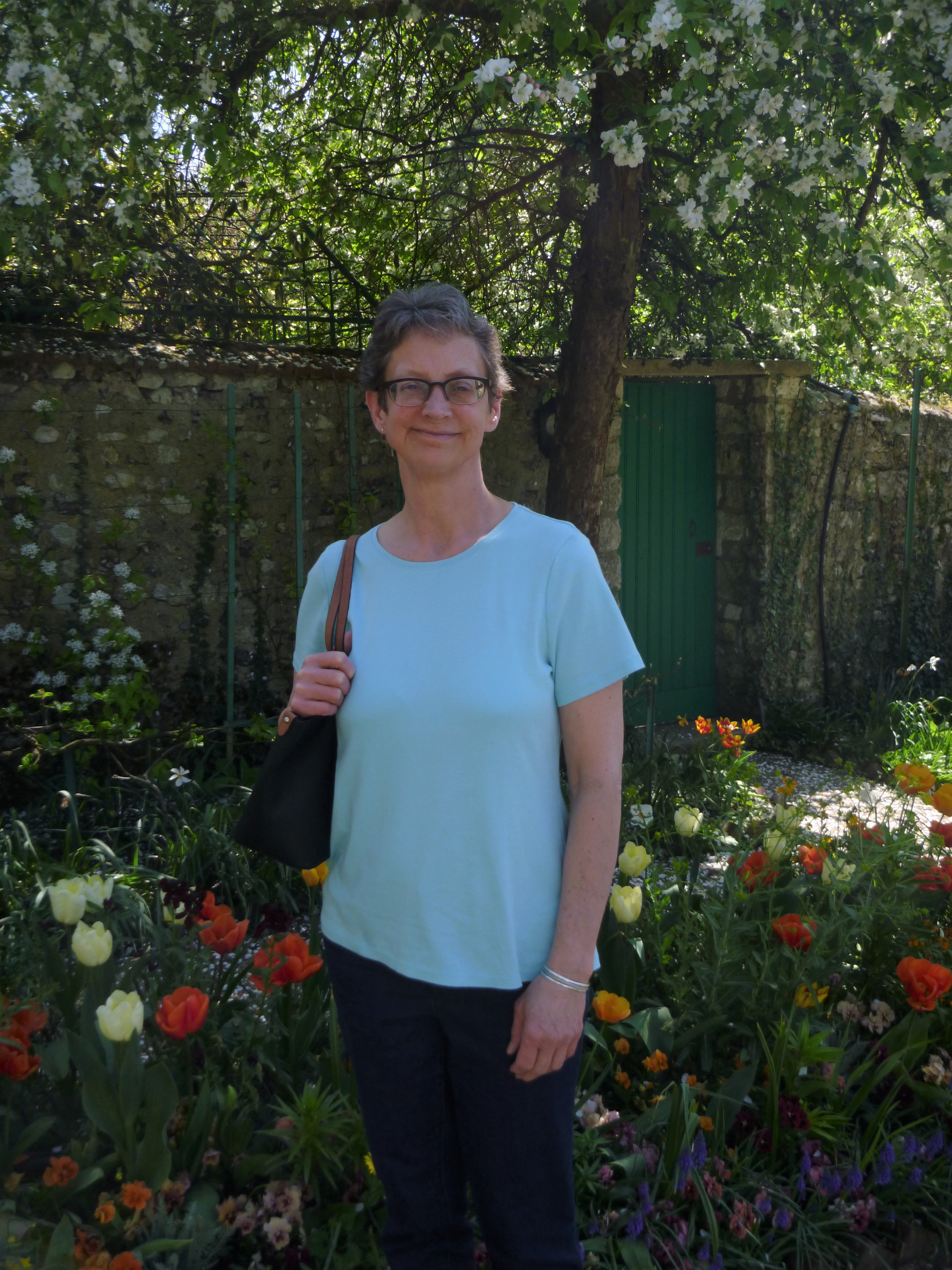
The large rectangular flower garden behind Monet’s house was a riot of brilliant hues. Having just left the dull brown landscape of wintery Maine, I drank in the color. Bright green grass, tulips, azaleas, poppies, and pansies lined the walkways, while vines climbed trellises, arches, and ancient stone walls.

P1010478 - me at Giverny

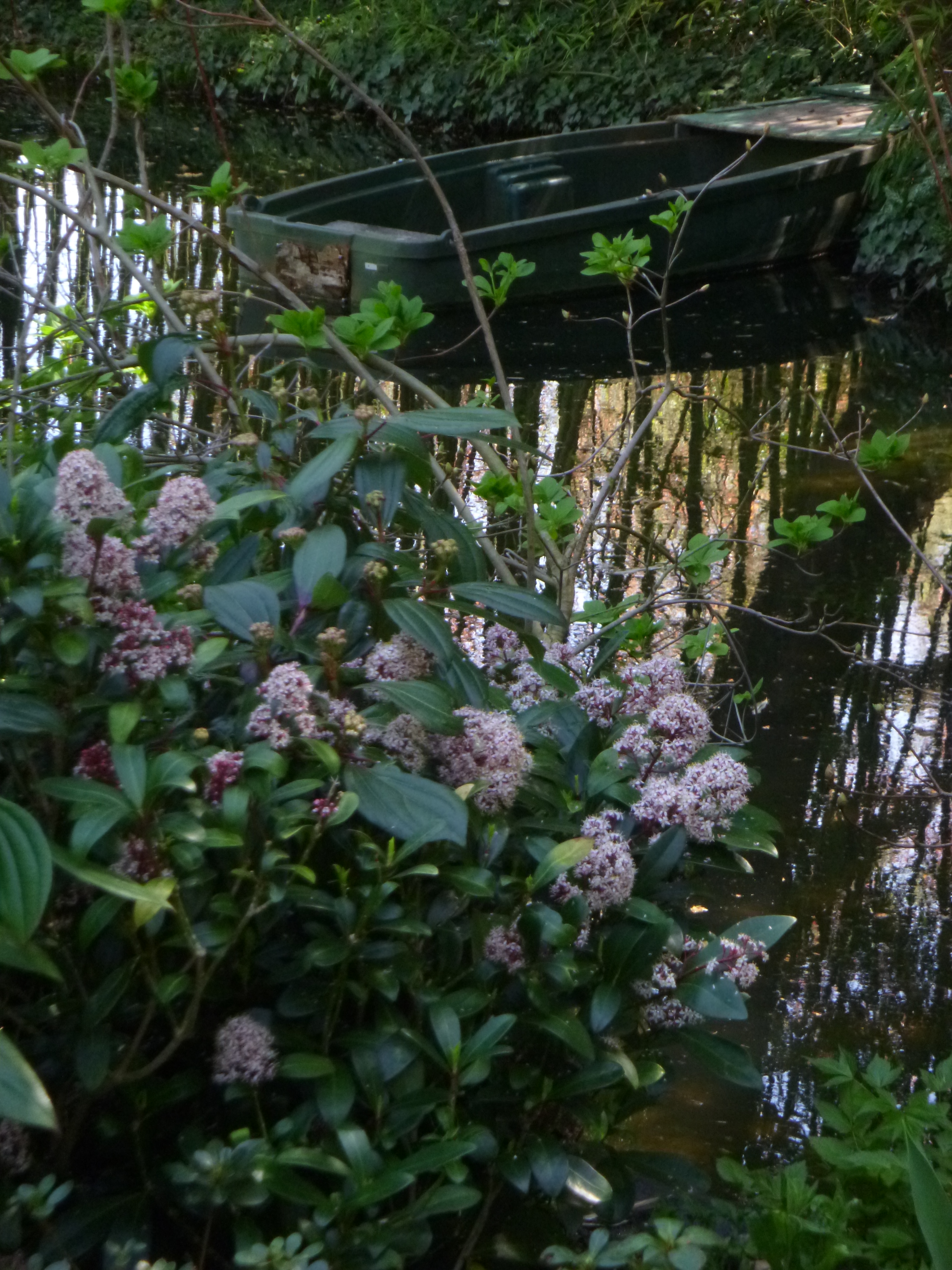
What I’d been dreaming of seeing, though, was Monet’s water garden, which has been recreated in its original design. A passageway took us under another road and toward the Etang des Nympheas, the lovely French translation of “water lily pond.” And there it was, with the curving bridge and the rowboat and mysterious carp hovering near thick lily pads not yet in flower.

P1010490 - Monet's boat

There were plenty of paths to wander. All of the bridges had been painted rather a shinier, brighter green than I would have chosen, but the other touches blended easily into the garden’s natural design. Bamboo railings were lashed together with dark brown twine and rustic wooden borders lined the tiny, fast-moving stream.

This was a garden of textures, merging with colors, creating the living painting that Monet had intended.  People strolled, their voices hushed, as if around the next bend they might come upon Monet intent upon his work.

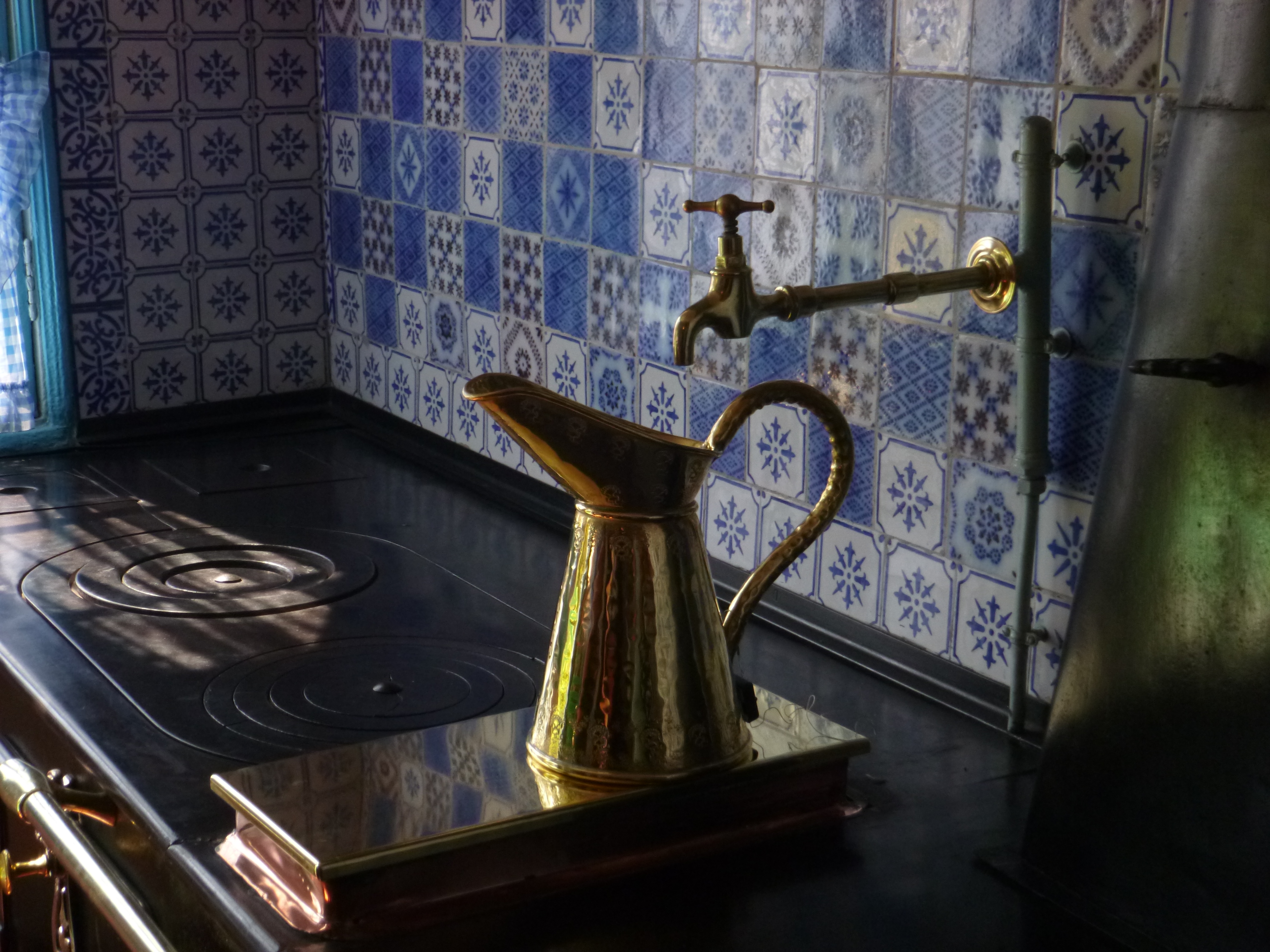
P1010534 - Monet's kitchen

Inside, the house overflowed with art, as Japanese engravings mingled with the paintings of Monet’s contemporaries and his own. The yellow dining room and blue kitchen made me feel right at home; they were my favorite rooms.

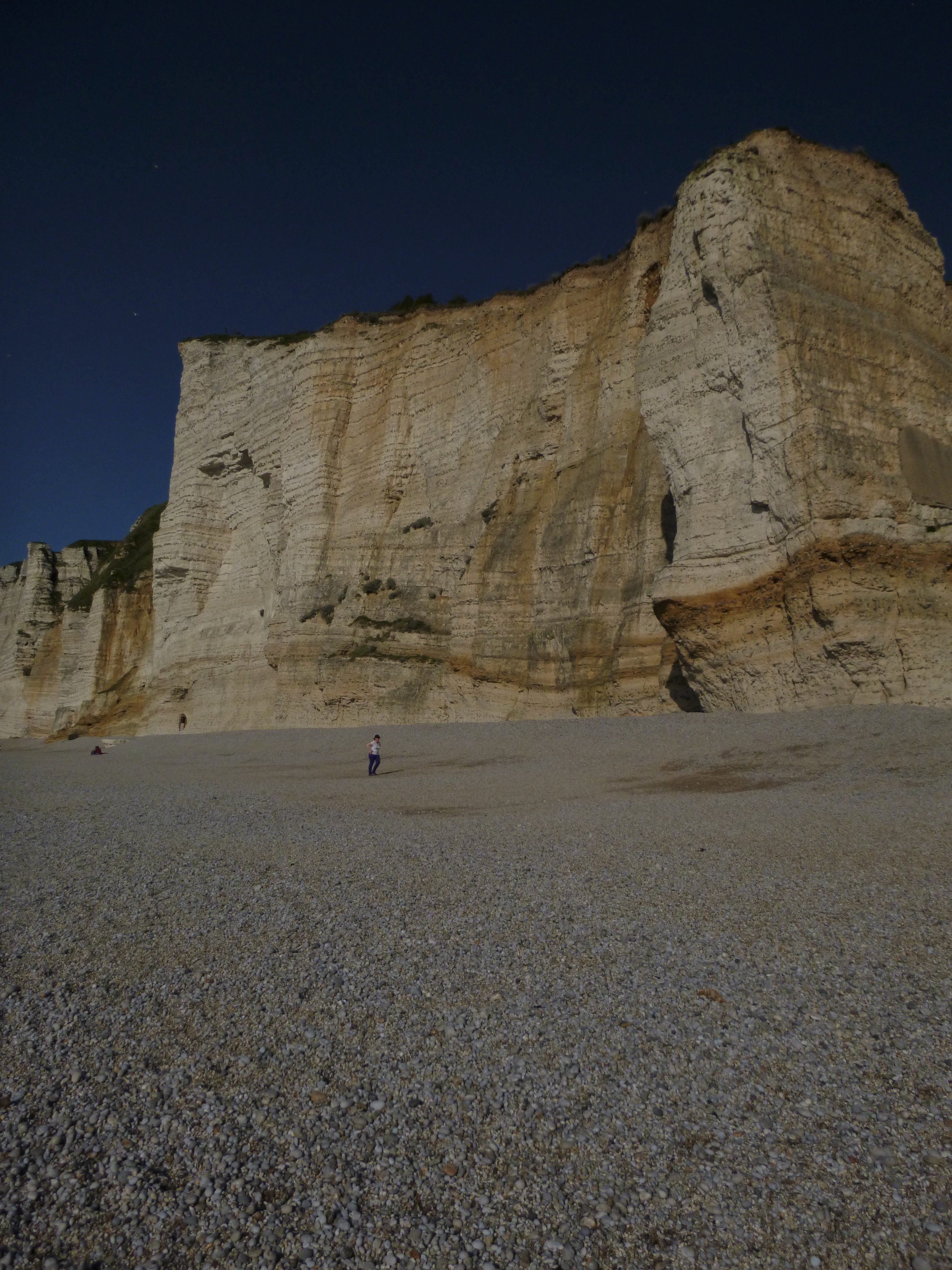
P1010544 - cliffs at Etratat

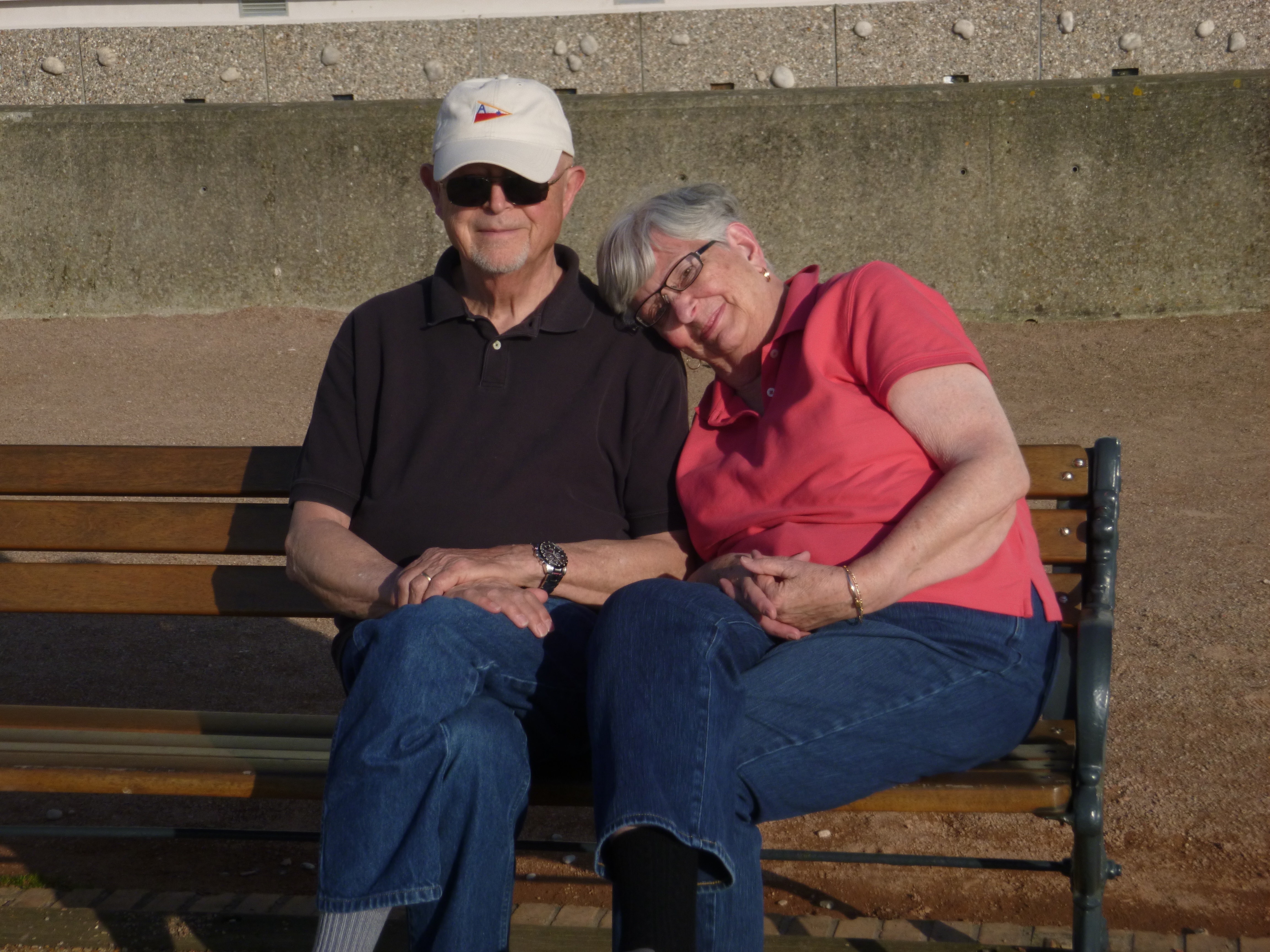
Our next stop, a detour to Etratat, on Normandy’s north coast, was well worth it. White cliffs bracket the beach on either end like encircling arms and tower high above mere humans. The sea in places has carved out arches and tiny caves. Mom and Dad sat on a bench looking out over the English Channel, perhaps remembering early days on a beach on the other side of the Atlantic.

P1010555 - Mom and Dad at Etratat

We ended our day with dinner in the scenic town of Honfleur, where tall narrow houses, some 2 windows wide and 7 stories tall, marched along the far side of the harbor. We will have one more day in Normandy, then head to Brittany.

P1010567 - Honfleur