Surprises of a quiet day: Blythe Island Regional Park, Brunswick, Georgia

A wildlife bonanza and kayaking serendipity right at camp

This campground, part of a park run by Glynn County, was my home for three nights, arriving January 23rd and departing January 26th. After the long excursion to Okefenokee, I decided to stay and enjoy the park on my last day. Chores and writing got accomplished, but I also just relaxed. While my laundry was drying in the laundromat, I walked over to the park’s public marina on the tidal South Brunswick River. The birds, there, oh my, I just couldn’t believe it!

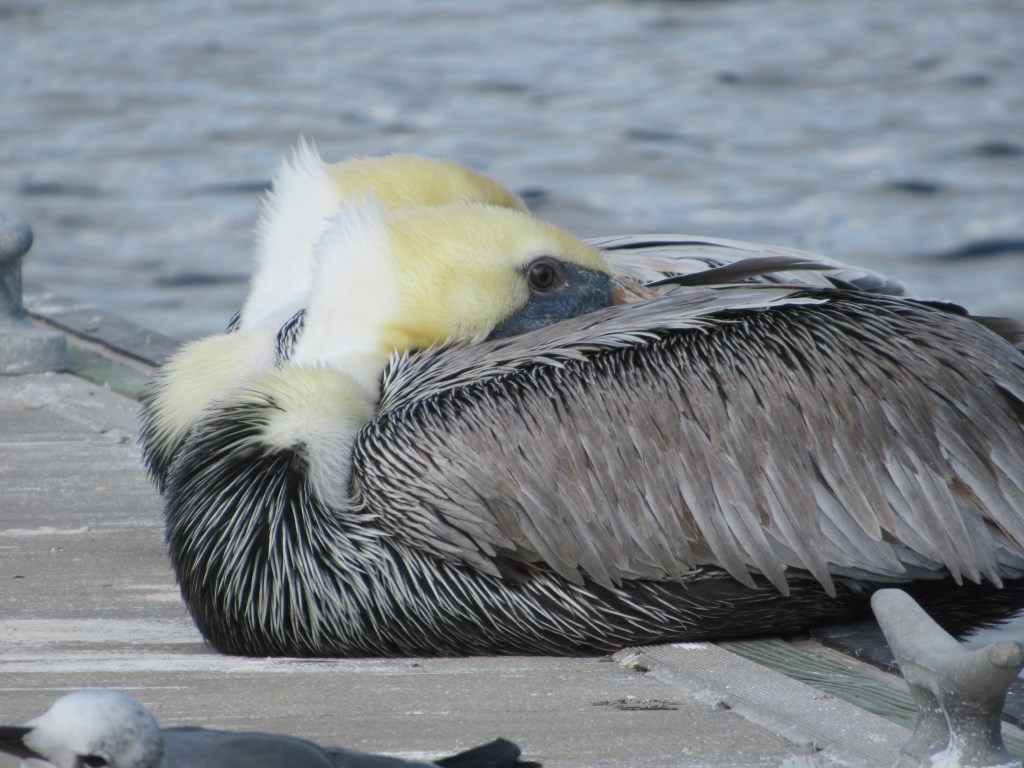
On the dock, a pair of brown pelicans posed willingly, their fuzzy yellow heads so soft in contrast to their much coarser gray body feathers, wet from the brackish water.
Another intriguing pose
A male hooded merganser popped up next. I watched him dive and preen, gazing down from behind a long fish cleaning table that mostly hid me from sight.
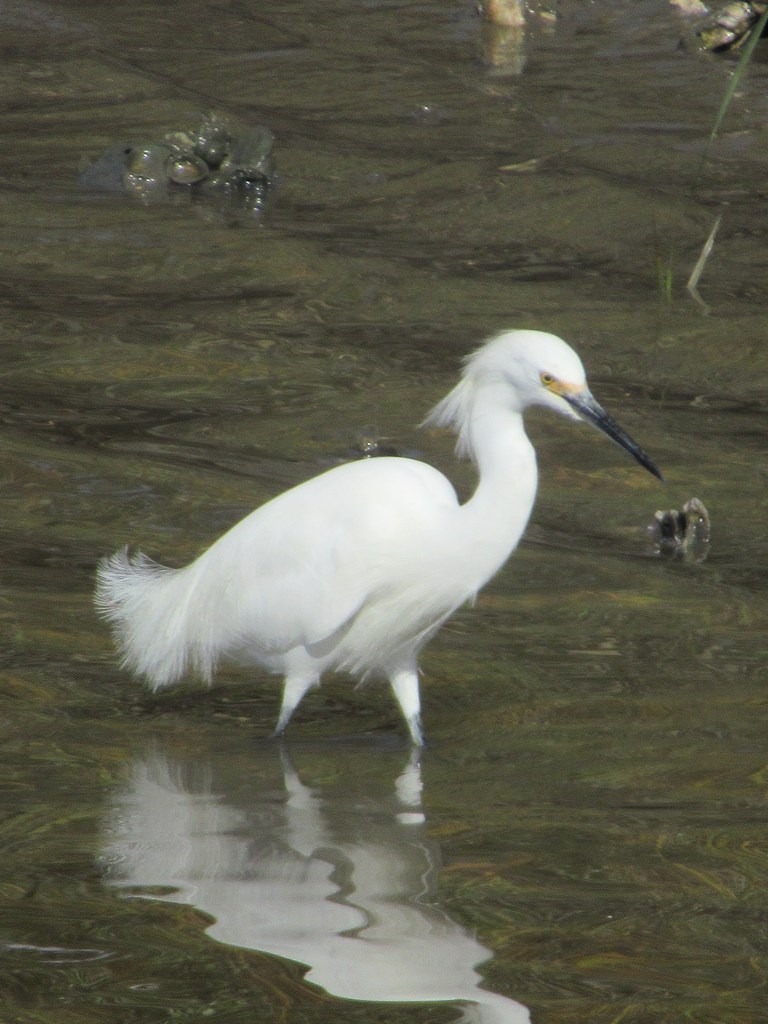
The snowy egret can be identified by its bright yellow feet, which I clearly saw as he stalked along.
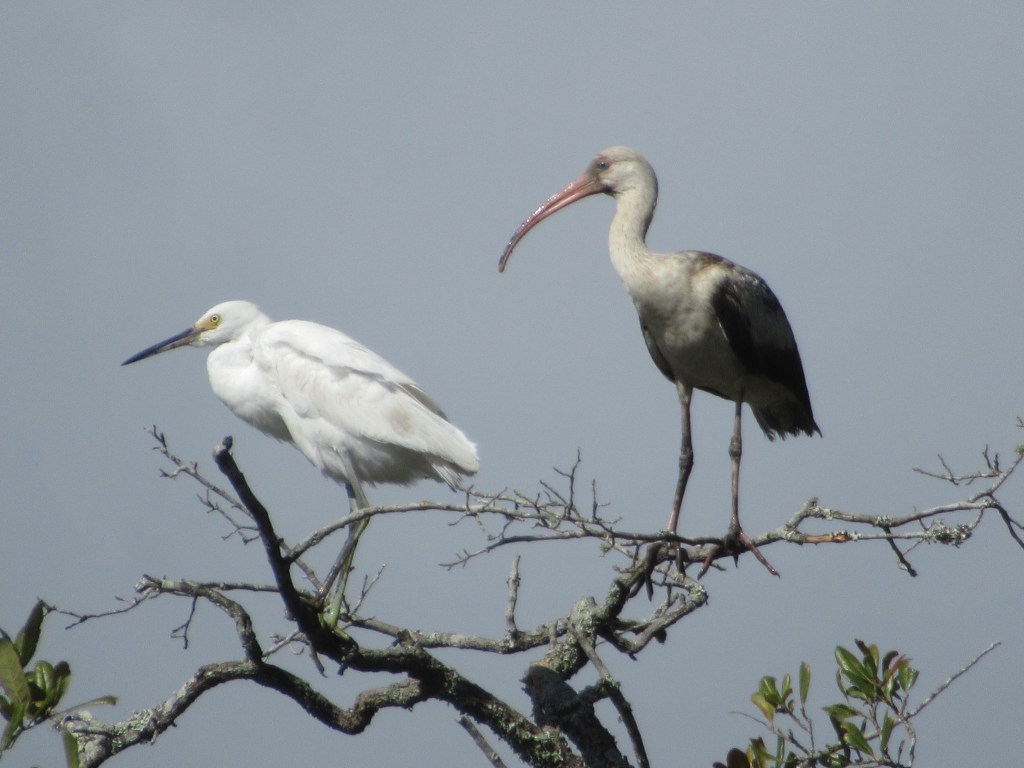
Then there were these buddies. The immature little blue heron on the left, with its distinctive green legs, flew in first. Then came the bird on the right, which I believe is an immature white ibis.
Two youngsters enjoying the hot sun and refreshing breeze, hanging out together.

Later that afternoon, I ambled out of my camp chair, assembled the kayak, and plopped it into the water that I could see from my front window. There are two tiny lakes there, but it turns out there is a canal (or stream?) that flows out the far side. Paddling past more egrets and a shy turtle, I followed the current into the narrow passage, past longleaf pine above and rhododendron below. Once, I turned back briefly just to make sure that going against the current would be doable.
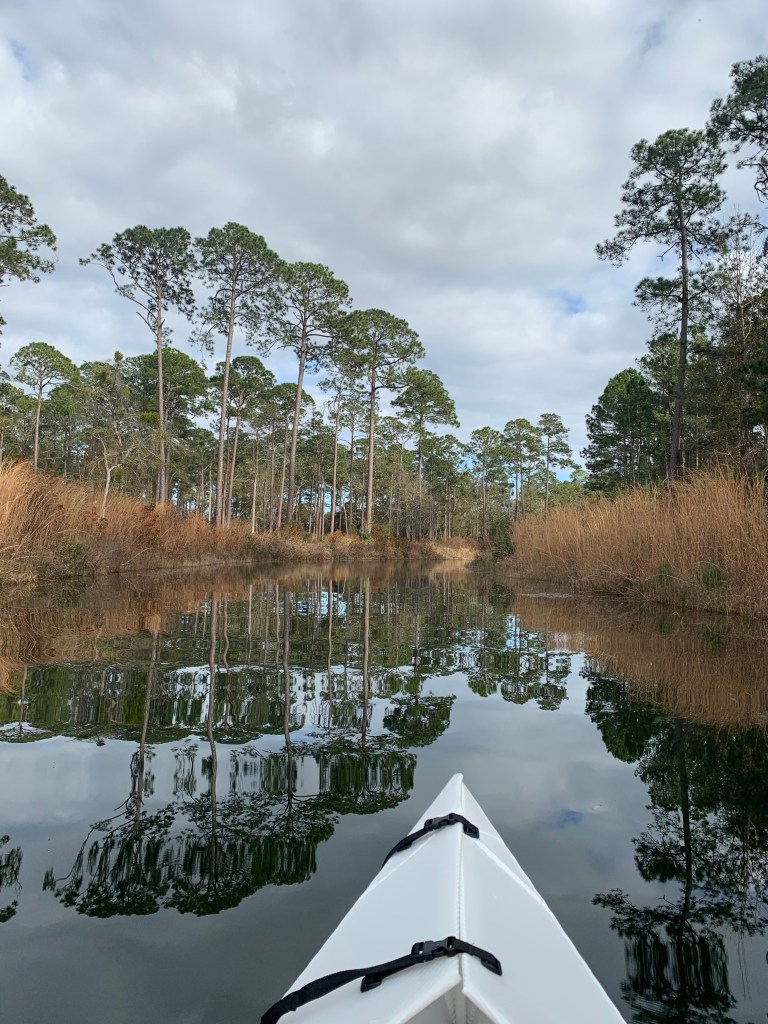
If I hadn’t stayed to relax at camp, I would have missed this gem.
Today’s mystery water plant, observed in several large matted clumps

Exploring that canal and a couple of dead end turns off of it, I ended up paddling almost three miles. Meanwhile, there was a small problem in paradise. Fires ants! Carrying the kayak down, I had been bitten four times. I recognized that stinging pain right away, but it took a minute to find them under my Teva strap. A day later, my left foot would be swollen and very itchy, with blisters where the bites were and an ugly reddish color to the front half of my foot.

I will spare you a photo of that!

Last character of the day’s wildlife bonanza was this armadillo, spotted as I drove back home with a takeout shrimp po boy from Fish Tails Pub & Grill, right down the road.

Sometimes the best days happen right at home!

Cerro Azul Meambar National Park

  
The evening rains have begun, pouring down upon a country in true need of the life-giving water. Yesterday, as we drove past sloping fields of corn and sugarcane, Roman told me how dry the spring had been. 

The downpour has gathered us around a simple wooden table, like family united by the bonds of travel. The steady rhythm on the metal roof began gently, but is growing ever stronger, accompanied now by some serious thunder. Safe and dry, we travel with our stories, from continent to continent, and it is amazing to think that this is the life that all the others have been living for months or even years.

Later, while I was writing this, a swarm of brown, lacy-winged insects appeared, driven in perhaps by the solid wall of water. On the rafters above, a gecko is in heaven, feasting, his tongue flicking out again and again amid the bounty. This day has been a good one.


The future of Honduras lies with people like Walter, who used resources like missionaries and a well-known ornithologist living nearby, to learn both birds and English.
 

A rustic cemetery, alive with birds, was our first stop. The hour was still early and Walter was quick to call out the species. The golden-fronted woodpecker, crimson-colored and blue-gray tanagers, the Montezuma oropendola, white-collared seedeater, and sulphur-bellied flycatcher. The exotic names and brilliant colors were soon swirling around in my mind as I jotted notes.


When we walked down from the cemetery, we discovered a vehicle full of soldiers waiting for us. They were assigned to protect the national park. Walter assured me that it was the park resources that were in danger, not us. However, one of the soldiers, Luis, walked with us for a couple of hours (with his gun) as we continued upward toward the park. 

Once inside the park, we were free to roam on our own and quickly found a blue-crowned motmot. Walter was able to set up his spotting scope and I got a good look at this beautiful species, with its long and delicate double tail. PANACAM, as the national park is commonly known, is home to over 250 species of birds, many butterflies, and the waterfall pictured below.Tomorrow I go kayaking on Lago de Yojoa!


A swim under the waterfall brought me back to life after the long, hot walk.