Some stories need to be told right when they happen! Between North Carolina and here, I spent six nights off-grid in the Brick House campground in South Carolina’s Sumter National Forest. I’ll get back to that sojourn, which featured frigid temperatures, an ailing generator, and hiking the Palmetto Trail, later.

Struggling to back my trailer in just where I wanted it was the perfect way to meet my backyard neighbors at the Blythe Island Regional Park campground in Brunswick, Georgia. Roy came over to quietly advise me and his wife Sue soon followed with information about some canoeing they’d been doing. The water trails at the wildlife refuge were a true discovery, and I knew I had to go explore them. Roy and Sue had seen and heard flocks of sandhill cranes and showed me photos of the Suwannee Canal, which begins at the visitor’s center.

At the visitor’s center, I scooped up some fabulous free stickers for my growing collection and got an orientation to the water trails. As I had to be off the water by 4:30 p.m., I would do the length of the canal and back, around four miles, but would not get to explore any more of the water trail system.
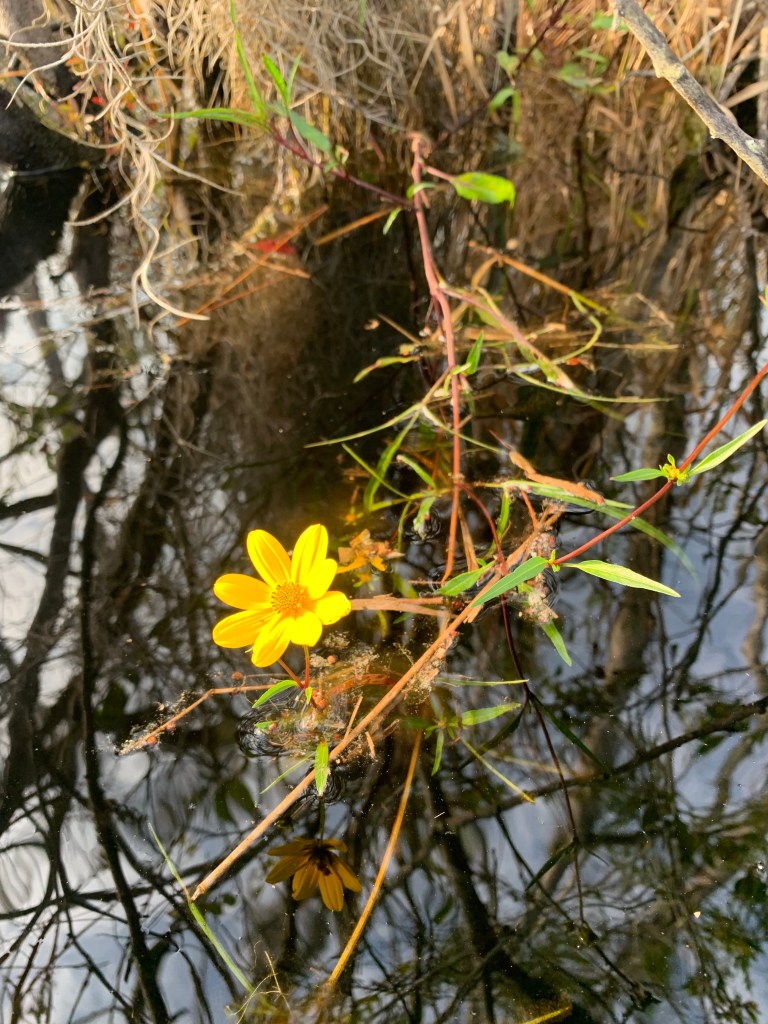
The startling news was that lots of alligators had been seen basking in the sun on this 70-degree day! You think I’ll get to see one? I asked in surprise, as much excited as apprehensive. Oh, there’s no doubt, replied the ranger. He then assured me that alligators are not aggressive, and you can paddle to within fifteen feet to photograph them. Most of the time, in January, alligators are in brumation, a type of torpor where heart rate and metabolism slow down. On warmer days, though, when you start seeing turtles out, snakes and alligators will also be active.
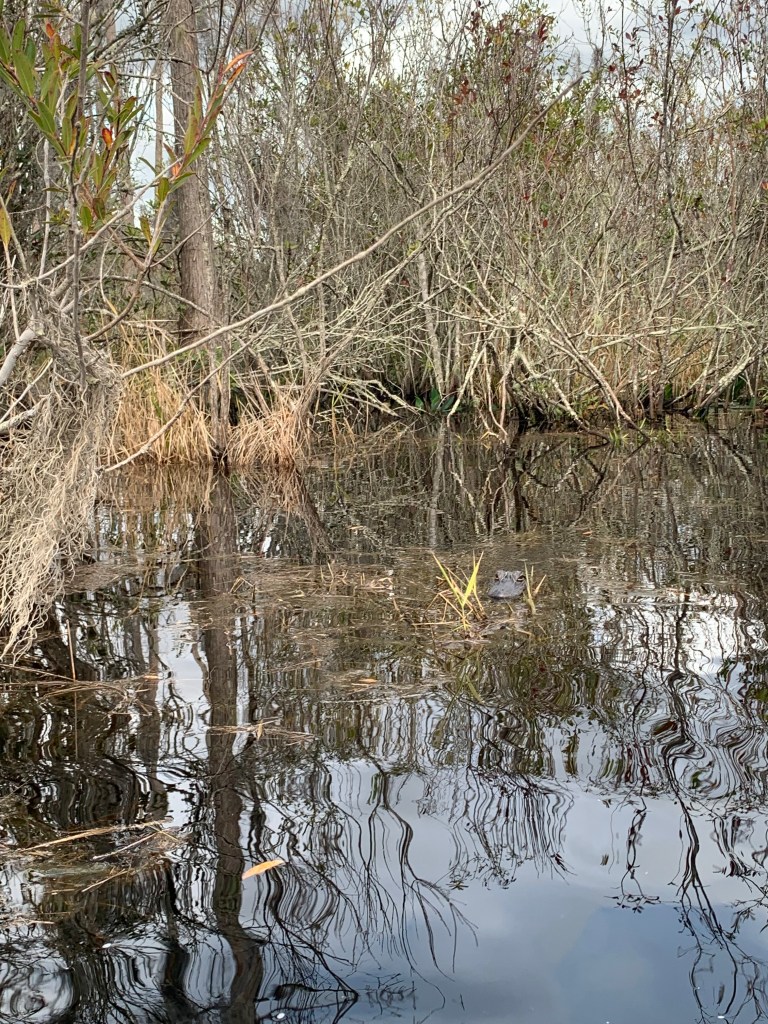
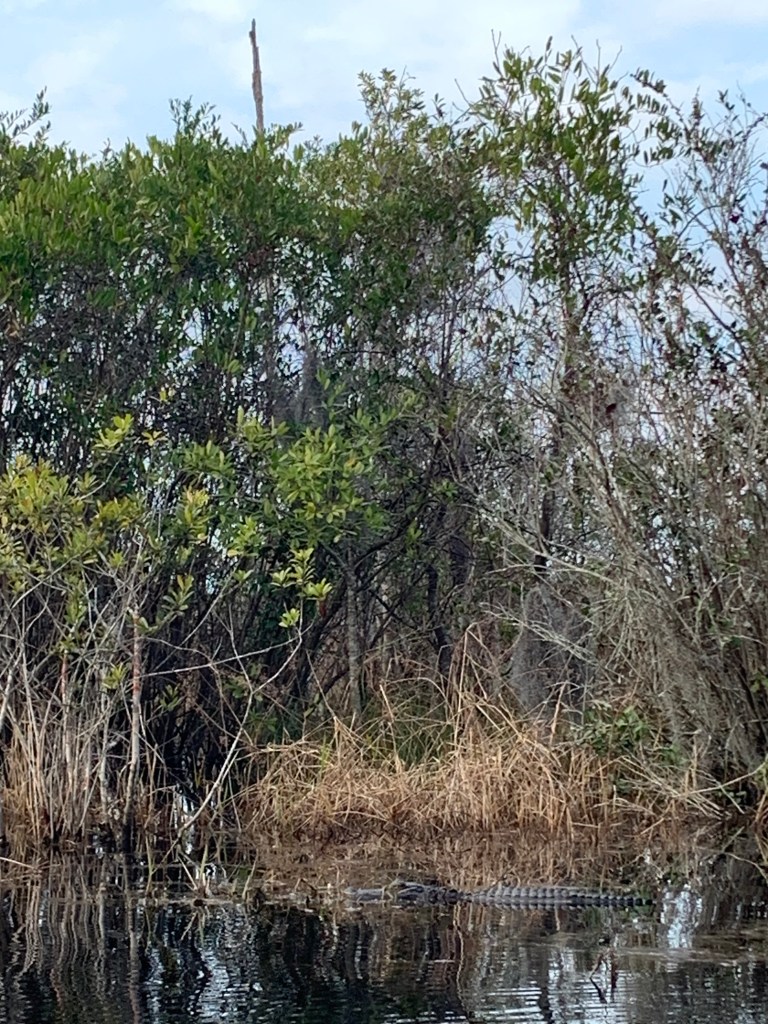
Every sense was on alert as I scanned the banks. In addition to reptiles, I was on the lookout for river otter or the elusive American bittern, both of which had been spotted today. The alligators would be sunning on the banks. I probed the tall dry grass and peered into the water under shrubby brush. Finally, a shape emerged, like jagged teeth…an alligator tail. It was a big one, and looking closely, I could see his body and head, facing away from me. The wind pushed me away, until trees hid his form. I paddled back again and again, not really believing that here I was in my little folding kayak communing with a gator!

In two hours, I spotted eleven, four going out and seven coming back, so perhaps there were repeats. As I learned what to look for and where, they were easier to find. Two acknowledged my presence: a large one that slowly sank until only the top of his head and eyes were visible and a small one that twisted into the water with a big splash when I got too close. That was creepy, to have him somewhere underwater, not too far away!
My only regret was that I couldn’t stay longer and explore more. The refuge is home to flocks of white ibis and wood storks, as well at the sandhill cranes that Sue and Roy witnessed. Fifteen species of turtles make their home here. Perhaps someday I will return, to paddle farther and hike some of the trails as well.
 Laurie Apgar Chandler