Looking and seeing in the winter woods

The real voyage of discovery consists not in seeking new landscapes, but in having new eyes.     Marcel Proust

To clarify, I’m all for seeking new landscapes! Like April in Paris, this spring, where we’ve just booked a hotel a block from Notre Dame! In our everyday world, though, there are plenty of new discoveries to be made, if we would just look for them.
img_7239.jpg

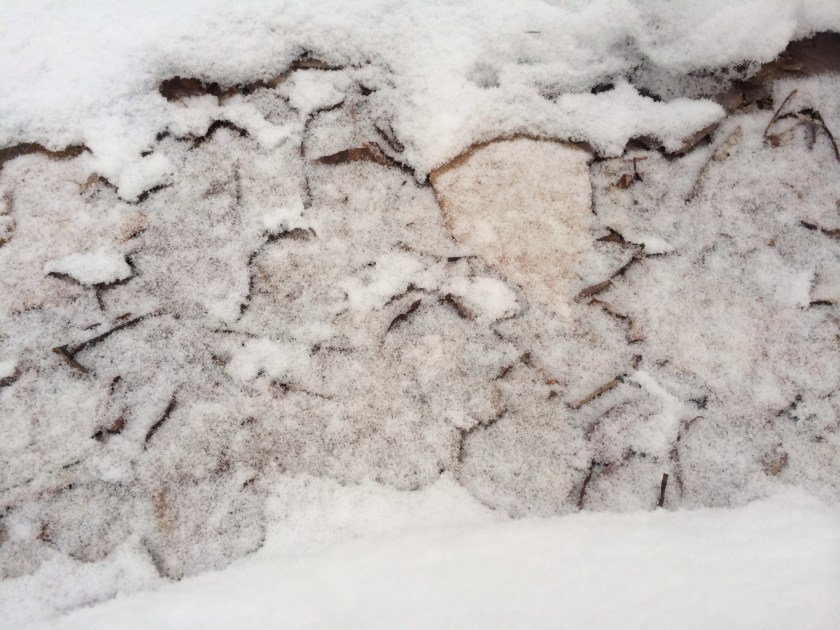
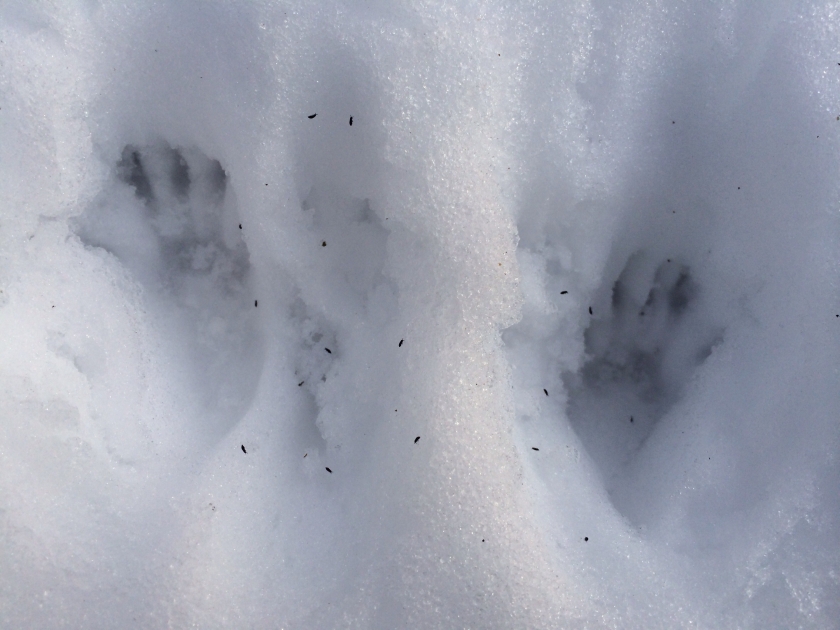
The forest is still criss-crossed with animal tracks. As the snow turned thin and slushy this week, the imprints stood out in greater detail. Tiny “handprints” of red squirrels were everywhere, as were the squirrels themselves. The warmth prompted me to carry along my binoculars and to pause from time to time. The repeated call of a barred owl came from afar, but it was mostly red squirrels that I saw.

One explored an ancient log pile, dark and damp, adorned with scattered piles of demolished pine cones. He moved with fluid energy among the logs, popping out first here, then there, to scold me. Later, another bravely stood his ground atop a stone wall. Only his haunches moved, quivering with indignation, and the shiny blackness of his eye stared me down. He looked fit and well-fed, the subtle gray and rust of his sleek fur elegant in the drab and cloudy light.
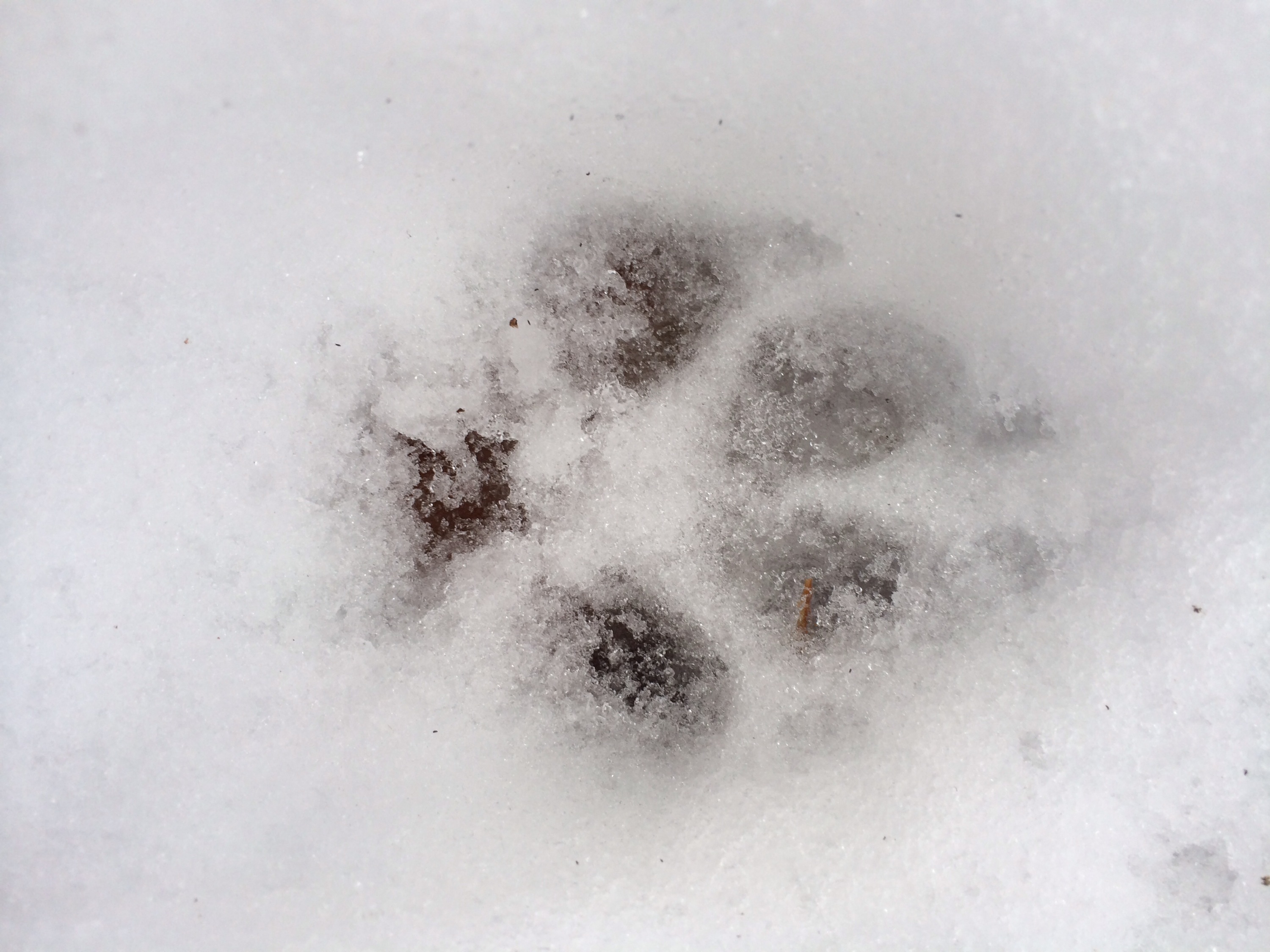

Canine tracks still mystify me. The one above was repeated in a single line that roughly followed my old trail for quite a distance. Both coyotes and foxes frequent these woods.
IMG_7258

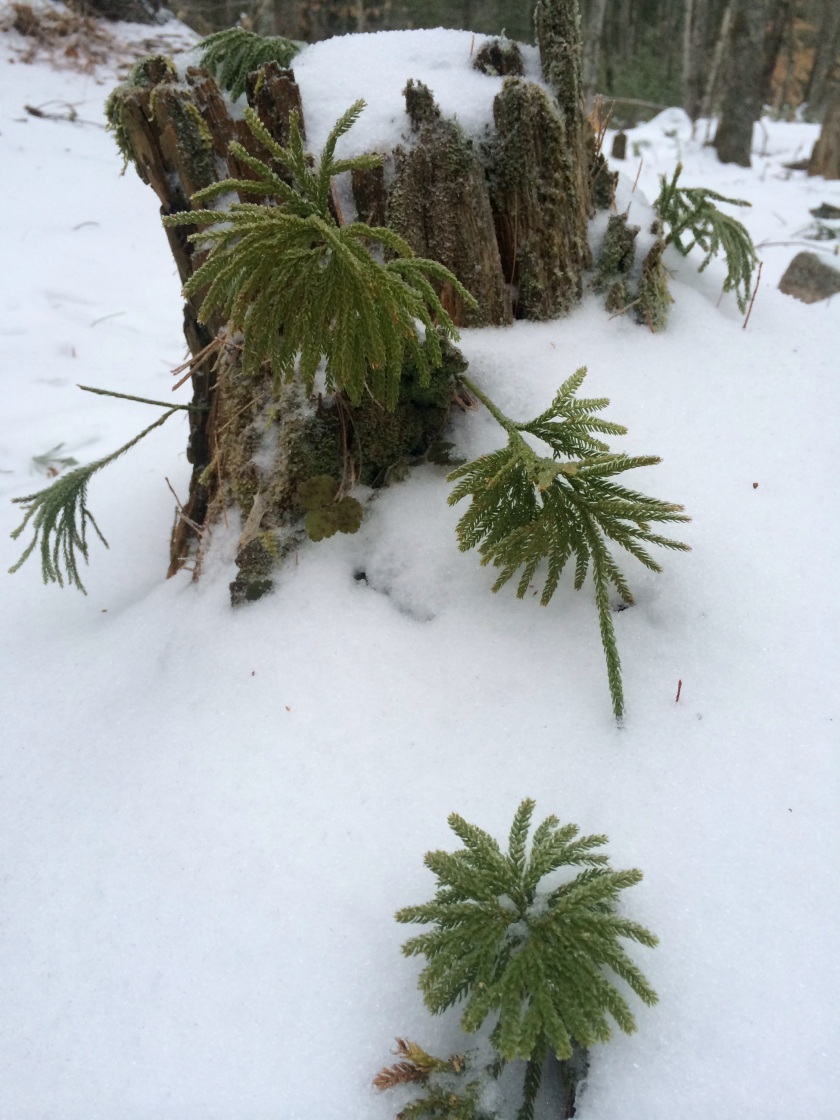
There’s green stuff out there, too. Not just trees, but much more, if you look closely. This small native plant, whose relatives once dominated primeval swamps, is very common. Somehow, it thrives in the northern forest, surviving months of ice and snow.

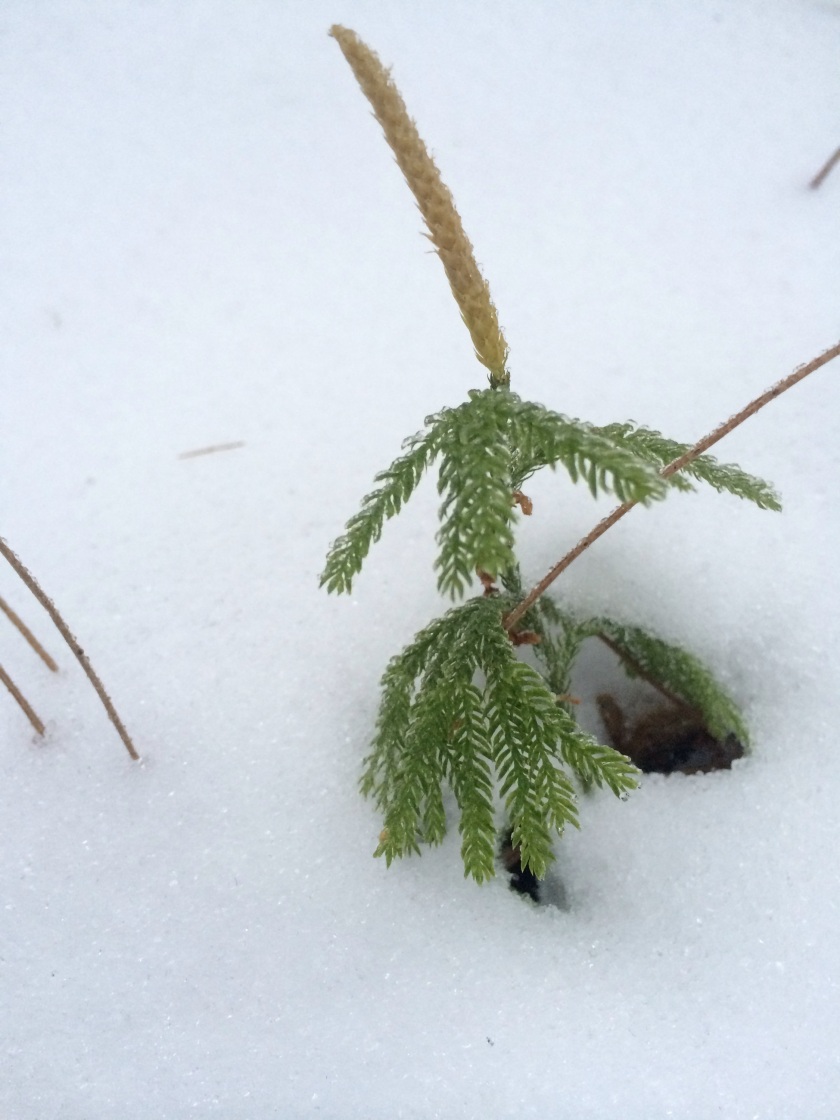
Looking a bit like a miniature spruce and often called “running pine,” the club moss is neither a conifer nor a moss. Closely related to ferns, the club mosses are vascular plants, with “veins” of xylem and phloem. Their ancestors were once the most complex plants on Earth. In the Carboniferous period, 350 million years ago, club mosses well over 100 feet tall dominated the forest that was later transformed to vast deposits of coal.
IMG_7254

This species, Lycopodium clavatum, is found in damp woodlands throughout North America. During the asexual part of its rather complex reproductive cycle, it produces spores, which are released from the plant’s erect, yellow-brown strobilus.

The spores are, for me, perhaps the most fascinating part of the story of the club moss. High in oil content, they are water resistant and flammable. Native tribes knew many medicinal uses for the spores, and, according to the Virginia Native Plant Society, medicine men tossed them on the fire during ceremonies to produce a flash of light.

In my reading, I found a host of other historical uses for the powdery spores, including flash photography, magician’s tricks, fingerprinting powder, fireworks, and treating rashes. Good incentive, perhaps, to try collecting some this year!

Upwards receives first book award!

The_New_England_Book_Festival_Logo

OK, how humble is it to say “first” book award? Honestly, though, my hopes and dreams for this book continue to grow, as more people read and share their thoughts. The volume of responses is growing and opportunities for the new year are coming in fast.

A few highlights:

  • Four upcoming events in the next three weeks (details on the events page)
  • Just invited to present at the Wilderness Paddlers Gathering in Fairlee, VT in March
  • Planning two events during the Adirondacks’ Celebrate Paddling month in June
  • And, of course, Honorable Mention in the category of Biography/Autobiography from the New England Book Festival.

The Boston-based New England Book Festival, sponsored by JM Northern Media, recognizes the best books of the holiday season in 17 categories. Winners are judged on “general excellence and the author’s passion for telling a good story” and “the potential of the work to reach a wider audience.”

To balance out the many hours devoted to the book, I continue to plan for next summer and enjoy today. A deluge of rain, amid temperatures as high as 55 degrees, has washed away much of our snow. The sight of green grass and brown leaves has been a welcome change. Sunday’s afternoon walk, on boots not snowshoes, felt free and unencumbered.

I tramped, I tromped, the trail more brown than white, looking around at the woods, rather than down at my feet. You know how it feels when you’ve just climbed up, then down, a mountain and hit the flat? The joy of simply swinging along is wonderful.

Gone, though, was the hushed white wonderland of winter. Every step was a loud crunch, either on a couple of inches of frozen remnant snow or, mostly, on frosty ground. Crunching along at a good pace, out to the edge of an old beaver pond.

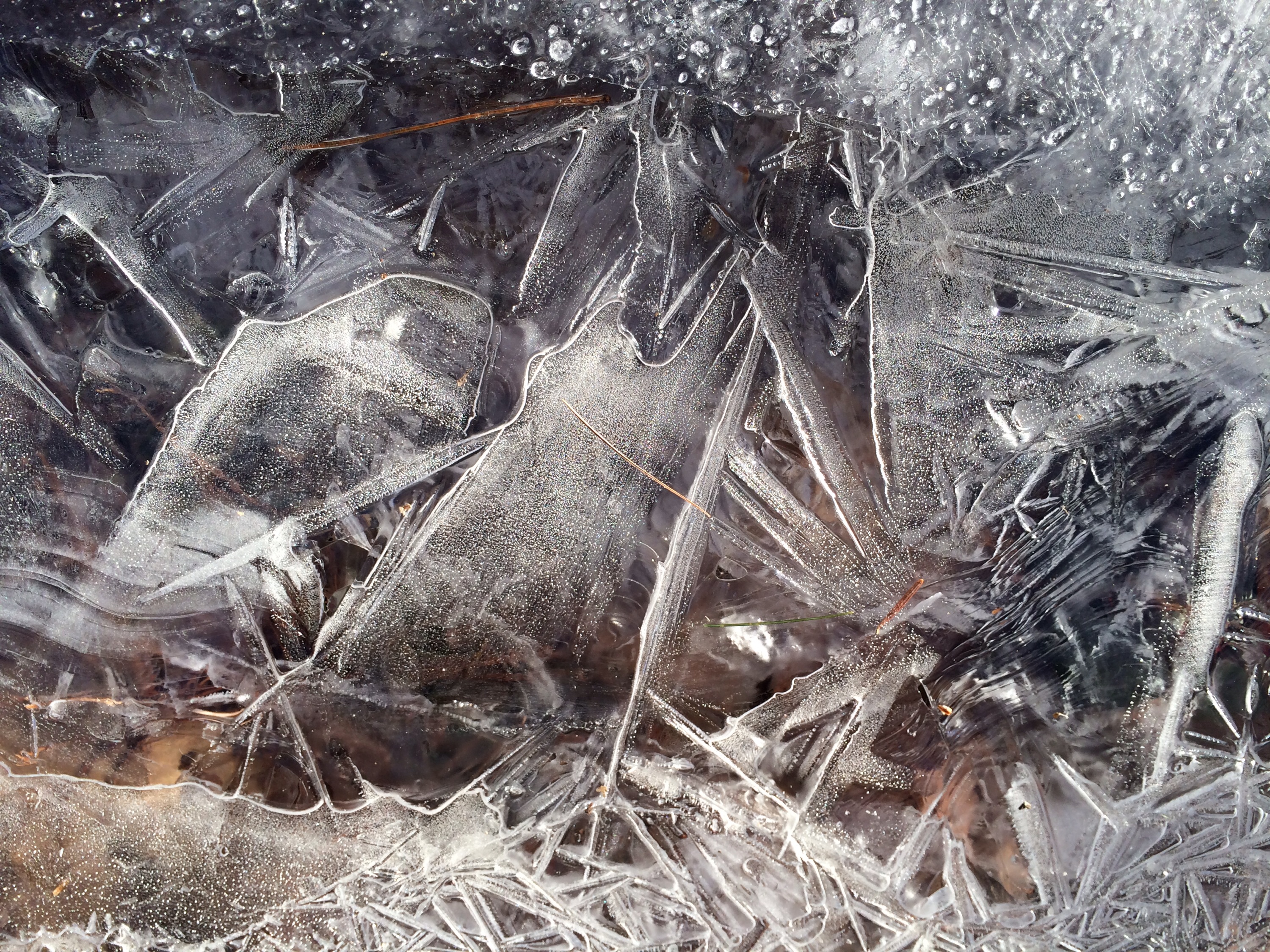
There, nature had sculpted striking designs in the paper-thin sheet of ice that rimmed the pond. I walked a few feet out to sit on a log, trying not to destroy too much of the beauty, finding an inch or two of air between the ice and solid ground below. The sound of my progress was deafening, all wildlife no doubt well warned of my visit.


When I sat, though, to take in the play of the brilliant sunlight across the ice, the ruckus continued. A vigorous wind, rustling the trees in the pond, gave the ice a tortured voice. The grinding, cracking, and squealing never let up, and the cold soon nudged me to head back home to a cup of hot cocoa and my never-ending to-do list.

As my faithful readers know, I am still learning the ins and outs of social media, and recently discovered that my automatic sharing of posts somehow missed the last one. If you’d like to join me on an earlier walk, here is my January 5th post.


Bombogenesis…it even sounds scary!

Winter so far has brought enough bitter cold and snow to make us believe that it’s serious this year. The snowshoeing has been great. I’m thinking of it as the start of training for next summer’s north woods adventure (still in the planning stages).

IMG_7115
Berries at the edge of the swamp shone in a coat of ice last week.

The word “bombogenesis” had somehow escaped my notice for some 56 years…until yesterday. According to NOAA, the term describes the rapid intensification of a mid-latitude cyclone, measured by its drop in central atmospheric pressure. A drop of 24 millibars or more in 24 hours creates a bomb cyclone like Winter Storm Grayson, whose pressure dropped an incredible 59 millibars as it approached New England yesterday. Skies are still dark here, but soon I’ll head out to start shoveling my way to the garage and our snow blower. As of now, school is open with a 2-hour delay. 

IMG_7193
Farewell small spots of bare ground, farewell to tracks and signs of life that laced the winter woods, farewell to quick and easy walking…soon all my trails must be won once more.

Around nine in the morning, the first powdery sprinkling of snow began dusting the ground. As I followed my favorite trail by the swamp to a far hill, I took a last look at the many animal tracks, almost memorized in my traipsing back and forth day after day. Dad had discovered the scene in the photo below, one sunny day last week. “There’s a story!” he exclaimed. Tiny prints of mouse or vole raced for the cover of a hole, the sweep of owl wings marking either the creature’s demise or narrow escape.

IMG_7181

I ventured out again around one o’clock yesterday. The blizzard conditions were just starting, and snow was quickly reclaiming the forest, even a moving person. The particles bombarded me, an audible pelting against my parka. Once, a gust of wind gave a hint of the fury soon to follow and I thought of turning back, but didn’t. I was warm, the temperature thirty degrees warmer than on some recent days. At the same far hill, I turned around, the tracks I’d made already blurring into fluffy whiteness.


Trudging home, I could still faintly see depressions from the ski poles that my daughter Megan had used on Christmas week. Soon, they, too, would be buried, our ramblings just a pleasant memory of a week of family fun. The woods tomorrow will be all new.

Sleuthing in the littoral zone, the fight against invasive aquatic plants

image
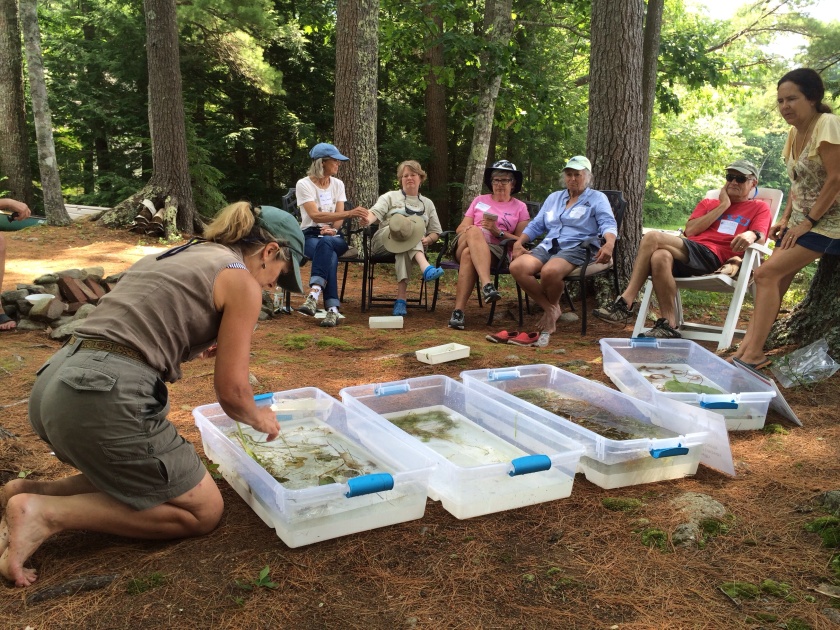
Roberta Hill, from the Maine Volunteer Lake Monitoring Program, helped us sort and identify the aquatic plants we collected from Pemaquid Pond during our Invasive Plant Patrol workshop.

Back in 2009, a man named Dick Butterfield did what I did yesterday. He attended his first workshop with the Maine Volunteer Lake Monitoring Program (VLMP), to start learning to identify dangerous invasive aquatic plants. His thirst for knowledge, combined with concise, effective training, soon saved one of our local lakes.

No doubt armed with his mini waterproof identification key to the 11 most-unwanted suspects, he ventured out on his very first patrol, on nearby Damariscotta Lake. And found hydrilla, which the Maine DEP calls “the most problematic invasive plant in North America.” The lake is huge, with 45 miles of shoreline, but volunteers and experts sprang into action to contain the hydrilla in the tiny cove where Dick had found it. Dick caught it early, which is critically important in the fight against invasives.

image.jpg
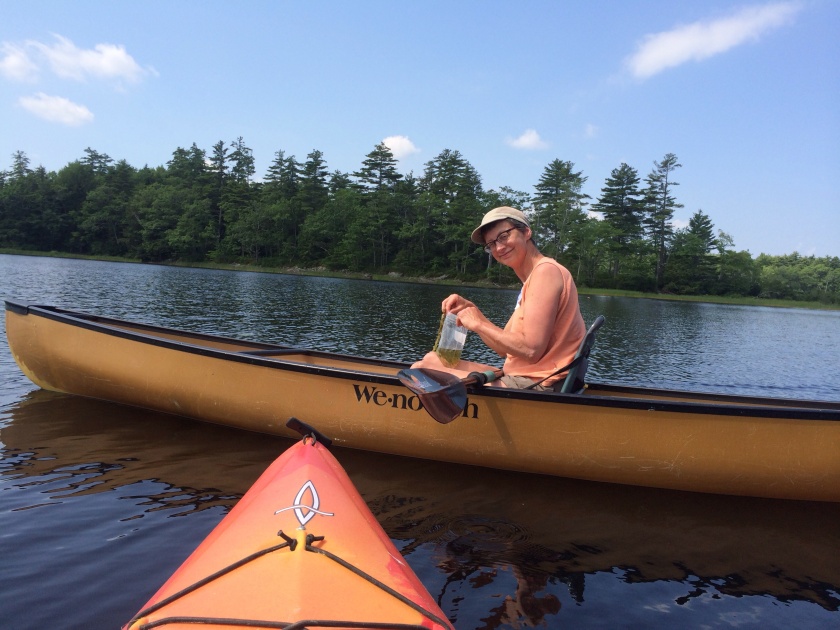
Paired up with buddies, we went out into our assigned sectors to collect plant specimens in the littoral zone, the zone of richest diversity along the lake’s shoreline.

Our workshop was information-packed, but my message for you is simple. In Roberta’s words, “The work of citizen scientists [volunteers] on the the front line is the most important piece in this fight.” Training focuses on just those 11 likely culprits, which fall into three main structural categories. That means that some types of plants (like hairy, grass-like stuff) you see can just be ignored. To demonstrate how easy screening samples can be, VLMP recently set up a table at L.L. Bean and taught willing shoppers how to use the key. Their average time to key out a sample was just two minutes.

image
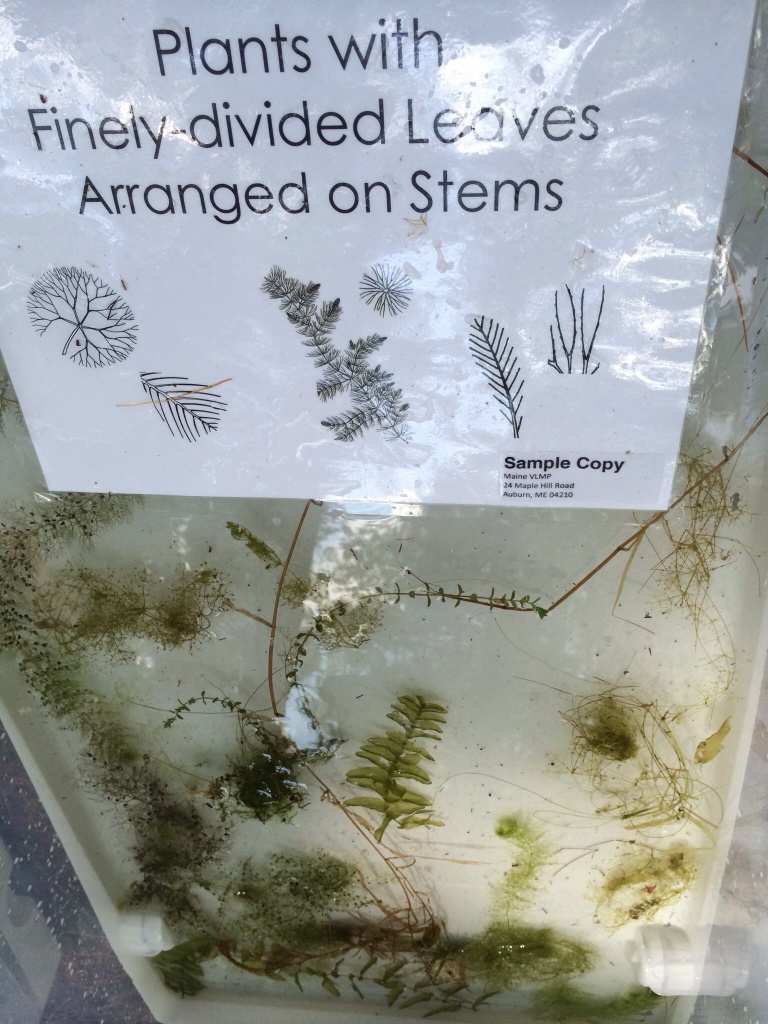
The sorting pan for one of the three broad categories that the eleven-most-unwanted invasive plants fall into. Although we were just learning, and made some mistakes, visible in the photo are some innocuous native milfoils and bladderworts that we collected on our plant patrol.

I was invited to yesterday’s workshop by the Pemaquid Watershed Association, which I’ve belonged to for many years. One of my resolutions for 2017 was to become a more active PWA volunteer. I’ve been writing some press releases and plan to volunteer for plant patrols on McCurdy Pond, where I often keep my canoe. If you’re interested in learning more, visit the Maine Volunteer Lake Monitoring Program or take a peek at the Key to the Eleven Most Unwanted Invasive Aquatic Plants.

Spring morning, a poem

Spring morning

 If you would know the pond today, come early.

Hasten with deliberate slowness,

hurry, linger, before the now becomes the when.

Clouds shift, light evolves, each moment more, each moment less.

Faint and ancient epoch now is winter,

that held the world in its unyielding grasp.

Breathe and all is new, unfurled, colored, textured, gone.

Nature writes her poem anew each morning,

and erases it at night.

Canoe glides a path and with it pens a verse,

Plucking twang of bullfrog chords,

Grackle’s iridescence hidden in silhouette against the sky,

Old men turtles in a line plop away, and I must go.

Headed home, flowers dust the shore with white.

Each tiny cluster speaks the pace of spring.

Round pink buds of promise

turn to stars of white perfection,

then fade to fuzzy frazzle.

If you would know the pond tomorrow, come early.


Upwards: The life of an author 3 months out

Three months out from what, you ask? Actually, many of you are deliberately NOT going to ask, as you’ve heard about little else from me for many months!

Just in case, though – three months out from holding Upwards in my hands. That shiny new cover, those color photos, my words in print. Actually, the cover won’t be shiny. One decision firmly made is to have a “Matte/Satin” cover. And color photos? That’s my hope and dream, but I’m waiting anxiously for cost estimates for a center section of photos.

No matter how thrilled I am about publishing, the whirlwind of life goes on. The end of the school year is upon us, bringing field trips and frenzy. This week, we visited the Maine Wildlife Park in Gray, Maine. Run by the Maine Department of Inland Fisheries & Wildlife, the park cares for and exhibits only animals that are unable to live in the wild.

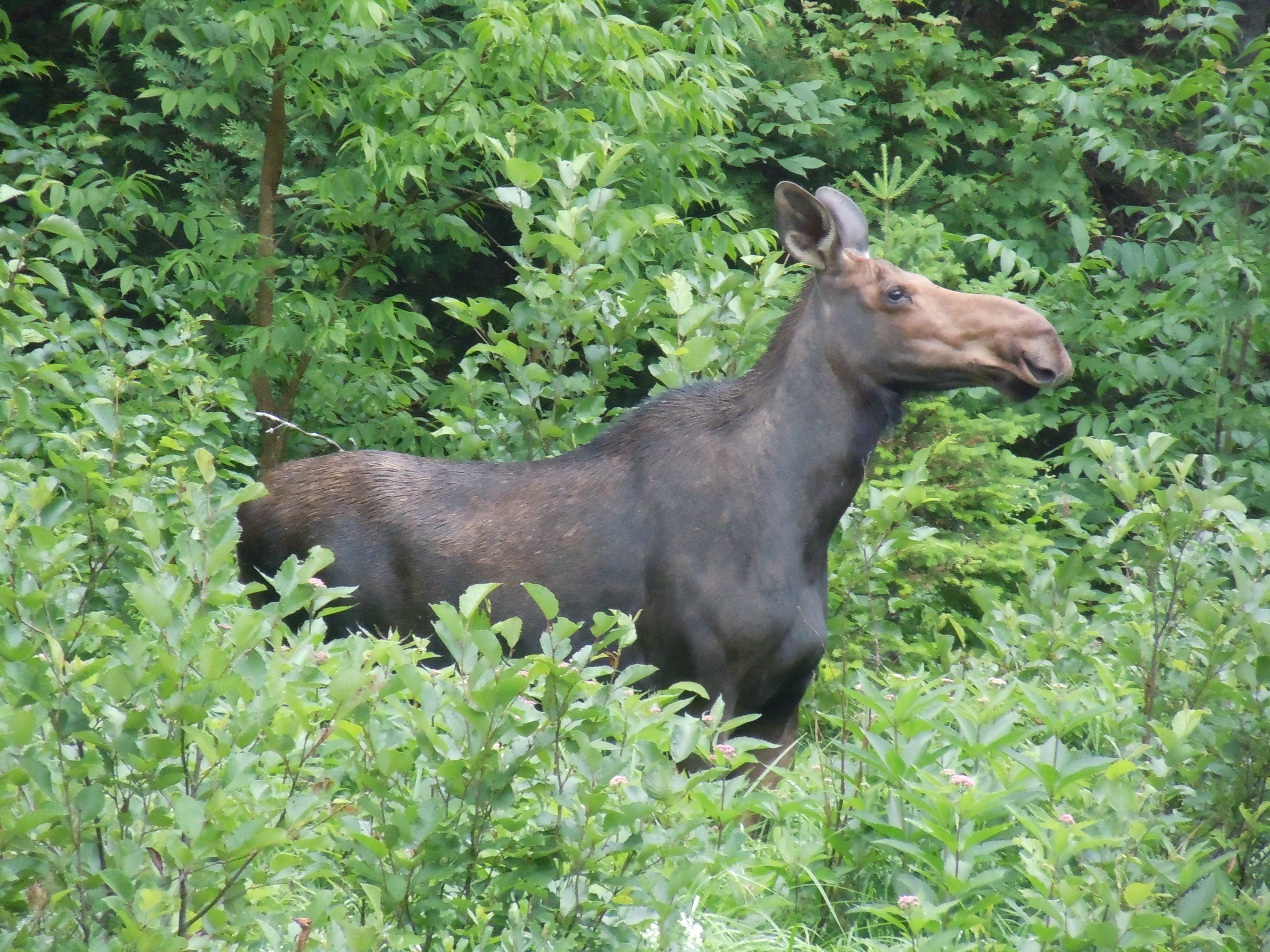
The more natural habitat areas were fascinating, while I struggled to watch two black bears panhandling for treats beneath a machine being fed by an endless stream of quarters, the huge glass window above obscured by a wall of captivated children.

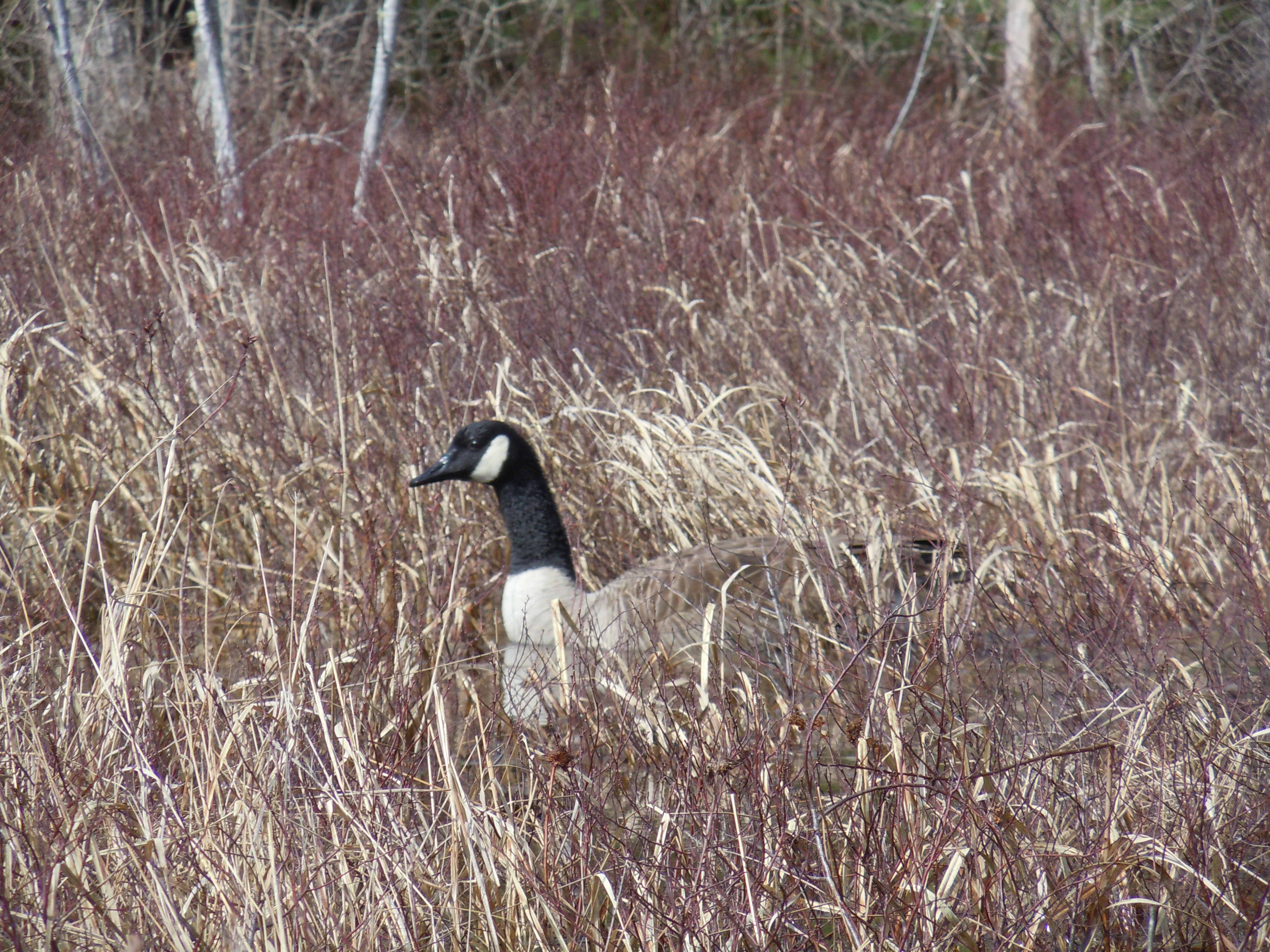
After taking the above photo, I decided that I would learn about the Canada lynx. (That’s Canada lynx, not Canadian lynx, just like the goose). The bobcat, also found in Maine, is a different critter. Similar in size and appearance, there are differences between the two species: Bobcat = shorter legs, smaller ear tufts, smaller paws, more likely to look spotted or striped and Lynx = the opposite. The tip of a lynx’s tail is solid black, the bobcat’s black on top and white below. Plus, in the deep snows of the north woods, a sighting will probably be a lynx, well-adapted for life there.

Somewhat of a picky eater, the lynx dines on snowshoe hares at least 75% of the time, eating 1 to 2 per day. Historically, lynx populations have cycled up and down in rhythm with hare populations. In Maine, however, both have been booming for years, as young spruce-fir forests grow back following devastating waves of spruce budworm mortality. The young-growth timber provides ideal cover for the lynx’s favored prey.

I can’t recall having seen a water snake in Maine, until my visit to the wildlife park. Research seems to indicate they live only in the southern half of the state, so my best chance will be during my excursions close to home.

Out on the pond this week, it was cool and my sightings were all avian. It’s too early in the season to take the leaves for granted and the maples were particularly striking. Vivid red clumps of maple keys jumped out among the shoreline greens and pinks, and I tried to draw in calm as I paddled and let go of some of the excitement that is keeping ME keyed up!

One afternoon, swallows had overtaken the water and swooped in acrobatic dance, surely happy to find many squadrons of mosquitoes on patrol. They can also drink mid-flight, quickly scooping up water from the surface. On shore, a solitary spotted sandpiper winged from stone to log ahead of me, the first time I’d observed this species on McCurdy Pond. Now, today, a quiet Saturday, I rose with the dawn again and hope to squeeze in another paddle among the expense-filing, permission-requesting, photo-choosing tasks of a busy soon-to-be-published author.

IMG_5909

Natural beauty along the NFCT…sharing some of my favorites

DSCN7835
First moose of the trip…we enjoyed each other while I ate my scrumptious no-bake cookie on Little Spencer Stream
DSCN7847
Canada lilies continue to glorify the river banks
DSCN7855
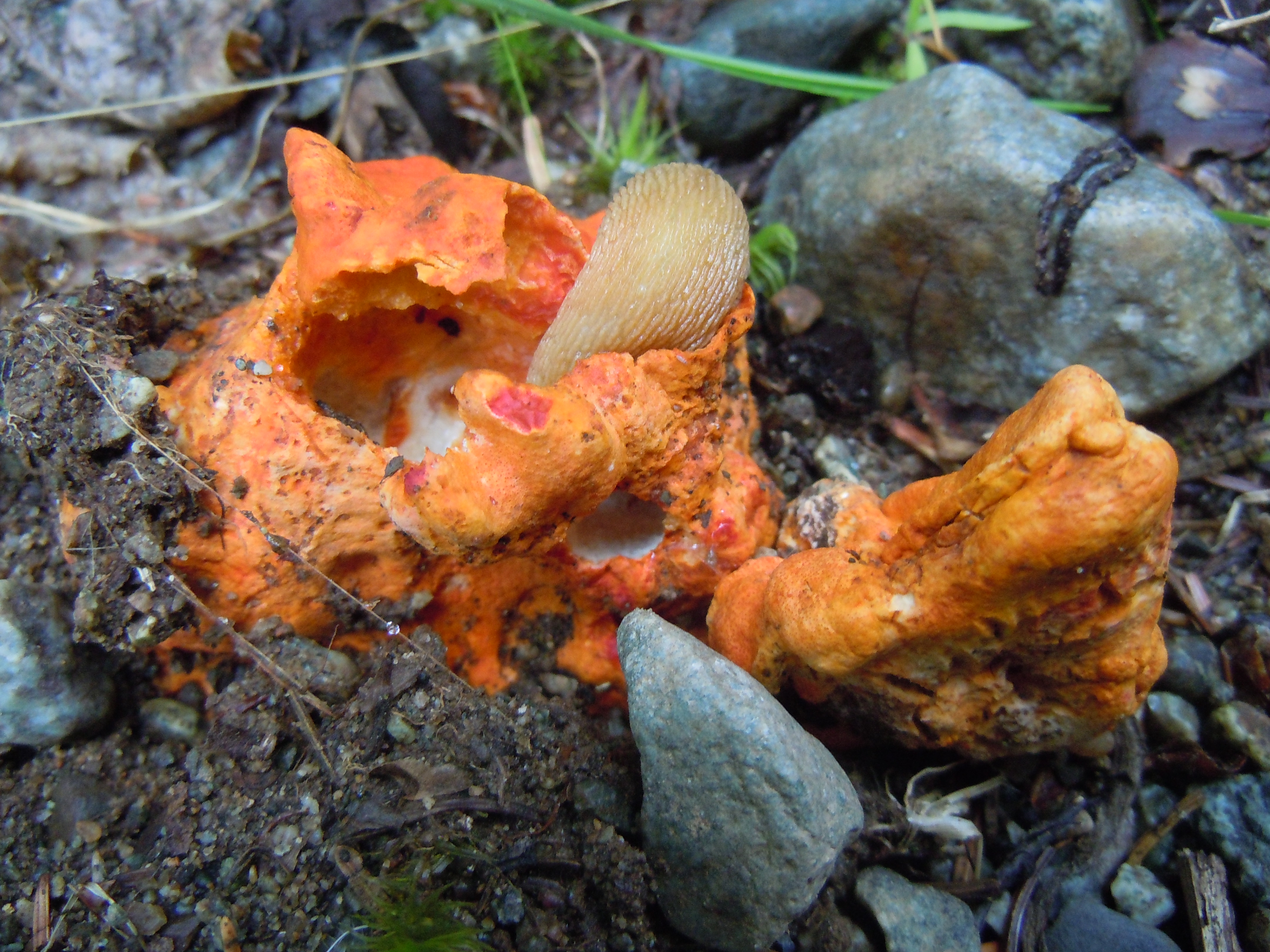
Fascinating fungus being devoured by a slug
DSCN7876
Flower of the day…quite small…found in wetter areas…Allegheny Monkey Flower, says Chris Gill, one that I know I never discovered before…thanks!
DSCN7892
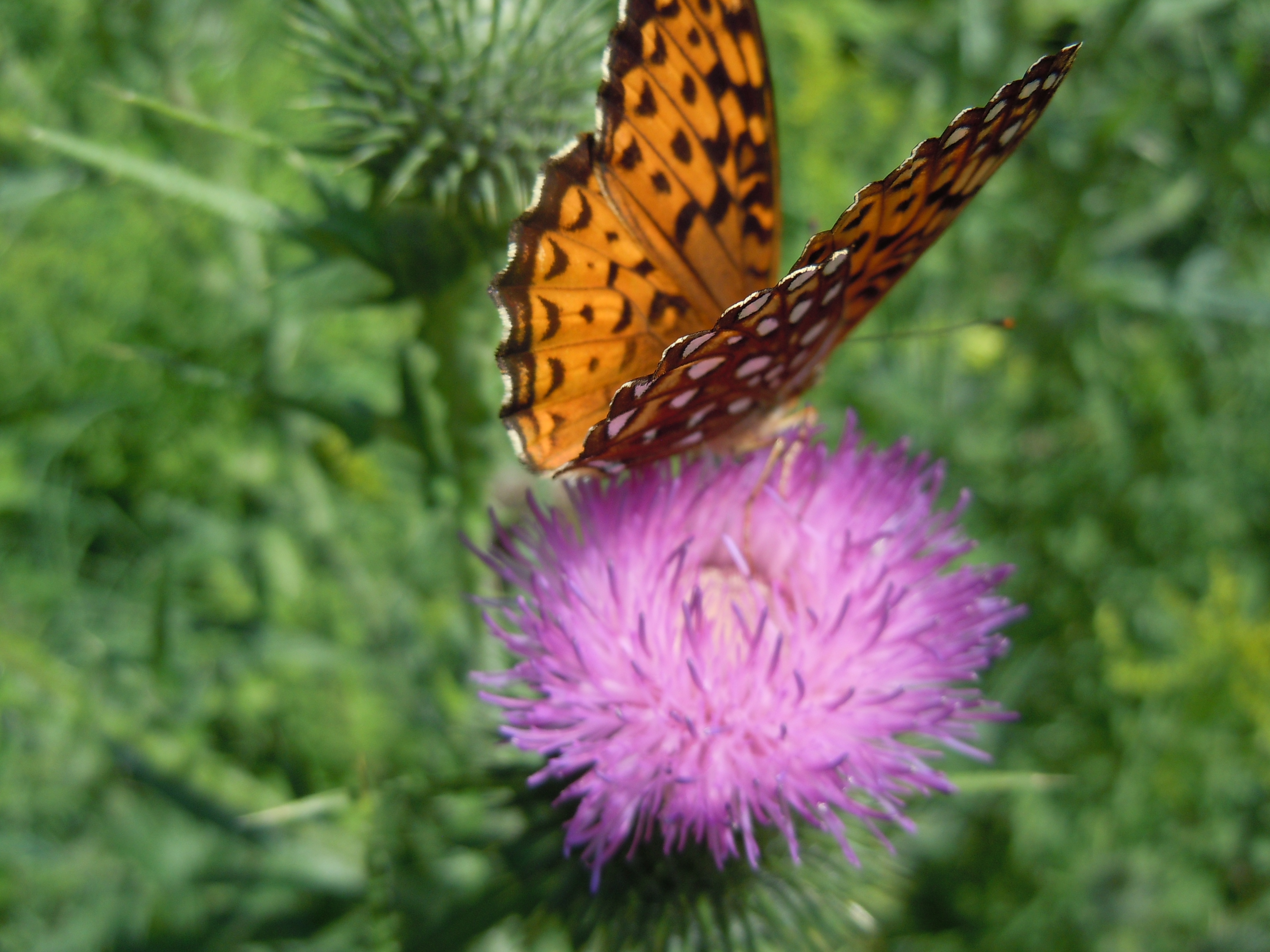
Butterflies were in abundance during the Hardscrabble Road portage
DSCN7918
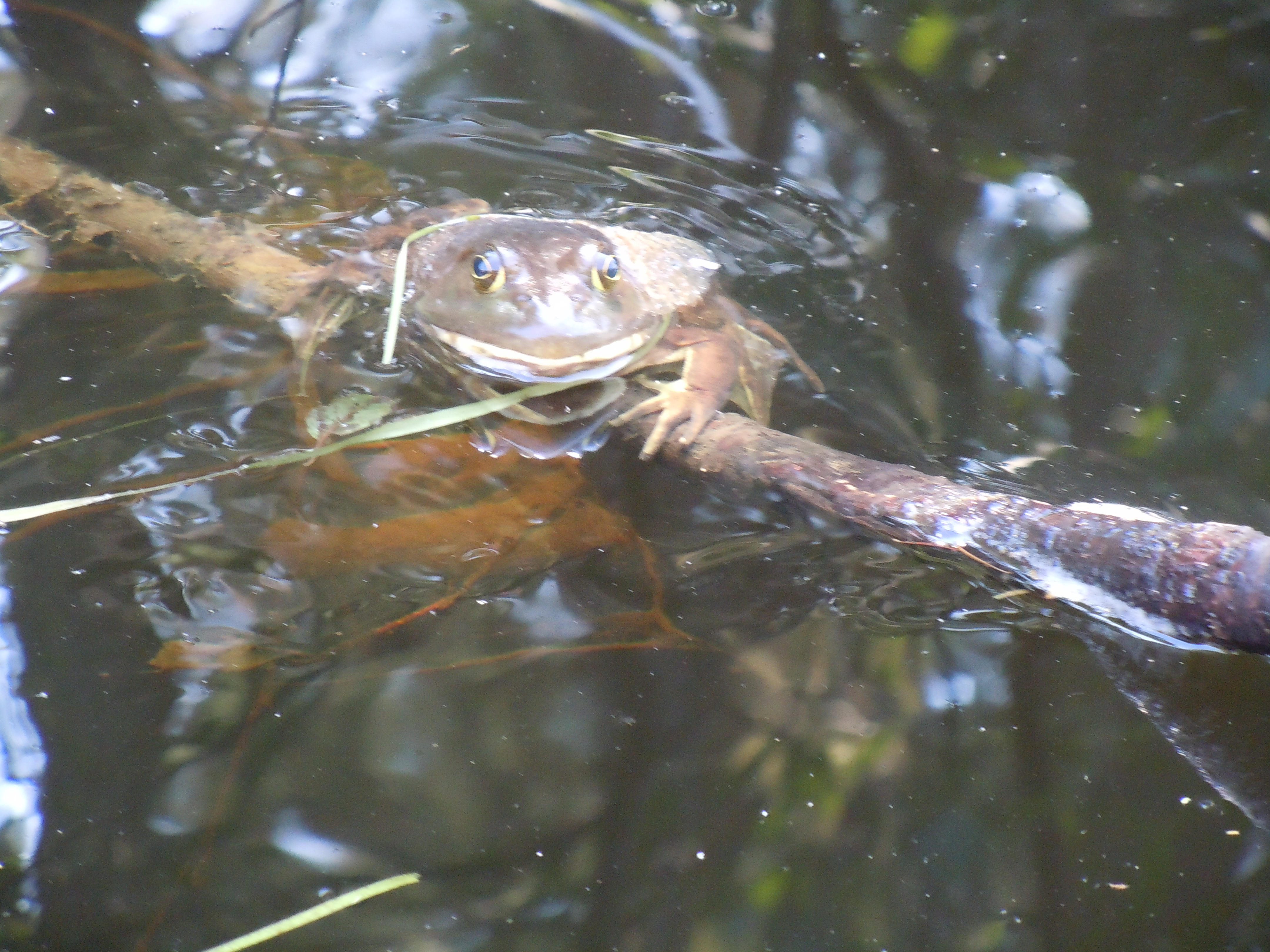
Laid back frog hanging out along the Moose River

May you find fireplace birds

Fireplace birds

Sometimes you will never know the value of a moment until it becomes a memory.
Dr. Suess

We christened them the “fireplace birds,” but of course they had another name.  In those shortening days toward the end of August 2009, the Allagash was a quiet place.  As Dad and I canoed from Umsaskis Bridge to Michaud Farm, the cool mornings and chilly swimming were more than compensated for by moose heavy with antlers and the beautiful solitude of the river. 

Our cheeky friends first visited us at Lock Dam.  Hopping contentedly among the ashes of the fire pit, focused on pecking who knows what, they were surprisingly tame. The colorful male and his drab partner were a species new to us.  Dad and I love our birds, especially new ones, and felt their presence yet another gift of the late summer wilderness.  Imagine our surprise, the next evening, when we discovered two more in the Outlet campsite on Round Pond.  

Dad and I will never forget those birds, or the midnight stampede of a moose through our campsite and down into the river with a mighty splash, or our first otter family in the Musquacook Deadwater.   A journey is so much more than the destination.  One of my hopes for this summer is to absorb the experience, treasure the moments.  And which parts will live on in my stories, in the memories of my heart?  I don’t know, of course.  But if you ask me why I will live on tuna and granola, portaging in the pouring rain and paddling into the wind, with sweat and bugs my closest friends, I go because of the fireplace birds, whatever they will be. 

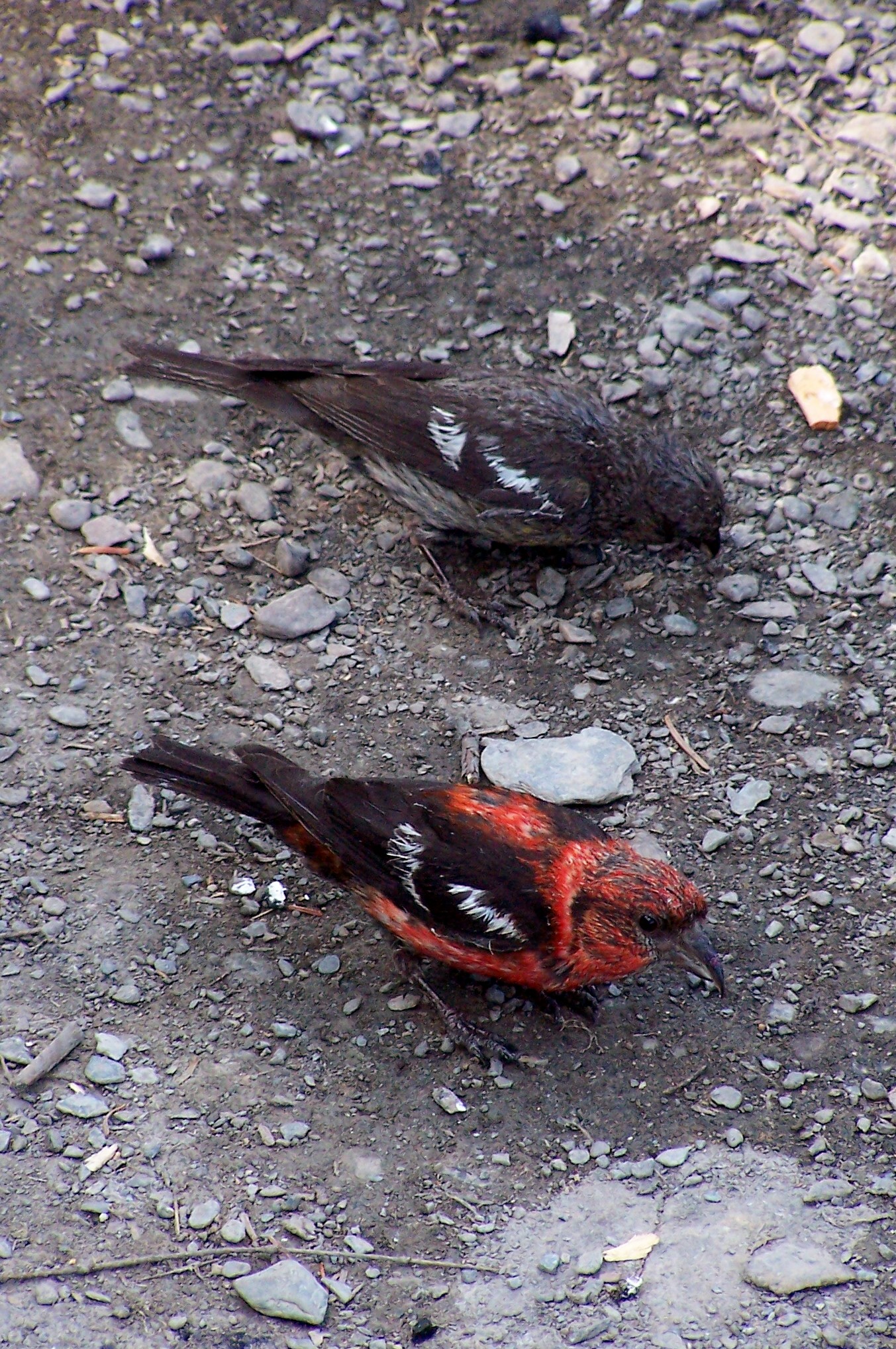
Oh, that’s right, you would like to know what those birds were, right?  White-winged Crossbills, Loxia leucoptera, a finch that feeds almost exclusively on spruce and tamarack seeds, eating up to 3,000 in a single day!

Wind and water

“Welcome home,” whispered the gentle waves
Spring still life

Well, I am debating whether I can manage without taking my iPad Mini this summer.  I already know I can’t live without my binoculars and GPS and SPOT and phone and probably my camera, at least for the latter part of the trip.  So here’s my first “phone-only” post!

We’ve been away for the first bit of April vacation, so yesterday morning was my first paddle on the open waters of the lake, totaling 6.6 miles.

Going out, I was headed into the wind, but got quite a push from the current on the usually placid river, about 1.5 mph.  On the way home, thank you wind!  Birds galore: swallows, flickers, buffleheads, an osprey, Canada geese, and a pair of very vocal loons. I thought I heard a kingfisher, but have yet to see one this year.  I may add a couple more photos from the camera after this experimental post works.  More soon on our explorations earlier this week…

042415 buffleheads
Pair of buffleheads on the sparkling lake
042415 Canada goose
“Are you looking at me?”

It doesn’t take much, a poem

041915 Black ice
Friday evening – just before ice-out, the surface of the lake turns a uniform black color
041915 ice breakup
By Saturday morning, the ice was starting to disintegrate and today…none there!

Spring just makes me want to grab hold of life with both hands.  To sit in the sun and absorb the warmth with all my being and, yet, to say a lingering goodbye to the waves of icy air that are still flowing from the patches of ice marooned in the woods.  I am restless, not least of all because I am in the process of leaving my lay ministry job and embarking before long on my paddling trip.

Poetry is new for me, but today’s just seemed to write itself:

041915 skunk cabbage

It Doesn’t Take Much

It doesn’t take much, this time of year, to lift a tired heart.

Just a quiet hour to roam the woods, to wander with springtime dreams.

Rubber-clad feet sink deep in the mud, but at least it isn’t ice.

No slippery, sliding, breath-taking suspense to see if you’ll stay upright.

Just a cushion, a carpet of softest duff, welcoming, moist and brown.

It doesn’t take much this time of year, to feel the throb of life.

A barred owl calls in the height of day…”Who cooks for you?” he asks.

Then comes a sound to drown out them all, a chorus of horrid croaks.

“What species is this?” you want to know, so stealthily you sneak near.

Quietly perch near a murky black pool that gradually comes to life,

With tens or hundreds of busy gray frogs in a noisy springtime dance.

It doesn’t take much, this time of year, to find beauty at every turn.

No need for a violet, a lupine, or rose… a humble skunk cabbage will do.

Squat down to look closely as the new plant unfurls,

And you’ll be amazed what you’ll see.

Bright shiny purples and pale mottled greens have a beauty all their own.

No, it doesn’t take much this time of year, for hope to spring anew.