Discovering the deep historical roots and natural beauty of this large and popular state park near Birmingham
The restored blast furnaces of the Tannehill Ironworks rise high above Roupes Creek.
Writing a travel book can be full of surprises. When I set out, I had no inkling that I would be learning about the early iron-making industry. During the Civil War, Alabama played a key role in producing pig iron (more than all of the other Confederate states combined) and making cannons and ammunition. Bars of pig iron were sent to the Selma Arsenal, which produced half of the cannon and two-thirds of the ammunition used by the South in the final two years of fighting. This region is unique in the world for its abundance of all of the resources needed for iron production: iron ore, limestone, and either coal to make coke or forests to produce charcoal.
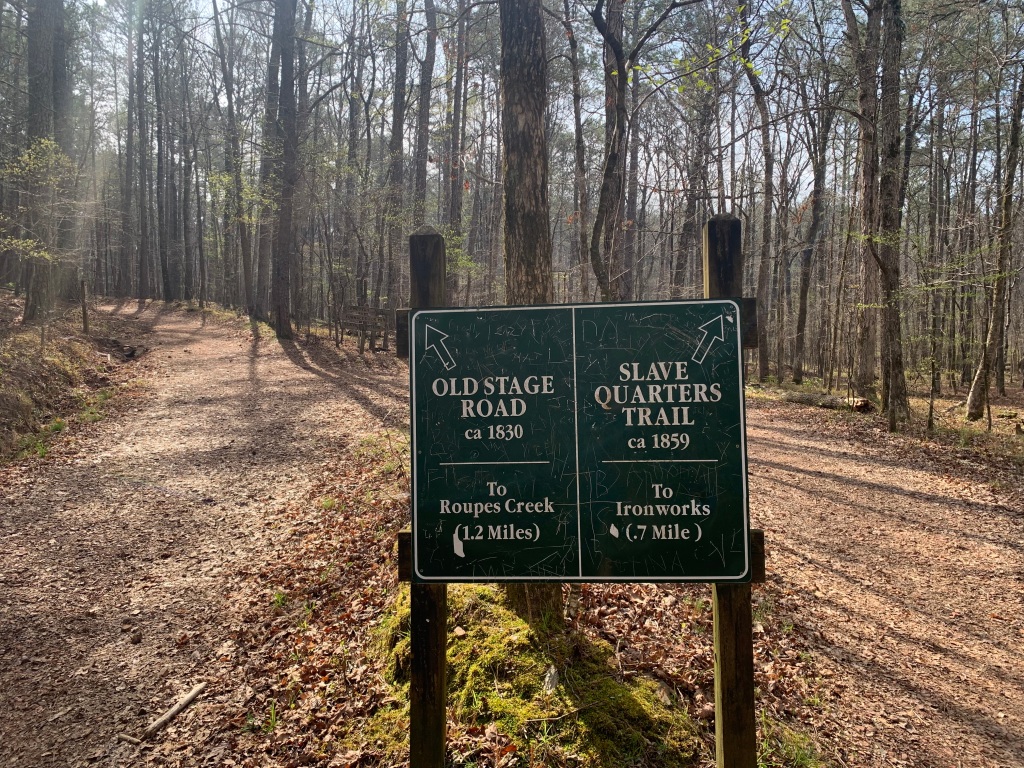
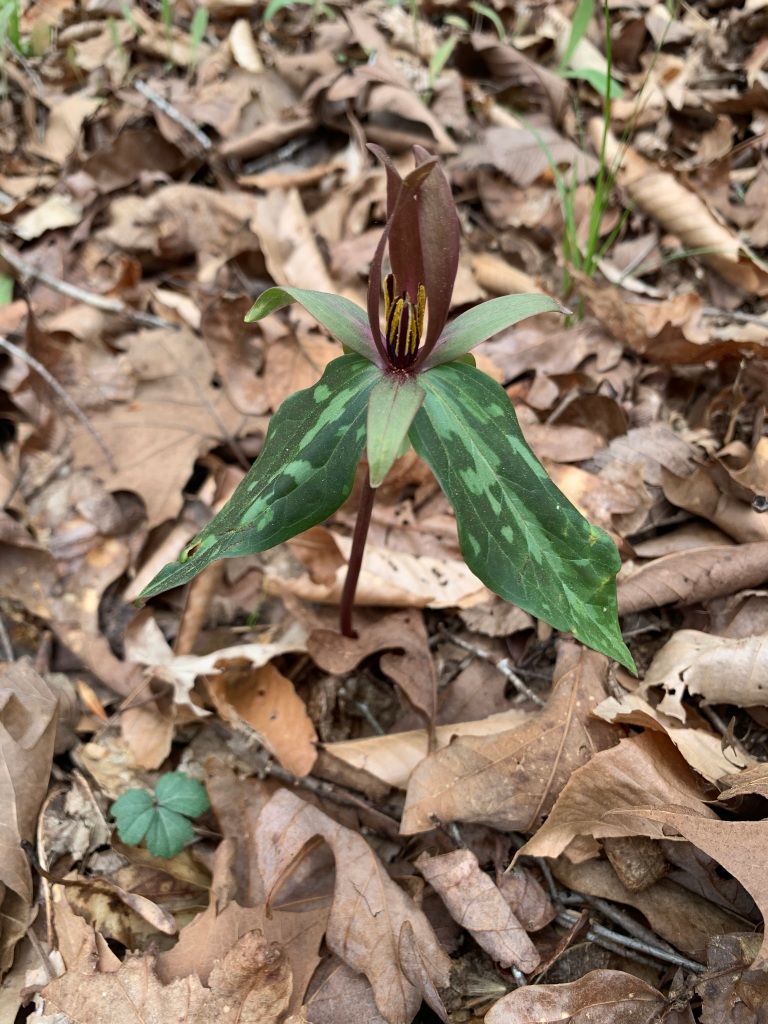
Hikes in the park at times follow an old stagecoach route or the Iron Road where the pig iron was transported 18 miles by eight team mule wagons to the Alabama & Tennessee Rivers Railroad.Spotted trillium (or perhaps the look-alike Little Sweet Betsy) in a wet swampy spot near Roupes Creek. During my week at Tannehill, the woods began to green up, with flowering dogwood, redbud, and native azaleas adding touches of white, lavender, and pink.Violets bloom in an old slave cemetery, brightening the final resting places of furnace workers and their family members, whose names are long forgotten.
Tannehill is also home to the Alabama Iron and Steel Museum, which surpassed all my expectations. For almost two hours, the story of Tannehill came to life for me. Beginning with the huge seams of brown and red iron ore found locally, to colliers camping in huts to make charcoal to large displays of 1800s household and military items made either here or at the Selma Arsenal.
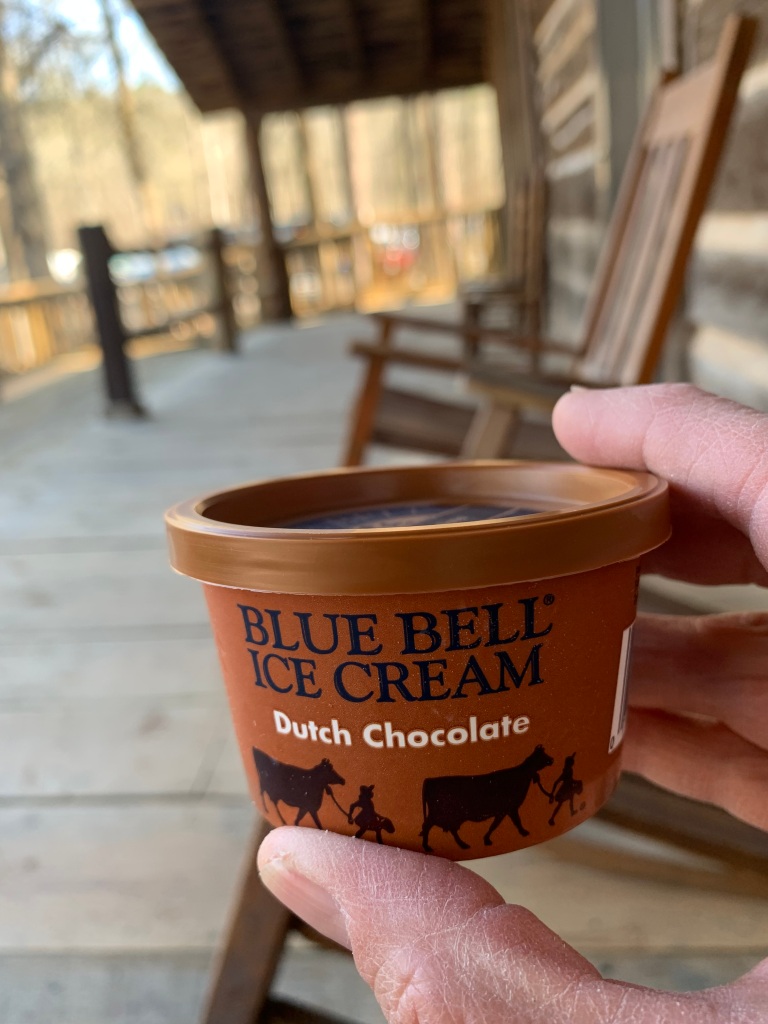
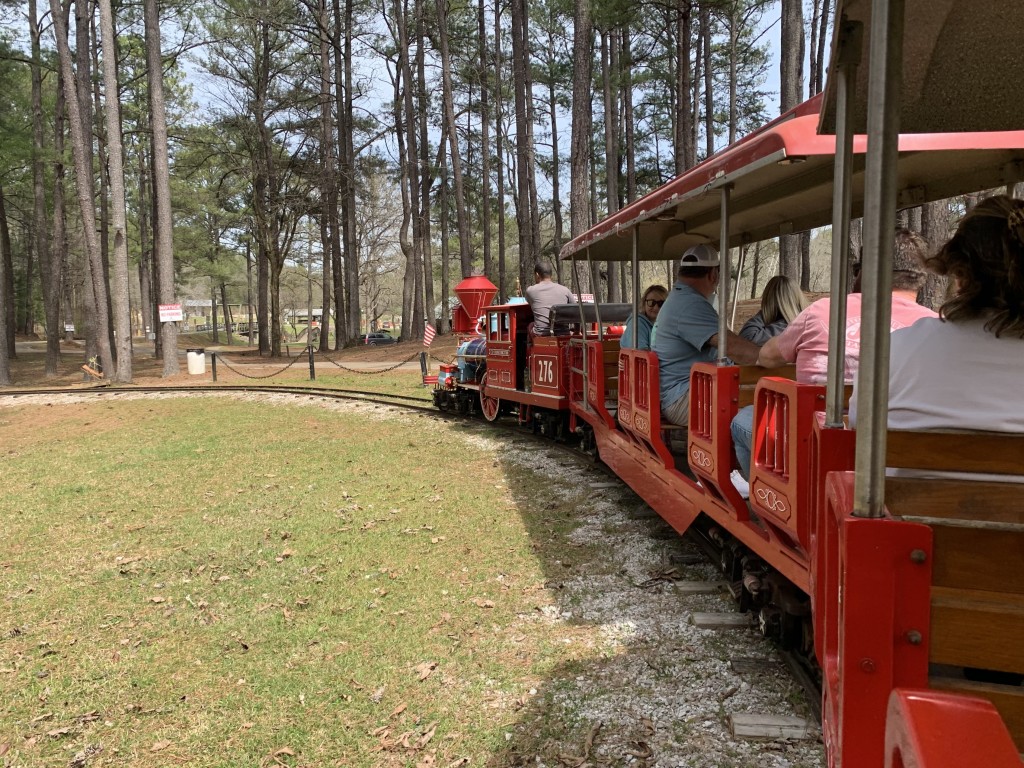
During the Civil War, over fifty Alabama caves were mined for saltpeter (potassium nitrate), the primary ingredient in gunpowder. In the latter years, the job fell to boys too young to fight. This iron pot, made at the Selma Arsenal, is seven feet in diameter and still contains saltpeter residue.Tannehill Ironworks Historical State Park is a mix of the wild, the historical, and the crowded and touristy, but I sure did love a one-dollar Dutch chocolate ice cream after a long hike!r On weekends, this cute train runs from the campground to the pioneer farm, gristmill, and fairgrounds (home to a huge monthly craft show). Just like the ice cream and senior museum admission, a one-way train ride costs just one dollar!Campground 3 offered more privacy and an abundance of gray squirrels exploring the steep hillside behind my campsite. Campgrounds 1 and 2 look more like a crowded RV park.
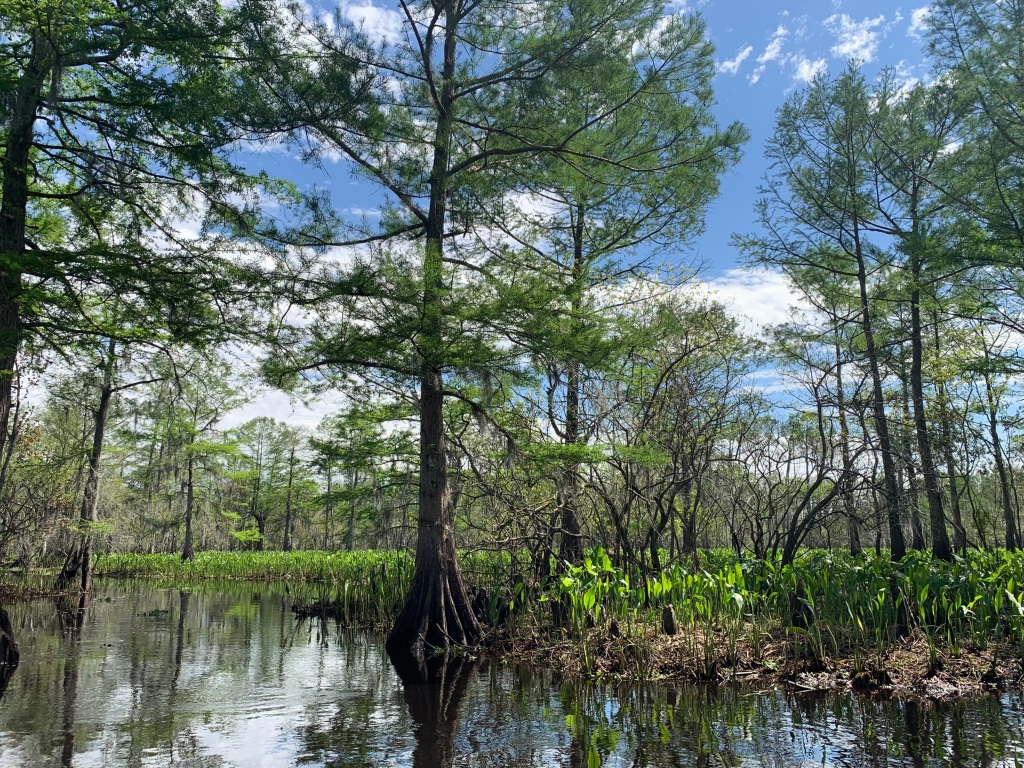
This campground, a wildlife paradise near New Orleans, was the turning around point for my journey.
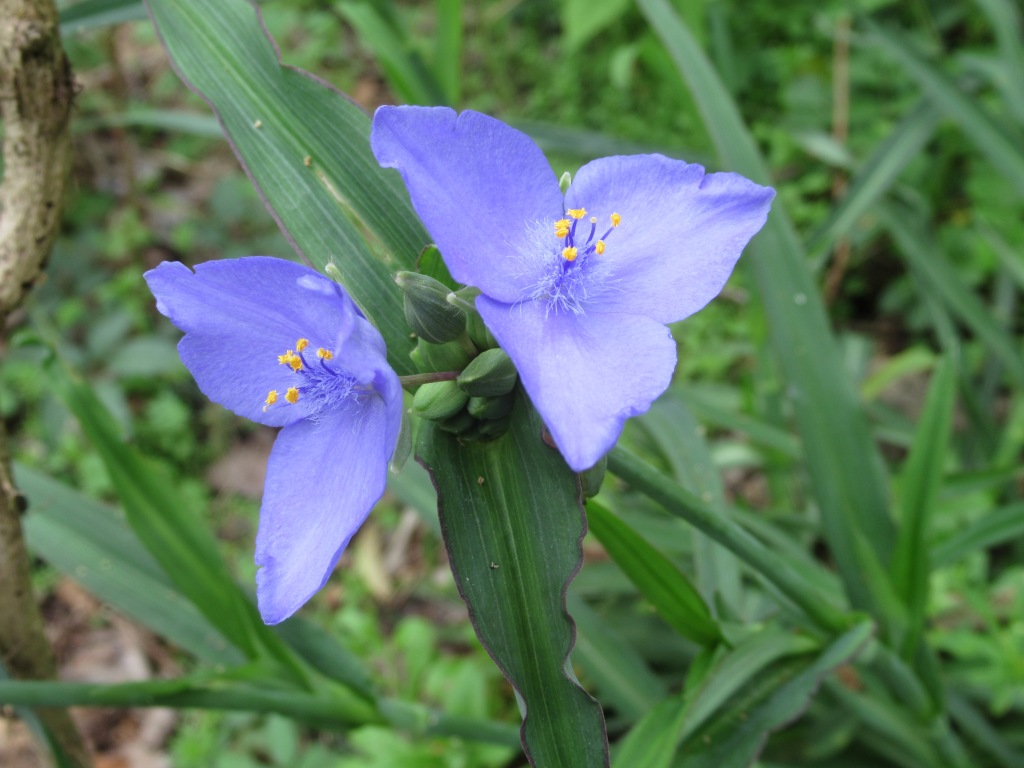
Spiderwort burst into bloom during my 12-day sojourn.
I left Louisiana this morning, to begin my long journey back to Maine. It was sad. For this “62-plus” solo RVer, St. Bernard State Park was the perfect campground (except for the fire ants). With the senior discount, the cost for my water and electric site was just $14 per night. I also lucked out with a long green space that led back to a busy wetland full of wildlife. There were hot showers, an on-site laundry, and it was an easy 18-mile drive to the French Quarter. The main road near the campground goes straight into New Orleans and becomes Rampart St., with parking readily available.
My backyard wildlife list included a red-eared slider, little blue heron, alligator, raccoon, and a pair of yellow-crowned night herons, as well as the almost hourly call of the barred owls.
Best of all was time with friends – Sue and Roy, my camping neighbors from Blythe Island in Georgia, and Al and Ingrid, who I met here in the manner I often do, when Al came over to guide my backing up. I am improving, but I don’t want to get so skilled that I no longer make wonderful friends this way!
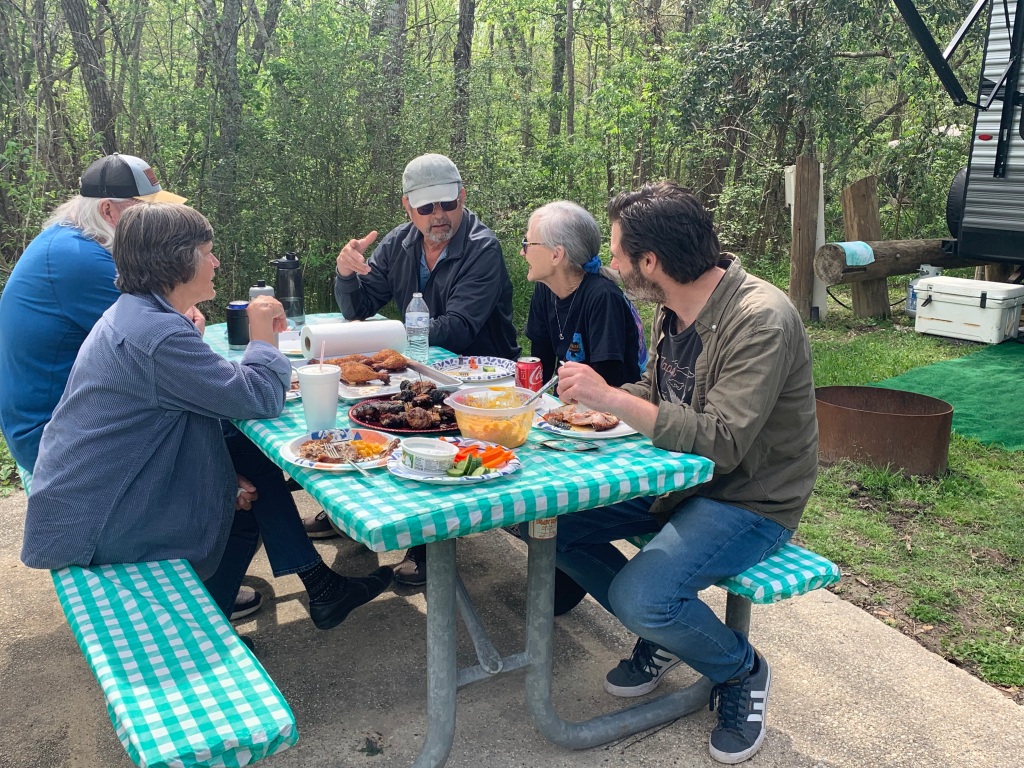
Al’s smoked chicken quarters and deer wraps with bacon made for a fine picnic!Roy provided much needed moral support for my refrigerator repair. I miraculously discovered the problem (a blown thermal fuse), thanks to advice on the Grand Design owners’ forum. Young alligators in the lagoon beside the state park’s nature trail. There were seven that day, all the same size, in one small area. Later, I would return with Sue to find a huge mother alligator in the same spot, with foot-long babies sunning on her back.Sue, Roy, and I took a four-hour guided kayak tour of the Manchac SwampA non-venomous Mississippi green water snakeRoy and Sue in their canoe, with shrimping boats in the background. We explored the salt marshes of Bayou Bienvenue yesterday. After all the meals and rides and campfires they’ve shared with me, it was fun to show them the abundant birdlife, especially a gorgeous pink roseate spoonbill.
The highs and lows of the culinary journey after two months on the road
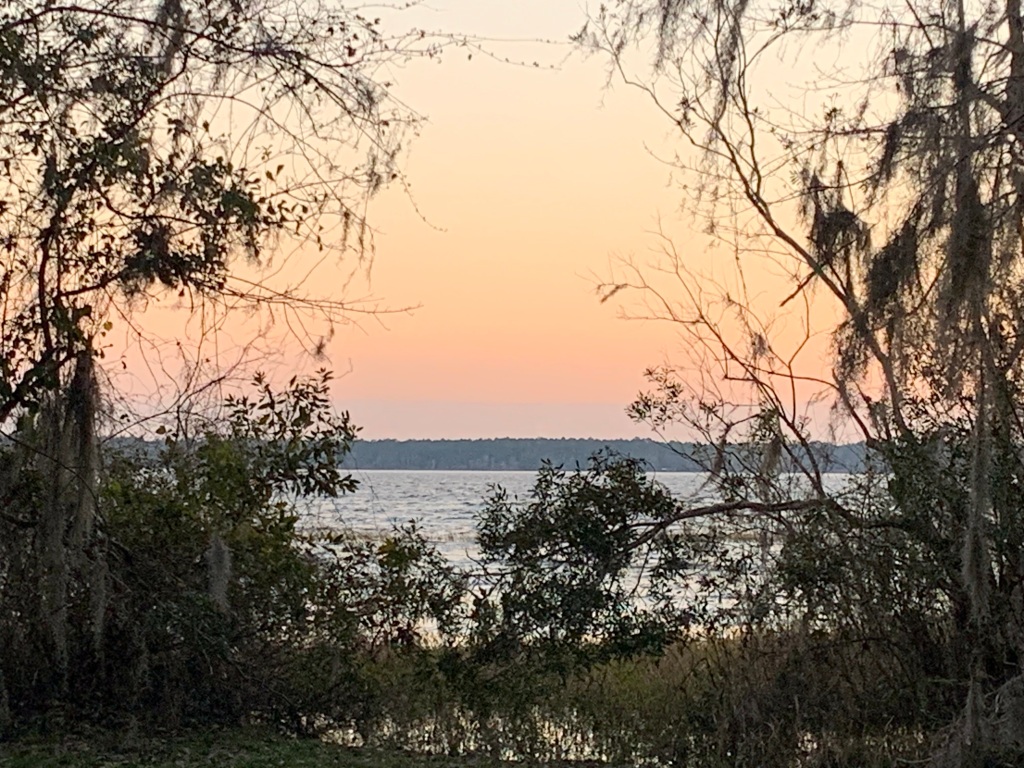
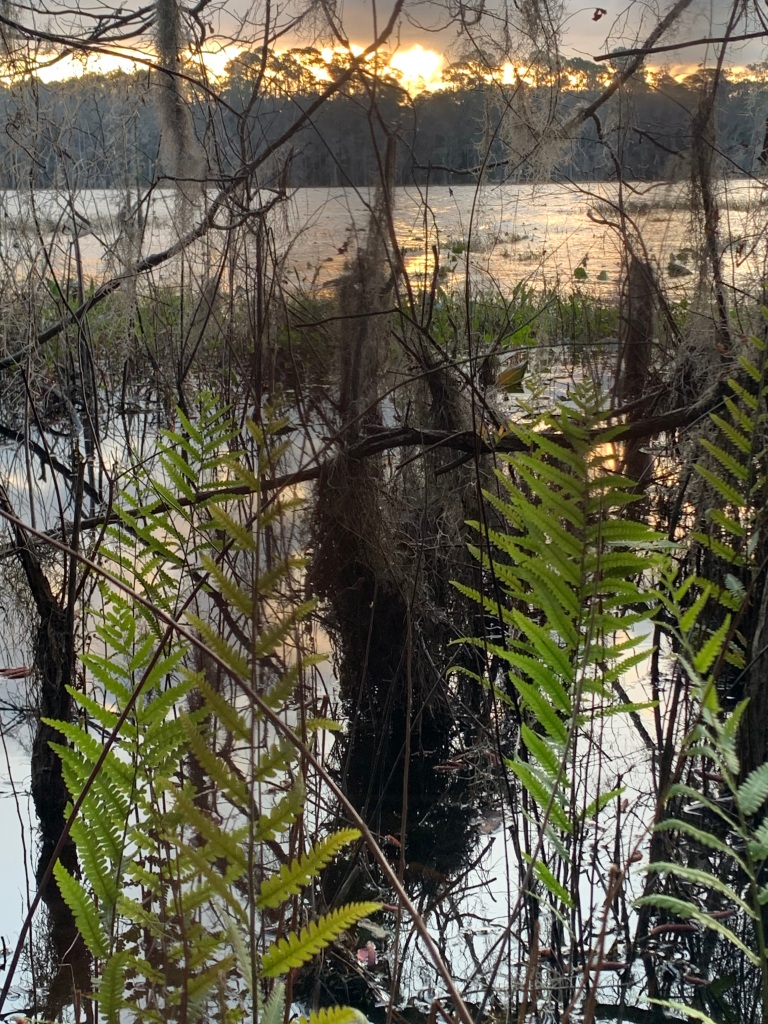
Lake view from my campsite in a Florida national forest
How much are you spending on groceries and eating out?
One goal of this journey is to discover how much it costs me to live a full-time nomadic RV lifestyle. I have budgeted $300 for groceries and $75 for restaurant meals monthly. Both line items have benefited from the hospitality of family and friends and by rural camping locations. There is not much temptation to go out to eat when there is nowhere close by to go. On the other hand, I went all out on meals in Savannah during our three-generation girls weekend. (While baby Emilia enjoyed her bottle, Megan was introducing me to the espresso martini!).
After two months, I believe that the grocery amount is doable, the restaurant amount is not. I want to be free to experience regional specialties and go out to eat with family and friends along the way.
How does your food differ on-grid and 0ff-grid?
So far, on this journey, I have never been able to use both electric and water hookups at the same time. In fact, the trailer stayed winterized until arriving at my current campground in northeast Florida. Thank goodness, you will agree, given those cold and challenging nights in the Carolinas.
Several mornings have started out in the low 40s here in northeast Florida
All of the electric & water sites were taken when I arrived last Thursday. I was grateful to get one with a water hookup, lake view, and paved parking pad. I’ve made a couple of runs to convenience stores and a Family Dollar within six to ten miles, but there is no grocery store. I am not running my refrigerator so I can prioritize lights and heat. The generator (whose carburetor was replaced under warranty) and the solar panel are keeping the battery charged fine.
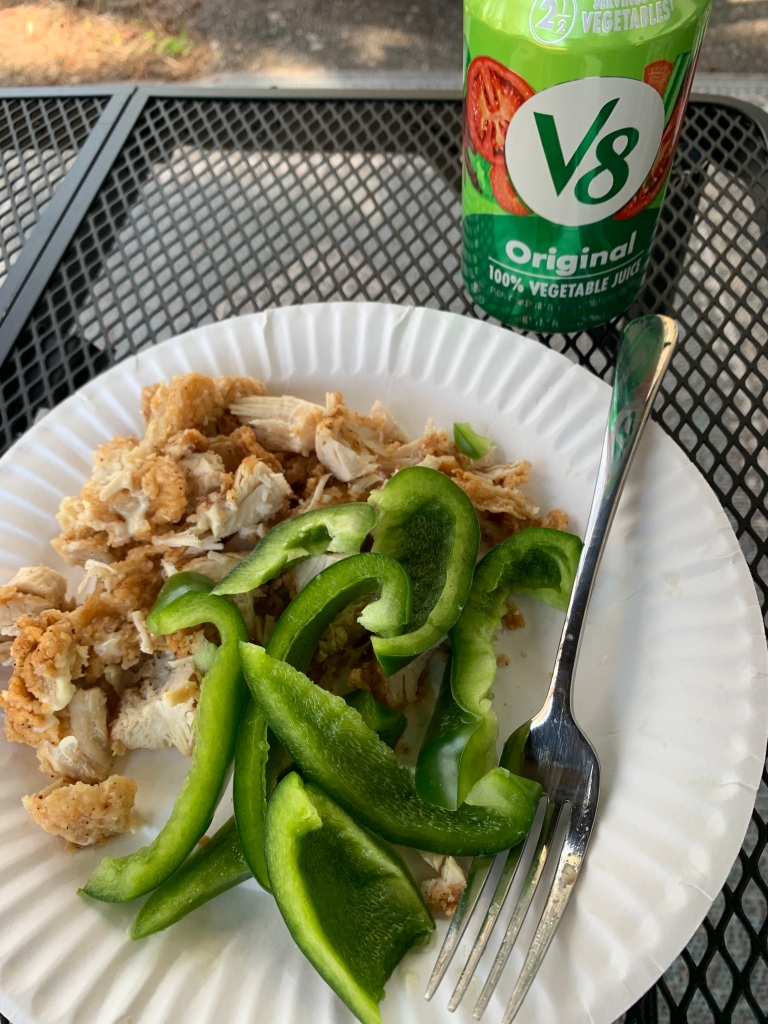
Lunch on my campsite patio yesterday while I was having my F150 windshield replaced by a mobile repair service! Chicken salad from the leftover chicken tenders was quite tasty.
Here’s what I found: For dinner one, a frozen Mexican bowl that I ate with tortilla chips from the pantry. For dinner two, a two-serving bag of no-longer-frozen brocolli with one of those microwaveable white cheese pasta cups. (My microwave works when the generator is running). For dinner three, chicken tenders from the closest convenience store with green pepper strips and fruit salad. For dinner four: avocado and the rest of the tortilla chips. Family Dollar also provided a can of hearty beef and vegetable soup and a bag of non-refrigerated meatballs in Italian sauce that are still on hand.
To sum up, I need to plan ahead better on groceries. I expected to have electricity here, to be running the fridge, to be able to buy what I needed after I set up camp. Instead, I found myself wandering Family Dollar in search of meals that would be healthy and tasty enough.
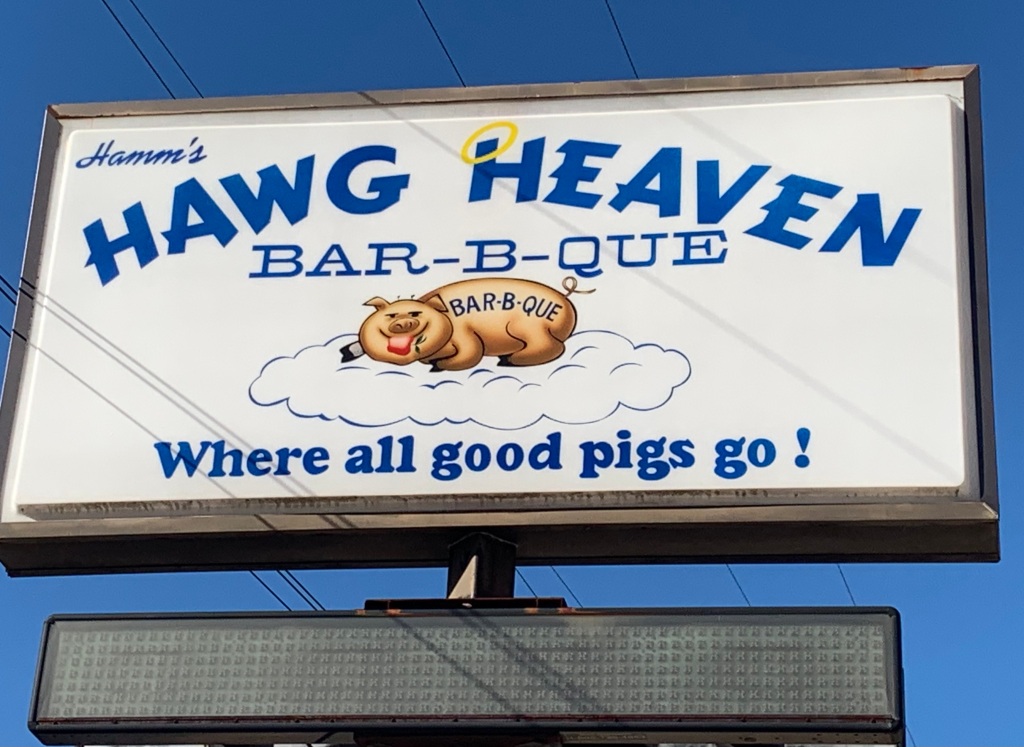
You will find Hawg Heaven in Prosperity, South Carolina
Have you been sampling the local cuisine?
Readers of my canoe tripping books know how much I love a cheeseburger and fries, especially with a fresh salad. The El Dorado near the Arrowhead Campground did not disappoint in that regard. By South Carolina, I was determined to have some BBQ and found it on Hawg Heaven’s all-you-can-eat buffet, along with corn bread, ribs, homemade mac and cheese, green beans, butter beans, and peach cobbler. Yessir, I was eating well in the South now!
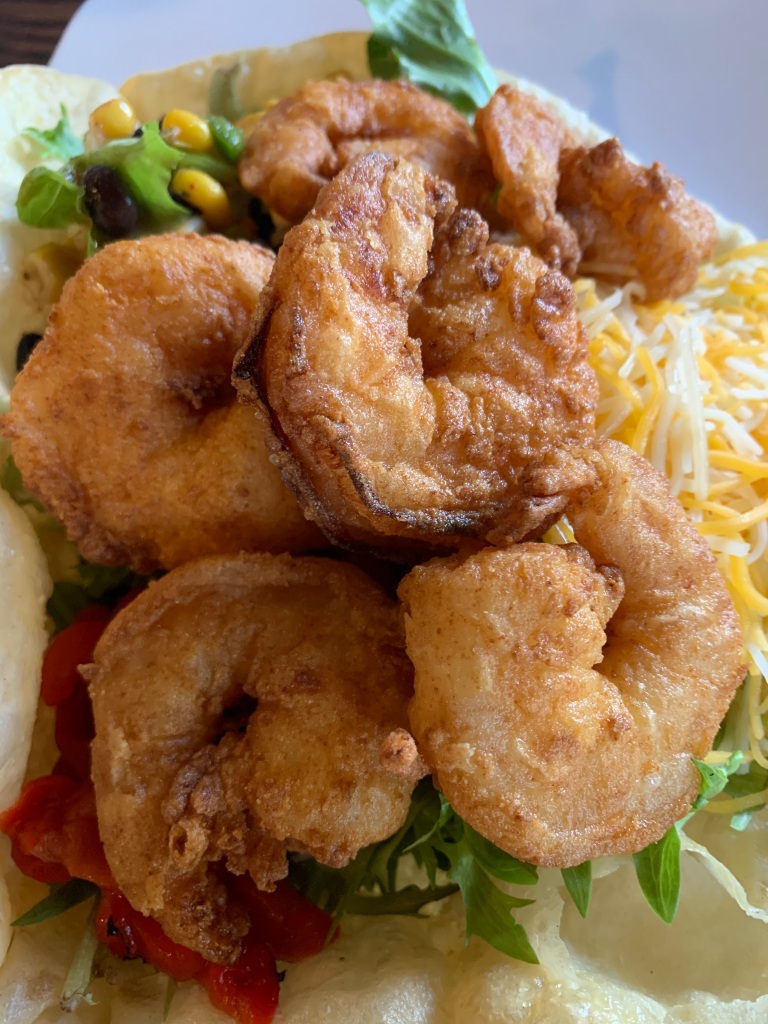
Georgia’s Golden Isles shrimp were sweetly flavorful, delicately battered, and fresh as can be. I ate them seven different ways, including this taco salad with shrimp at Tortuga Jack’s on Jekyll Island, courtesy of my friends Christine and Bob. Bob and I were high school classmates!
In my imagination, in the planning stages, I was going to be grilling steaks and making homemade pizza. Whirling some smoothies around with my new immersion blender and reaching into the fridge for a cold beverage whenever the mood struck me. So far, I haven’t even come close. Tomorrow, though, I move on to new possibilities. The next place has electric & water at every campsite., and you can trust that the pantry will be much better provisioned.









 Laurie Apgar Chandler