Paris, the City of Light, could take a lifetime to know but we savored our short glimpse of her delights
Just around the corner from our Mercure hotel was this view of the Eiffel Tower
We arrived back home in Maine around midnight Friday night, and I was up bright and early this morning writing, still on Paris time! Someone asked, why the walker? I should have explained that Lance has a very rare form of muscular dystrophy. He didn’t know, back when he was a paratrooper in the 82nd, or later, serving as a stevedore in an Army transportation company in Saudi Arabia during Desert Storm. Traveling through France heightened our awareness of the research we should do ahead of time and increased our appreciation for ADA accommodations in the U.S.
Cobblestones were everywhere, including the interior passage to our first apartment. Our second hotel had no elevator, and all of the larger rooms were on the second floor. Sometimes museums or churches would have elevators, but they invariably had many long, elegant flights of steps. We developed an efficient system of carrying the walker between us – descending into cathedral crypts or up to the heights of Pointe du Hoc, often without railings.
People were almost universally quick and generous to offer a helping hand, and we did find handicapped parking many times just where we needed it. Checking in at the Rouen hotel, a sharply dressed man stepped up to carry the walker upstairs with its load of two heavy bags piled on top. Only later, at dinner in the hotel’s fine restaurant, did we discover that he was a guest, not staff!
On our way home, we took full advantage of mobility assistance services. These were a lifesaver, not just the wheelchair transport, but having someone to guide us efficiently through security and customs. The walker, and people’s kindnesses, made this dream trip a reality!
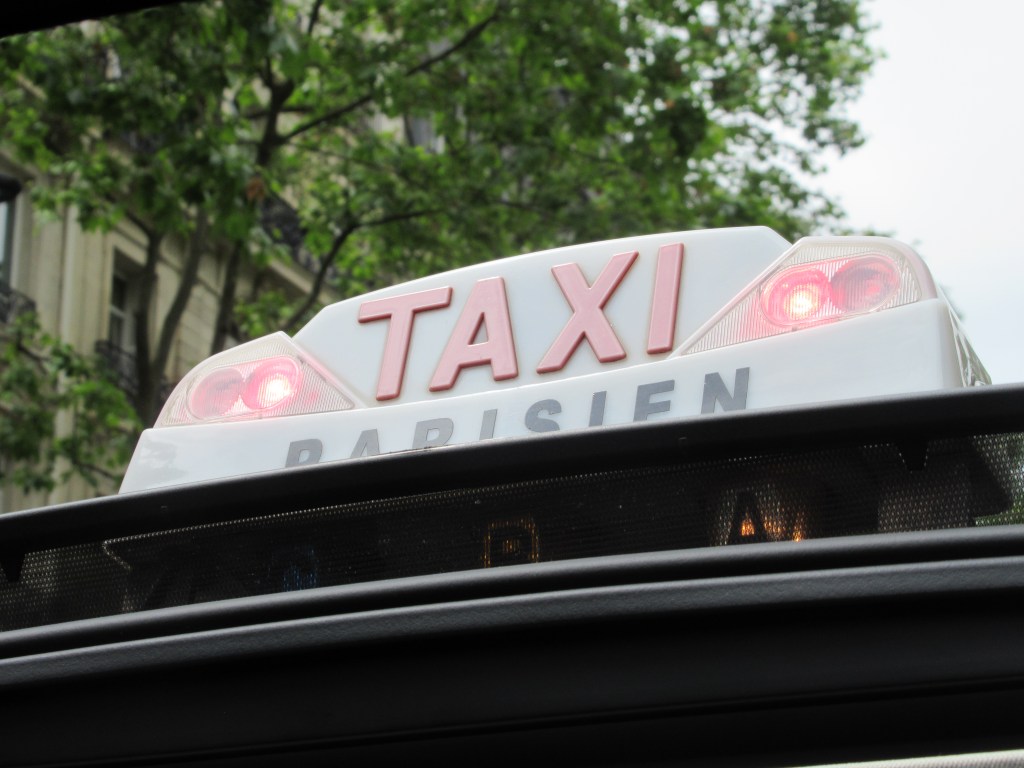
Hailing a taxi at the train station involved loading up out in a lane of busy traffic, as police had the entire taxi lane blocked off. A motorcade, presumably of 80th anniversary dignitaries or their families, soon rolled in with sirens, lights, and a stream of shiny black SUVs.Our favorite waiter, at La Riva, called me “a beautiful doll” and made our first lunch feel both elegantly Parisian and lots of fun. We had endive salads, mine topped with toasted baguette, melted rounds of goat cheese, and slices of smoked duck breast. Looking back at the Pont Alexandre III, the grandest bridge on the Seine. Superb weather brightened our early river cruise on an uncrowded boat. The woman ahead of us was enjoying a free birthday cruise that the company offers to Parisiens. She worked hard perfecting my pronunciation of “Joyeux Anniversaire,” French for “Happy Birthday.”
We were pleased with Vedettes de Paris, which offers a one-hour cruise (20 euros) with a guide narrating alternately in French and English. He was engaging and imparted lots of historic information with a personal flair. We had booked ahead and scouted a way to access the river from a bike path near our hotel rather than down the several flights of stairs below the Eiffel Tower.
Five years ago, a devastating fire broke out in Notre-Dame Cathedral, destroying the roof and toppling its delicate Gothic spire. Already in disrepair, the spire was being repaired at the time and all of its priceless statues had been removed just four days earlier. Although the cathedral will not reopen in time for the Summer Olympics as originally hoped, the recent reinstallation of the spire was a moment of great joy and emotion for the people of Paris.
The boat cruised by the Louvre, the Musée d’Orsay, and Notre-Dame Cathedral, and under bridges both elaborate and historic. I was intrigued to learn that an 1856 statue of a Zouave soldier on the Pont de l’Alma is used to measure flood levels. In the epic flood of 1910, water reached the statue’s shoulders. Passing under the stone arch of the Pont de la Concorde, a treasured symbol of the French Revolution, we looked up at its darkened underside. For centuries, the people of France have taken great delight in crossing its span, which was constructed of bricks taken from the demolished Bastille.
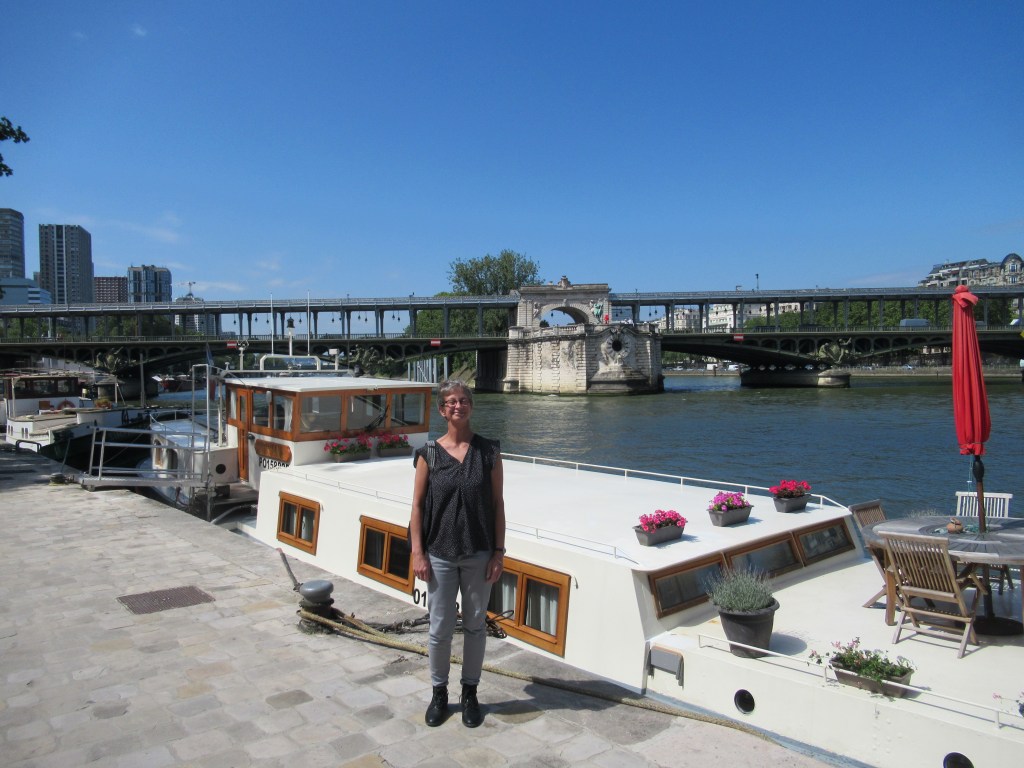
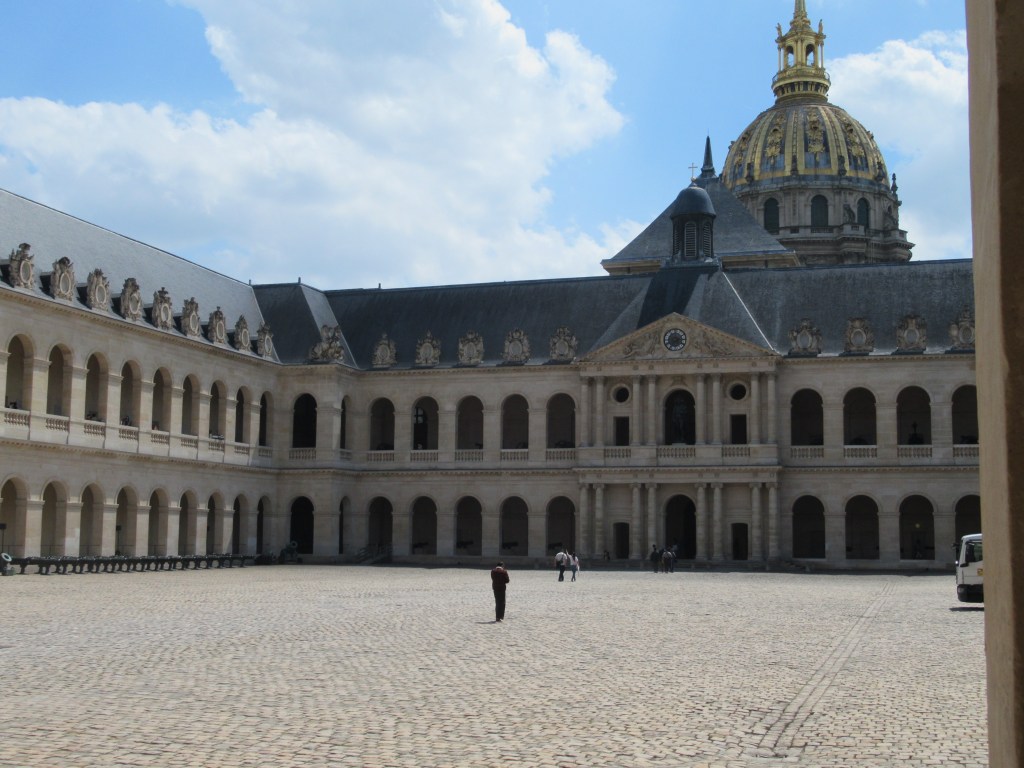
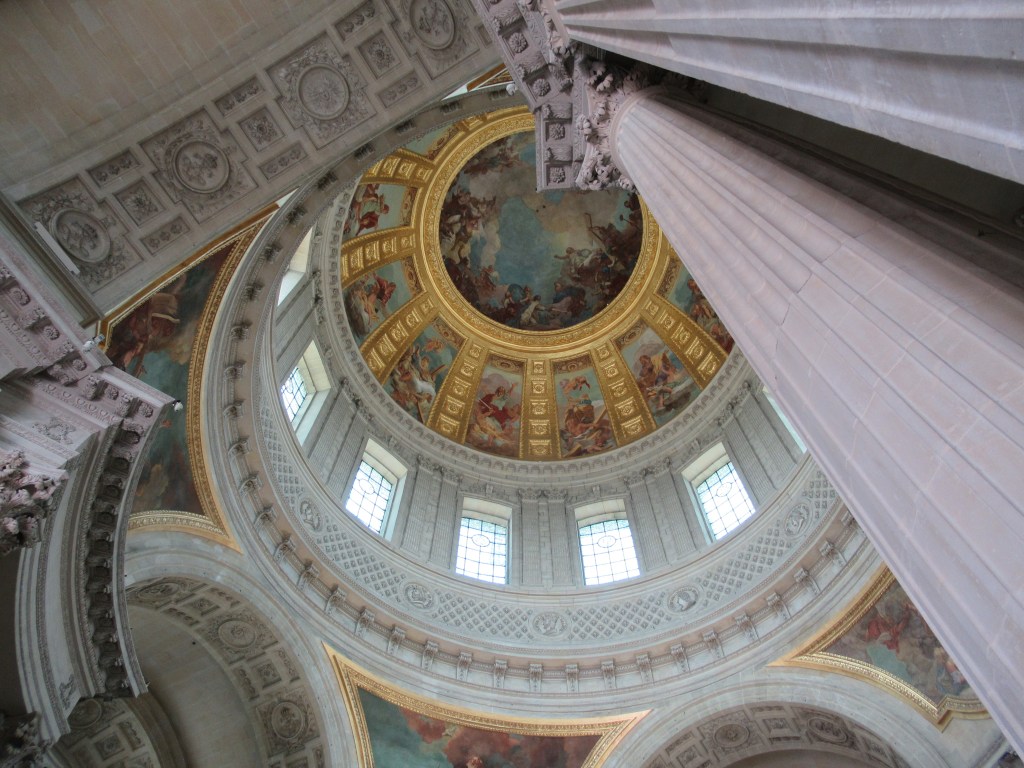
We enjoyed the wide assortment of boats being used as homes along the riverA block of postal boxes at the water’s edge included one for the Adriana, pictured hereWe took a taxi to Les Invalides, a 17th-century complex that began as a home for many hundreds of wounded soldiers, who ate in vast dining rooms that now house the Musée de l’Armée. Lance was captivated with imagining formations of troops, with commands echoing off the walls over the centuries past. Under the golden dome lies Napolean’s tomb, as well as the final resting places of other military heroes.Photographing the dome cupola from this angle highlights its ornate architectural details
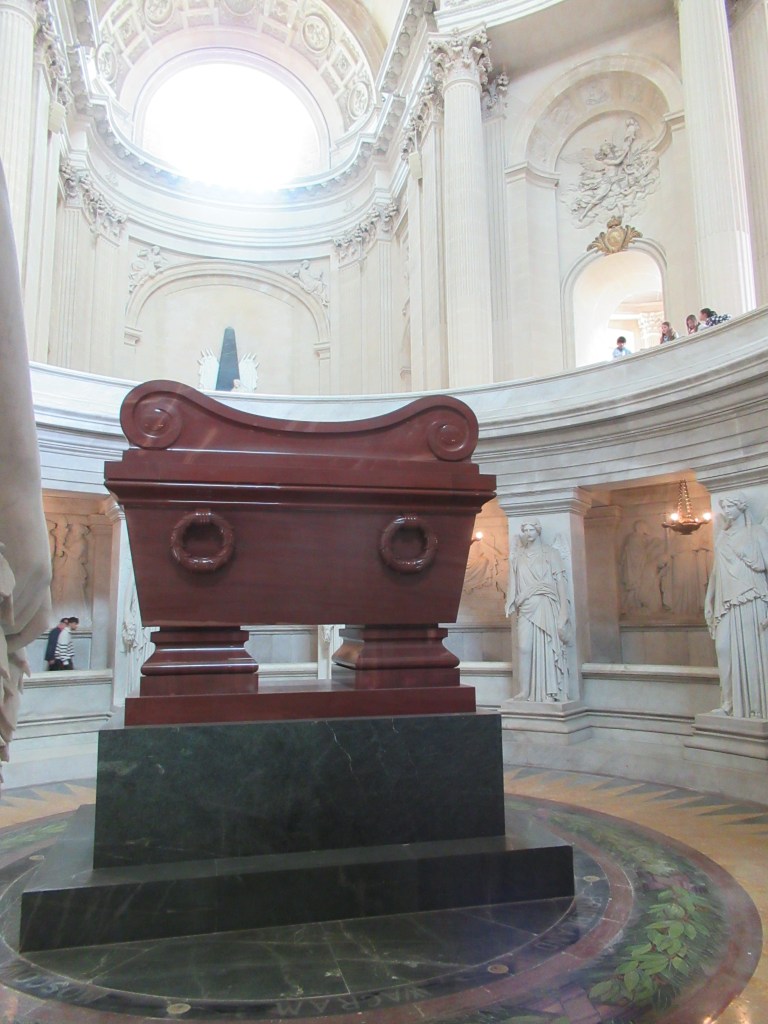
There were many stairs (of course) to descend to the crypt level where Emperor Napolean Bonaparte’s impressive sarcophagus rests, encircled by white marble statues of angels. Above a huge bronze door made from cannons captured at Austerlitz are written these words from Napolean’s will: I wish my ashes to rest on the banks of the Seine among the people of France whom I so much loved.
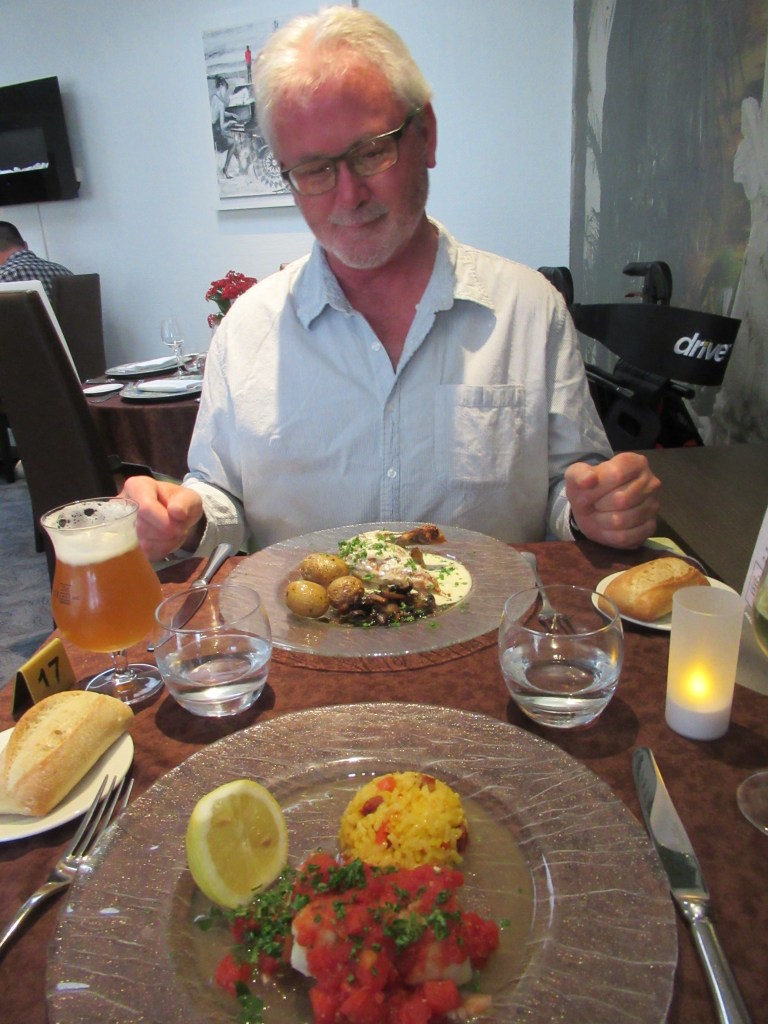
The sarcophagus contains five coffins, one within the next, made of tin, mahogany wood, two of lead, and ebony woods. Eight of Napolean’s major victories are incorporated into the inlaid floor.The four side chapels, each with a cupola, are equally breathtaking. One part of the Musée de l’Armée focuses on the ancient weapons and armor of kings and noblesVery young children wore armor and learned skills they would one day use in battle. This armor and rondache (shield) were a gift to ten-year-old Louis XIII (King of France from 1610-1643).La Source was an excellent choice for our last fancy meal. We sat outdoors across from a small park, watching Paris stroll by. Lance’s veal medallions in cream sauce with scalloped potatoes and my beef bourguinon were certainly memorable, maybe the best of our trip.
Toasting our trip with beer and champagne downstairs that evening, we knew that although there were surprises, both helpful and difficult, we had done it! Immersed ourselves in memories of a place and time when the free world joined together with great courage and unity of purpose. Walked places that are hallowed ground to the men of the 82nd Airborne. Seen cathedrals and tapestries, flowers and lots of Normandie cows. Eaten to our heart’s content from markets and shops and in sidewalk cafés, just as we’d dreamed.
This harbor town at the mouth of the Seine would inspire anyone to take up a brush and paint
The tall, skinny houses of Honfleur were built by fishermen circa 1700
They say Honfleur has a luminous light all its own. Eugène Boudin, one of the first artists to paint outdoors, was born here. Later, Claude Monet came, to meet Boudin and paint. Visit Honfleur, and you will understand. The composition of the harbor setting is exquisite and its architecture very different from the rest of Normandy. The palette of colors, overhanging stories, slate shingles, and individuality of each home make a walk along the Vieux Bassin (Old Port) delightful.
Crossing the Pont de Normandie from Le Havre to Honfleur at the mouth of the Seine, where the river widens to meet the English ChannelHonfleur is a working harbor, too, with a lighthouse on the Seine estuaryChildren were riding this carousel at the entrance to the Vieux Bassin, the Old PortCalvados tasting, where we learned that the younger vintages are added to coffeePartway through lunch, it dawned on me what “ailes de raie aux câpres” might be…skate wing with capers…tasty and definitely in the category of new regional cuisine!
Honfleur is renowned for seafood. I chose lunch from among the fish selections at the pretty outdoor restaurant right on the Vieux Bassin. I couldn’t read all of the French, but knew I wanted something different – not salmon, not tuna. The piece of fish arrived topped with butter and capers and accompanied by potato wedges, pasta, and vegetables. The texture of the white meat was unusual. It looked stringy but tasted delicious, and inside there were bones or cartilage, like thin fingers. Without doubt, I was having a culinary adventure!
Imagine being moored here in your own sailboat!We couldn’t stop admiring all the tiny detailsLet us know which is your favorite, please. We can’t choose just one!Honoring Samuel de Champlain, who set sail from Honfleur to explore the New World
We were back at the hotel before four and had the place to ourselves for a while. With our busy pace lately, it was a joy to claim one of the outdoor canopy tables, have a drink, and absorb the ambiance of flowers, bird song, and simply being here in France. Up in our room, with the window swung wide, we shared a bottle of pear cider I’d gotten in Honfleur. We’ve done this several evenings. Gotten salads at a local grocery, along with cheese, butter, and a baguette rustique, a whole grain version of the usual.
On the A-13 toll highway, we suffer an unexpected and unwelcome setback
Go 135 km in a 130 km zone and look what happens!
Well, the good news is that I won’t have to devote two or three hours to writing about yesterday, our day of travel from Bayeux to Rouen. We had planned two stops – a cider and Calvados tour and tasting and a visit to the coastal town of Honfleur. Instead, with our Range Rover spewing diesel fuel, we limped into a pull-off just past a toll plaza on the A-13.
The ensuing saga was both stressful and very long. To sum up, it took five hours to get the response one would expect from the roadside assistance plan we’d purchased from Hertz. Lance told me that evening that I was “the picture of dignity under duress,” and I could say the same for him. We ended up arranging a tow ourselves, grateful that in the end Hertz paid the 190-euro charge and sent a taxi to pick us up to get our new Citroen SUV. “Now you have a French car,” they assured us, “you will not break down!”
A fine dinner to celebrate our delayed arrival at our hotel, La Bertelière, in Saint-Martin-du-Vivier, near Rouen. Two amuse bouches – mushrooms in tomato sauce and tiny savory pastries – cod for me and guinea fowl for Lance, followed by a cheese course and crème brûlée. Magnifique!
Oh, my goodness, how will we ever go back to oatmeal or yogurt for breakfast?
Blue skies and sunshine warmed my early morning walk to the boulangerie. Lance had made me promise to bring back a generous selection of pastries, and I think I fulfilled my mission. After breakfast, with the GPS set for Juno Beach, we drove through one picturesque little village after another. Every few minutes, one of us would remark on cows in a green valley or a glimpse of an ancient manor house or flowers climbing a curving stone wall. In places, the roads are so narrow that cars must take turns in passing through. At Juno Beach, where 14,000 Canadians landed on D-Day, a raw wind and cloudy skies set a more somber note.
Canada House may well have been the first house on French soil liberated by seaborne Allied Forces. Over 100 Canadians of The Queen’s Own Rifles were killed or wounded here soon after landing. Not far down the beach is a German bunker.Photo of D-Day showing Canada House and troops carrying bicycles for traveling inlandIn 1944, the sands of Juno Beach were lower, and soldiers scaled the seawall with ladders, no doubt under heavy enemy fire.The site of the Church of Notre-Dame in Bernières-sur-Mer was donated by Bishop Odon, brother of William the Conqueror. The building dates to the 12th and 13th centuries. The bell tower, with its three bells, one of the tallest in the region, became a navigational landmark for ships.I lit a candle in this sacred space. My prayer was for peace.Looking down on the Canadian cemetery from one of two stone towers near the entrance.Maple trees shade flowered rows of markers, and some of the family epitaphs are in French. My favorite read: We’d give all the world and more, to see you come smiling through the door. History met us once more at Le Green Howards, where we had croque monsieur (toasted ham and cheese sandwiches) for lunch. Around the corner was a statue memorializing that British regiment, which landed at Gold Beach. Sergeant Major Stanley Hollis of the Green Howards received the only Victoria Cross to be awarded on D-Day.Late afternoon back in our courtyard
Walking the hallowed ground where men of the 82nd Airborne held a key bridge with valor and tremendous sacrifice of lives. Two Medals of Honor were awarded for actions taken here.
The Saturday morning outdoor market around the corner from our hotelWe loved the heart-shaped Neufchâtel cheese, recommended by a woman with me in line. We also bought Calvados, strawberries and a yellow pepper, but passed up the live chickens and quail.Our rental vehicle has given us the freedom to stop and explore along the way. Here, we got out to watch a line of planes pass overhead, wondering if there was a paratrooper drop about to happen.
After returning home last evening, we sat in the courtyard outside our room, with the sun warming us at last. In the quiet, Lance began to talk about the day. He felt a new lightness of heart and spirit, even the sense that a physical weight had been lifted from his shoulders after making the pilgrimage to the La Fière bridge near Sainte-Mère-Église. There, “on one of the most hotly contested pieces of ground in WW2,” the men of the 82nd Airborne proved their valor. That quote, and the title above, come from the famous Iron Mike memorial.
This small stone bridge across the Merderet River was crucial to Allied troop movements inland from Utah Beach. In June 1944, the pastoral countryside was heavily flooded and the men who landed, on target, on the far side of the bridge would defend it at any cost.This friendly gentleman took our photo, and we took his. His cute little dog rides in the basket!This relief map shows the manor house and bridge as they stand today. A soldier with a bazooka on the left before the bridge was key to taking out two of the three German Panzer tanks in the first day of the four-day battle. The third was destroyed by the paratroopers on the far side of the bridge. No enemy forces ever succeeded in crossing the river.At the Iron Mike memorial with a USAF captain who will help drop 1,200 paratroopers at La Fière on June 9 as part of the 80th anniversary commemoration. The planes that morning had been on practice runs for the big event. The paratroopers with their red berets that we’ve been seeing everywhere came over to France on those same planes. Men from Lance’s battalion fought here. The 618th Engineer Company (nicknamed The Nasty), in which he served, is part of the 307th Engineer Battalion, forever memorialized on the base of Iron Mike.
We crossed the bridge as a tractor raked hay in a nearby pasture and a couple of fishermen tossed their lines into the water. By an old stone church, yellow roses bloomed. The sun peeked out once more and all this history seemed so long ago. That church, the Cauquigny Chapel, and its cemetery, however, were the scene of intensive fighting on the far side of the bridge during the same battle.
The chapel in 1944. A stone clock, shattered and forever silenced, hangs today on the front wall of the restored building. On the afternoon of June 6, paratroopers who had dropped on the far side of the river held the chapel until driven away by German tanks. They escaped through the cemetery.The past and present photos of buildings are everywhere, proof of the massive devastation of war.This chicken quarter smothered in vegetables was fabulous, paired with a local ciderThe best (so far) of the FOUR hamburgers Lance has sampled. I treated my favorite member of the 82nd Airborne to lunch for a change, at Les Ecuries in Sainte-Mère-Église.
Traveling back eighty years to honor and understand the depth of sacrifice on which our future rested
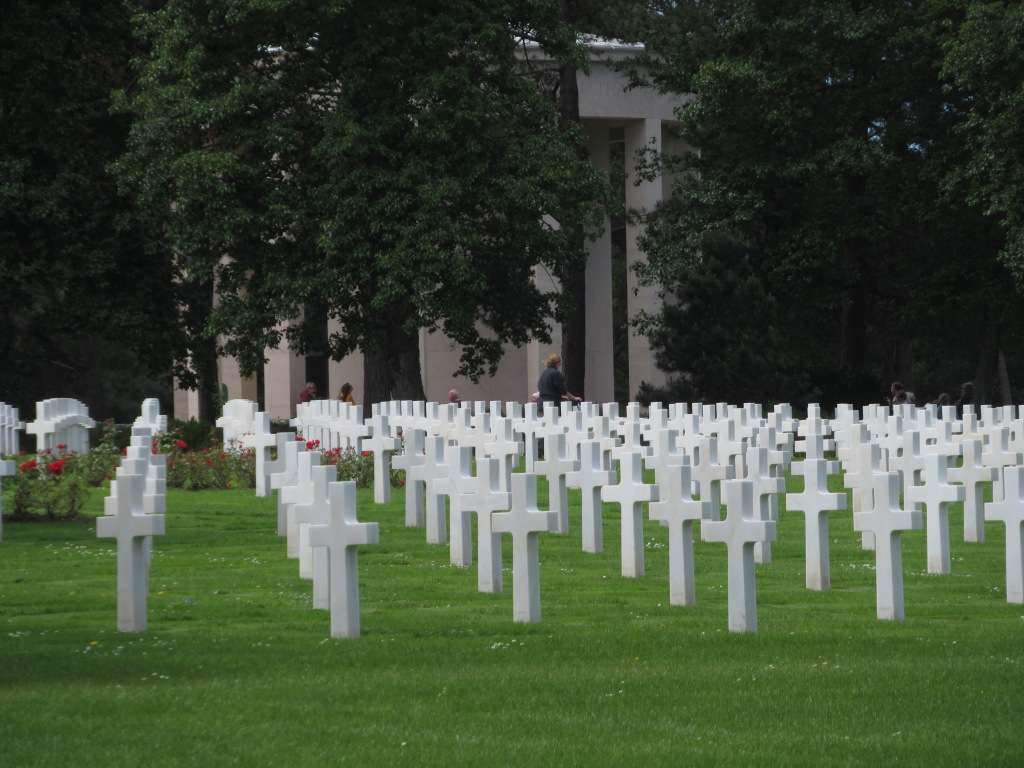
Six years ago, we arrived too late in the day to visit the American cemetery, and I cried. Today, I cried once more. Here are interred the remains of 9,387 Americans, including four women. By the end of the campaign for Normandy, the Allied dead there would number more than 50,000.
On the eve of D-Day, General Eisenhower sent to each of the soldiers, sailors, and airmen of the Allied Expeditionary Force a letter of encouragement from which I have taken the title of this post. How difficult it must have been for him to send forth so many young men into such great danger. Eisenhower spent that last evening with the men of the 101st Airborne and stayed until the planes had all disappeared into the dark night.
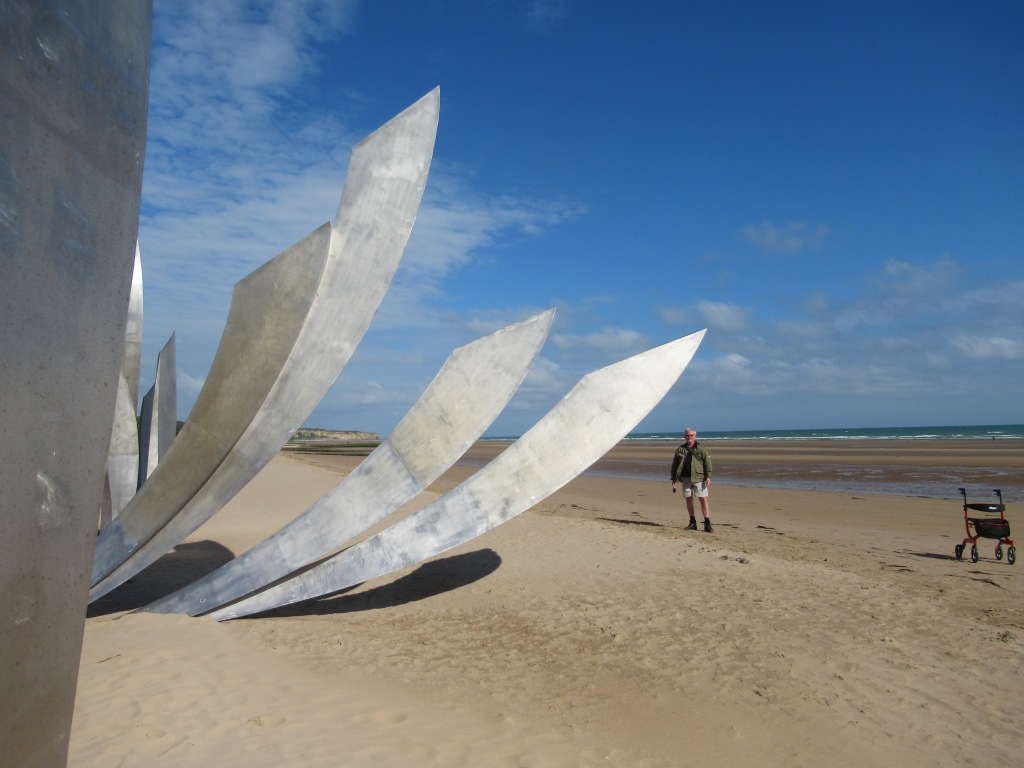
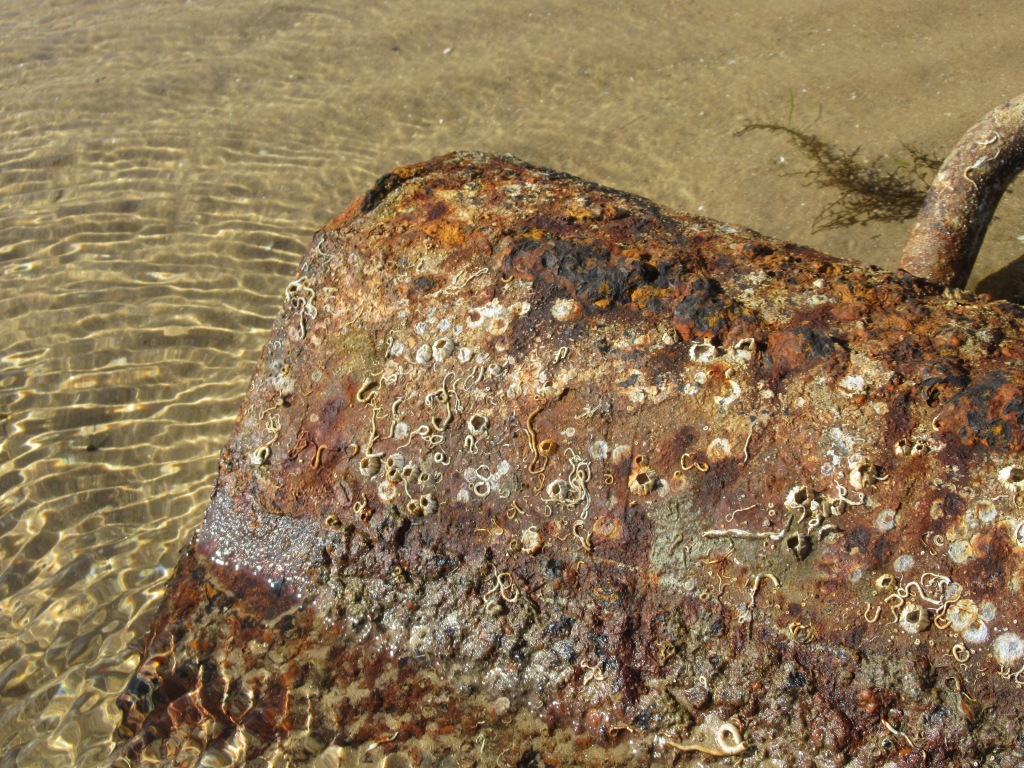
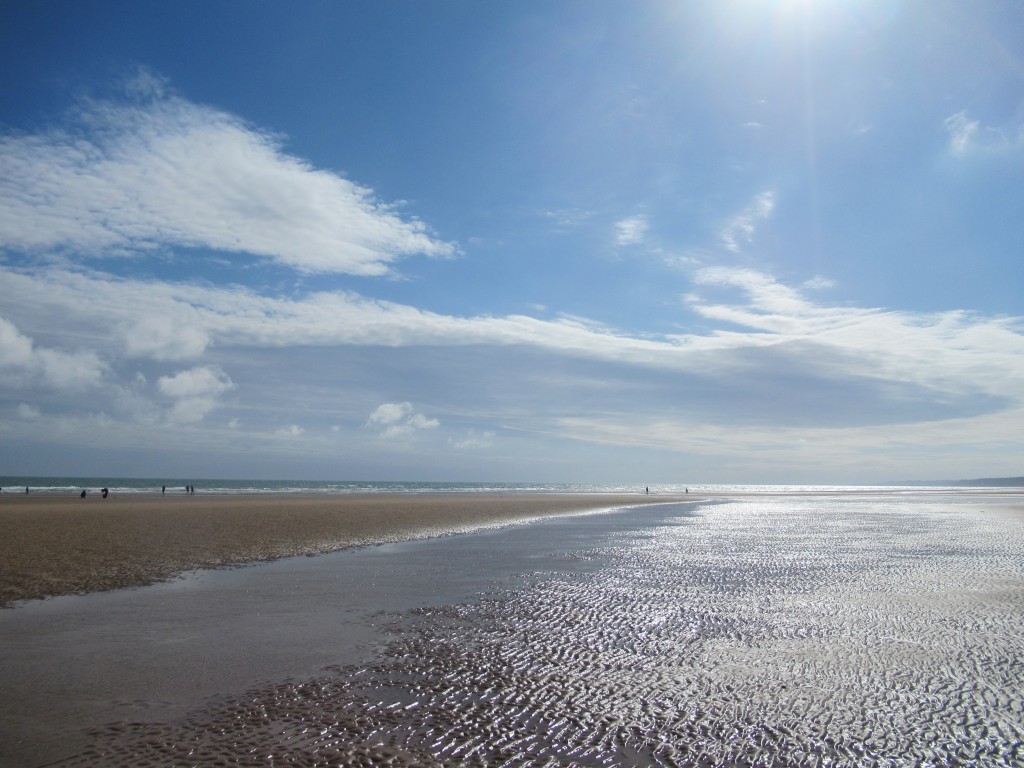
Anilore Banon’s uplifting sculpture Les Braves, on Omaha BeachThis small remnant of the many tons of metal that littered the beach was padlocked in place.Envisioning the chaos and carnage of 80 years ago amid the beauty of today.
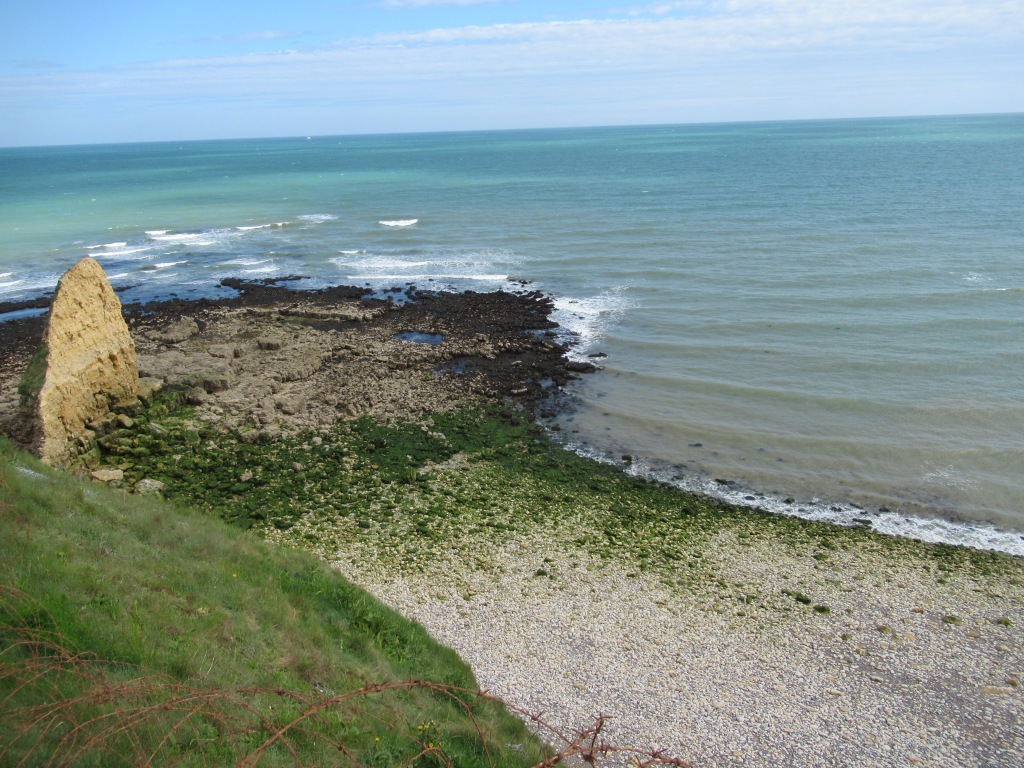
I collected a delicate, perfect seashell (as I had at Utah Beach) to add to our jar of seaglass back home. From here, we drove to the top of the 90-foot cliffs at Pointe du Hoc, where Army Rangers once achieved the impossible, under fire.
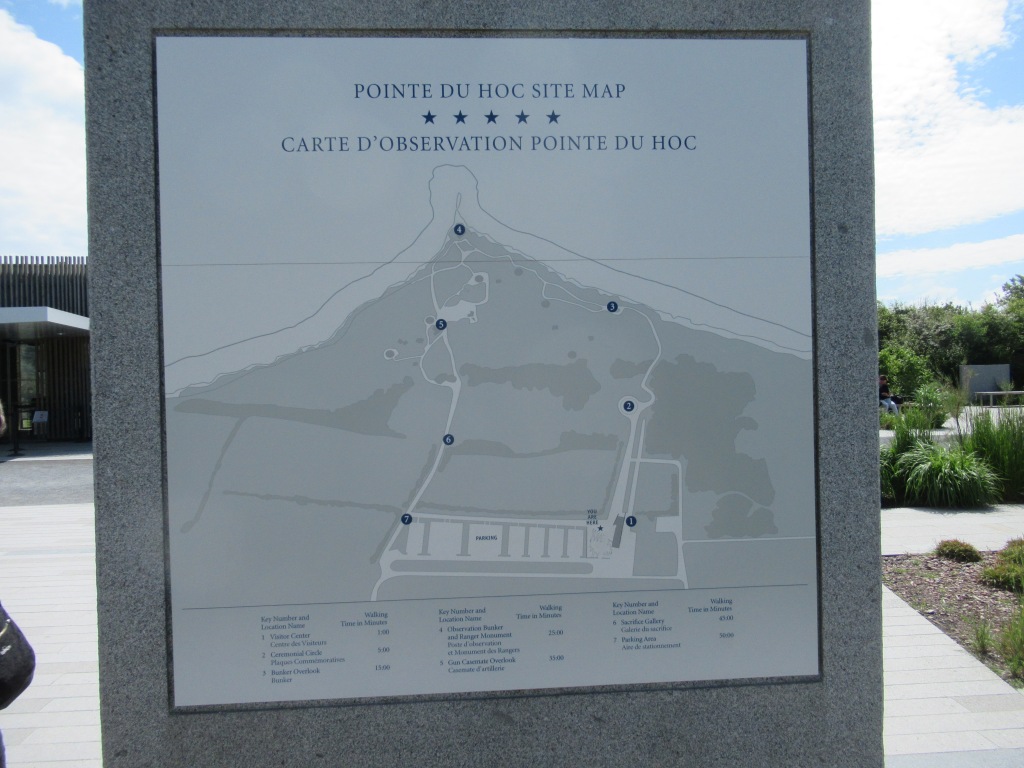
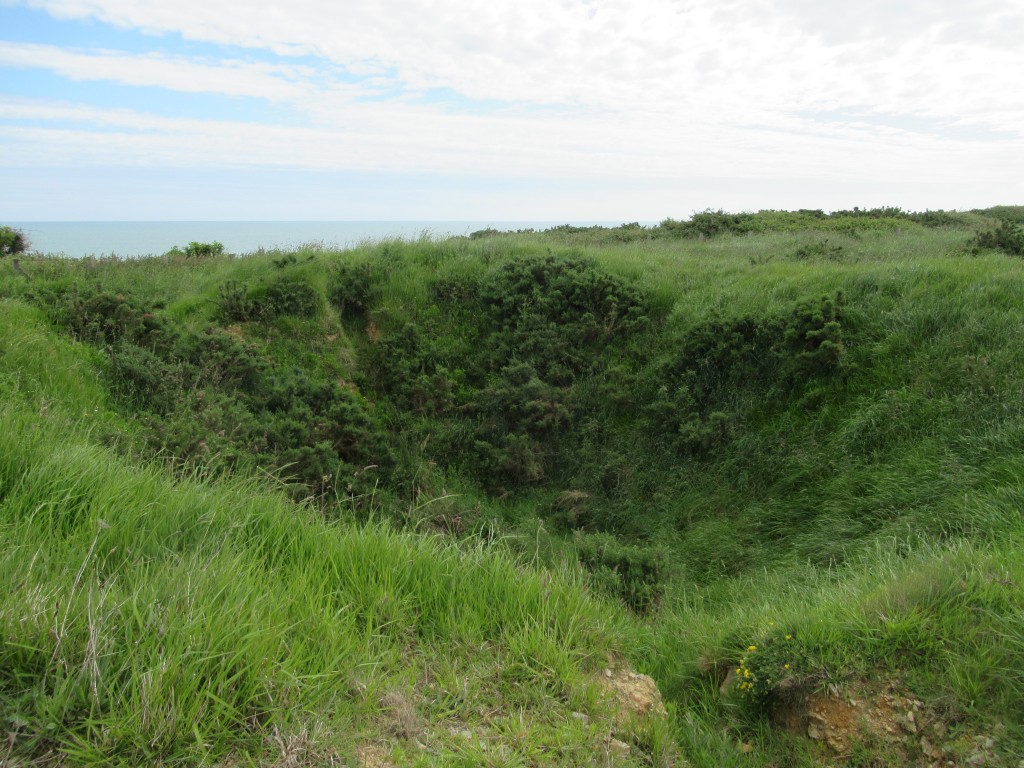
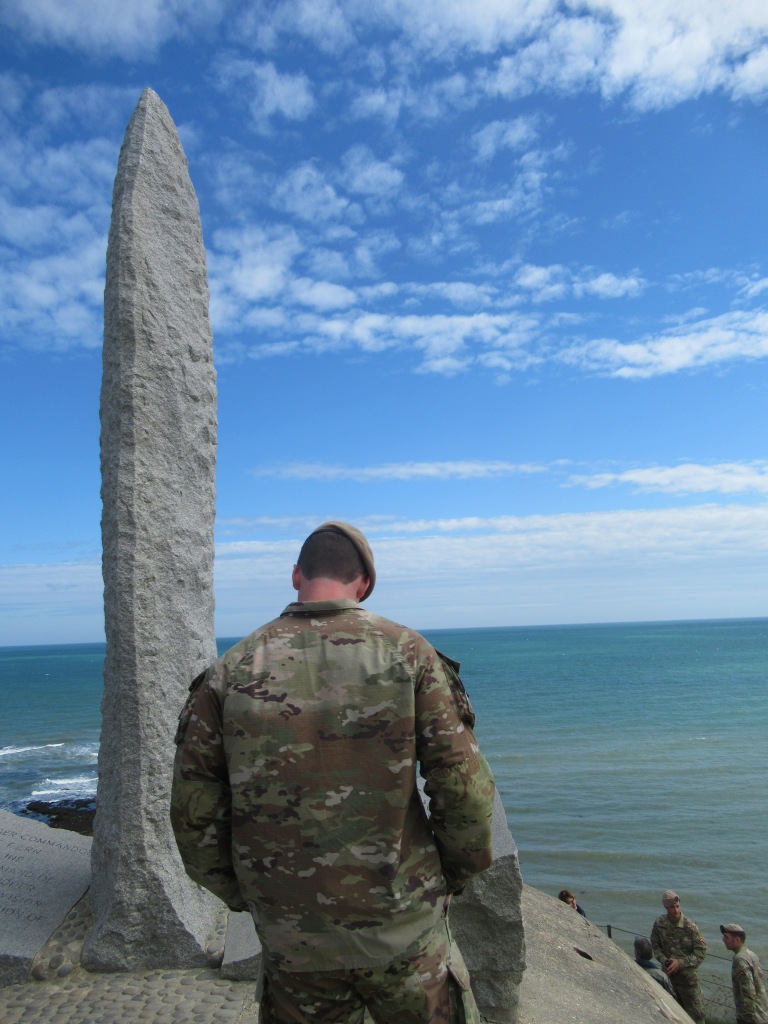
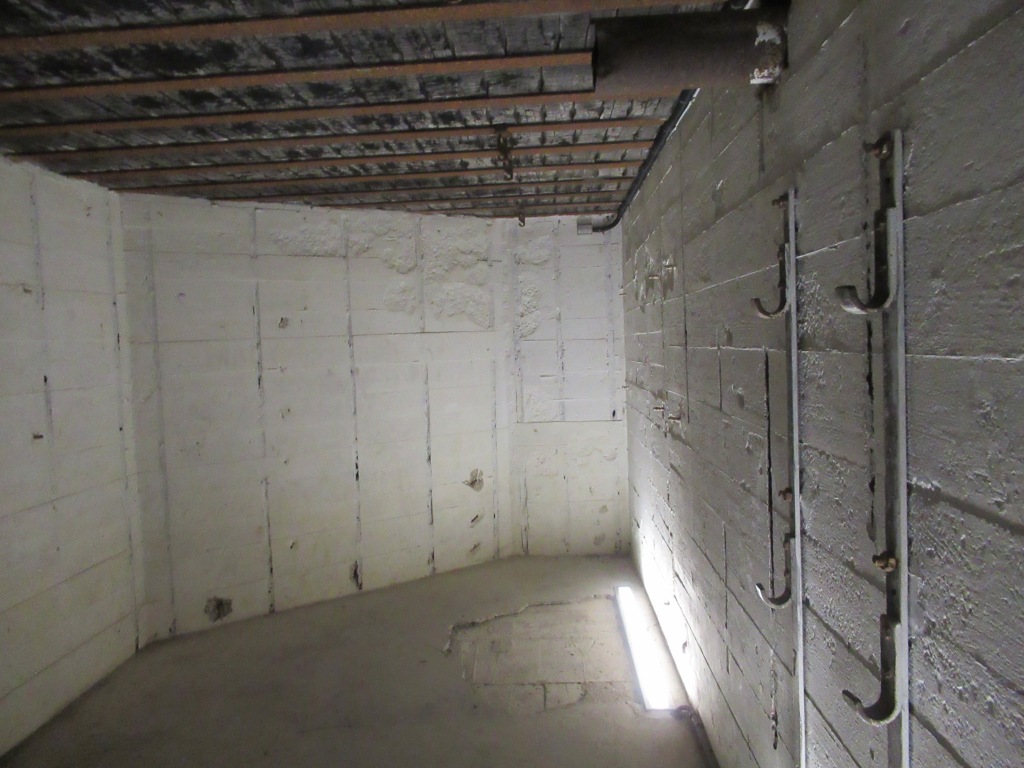
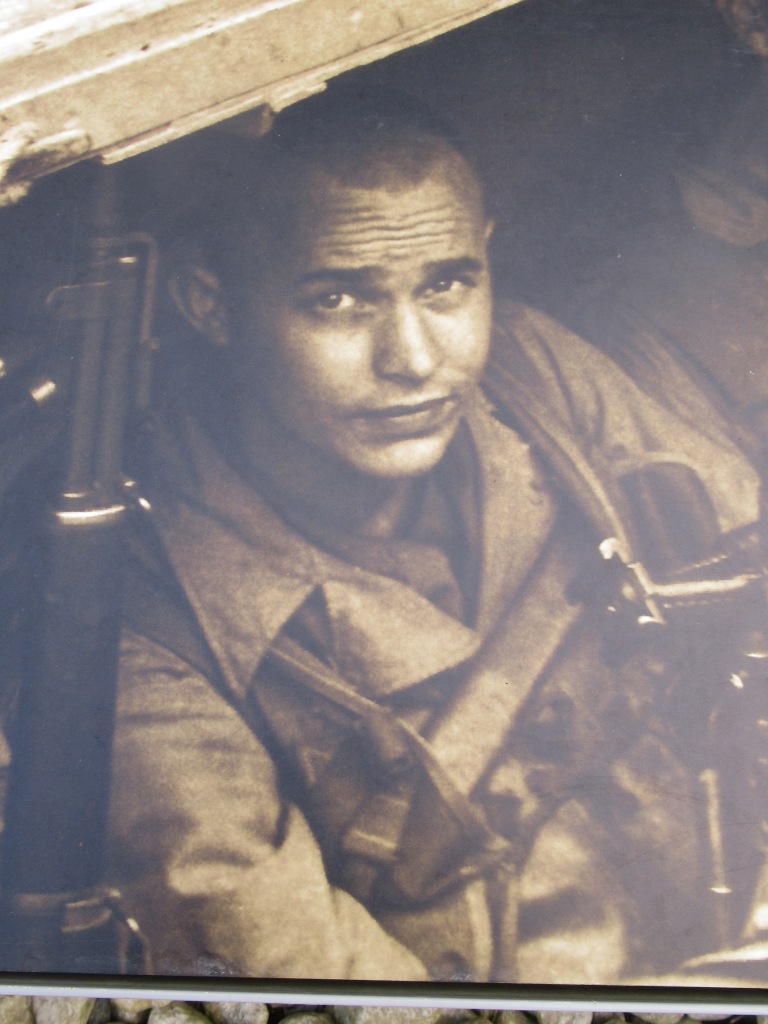
Map of Pointe de Hoc, showing the 50-minute walk that Lance completed, in addition to navigating the seawall, beach, and later the cemetery, more than 10,000 steps for the day.The walk toward the point weaves among countless impact craters left by Naval artilleryAn Army Ranger of today pays his respects at The Dagger, a memorial gift from the French Inside the observation bunker at the tip of Pointe du Hoc, a maze of rooms with a narrow gap toward the sea through which the Germans could shoot and keep watchLooking down from above at Pointe du HocSergeant Walter Geldon, Company C, 2nd Ranger Battalion
The Normandy sites come alive through many personal stories, though tens of thousands will forever remain untold. Here is just one: “June 6, 1944 was Sergeant Geldon’s third wedding anniversary. He and his fellow Rangers sang songs to celebrate the occasion shortly before landing on Omaha Beach. The 23-year-old steel worker from Bethlehem, Pennsylvania, was cut down by enemy fire within a few minutes of coming ashore. When his widow died in 2002 at age 78, she was buried by his side.”
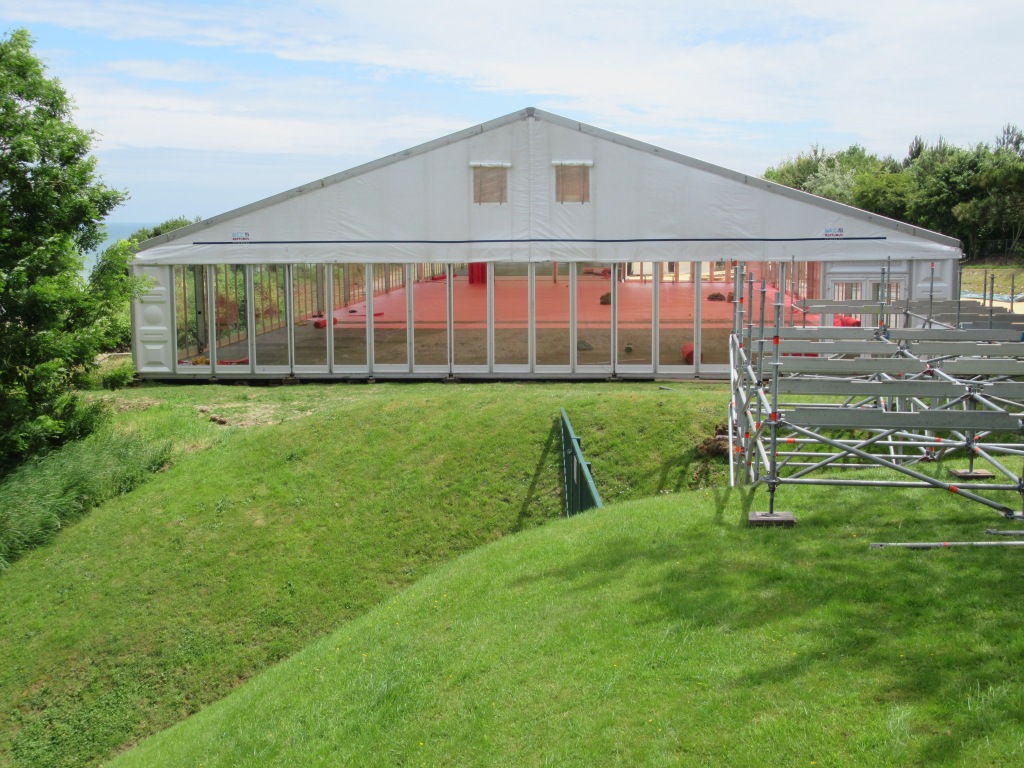
Temporary building and staging being installed for 80th anniversary celebrations
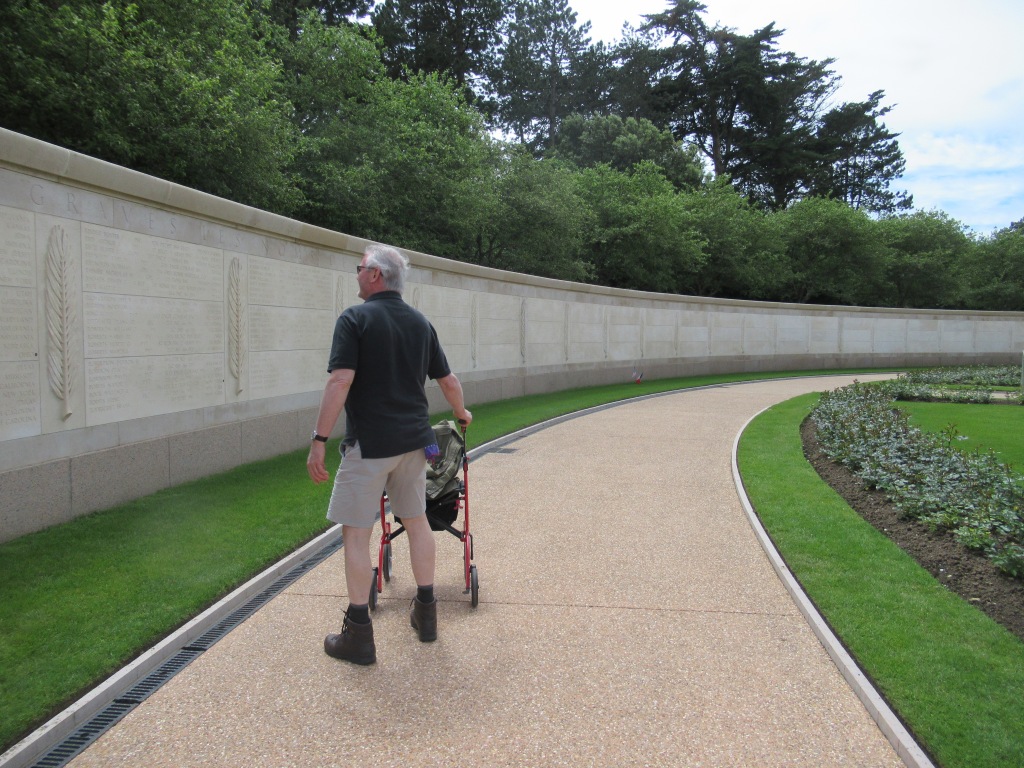
There are ups and downs to being here now, as June 6th fast approaches. An unbelievable number of active and retired military, as well as a stunning array of vintage Jeeps and other Army vehicles have gathered. The spirit of anticipation and brotherhood are at their highest. However, much of the American cemetery was blocked off, including the main memorial visible in the opening photo, with its soaring statue representing American youth. We never learned if there were open sections toward the back where you could walk among the graves. Thus, we were very grateful to find the Garden of the Missing open and paid our respects amid its tranquil beauty.
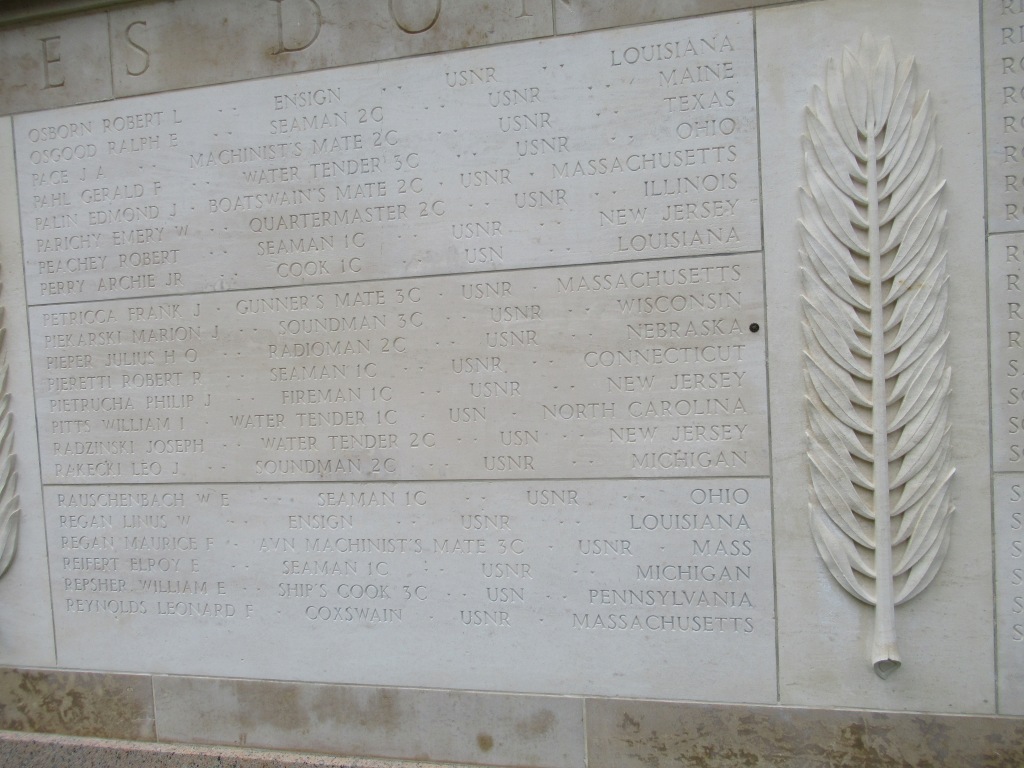
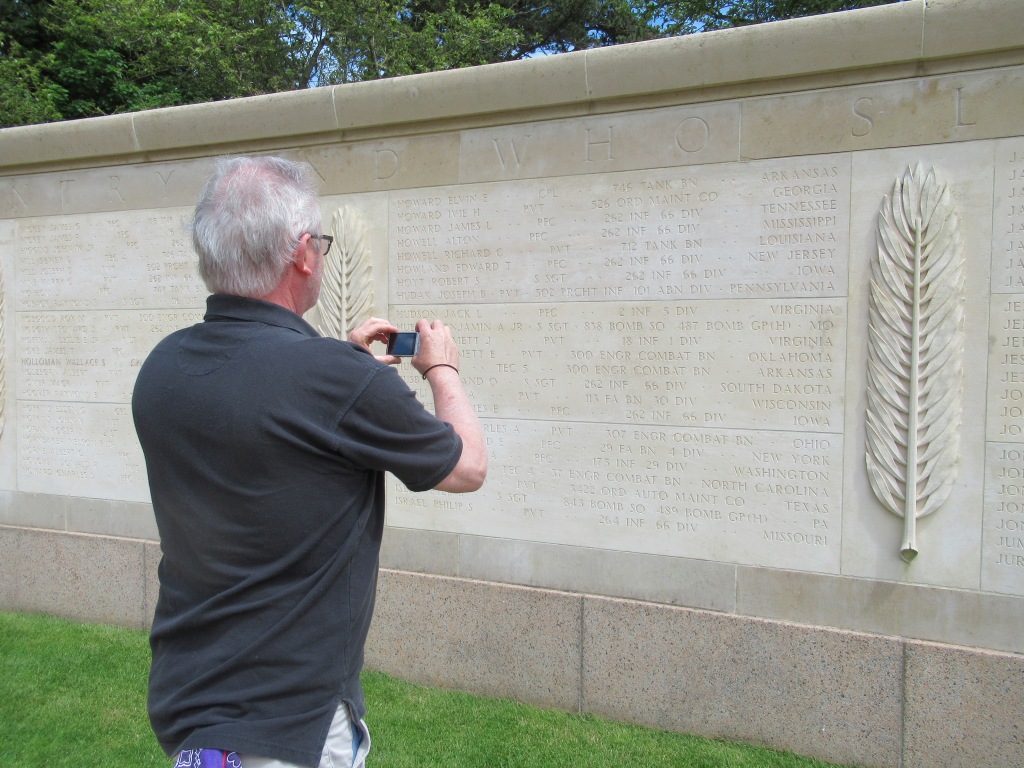
Inscribed around the Garden of the Missing are 1,557 names of American soldiers and sailors whose remains were lost. All the Army panels include multiple names from the 66th Infantry Division. 483 of the lost were never recovered from the English Channel when a torpedo sank their troopship Leopoldville on Christmas Eve 1944.A bronze rosette indicates a soldier whose remains were later recovered. This panel also includes one of the lost from Maine, most of whom were in the U.S. Navy section. Lance searched diligently for names of soldiers from his combat engineer company, the 307th, part of the 82nd Airborne Division. Sadly, two were lost and never recovered.
The story of the day would not be complete without mentioning our brush with the gendarmerie. At what appeared to be a random police checkpoint, Lance briefly considered making a run for it in our Range Rover (thinking of the movie The French Connection) when an officer waved him in. Better judgement prevailed, though, and after a very careful scrutiny of Lance’s driver’s license, we were free to go find lunch. We did not observe a single other vehicle get pulled in. On a lighter note, rambling the countryside has surely been a highlight, knowing that the churches, stone houses with their tile roofs and flower draped walls, even the hedgerows, must be little changed from 1944.
Pastries for breakfast from the local patisserie included apple in puff pastry (2nd from right) and our favorite so far, an almond and chocolate delight on the far left. I am having more of those!
Bonjour from our French studio apartment! After days of off and on rain showers, the weather forecast has improved for the rest of our trip. My plan for this post is to show you our day yesterday in photos. The rainy morning and surprising news that the Olympic flame would pass through Bayeux kept us close to home. The police presence was unbelievable, and many routes would be blocked, so we breakfasted at home and walked to do our laundry and shopping. Our plan was to take a taxi to see the Bayeux tapestry in the afternoon, but in the end we drove after all and found a superb parking spot right by the museum. Anyway, here goes…enjoy!
If you’re going to get caught outside in a drenching thunderstorm, being on your way to dry clothes at the laundromat is not such a bad thing. After our laundry was finished, the rain sent us into a cafe where Lance discovered a new love: cafe au lait!Cafe au lait with tiny cookies as an added bonusNormandy is, of course, known for its fine soft cheeses. At the fromagerie, I found Pont l’Evêque, to pair with duck terrine from the charcuterie, and fresh baguette.The culinary adventures of French town lifeWe saw much of the town in search of a parking space. Lance is driving admirably in our rented black Range Rover Evoque. He has an assertive style and parallel parking skills that fit well here.Photo detail of the Bayeux Tapestry as photos of the original are not allowed. Note the realistic movement of the horses debarking from the ship with William, soon to be William the Conqueror.
Having visited the tapestry before in 2018, here is what I wrote then: the 11th-century Bayeux Tapestry is a remarkable work of art and storytelling. Embroidered with richly dyed woolen yarns on a 224-foot-long strip of linen, it is not actually a tapestry at all. Tapestries are woven, not embroidered. Its colors, primarily blues, greens, gold, and russet, still hold true after more than nine centuries.
Going to see this treasure is a must; the visitor experience is so well done. Before entering the darkened room, each person is given an audio guide, like a telephone handset, that narrates the tale and keeps everyone spaced out and moving at the same pace. The subtle lighting enhances the colors, and you can move up close to see the details of the stitching. These are stock photos.
The tapestry’s more than fifty scenes tell of the events leading up to the Norman Conquest, culminating in the famous Battle of Hastings in 1066. There’s a Norman spin to the story. The scene at the start of this post shows the coronation of King Harold after the death of England’s King Edward, despite Harold having previously pledged allegiance to William of Normandy. Much like a comic strip or graphic novel, the scenes are action-packed, depicting treachery, heroism, and humor. The audio guide pointed out details we might have missed, like Hailey’s Comet, seen as a portent of the coming invasion.
Lance watching for the Olympic flame to pass in front of our hotel. The runner with the flame was preceded by numerous sponsoring companies with ample fanfare and giveaway merch and surrounded by many, many police runners also attired in white.The Olympic flame passes by our hotelFilet mignon de porc sauce pomme et calvados for dinner
Well, wouldn’t you know, the forecast for today has changed to showers and rain. So once again we don our raincoats and set out for another adventure!
The immersive Airborne Museum is located not far from the historic church near the village square.
This may be the best photograph of the trip
For months, we have dreamed of visiting Sainte-Mère-Eglise, the village most sacred to the legend of the fighting paratrooper. On June 5, in preparation for the D-Day beach landings, paratroopers from the 82nd and 101st divisions landed here, often far from their intended drop zones. A week ahead of the 80th anniversary celebrations, many current and former Airborne troops are gathering here to honor them. Vintage Jeeps and Army motorcycles are scattered around the square.
A reminder of the dangers of war, as well as the moments of mercy
If you know this village, it may well be through the touching story of Private John Steele of the 82nd Airborne. As he drifted toward the village square that fateful night, his parachute caught on the church steeple. There he hung for hours, playing dead, while two armed German soldiers watched from the windows. Realizing the American was alive, they took him prisoner, rather than kill him in that sacred place. Steele soon escaped and survived the war.
Rugged wooden doors and simple stone floors worn from countless steps contrast with the elegance of the pulpit and altar. Here, I lit a candle for the brave men of June 5.Stained glass window created for the 25th anniversary of D-Day. Note the parachute above.
The Airborne Museum in Sainte-Mère-Eglise follows the Airborne divisions of World War II from their creation through D-Day and beyond. Original war footage, full-scale dioramas, and an amazing collection of original uniforms and equipment, often tied to stories of the soldiers who wore and used them.
The C-47 aircraft dropped paratroopers and also towed the gliders that were part of the invasion. Visitors can walk through the simulated interior of a C-47, just inches away from troops on their way to the drop zones. Against the countryside below are planes and anti-aircraft fire.The only original Waco glider remaining in France. A total of 512 gliders carried Jeeps, ammunition, side arms, food, and extra troops into Normandy on D-Day and the day after.Just before D-Day, Ralph Busson, Bill Farmer, and Dan Furlong tore this dollar bill into three pieces. Each carrying one into Normandy, they vowed to meet at the end of the war to reunite them. Although Bill was killed, his fellow soldiers met, putting a photo in place of Bill’s piece.The Stop Bar is one of those most visited by military personnel in the area. Its walls are adorned with thousands of pieces of military and first responder memorabilia. The photo visible above my shoulder shows recently retired Chairman of the Joint Chiefs of Staff, General Milley, with his soldiers and the gift of his challenge coin to the bar.A solemn ending to the day with a walk on nearby Utah Beach.
The British cemetery in Bayeux is a place of peace and beauty
Beneath spreading chestnut trees, fallen soldiers of the Commonwealth rest
Crisply edged, pure green grass. The flowers, a riot of color from an English cottage garden. The messages from family that adorn each stone. Together, these touches somehow brought comfort and honor and a rightness as we wandered the largest of the British cemeteries, right here in Bayeux.
One of 338 unidentified soldiers buried here, each one “known to God”One of several double graves, probably the remains of brother soldiers found togetherLeaving a message of remembrance in the visitor register1st Officer H.L. Abrin, an American with the R.A.F. Ferry Command, is one of over five hundred soldiers of other nationalities buried here. Surprisingly, most are German.The epitaphs were as individual as the men who gave their all for freedomLike the world, we will always remember










 Laurie Apgar Chandler